
Bathroom Ventilation: Options and Tips
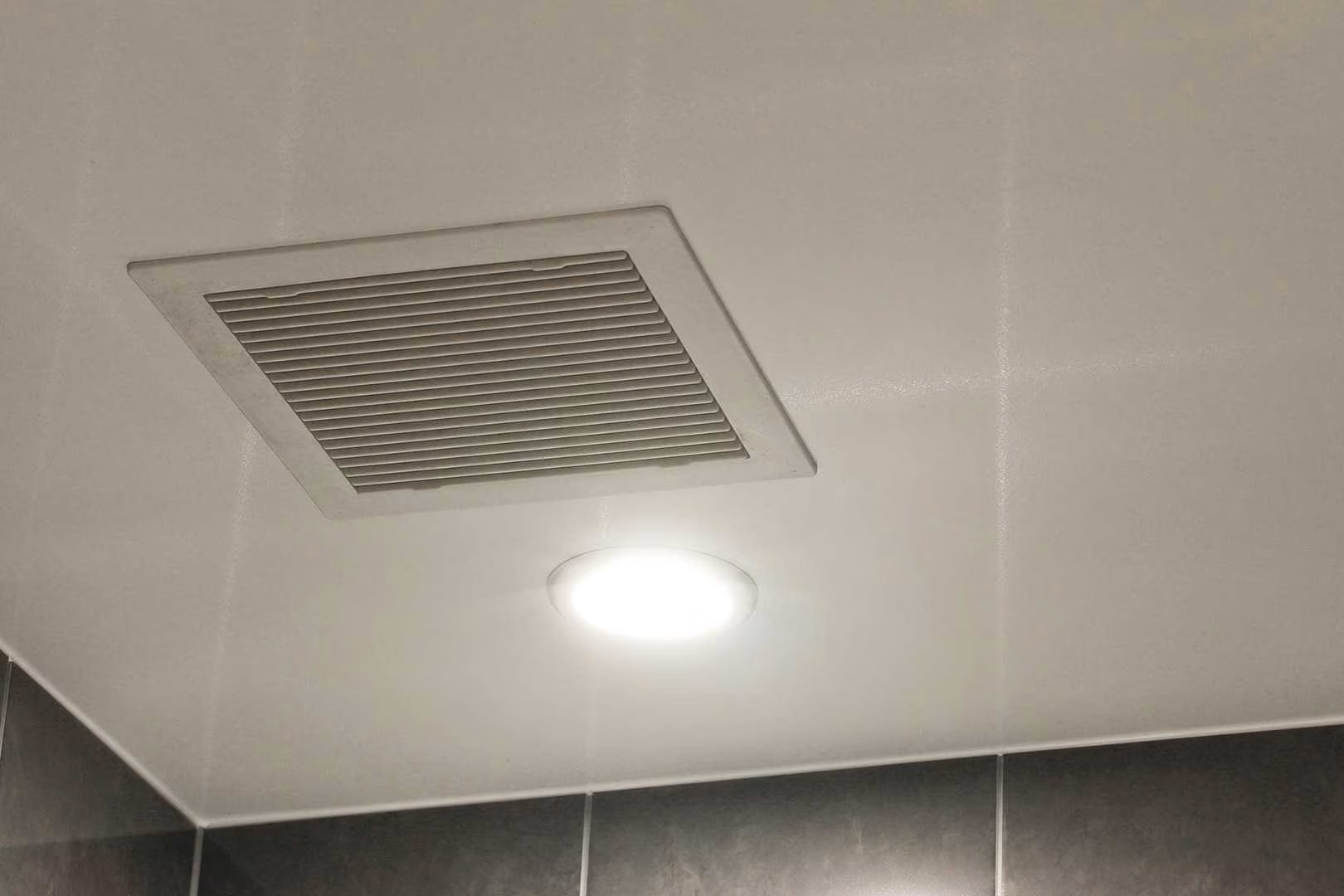
Bathroom Ventilation: Due to the high humidity in bathrooms, ventilation is especially important and, in some cases, even required by law. Learn more about bathroom ventilation options in our guide.


Photo: © Suriya KK / Shutterstock.com
The ventilation system primarily ensures the necessary air exchange in living spaces. This is essential for several reasons: first, to maintain consistent air quality, and second, to improve comfort. Ultimately, air quality is also an indicator of quality of life. Beyond health, ventilation has another important purpose. Moisture is generated in buildings in various ways during daily life. This moisture must be removed to prevent moisture damage and mold growth.
Tightening regulations for the construction of new houses and apartments has led to significant progress in energy conservation and efficiency in residential buildings in recent years. While an existing building still requires an average of over 200 kilowatt-hours (kWh) per square meter of annual energy consumption, new buildings require less than a third of this amount. This annual energy consumption refers to the thermal energy that must be provided, taking into account losses caused by transmission and ventilation.
Specifically, the German Building Energy Act (GEG) requires that the building envelope of newly constructed buildings be permanently airtight. Natural ventilation through leaky door and window openings, as is common in existing buildings, is no longer permitted in new buildings. However, a minimum air exchange rate necessary for the health and safety of the building must be ensured. This can be easily demonstrated by developing a ventilation concept in accordance with DIN 1946-6. Owners of existing buildings must also submit a ventilation concept when retrofitting, which includes:
In this respect, AHI Carrier ventilation systems meet all the requirements of the DIN 1946-6 standard “Ventilation of residential buildings”.
Experts distinguish primarily between natural and mechanical or controlled mechanical ventilation (CMV). Window ventilation is one of the best-known and oldest forms of natural or free ventilation. Other forms include gap ventilation, roof ventilation, and shaft ventilation. Ventilation is driven by natural forces such as the pressure difference between indoor and outdoor air, thermal draft, and, last but not least, wind. However, in many buildings, natural ventilation is insufficient to provide moisture protection.
This is where mechanical ventilation comes in, operating independently of external influences and users. In this context, it’s important to explain four terms that play a crucial role in this function:
Controlled mechanical ventilation is divided into centralized and decentralized systems. Depending on the application, both systems offer their own advantages. Both are capable of heat recovery, significantly reducing the heat required for ventilation. The fundamental difference between ventilation systems lies in their individual design. A specialist consultation can help determine which ventilation system is best suited for a specific building.

Get a free, personalized consultation on AHI Carrier ventilation systems from our qualified sales partners!
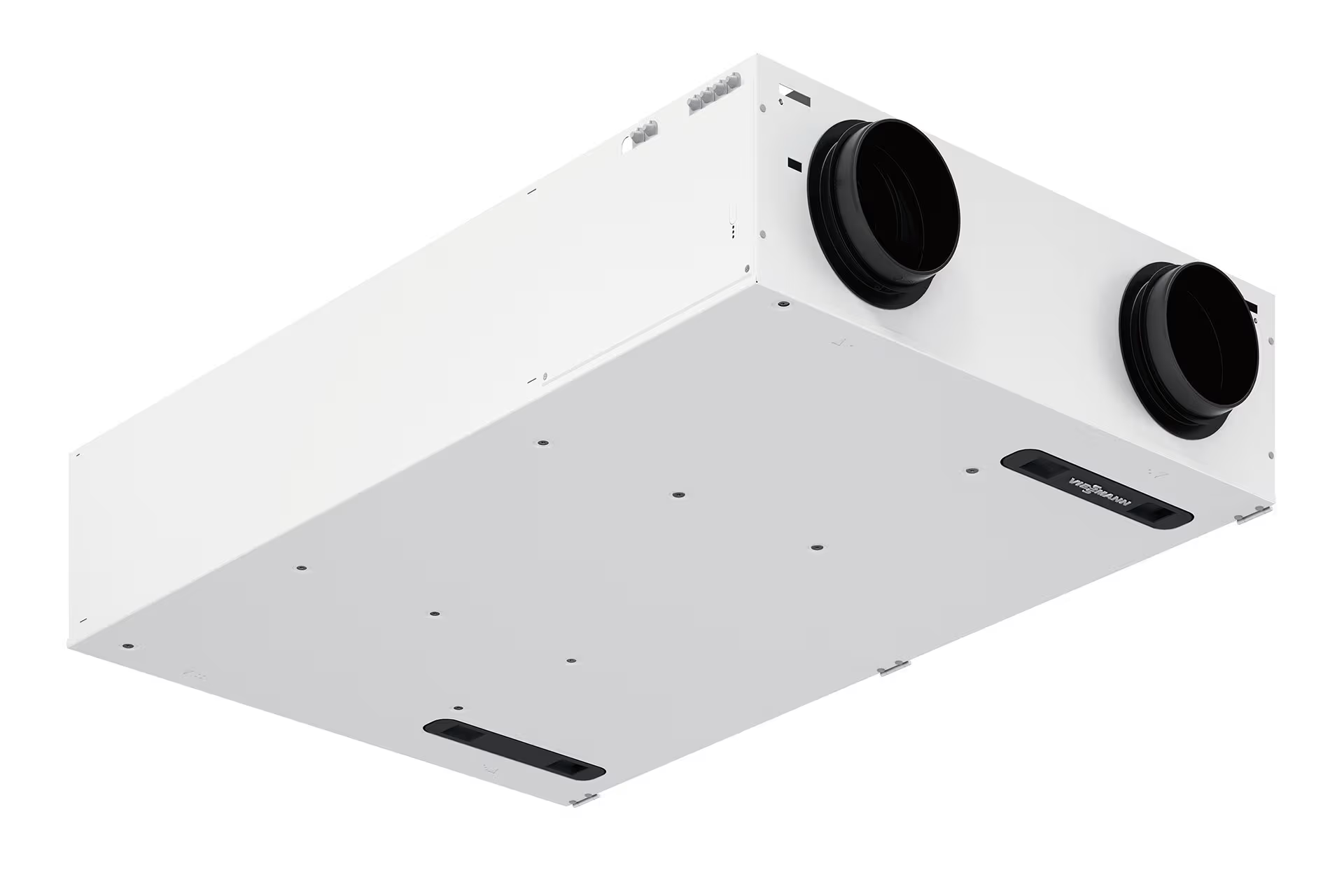
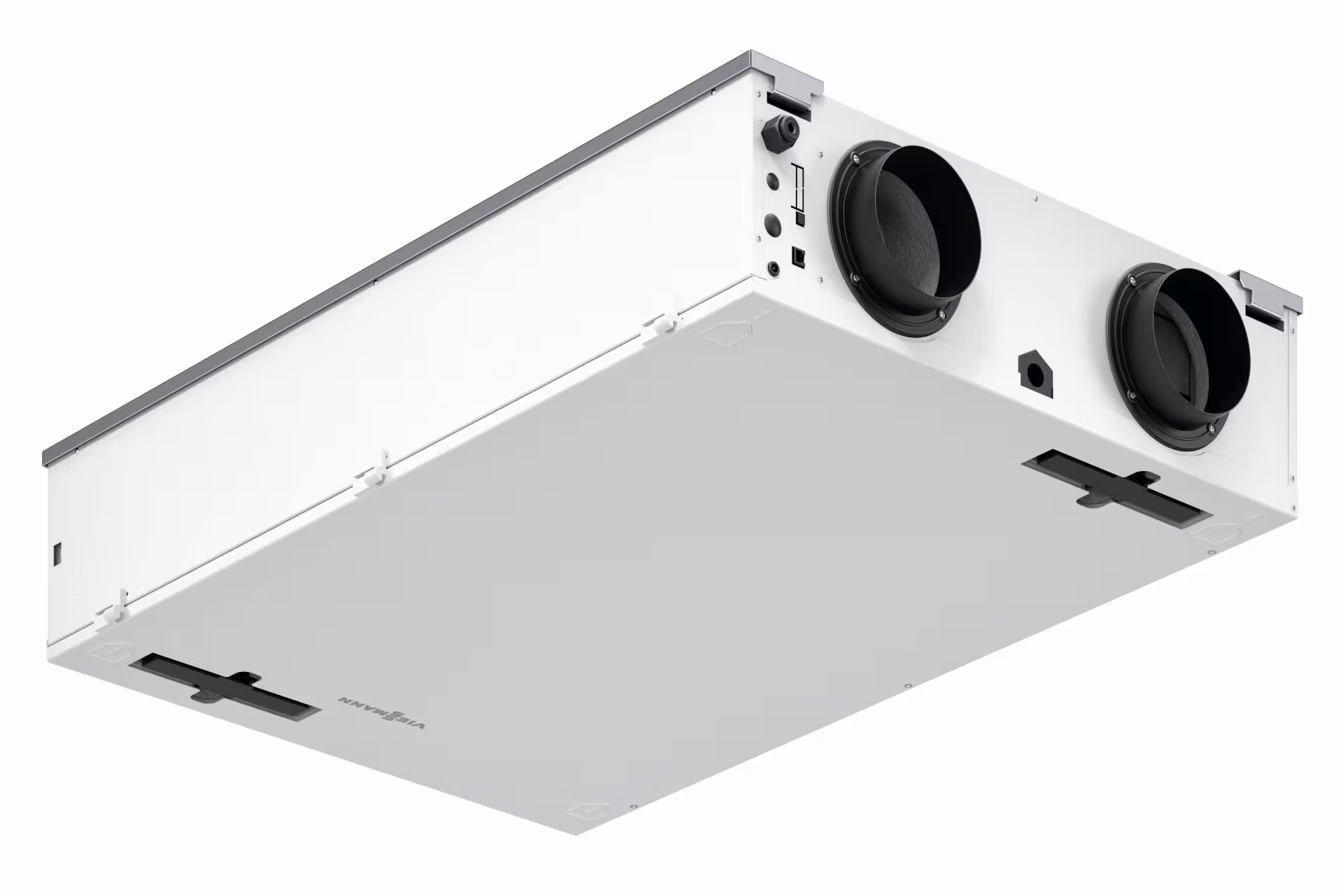
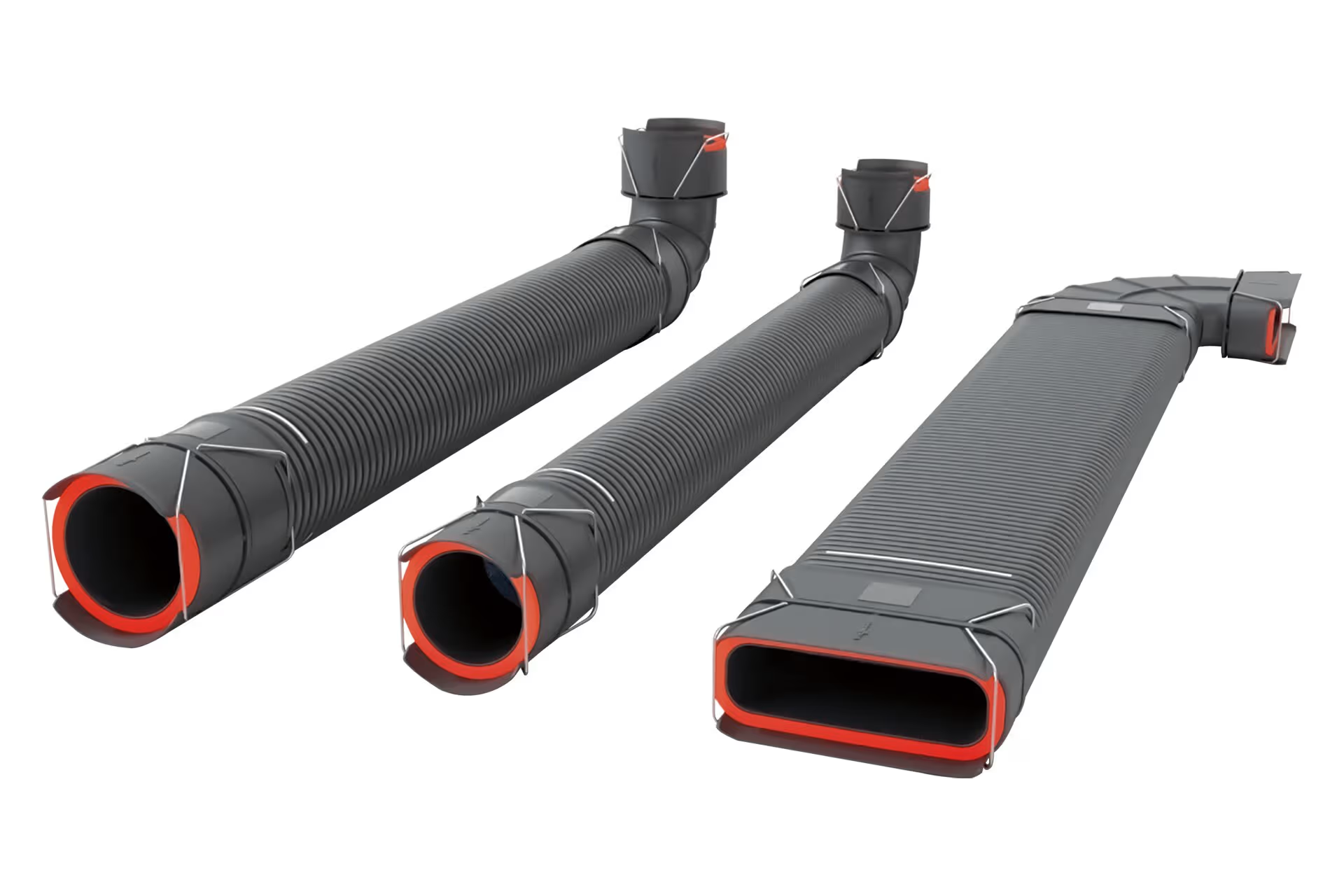
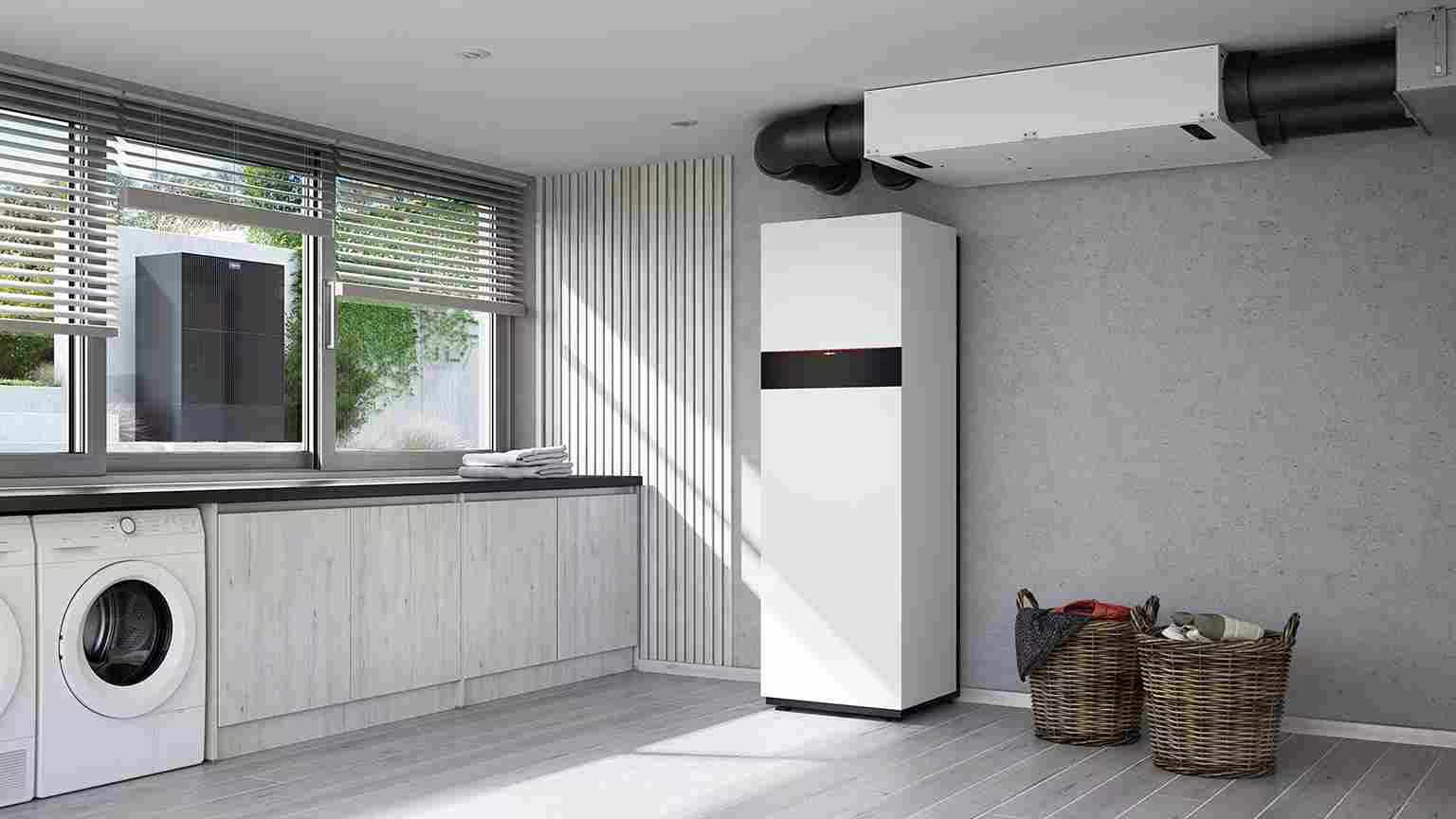
Request a consultation now →In the case of central mechanical ventilation, a single unit supplies fresh air to the rooms. For this purpose, a central ventilation unit is installed in the wall or ceiling. Ventilation is achieved through a connected air distribution system, which is usually concealed within the floor or ceiling structure. In its simplest design, such a ventilation system has only an exhaust system that expels stale air to the outside. Fresh air enters the house only passively through leaky building envelopes, door cracks, window gaps, or external ventilation ducts.
Alternatively, supply air is directed into supply ventilation zones (living rooms, children’s rooms, or bedrooms) on one side, and exhaust air is drawn from exhaust ventilation zones (kitchen, bathroom, or toilet) on the other side. Centralized systems are primarily used in new buildings, as they require more design effort. However, they can also be used in older buildings. For example, during a retrofit, the system can be installed in a suspended ceiling.
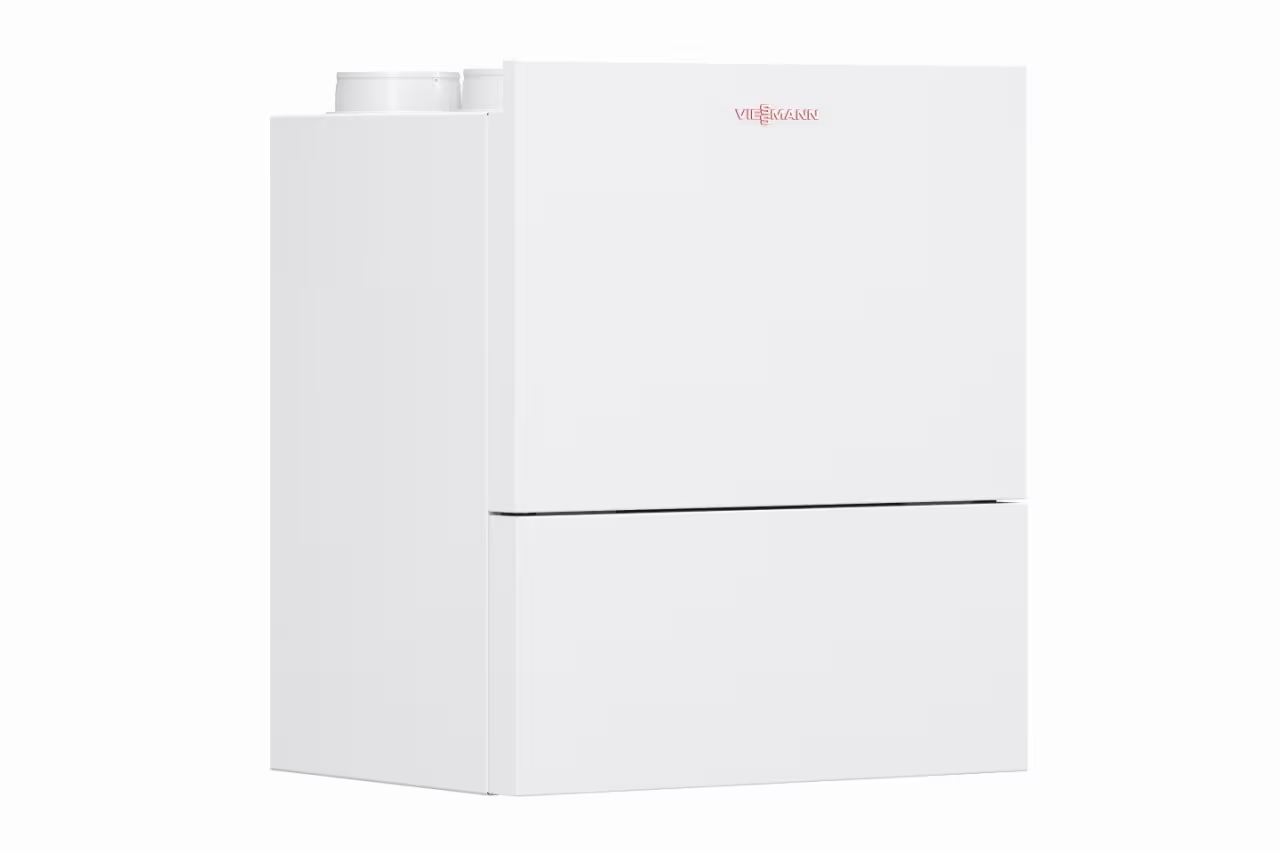
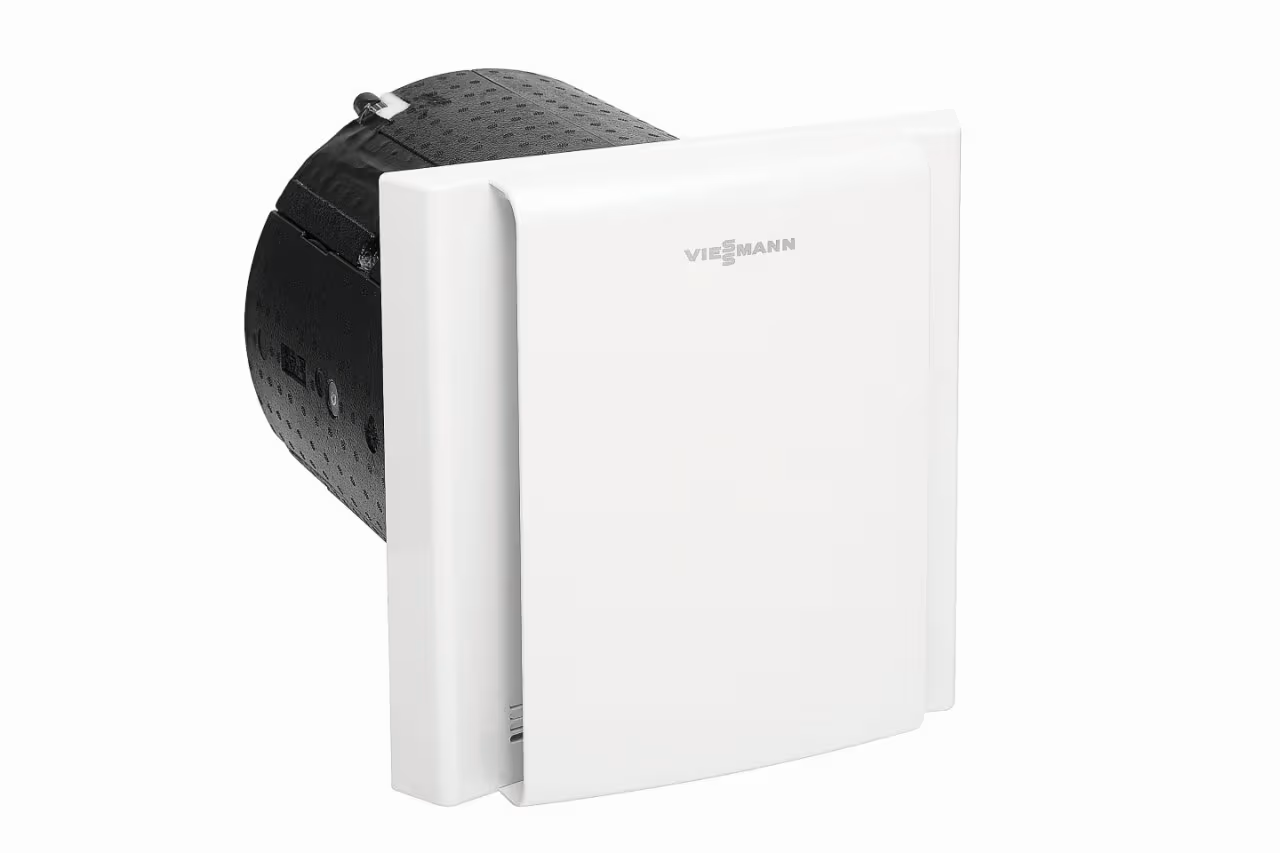
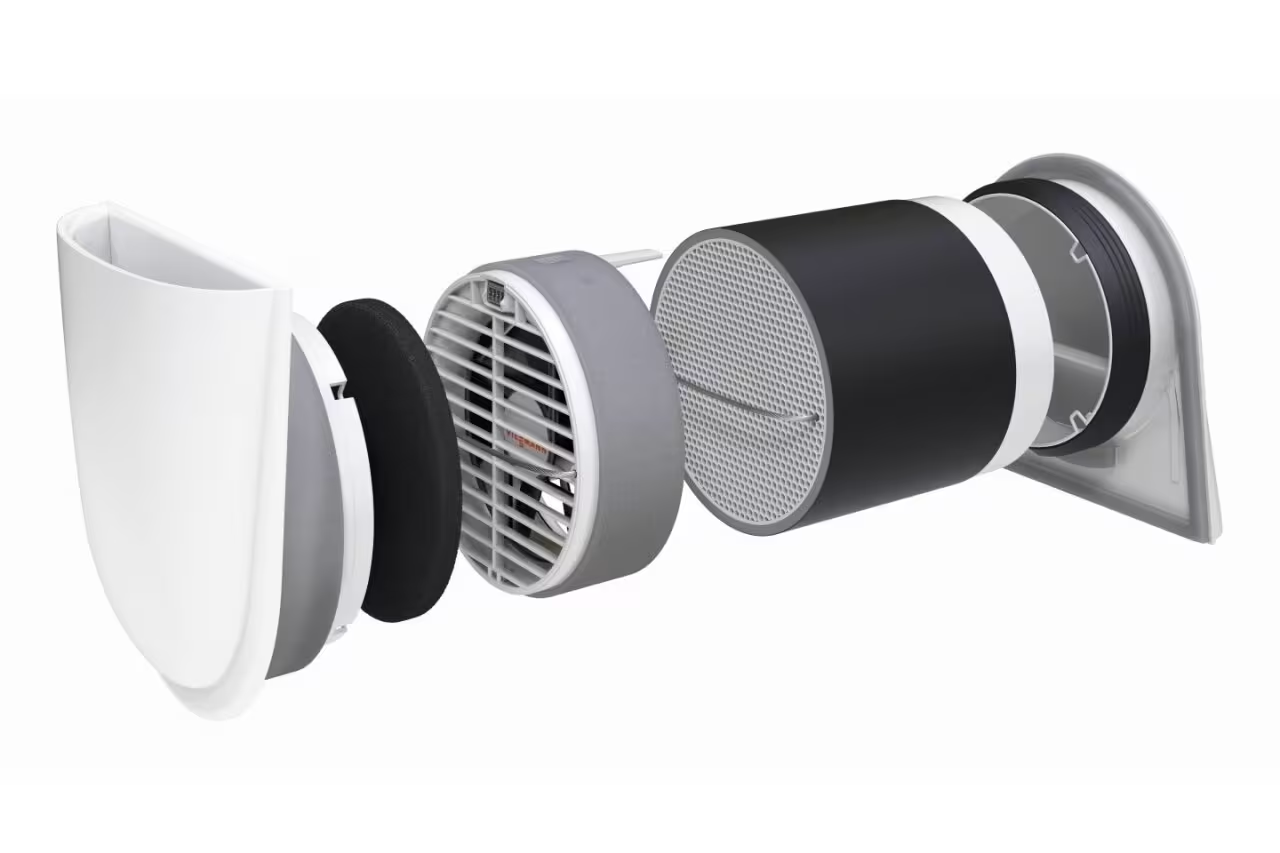
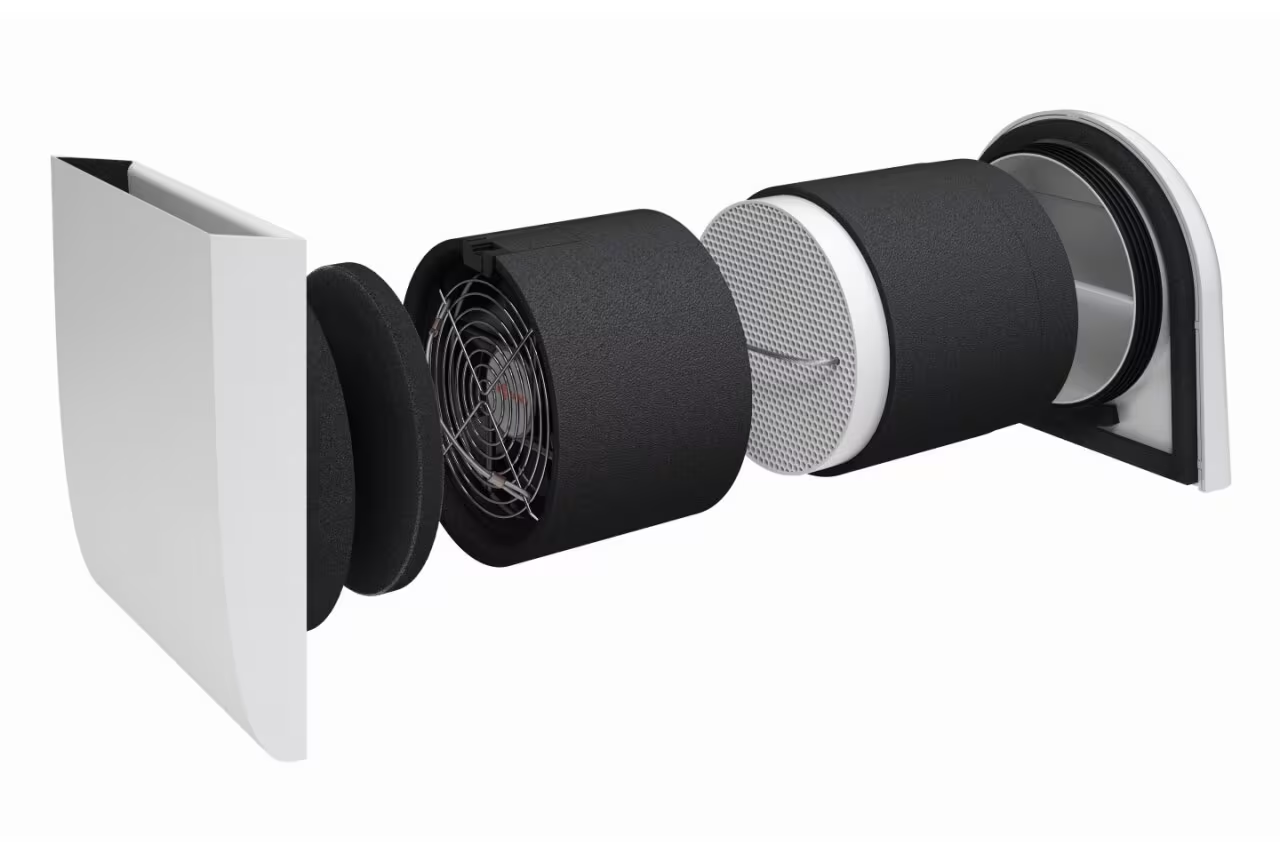
Unlike a central system, the entire living space is not supplied by a single unit. Instead, several ventilation units are used to supply individual rooms with fresh air. Typically, the units are installed directly in the exterior wall of the rooms receiving the air, eliminating the need for ductwork. This makes decentralized systems particularly suitable for retrofitting, as all that is required is a drilled hole in the exterior wall and a power source. However, decentralized mechanical ventilation can also be installed in new buildings. This option is particularly attractive for multi-family buildings (specific rooms only) or granny flats.
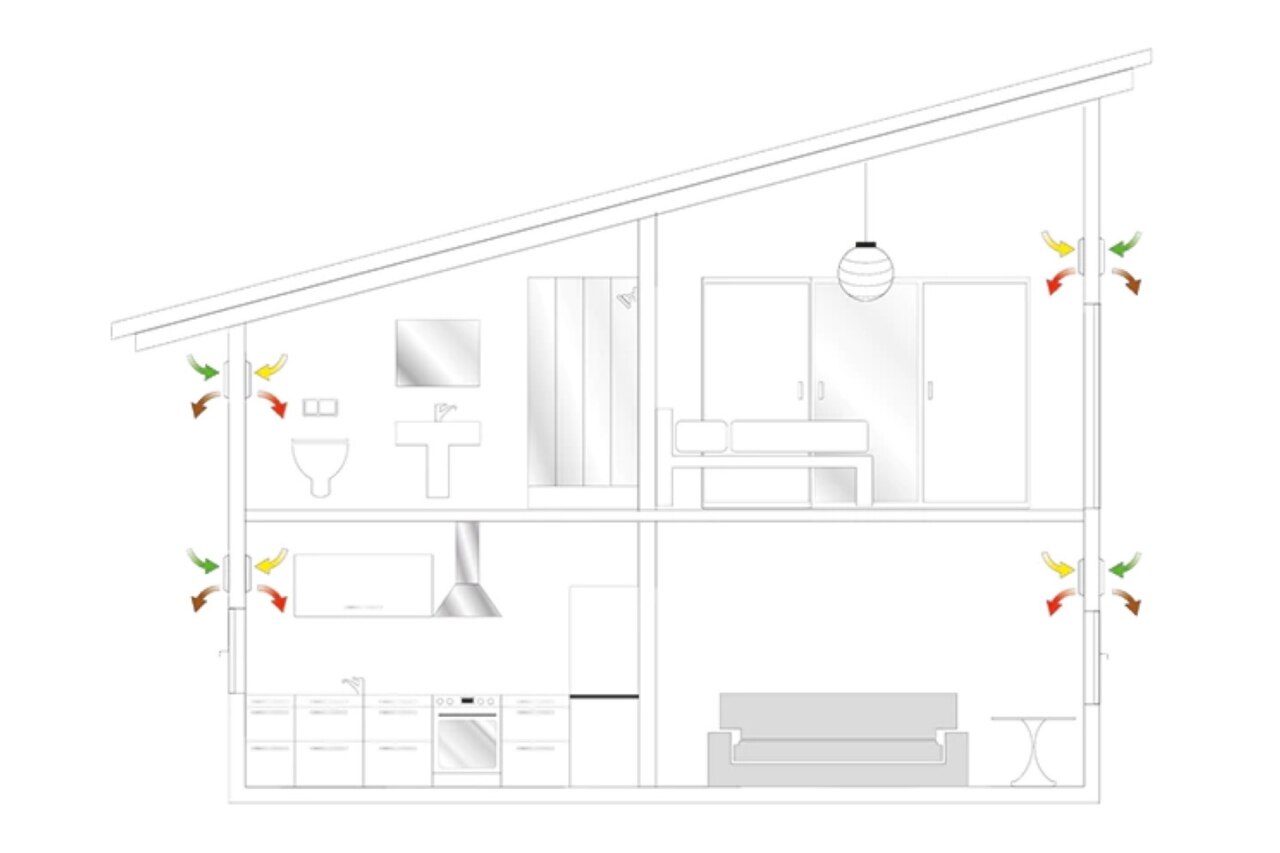
Depending on the design, a distinction is made between continuous operation and push mode. A push mode ventilation system operates alternately in exhaust or supply air mode. Installation of this type of system requires two units with two wall openings. Both units communicate through a common controller. In continuous mode systems, both airflows pass through a single unit without interruption. Installation of this type of system requires only a wall opening or a drilled hole.
For detailed information on the differences and similarities between central and decentralized ventilation, see Comparison of Central and Decentralized Mechanical Ventilation .
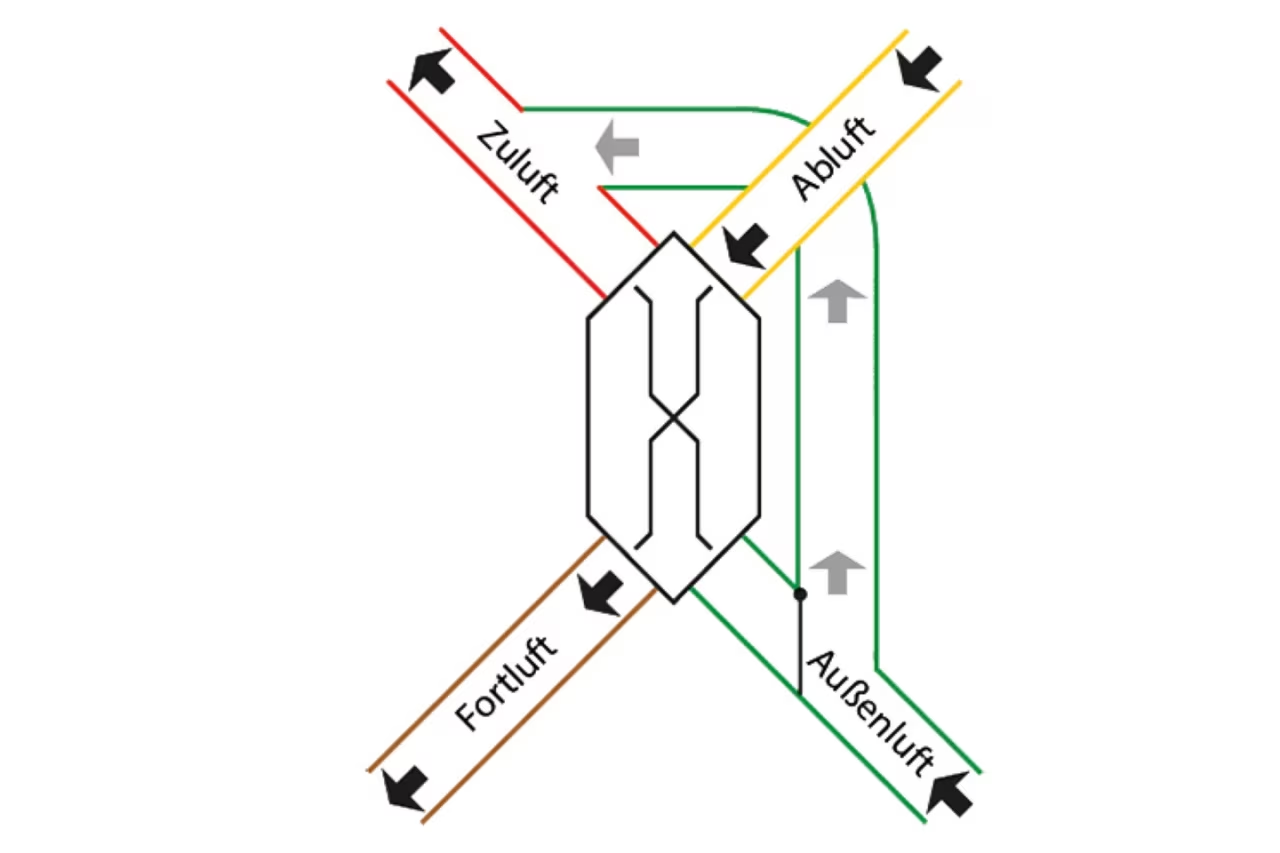
Heat recovery is a feature of controlled mechanical ventilation. In a central or decentralized system, a built-in heat exchanger extracts heat from the already heated exhaust air and transfers it to the usually cooler outside air entering the building. The outside air does not need to be heated to the same degree, significantly reducing the building’s heating requirements for ventilation.
The heart of a ventilation system with heat recovery is the heat exchanger. AHI Carrier central ventilation units use cross-counterflow heat exchangers. They are designed so that exhaust and supply air, separated by several polymer layers, pass each other. This prevents the two air flows from mixing, and only heat is transferred. For many homeowners considering a central mechanical ventilation system, this feature is essential.
An enthalpy heat exchanger is a cross-counterflow heat exchanger capable of extracting not only heat but also moisture from the exhaust air. This is achieved using a semipermeable membrane. The membrane allows only moisture and heat to pass through, while odors and dirt are retained. Using an enthalpy heat exchanger is especially beneficial in winter, when the outside air is relatively dry.
Regardless of the building regulations for residential premises set out in the Energy in Buildings Act, the benefits of mechanical ventilation are numerous.
To ensure consistently high indoor air quality, the air in all rooms must be changed every two to three hours. As mentioned, the airtight envelope of new and renovated buildings naturally prevents this. Window ventilation alone cannot provide the required air change rate, especially when occupants are absent. Mechanical ventilation, however, can provide rooms with sufficient fresh air at any time of day, regardless of the occupant.
Traditional window ventilation is considered ineffective, especially when used incorrectly. Many people tend to leave their windows tilted, believing this will prevent heat from escaping. However, the opposite is true. Warm air in the room escapes unimpeded through the window, leading to increased heating costs. Controlled mechanical ventilation with heat recovery supplies as much fresh air as needed and also recovers valuable thermal energy.
An underestimated risk of improper ventilation in residential spaces is inadequate moisture removal. Several liters of water are released into the indoor air each day as water vapor. A family of four produces up to 15 liters of water daily while cooking, showering, drying laundry, or watering plants. This increases the relative humidity of the air. If moisture is not removed, it can condense on wall surfaces, leading to mold growth and, in the worst case, damage to the building’s fabric. Controlled mechanical ventilation removes moisture independently of the user, thereby protecting the building’s fabric and ensuring the property retains its value.
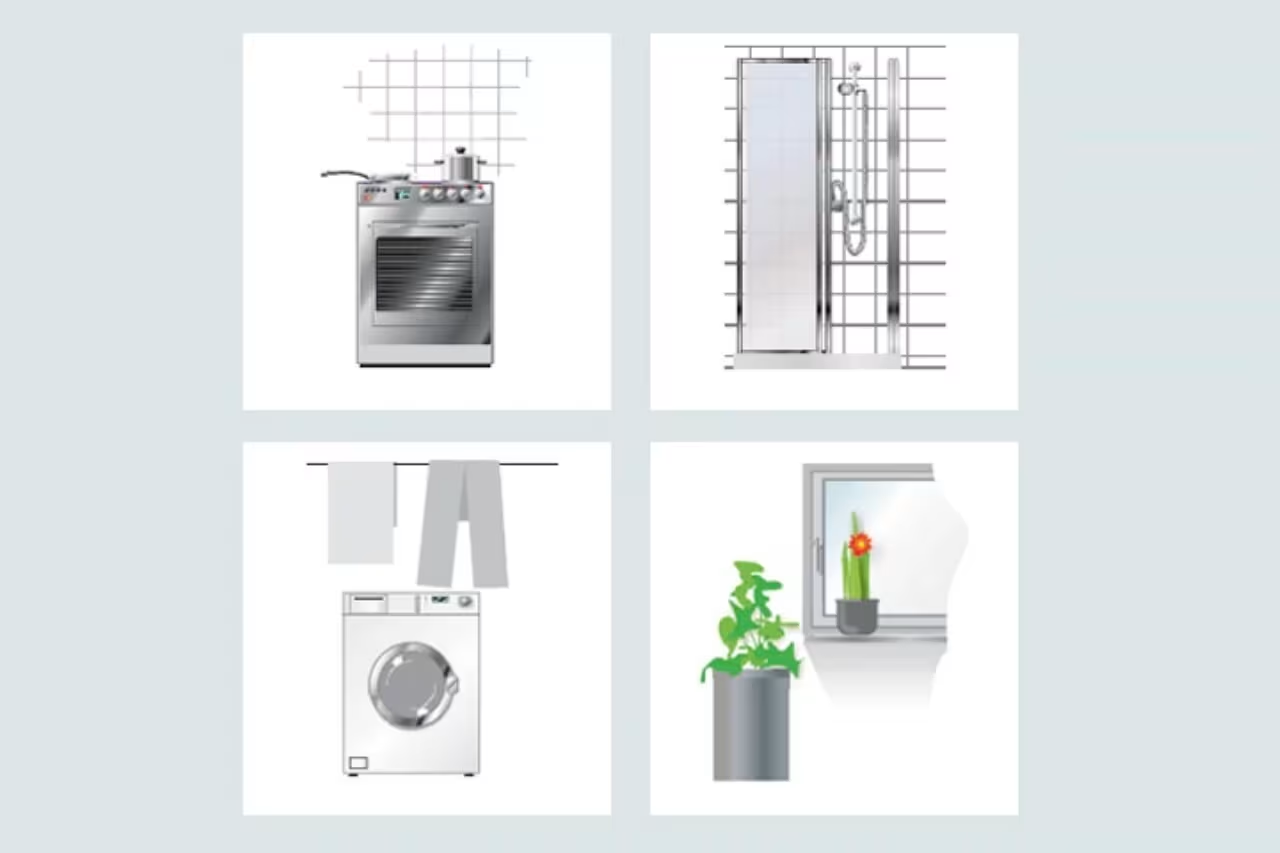
The picture shows a stove, shower, washing machine and installation to illustrate what and how much water vapor is produced that must be removed by the ventilation system.
Another advantage of ventilation is that ventilation systems have built-in filters. These filters protect the system from pollution, while also filtering out particles from the outside air, thereby protecting residents. For allergy sufferers, pollen filters are also available.
The ventilation system supplies fresh outside air to the supply ventilation zones while simultaneously removing stale air from the exhaust ventilation zones. In addition to constantly replacing the air, unpleasant odors from the exhaust zones do not penetrate into living spaces.
Another advantage of controlled mechanical ventilation is particularly evident near busy roads, where noise and air pollution are common. Keeping windows closed reduces noise levels. Outside air is filtered before entering the building.
For natural ventilation, windows must remain open. However, even if they are only tilted, the risk of burglary increases significantly. A mechanical ventilation system significantly reduces this risk. Windows can remain closed. A properly installed and adjusted ventilation system also prevents drafts.
In our guide to mechanical ventilation, we’ve compiled the most frequently asked questions and answers for you.
The Building Energy Law does not prohibit natural ventilation, such as window ventilation. However, in practice, the use of ventilation systems shows that manual ventilation is no longer necessary. If you want a fresh breeze from time to time, you can, of course, open the windows at any time.
Depending on the installation location of the ventilation unit and the placement of the air diffusers, ventilation systems can generate noise. However, noise is significantly reduced with proper planning and configuration of mechanical ventilation. This is also achieved by integrated components that optimize flow and sound. Silencers are also available and can be installed in individual ducts. A centralized mechanical ventilation system is typically somewhat quieter than a decentralized one. However, this does not automatically mean it is better.
Since outdoor air is not free of dust and impurities, all AHI Carrier ventilation systems have built-in outdoor air filters. Depending on the application, different brands of filters are used. Typically, these are either coarse filters or fine filters. The latter are also called pollen filters. To protect the exhaust air distribution system, exhaust air filters are installed in the vents in the bathroom, kitchen, and toilet. They reliably prevent dirt deposits from entering the ventilation unit and the air distribution system. The ventilation units are equipped with a filter change indicator, which indicates when a filter needs to be replaced. The air distribution system can also be cleaned if necessary.
In an energy-efficient home, fresh air almost never enters passively. Ventilation systems are designed to continuously supply only the required amount of air. Therefore, the ventilation system should operate 24 hours a day. However, when residents are not present, the system may operate at a reduced level.
In the brochure below, you’ll find everything you need to know about mechanical ventilation. Learn more about the features and functions of central and decentralized mechanical ventilation systems. On the final pages, you’ll find a clear and understandable explanation of the technical specifications of individual units.
Does the individual unit meet the requirements for use in a residential building? What is the air flow adjustment range, and what energy efficiency class does the unit have? Find the information you need in the following product data sheets.
Bathroom Ventilation: Due to the high humidity in bathrooms, ventilation is especially important and, in some cases, even required by law. Learn more about bathroom ventilation options in our guide.
Learn more about the features of both systems in this comparison of central and decentralized ventilation systems. Read now!
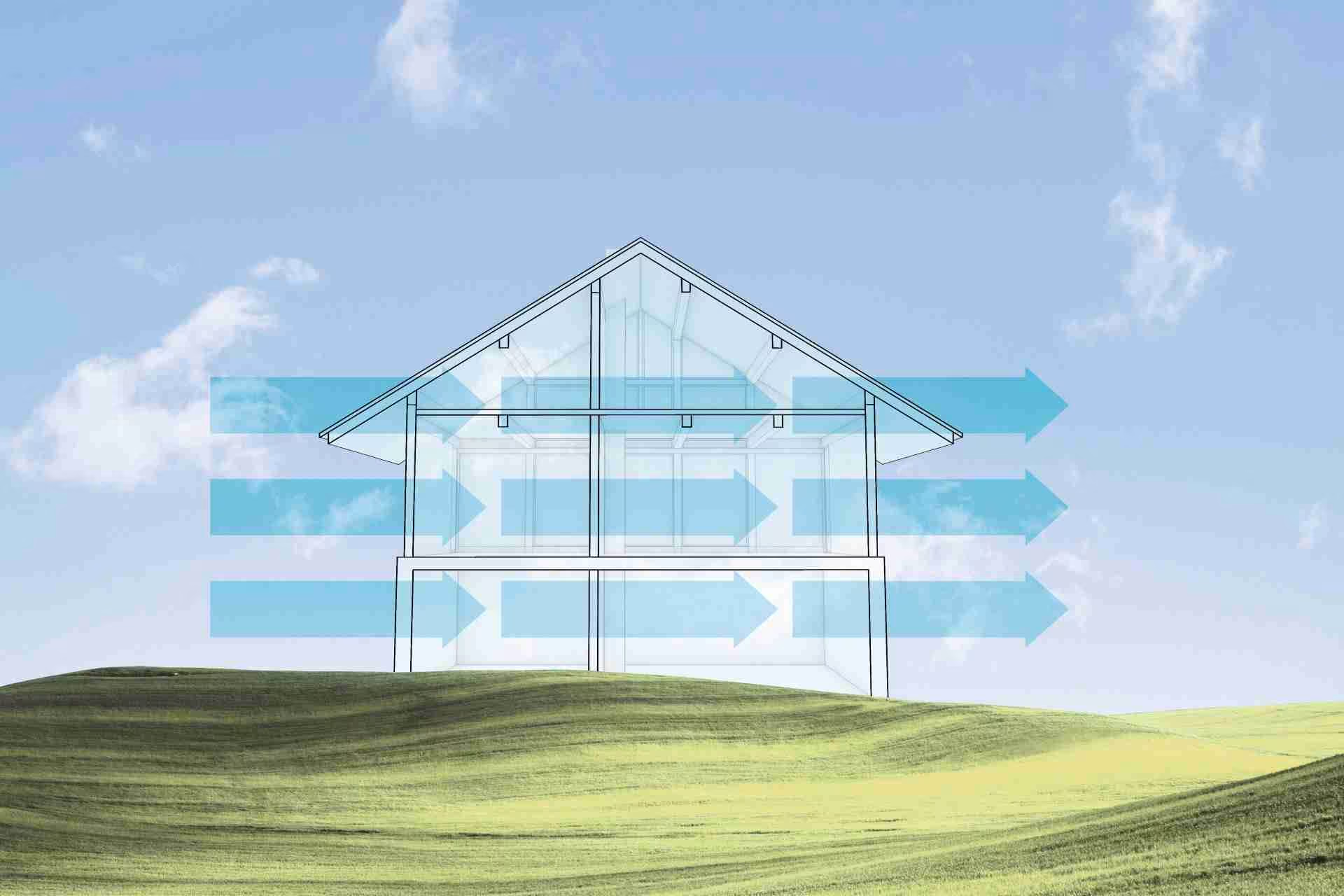
Want to save on heating costs with mechanical ventilation? We’ll explain how and what it requires.