MENU

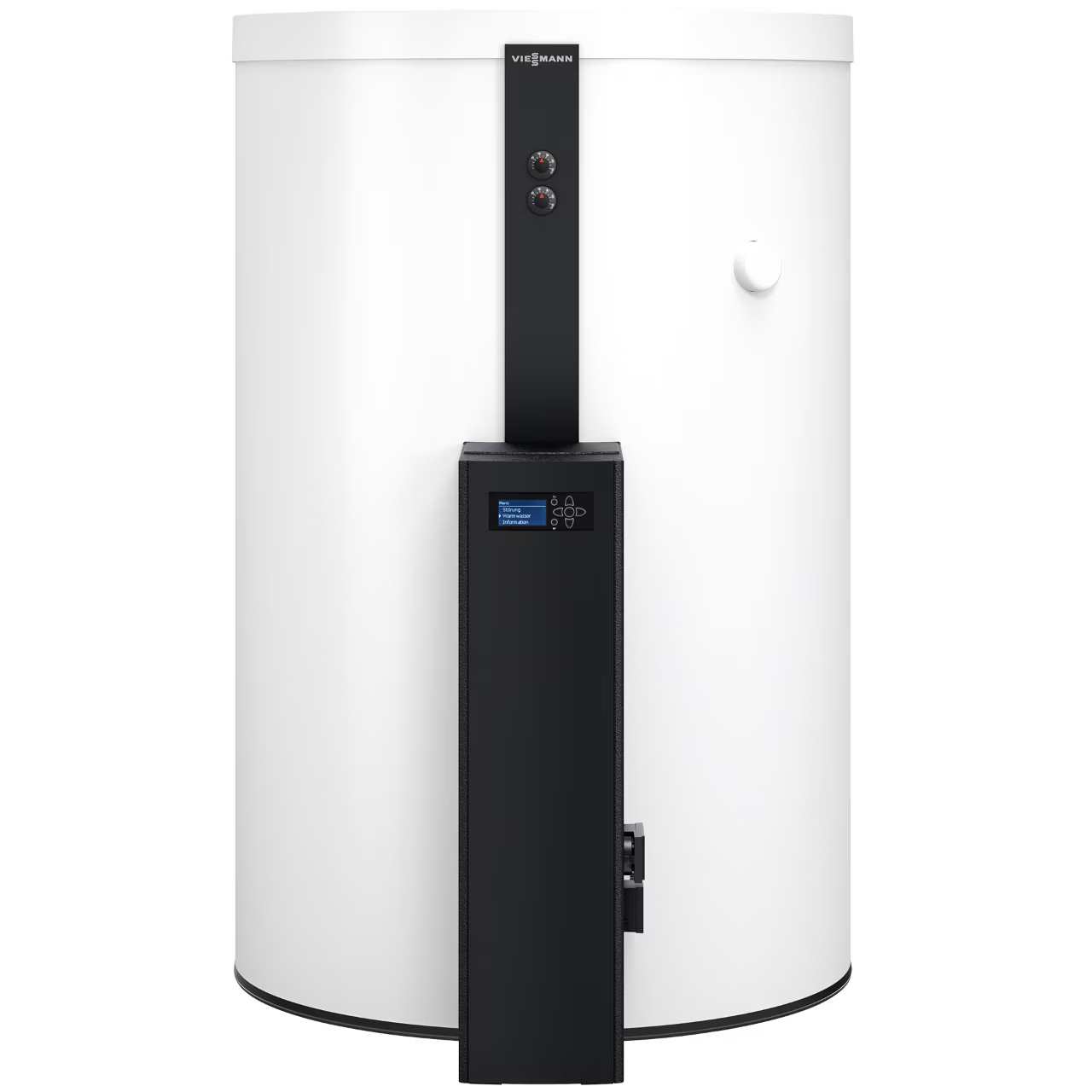
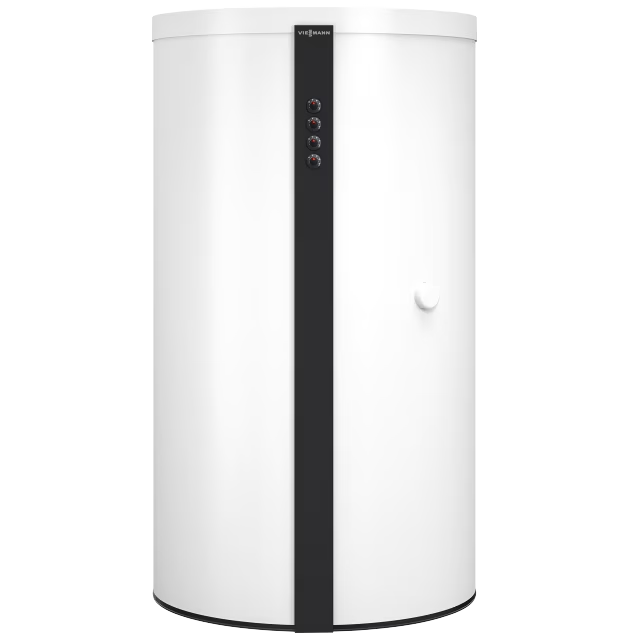
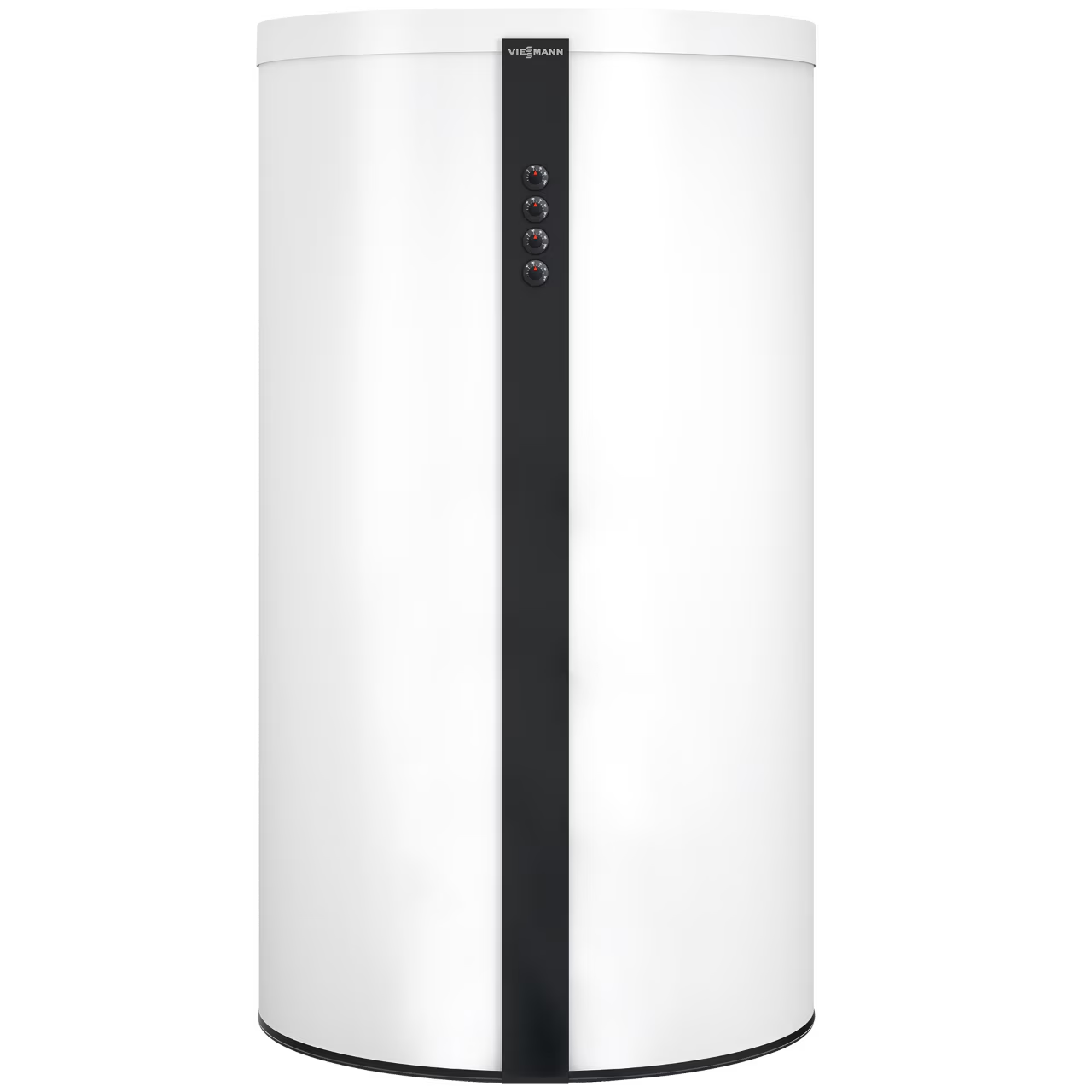
Viessmann heating water buffer tank with fresh water module

Essentially, buffer cylinders store thermal energy that is not currently needed, allowing it to be released later as needed. Buffer cylinders for hot water are primarily used in situations where heat is not always needed continuously. For example, peak times for heating and hot water in the average household are morning and evening. However, a solar thermal system for backup central heating and hot water production produces its greatest output during the middle of the day. A gas or solid fuel boiler, on the other hand, constantly switches on and off. A buffer tank reduces this cycling and uneven heat output. It provides heat when needed and ensures that the heat generator operates at optimal capacity at all times.

Viessmann offers a wide range of buffer cylinders for domestic hot water and heating. They are equipped differently depending on their primary applications and individual needs. The product range includes solutions for residential buildings, as well as for commercial and local authorities.

The design allows for optimal use of thermal energy

Temporary storage of thermal energy requires a special design. A heating water buffer tank is a steel cylinder equipped with hydraulic connections. The number of connections depends on the model and application. Viessmann water heating buffer cylinders also impress with their comprehensive polyester fleece insulation. This helps minimize heat loss and eliminates the need for additional insulation on the buffer tank.

Meeting individual needs

Depending on the model and circumstances, Viessmann buffer tanks can be connected to an immersion heater, an internal indirect coil for solar collectors, or an additional stratification system. Additionally, a freshwater module or a corrugated DHW pipe can be supplied as an accessory if the buffer tank is intended for hot water supply.

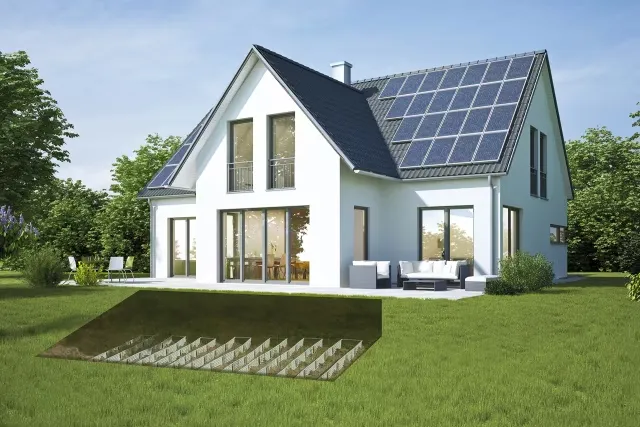
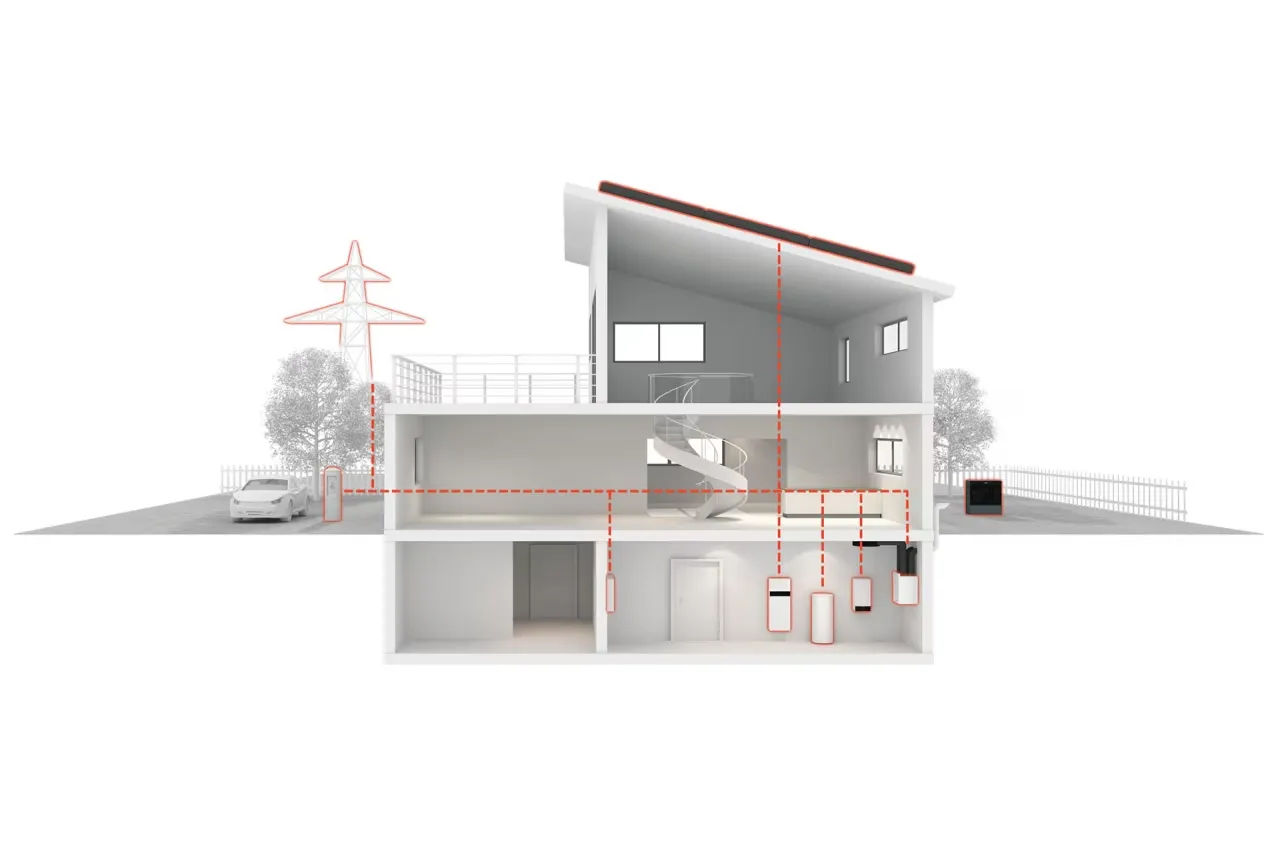
A typical house with a heating system and a buffer tank for heating water in the basement.

How does a buffer tank work?

A buffer tank is always located between the heat generator and the heat consumers. The boiler heats the heating water, which passes through the buffer tank. The flow from the heat generator mixes with the cold return water from the heat consumers (radiators) in the buffer tank. This raises the water temperature so that it can be supplied to the radiators when needed. The cold return water from the heat consumers then flows back into the heating water buffer tank. If the cylinder also provides domestic hot water, the consumers operate not only the radiators but also other draw points such as faucets, showers, bathtubs, and dishwashers.

The density of water depends on its volume and temperature. Therefore, hot water is always located at the top of the heating water buffer tank. From there, it flows to the radiators. Cold return water from the radiators is located at the bottom of the tank and flows from there to the boiler, where it can be heated. Thus, the boiler, buffer tank, and radiators form a closed system.

Buffer tank for additional heating of hot water supply

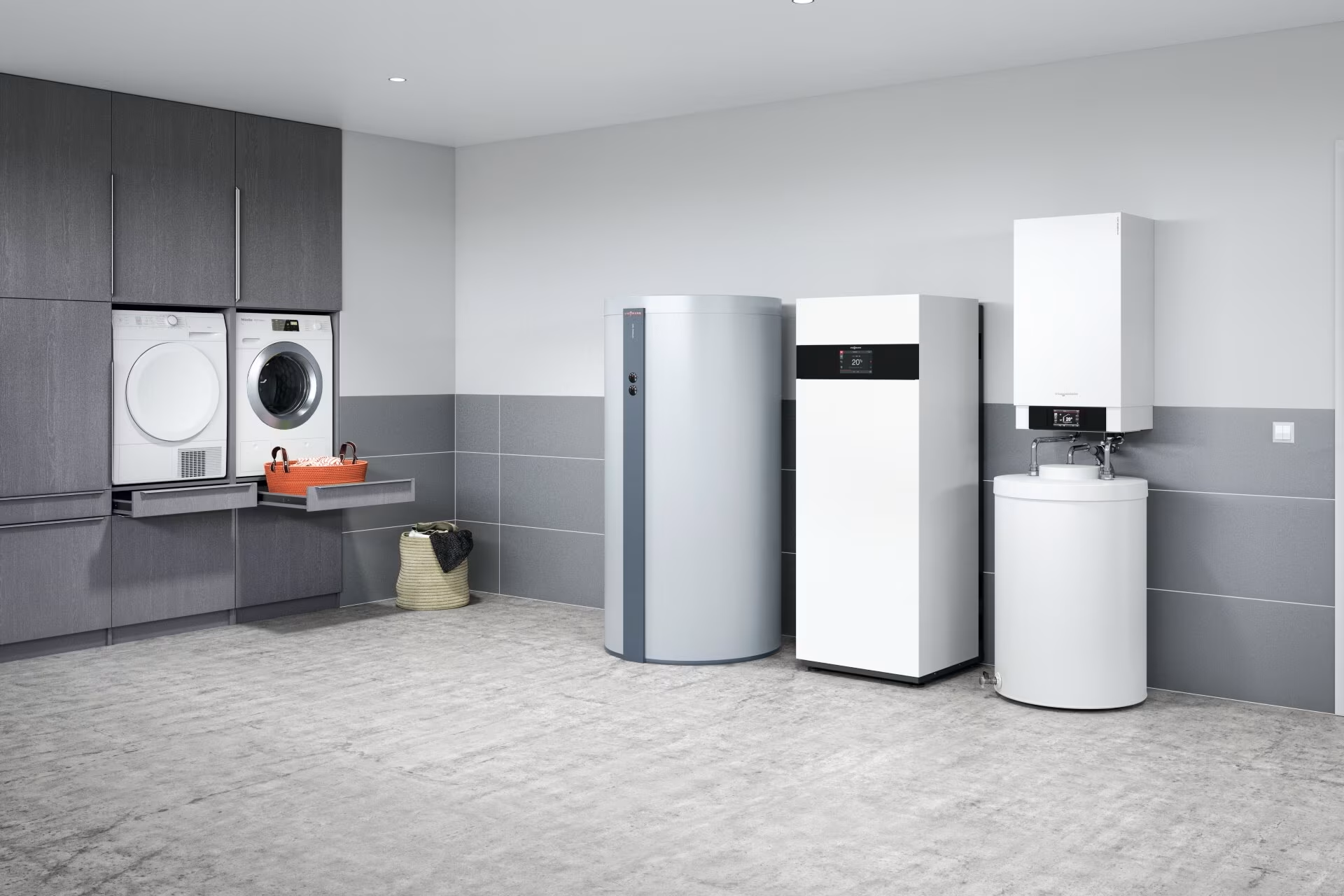
If the buffer tank also heats domestic hot water, it can be supplemented with a Vitotrans 353 fresh water module. It operates on the continuous flow principle. This means that domestic hot water passes through the module, past the hot heating water stored in the buffer tank, and is indirectly heated. This ensures hygienic domestic hot water is heated according to the individual needs of each household. There is no longer any need to store domestic hot water, saving space.

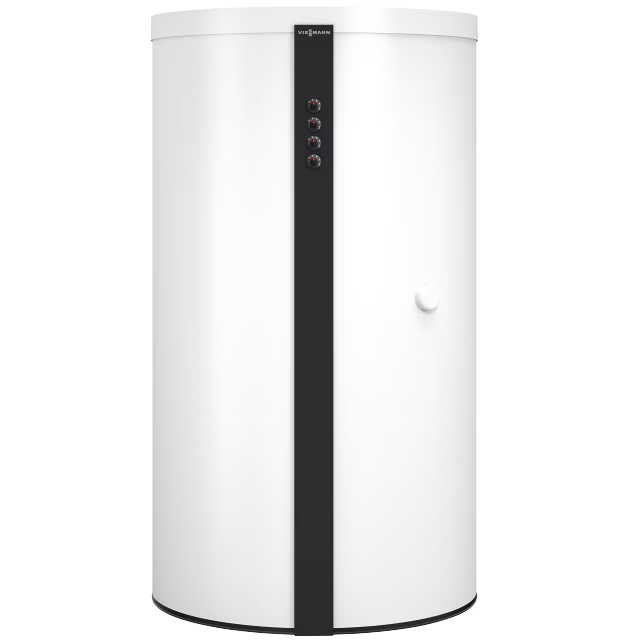
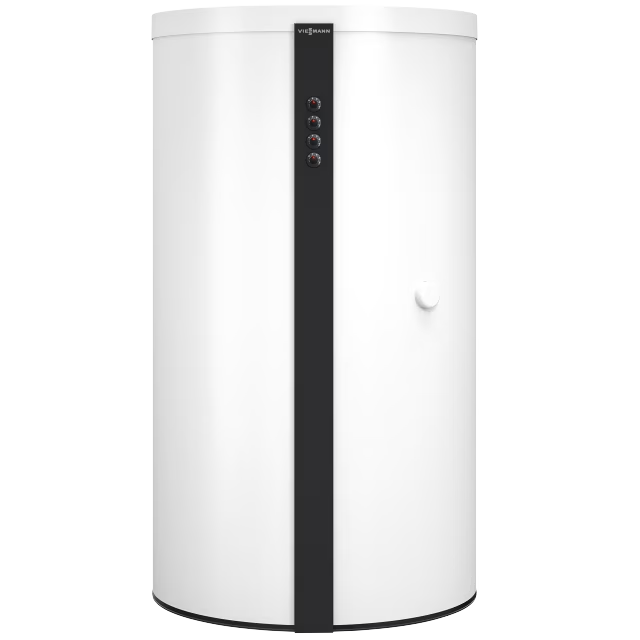
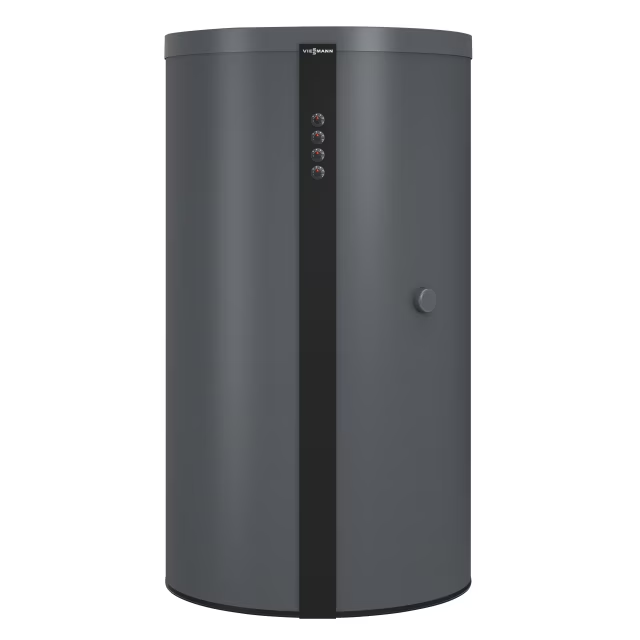
The Vitocell 100-E series includes buffer cylinders with capacities ranging from 46 to 2,000 liters. The Vitocell 140-E model can also be used with a freshwater module. It also features an internal indirect coil, which can be used for applications such as connecting solar collectors. Therefore, this Viessmann buffer cylinder is also suitable for dual-mode heating systems—systems that combine two heat generators.

Viessmann buffer cylinders for heating water

Buffer cylinder with additional stratification system

As mentioned above, water’s density changes with temperature. Hot water is lighter relative to its volume and therefore rises in a vertical vessel. In a buffer cylinder, this effect typically results in mixing. If a cylinder, such as the Vitocell 160-E, is equipped with a stratification system, the cold return water remains at the bottom, while hot tap water can always be drawn from the top. This offers the advantage that the cylinder doesn’t need to be fully heated for hot water to be available at draw-off points, such as a shower or bath.

In addition to the Vitocell 160-E with fresh water module, an additional stratification system is also available for the Vitocell 360-M multi-mode heating water buffer cylinder.

Multi-mode buffer cylinders for heating water from Viessmann

Multi-mode buffer cylinders not only combine water for heating and domestic hot water, but can also be heated by multiple heat generators.

If, for example, the heat pump supplies too little heat to meet current demand, an additional heat generator is used. This is similar to connecting a buffer tank to a solar thermal system. The Vitocell 340-M is a compact and space-saving solution – a buffer tank that heats domestic hot water via a flexible, non-stressed corrugated stainless steel pipe. This pipe is integrated into the cylinder as a spiral through which fresh domestic hot water flows. This water is heated by the hot heating water. Therefore, there is no need for a separate cylinder for domestic hot water, as the water is heated as needed. This, along with the use of stainless steel as a material, ensures hygienic domestic hot water heating without the risk of legionella formation. The integrated internal indirect steel heat exchanger also allows for the connection of solar collectors.

New VDI Guidelines 2035

In this video, you can learn more about the new VDI 2035 guideline and why it plays an important role for buffer cylinders.

Ensuring uninterrupted operation

Heating system maintenance also includes monitoring the operation of the heating water buffer tank. This helps ensure trouble-free operation. During a visual inspection, the heating specialist checks the buffer tank, pumps, and valves for damage, corrosion, dirt, and leaks. This is primarily a precautionary measure. The focus here is on the interfaces between components to ensure they are optimally matched. Generally, the Viessmann buffer cylinder requires no special maintenance.

Air valves make maintenance easy

The heat generator, buffer tank, and heat consumers form a closed system. However, there is always a risk of air entering the system. Viessmann’s Vitocell product range includes air vents. With these, your Viessmann partner can easily bleed the buffer tank.

The quality of heating water ensures low costs

The buffer tank contains low-oxygen heating water, so additional rust protection is generally not required. If the water is of a certain quality and meets the technical requirements (according to VDI Directive 2035 – Requirements for Heating Water Quality), the buffer tank does not need to be descaled. This is different with hot water cylinders. Here, tap water flows through hot heat exchangers. Depending on the water hardness, scale may form. Your Viessmann partner will remove this as well.

Other Viessmann guides and tips

Geothermal collectors

Geothermal collectors

Geothermal collectors for brine/water source heat pumps extract heat close to the surface and can be installed without a permit. You can read more about the differences here.

Read more
Gas Heating: Advanced Heating with Condensing Technology

Gas Heating: Advanced Heating with Condensing Technology

Read more
Heat Pump: All information at a glance

Heat Pump: All information at a glance

Read more