Bathroom Ventilation: Options and Tips
Bathroom Ventilation: Due to the high humidity in bathrooms, ventilation is especially important and, in some cases, even required by law. Learn more about bathroom ventilation options in our guide.


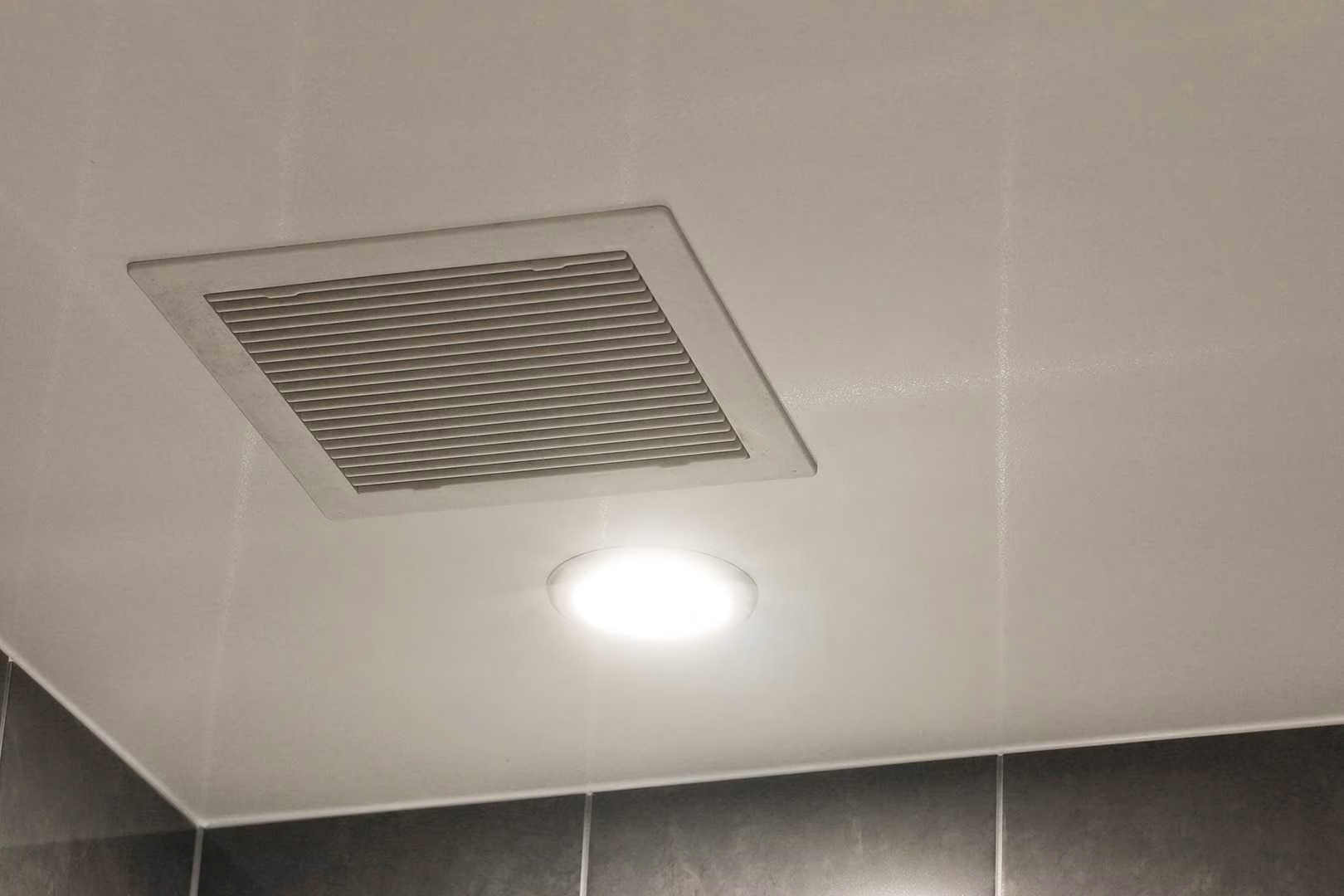
Fan image: © nikkytok / Shutterstock.com
Both central and decentralized systems ensure a consistently good indoor climate. They also prevent mold growth and moisture damage by removing moisture. Heat recovery systems also utilize heat efficiently. This, on the one hand, saves homeowners on heating costs and, on the other, reduces the environmental impact. However, there are some differences between centralized and decentralized ventilation systems.
When comparing centralized and decentralized ventilation systems, it’s important to distinguish between design and functionality. This is because both characteristics influence the area of application and are therefore also important criteria for homeowners.
The central ventilation system consists of a ventilation unit with fans and a heat exchanger, along with a corresponding air distribution system. It ventilates the entire building. The ventilation unit draws fresh outside air and transfers it to the supply ventilation zones (living rooms, bedrooms, or children’s rooms) through a built-in heat exchanger and supply air ducts. At the same time, warm exhaust air from the exhaust zones (bathrooms, kitchens, or toilets) enters the ventilation unit through exhaust ducts and also passes through the heat exchanger. The heat from the exhaust air is transferred to the supply air, thereby being recovered. Cool exhaust air is expelled outside through the exhaust ducts.
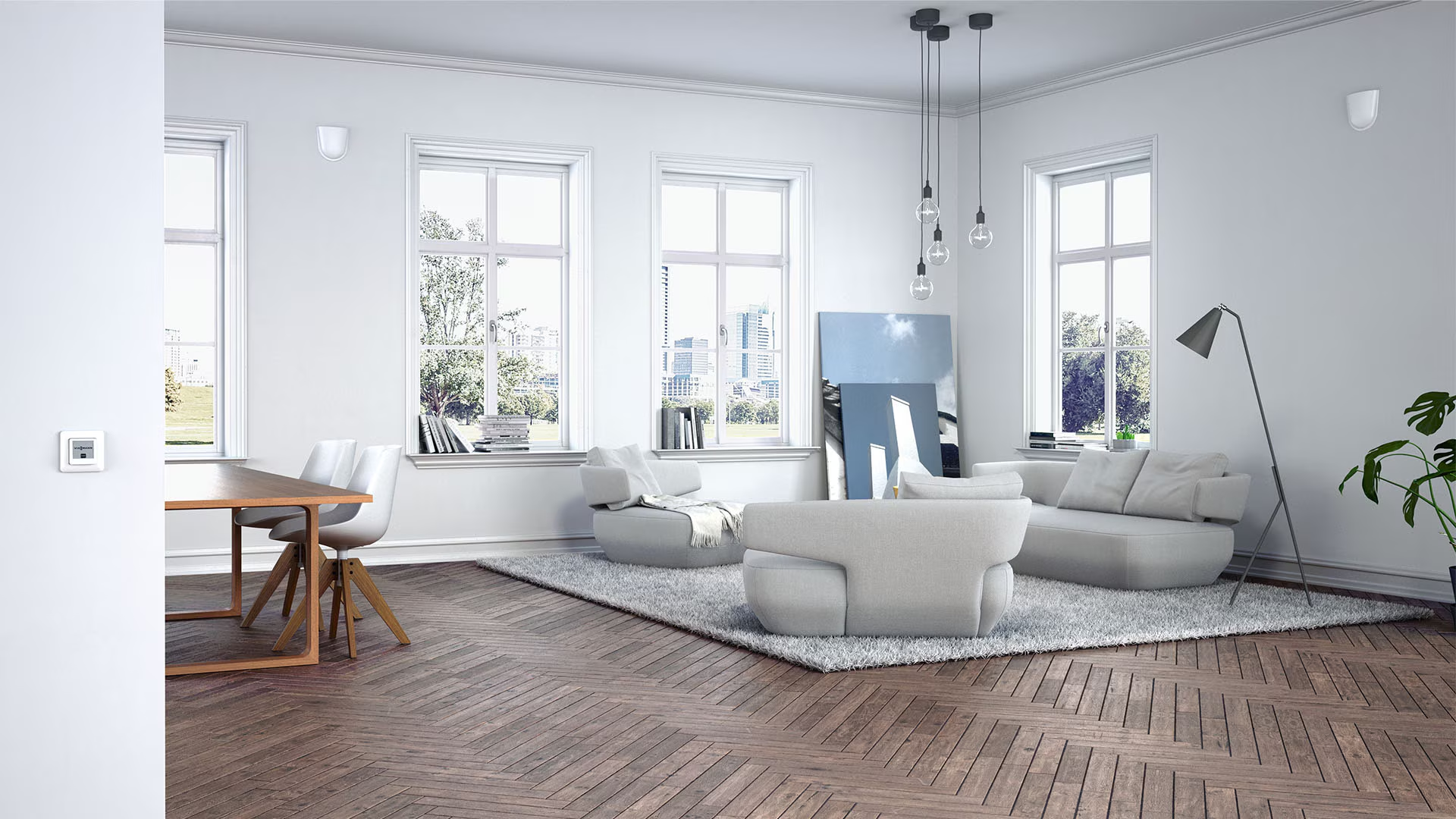
Decentralized mechanical ventilation system Vitovent 100-D
The main difference between central and decentralized ventilation systems is that the latter typically lack ductwork. The units are mounted directly in the exterior walls of individual rooms. Like central systems, Viessmann decentralized ventilation systems are also equipped with a heat exchanger and can extract heat from exhaust air. There are two types of units.
Constant fan : units with a built-in cross-flow heat exchanger. Two fans operate continuously. One fan always supplies fresh outside air to the room, while the other removes exhaust air.
Pendulum fan : These systems use only one fan and one heat accumulator. The two units communicate with each other based on air exchange rates. One unit draws warm indoor air through the heat accumulator and expels it outside. The second unit draws fresh outdoor air and directs it into the room through the previously heated heat accumulator. After approximately 70 seconds, the process reverses.
The section on decentralized mechanical ventilation explains what is important when using such a system.
Unlike decentralized mechanical ventilation, the centralized option offers the option of moderate heating of the room. All Viessmann central ventilation units are equipped with an automatic summer bypass. It bypasses the heat exchanger during warm summer nights. This allows fresh night air to enter the room and cool it to some extent.
The choice of ventilation system installation—central or decentral—depends largely on the building’s characteristics. Due to its nearly invisible installation and the associated high design complexity, the central option is most often used in energy-efficient new buildings. Suitable locations for installation include utility rooms, basements, or well-insulated attics.
Since an air distribution system is not required, decentralized systems, on the other hand, can also be easily retrofitted. Depending on the system type, only a hole in the exterior wall is required. This feature makes decentralized ventilation systems very attractive for retrofitting both older and existing buildings. Furthermore, units can be installed specifically in individual rooms where, for example, humidity is a problem. However, decentralized units can also ventilate entire residential buildings. A wide range of possible applications and relatively simple installation are two decisive advantages of decentralized mechanical ventilation.
Depending on the building’s characteristics, a central mechanical ventilation system can also be upgraded. This typically requires lowering the ceiling. Ceiling-mounted or wall-mounted flat-panel ventilation units, such as the Vitovent 200-C or Vitovent 300-C , are designed to maintain a low overall height.

Get a free, personalized consultation on Viessmann ventilation systems from our qualified sales partners!
Request a consultation now →When comparing central and decentralized ventilation systems, it becomes clear that the former deliver a greater airflow. This is because the entire airflow in the system is provided by a single unit. Central systems are designed to ventilate the entire house. The required air volumes for individual rooms are calculated in advance and adjusted using valves. The overall air volume is set on the ventilation unit itself. The user can also adjust individual ventilation levels as needed using the control unit. Only two external wall diffusers are required for fresh and exhaust air. As mentioned, decentralized ventilation units ventilate only individual rooms. Therefore, airflow is lower. A system must include several decentralized units. Each decentralized unit requires an external wall diffuser.
All Viessmann central ventilation units are equipped with fans with constant air flow. This allows for easy adjustment of the ventilation unit’s operation. During commissioning, the required air flow is set directly on the ventilation unit. By maintaining a constant air flow, the ventilation unit can compensate for filter contamination and always provide the required air flow in individual rooms. The section on ventilation systems explains what to consider when searching for the right system.
Depending on the design, there’s another significant difference between central and decentralized ventilation systems: noise level. Due to the placement of system components outside living spaces and the installation of sound attenuators, central ventilation systems are typically quieter than decentralized systems. However, the noise level also depends on the design, adjustment, and placement of the diffusers. If the individual components are well-matched, there’s no air noise.
All Viessmann ventilation units are factory-installed and operate extremely quietly. Additional soundproofing measures can be implemented if needed.
The installation of a central or decentralized ventilation system also affects cost. However, it’s impossible to make a definitive statement. Careful consideration of all factors is required. Decentralized ventilation systems are more cost-effective for retrofits because they don’t require a distribution system. In new construction, a central system is often a more economical choice because the air distribution system is installed during construction.
Whether a ventilation system is centralized or decentralized also affects its maintenance. Maintenance is absolutely essential for hygienic operation. All ventilation systems have filters that trap dirt. These must be cleaned or replaced regularly. In the case of a centralized system, this applies to filters in the ventilation unit and in the exhaust air valves. An outdoor air filter prevents dirt from entering the outside air. For allergy sufferers, pollen filters can also be used. An exhaust air filter protects the ventilation unit from indoor pollution and ensures a consistently high level of heat recovery. In contrast, filters in decentralized systems are located in each individual ventilation unit.
All Viessmann ventilation units are designed in such a way that filter maintenance can be carried out without tools and by the system user.
Bathroom Ventilation: Due to the high humidity in bathrooms, ventilation is especially important and, in some cases, even required by law. Learn more about bathroom ventilation options in our guide.

A controlled mechanical ventilation system ensures comfortable indoor conditions and may even be required by law. Learn more here!
Want to save on heating costs with mechanical ventilation? We’ll explain how and what it requires.