
Photo: © Krasula / Shutterstock.com
Topics at a glance
Of all heating fuels, wood has the longest history. Due to climate change and the resulting energy transition, as well as rising prices for natural gas and fuel oil, people are increasingly choosing to heat with wood. Thanks in no small part to modern technology, wood heating systems, also known as solid fuel boilers , offer several advantages over other heating systems. Wood is a particularly environmentally friendly fuel. It is a renewable resource and has an excellent life cycle assessment. When burned, it releases only as much CO₂ as it absorbed during its growth. The same amount of CO₂ is released during the natural decomposition of wood. Heating with wood is relatively inexpensive. This is because the fuel is usually sourced directly from local forests, eliminating CO₂ emissions from lengthy transportation.
And finally, most importantly: AHI Carrier’s modern, innovative heating technology ensures highly efficient wood combustion, making the fuel even more economical. All heating systems are made of durable, stable, and robust materials and are optimized for wood heating. In addition to high efficiency, they offer a high level of safety and are easy to operate. Sophisticated control and safety features ensure they are efficient and reliable.
Types of wood heating systems
Wood heating systems have undergone several changes over the past decades. Today, consumers can choose from a wide range of highly efficient heating technologies to suit every need. Once you’ve decided on a wood heating system, the next question is which type is best for you and your property. Wood heating systems, also known as biomass heating systems, come in several types:
- log boilers
- pellet boilers
- wood chip boilers
- combination boilers (which can burn logs, pellets and/or wood chips)

Expert advice on wood heating
Free and No Obligation:
Get a free, personalized, no-obligation consultation on our solid fuel boilers from our qualified sales partners!
Request a consultation now →Log boilers can be fed manually
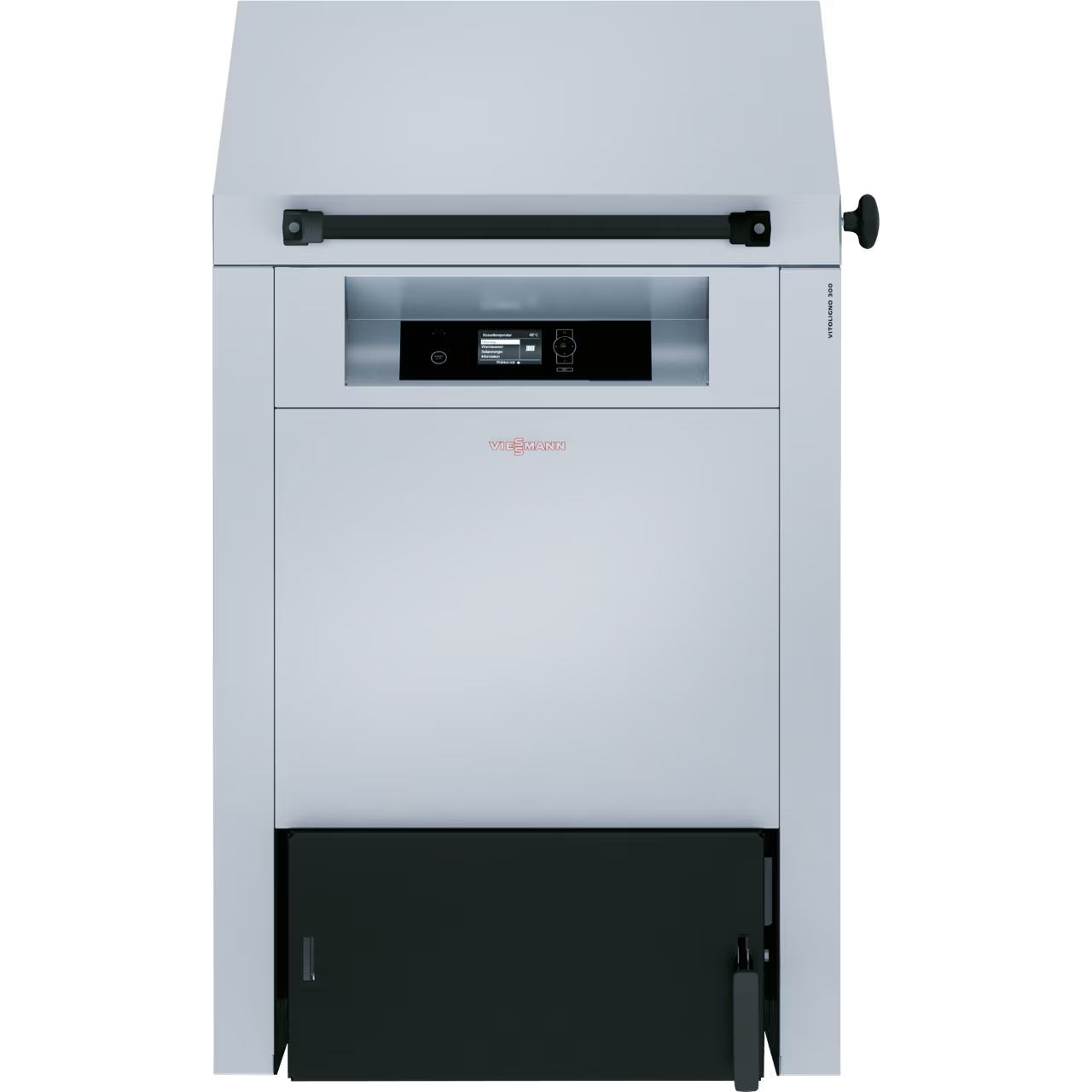
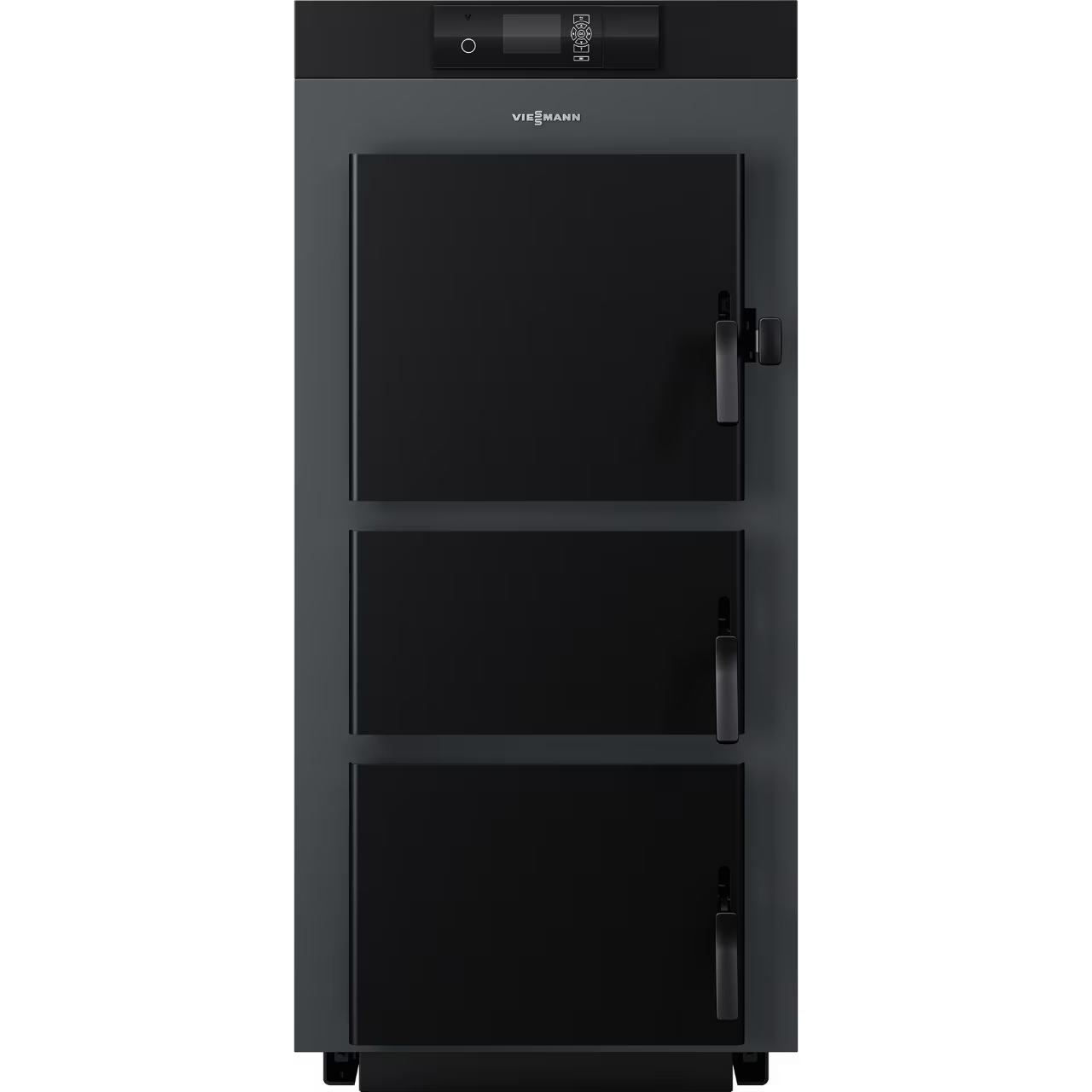
Log boilers are the most traditional form of heating – burning split pieces of hardwood or softwood. They can also burn briquettes, which are wood scraps compressed into uniform pieces. They have a higher energy content than logs. Log boilers are typically loaded manually and achieve high efficiency thanks to wood gasification technology. Requiring no special storage or conveyor system, wood gasification boilers are inexpensive compared to other heating systems. The technology itself has been proven for many years, confirming its reliability. Biomass heating systems burning logs are available in a wide range of power outputs and are suitable for both new and existing buildings.
Fuel storage advice: Logs are easy to store. However, to ensure efficient combustion, their moisture content must be below 20 percent. Therefore, it is recommended to store them for several years.
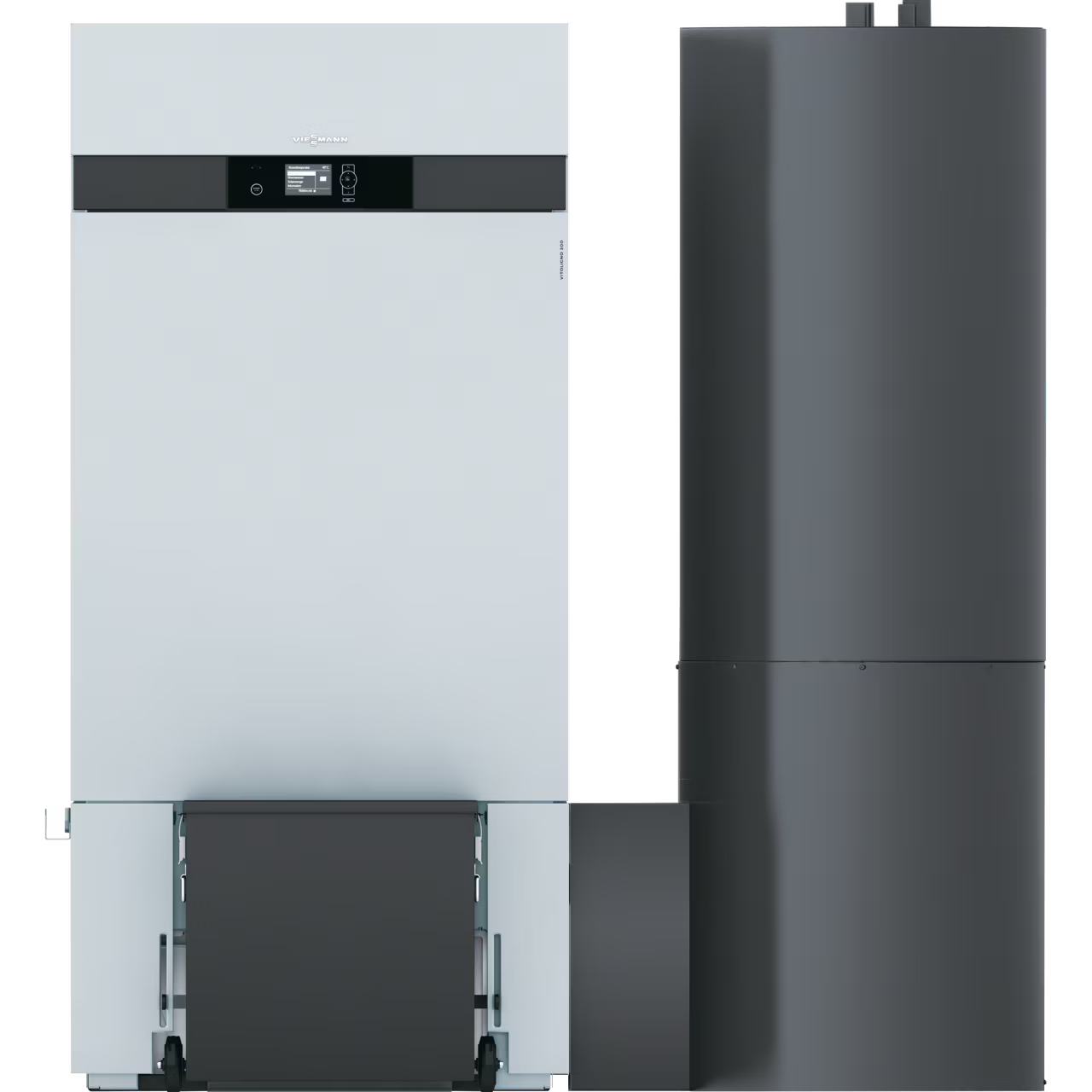
Pellet boilers operate with automatic fuel supply.
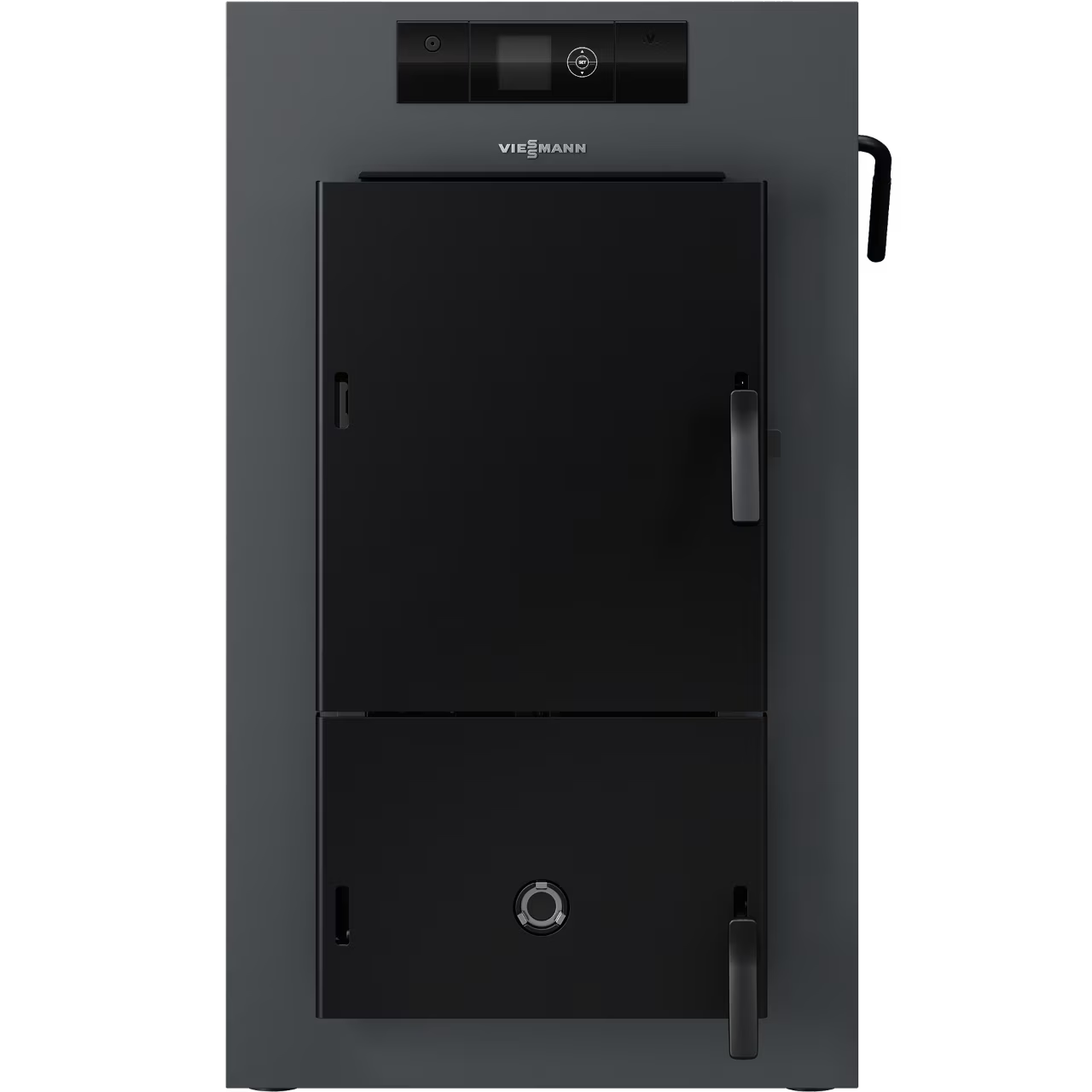
Pellet boilers are available in a variety of power ratings and can be installed in both new and existing buildings. They operate on fine pellets made from forestry or industrial wood waste, making them one of the most environmentally friendly fuels available. They also have a particularly high energy content and, thanks to their uniform shape, can be automatically fed into heat generators, eliminating the need to manually fill these heaters with biomass. Pellet heating systems are more expensive to purchase and install than other heating systems due to the need for fuel storage and a conveyor system. These are necessary to ensure the pellets burn efficiently and produce the maximum energy possible. There are five methods for storing and feeding pellets:
- Storage and feeding to the pellet boiler via a vacuum system
- Pellet hopper with feeding to pellet boiler via vacuum system
- Warehouse with pellet boiler feed via flexible screw conveyor
- Pellet hopper with feeding to pellet boiler via flexible screw conveyor
- Pellet box – flexible and compact storage for pellets
- You can find detailed information about this in the section Storage and supply of pellets .
Fuel purchasing tip: Ensure the pellets you use meet a standard brand quality, such as ENplus-A1 or EN ISO 17225-2 A1. Only 100% unprocessed wood residues are used in the production of wood pellets that meet ENplus and EN ISO 17225-2 standards.
Woodchip boilers use locally sourced wood as fuel.
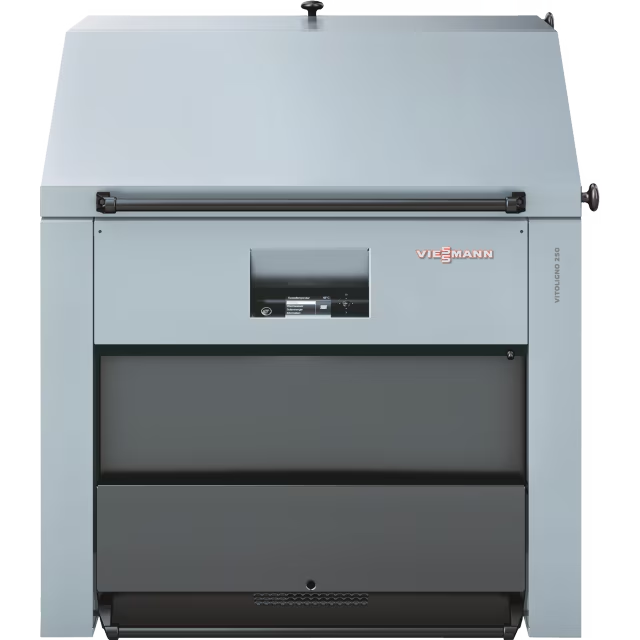
With the exception of the conveyor system, wood chip boilers operate similarly to pellet boilers. The most important difference: They run on wood chips, not pellets. Wood chips consist of dried and crushed forest and industrial residues, as well as firewood. Because they are easier to produce, natural wood chips are less expensive than pellets. They do not have a fixed shape and have a slightly lower and less consistent energy content. They also require more storage space than other biomass fuels. Wood chip boilers can be used in both new and old buildings and are particularly suitable for regions where fuel can be produced inexpensively from forest residues.
Combination wood boilers for pellets, wood chips, logs and briquettes
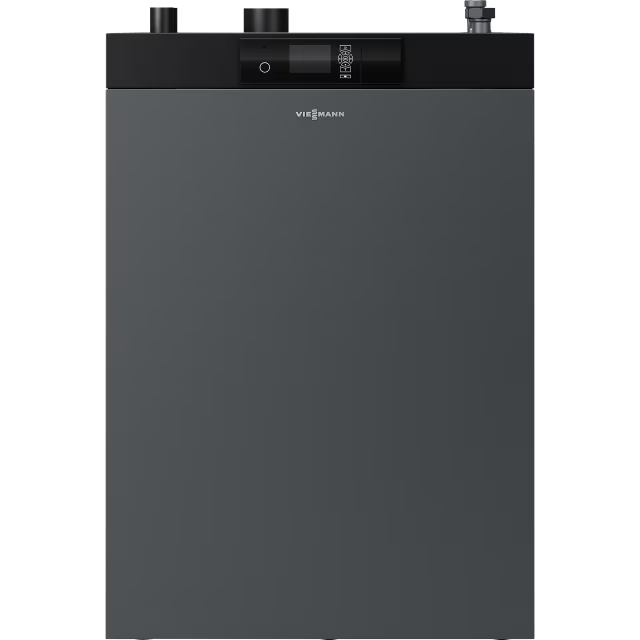
A wood-fired combination boiler is a versatile biomass heating system. It can be manually loaded with logs or wood briquettes, or automatically operated with wood pellets or wood chips. These versatile wood-fired heaters are available in a variety of power ratings and are suitable for heating both new and existing buildings. Compared to heat generators that burn only one type of wood, the purchase cost of a combination log/wood-fired boiler is higher.
Solid fuel boilers - additional information

Biomass as fuel
Learn more about biomass fuel now!
The benefits of heating with wood at a glance
A wood pellet boiler allows for fully automated operation, a wood boiler provides cozy warmth and hot water at a low investment cost, and a combination boiler combines the advantages of all wood heating systems. The benefits of wood heating are numerous. Wood heating makes a valuable contribution to climate protection and offers other benefits as well. Economic considerations are also important. These depend largely on the system’s installation scenario and other factors. With professional planning and implementation, system owners typically experience the following benefits of wood heating.
High reliability with a long service life
Wood heating is considered the oldest form of heat generation using biomass combustion. Wood has provided people with warmth for centuries. Over time, the technology has been repeatedly optimized and is therefore considered very mature. Furthermore, wood heating systems are extremely durable. For example, some wood boilers with a solid cast-iron grate can handle screws or nails driven into the wood without damaging it. They are designed for a long service life. Furthermore, modern biomass combustion systems are fully automated and equipped with control and safety devices for reliable, efficient, and safe operation.
Convenient hot water supply and central heating
AHI Carrier wood-burning boilers can operate efficiently in both single and dual modes. In addition to providing domestic hot water, these boilers can also provide pleasant warmth during the winter months. Properly sized, the boiler operates according to the needs of each application, preventing unnecessary heat loss. A built-in combustion controller also ensures efficient energy consumption while reducing emissions.
Wood heating systems are ideally combined with solar technology
With rising fossil fuel prices and growing environmental awareness, clean energy production is becoming increasingly important. The German government, for example, has set a goal of increasing the share of renewable energy sources to 60 percent by 2050. One of the advantages of wood heating is that it can be combined with other systems, such as solar. Using both of these technologies not only helps users protect the environment but also significantly improve their energy self-sufficiency.
As mentioned, beyond the economic aspects, there are also numerous environmental benefits when homeowners choose wood heating. Two notable advantages are independence from fossil fuels and the sustainability of the source.
Independence from oil and gas
Oil and gas prices are highly dependent on economic and political fluctuations and are difficult to predict. However, the overall trend is upward, not least because oil and gas are limited resources. Wood, on the other hand, is very economical and, as a local fuel, is not subject to sharp price fluctuations.
Indeed, fuel gas can be produced from renewable energy sources. However, this development is progressing slowly. Thus, independence from fluctuating fossil fuel prices is one of the many advantages of heating with wood.
Clean, renewable fuel
Burning wood only releases as much CO₂ as the trees absorbed during their lifetime. Therefore, heating with wood is CO₂ neutral. Furthermore, the fuel typically comes from regional forests and does not need to be transported long distances. As wood heating has become increasingly popular in recent years, some companies have begun importing wood fuel from abroad. This cheap wood is sometimes of poor quality and burns poorly. Furthermore, it is not always possible to determine whether the fuel was obtained from illegal logging or from sustainable forests.
Therefore, it’s always important to pay attention to the origin of your firewood and, whenever possible, choose locally produced wood. Certificates such as EN Plus for pellets are a good guide when choosing wood fuel. Purchasing from local sellers ultimately reduces the environmental impact and supports the regional economy.
High reliability of supply
In addition to environmental and economic benefits, wood heating systems provide a highly reliable energy supply. Firstly, wood heating is the only renewable energy source capable of providing heat from -25 to +20 degrees Celsius, regardless of the weather. Furthermore, the raw wood grows locally, making wood heating system owners independent of global crises.
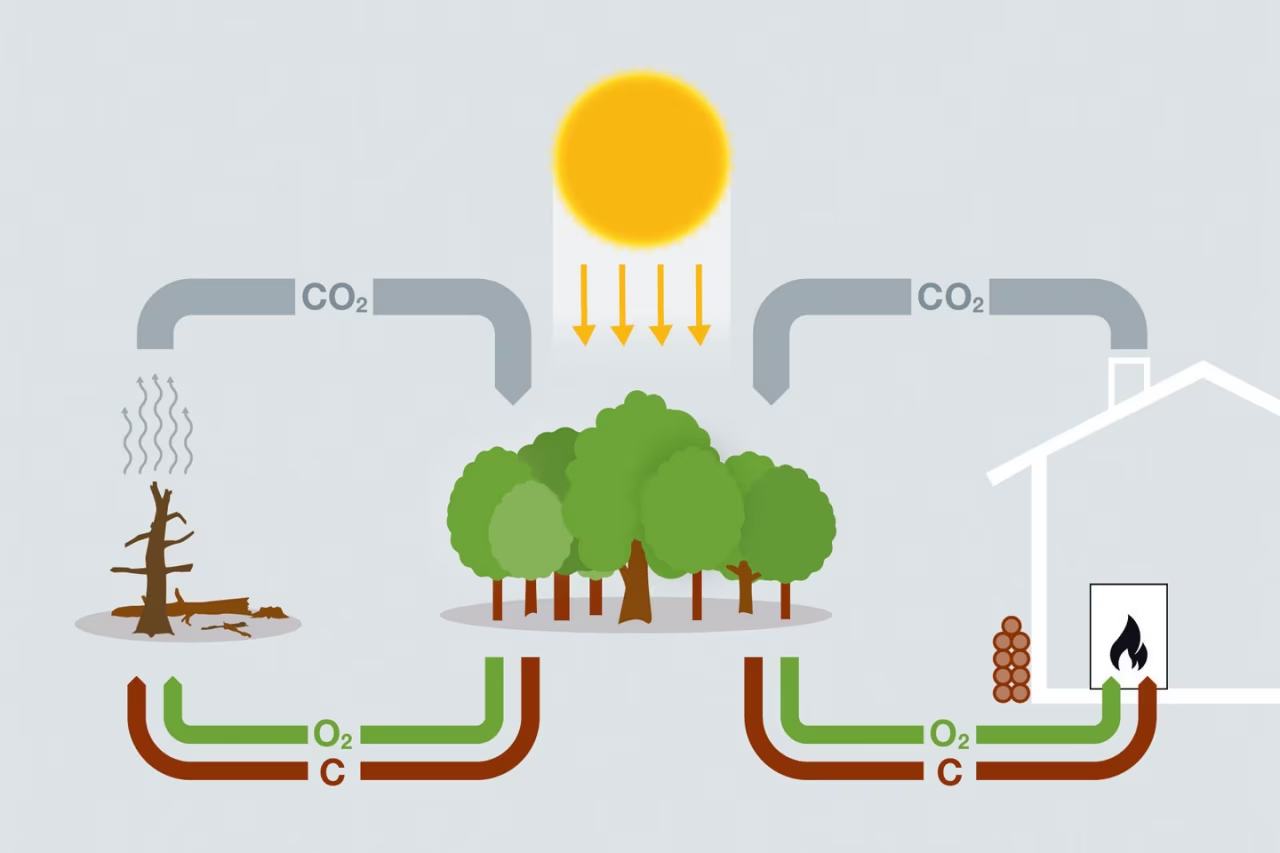
The CO2 cycle: wood decomposition (left), photosynthesis (center), and wood combustion (right)
Potential savings using the Vitoligno 300-C as an example
The Vitoligno 300-C is an efficient solution for new construction, designed to meet low-energy standards. The boiler boasts low energy consumption, making pellet heating very convenient. Almost everything is automated, from charging to cleaning. The following table illustrates the savings potential.
| Technology | Saving gas | CO₂ savings/year | Energy cost savings/year |
|---|---|---|---|
| Pellet boiler Vitoligno 300-C* | 100% | 70% | €1990 |
| Vitoligno 300-C pellet boiler + hot water heat pump + photovoltaics + energy storage* | 100% | 78% | €2190 |
*The values shown were determined through simulation using standard household profiles for Potsdam. A single-family house with a four-person household (existing with a gas boiler) has 150 square meters of living space and a gas consumption of 2,500 cubic meters. Consumption costs are rounded using standard values (EID). Energy prices from the Federal Statistical Office were used to calculate cost-effectiveness. Investment costs: AHI Carrier gross list price plus average installation costs nationwide (may vary individually).
Note: Our calculations are theoretical examples based on various assumptions and subject to certain general conditions. We assume no liability for their accuracy or applicability to real-world systems. Actual costs and potential savings may vary and should be calculated on a case-by-case basis based on the specifics of a particular location and general conditions.
Detailed information on potential savings is provided in our Modernisation Compass brochure, which is available here in PDF format:
Buying Tips: Key Facts
An important factor to consider when purchasing a wood heating system is heat demand. For the system to operate efficiently, it must be properly sized. An oversized wood heating system will consume unnecessary energy. A system that is too small may not be able to provide the required amount of heat, leading to either excessive heating costs or a loss of comfort. The required heating output can be determined using a heat load calculation . The contractor calculates the required heat load to heat the building to the specified temperature. This calculation also takes into account transmission and ventilation losses, as well as the additional heating output. Other important factors include:
Available Space: When purchasing a wood boiler, homeowners should consider space requirements. Depending on the heating type, some systems will require more space for fuel supply equipment and storage.
Purchase Cost: The cost of a new wood heating system is also a significant factor. Generally, log heating systems are less expensive than pellet and woodchip systems. However, they require manual addition of fuel.
Suppliers: Like many other products, you can buy wood boilers online. However, experts advise against this. It’s best to invite a heating contractor to your site. They can provide detailed advice and quickly determine the size and type of heating system you need. They can also advise you and respond quickly if any issues arise after installation.
You can find further tips and information in the wood heating guide at heizung.de .
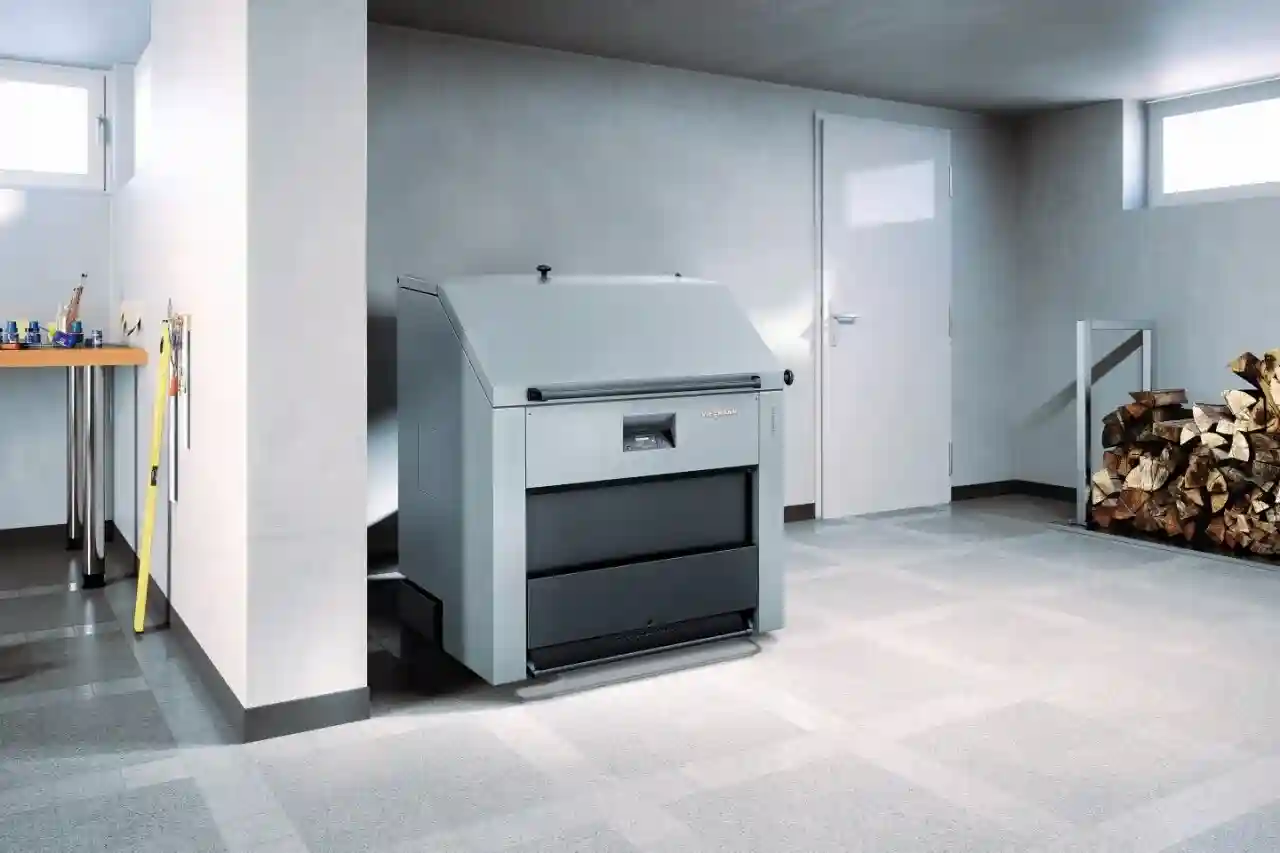
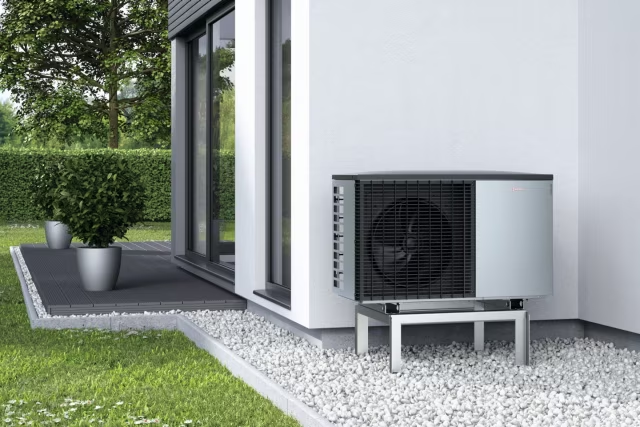
AHI Carrier Vitocal 200-A
Frequently asked questions about wood heating
Can wood heating be used effectively everywhere? Which is better: logs or pellets? Where can I buy wood fuel? In this section, we’ve compiled the most frequently asked questions and answers about wood heating systems.
Can anyone heat with a wood boiler?
AHI Carrier wood-burning boilers are so easy to use that they can provide heat for virtually any detached house or apartment building. A key requirement is a dry storage area, as residual wood moisture is a critical factor influencing combustion quality. Modifications, such as chimney installations, are generally not required.
AHI Carrier wood-burning heating systems are also an excellent complement to oil and gas heating systems.
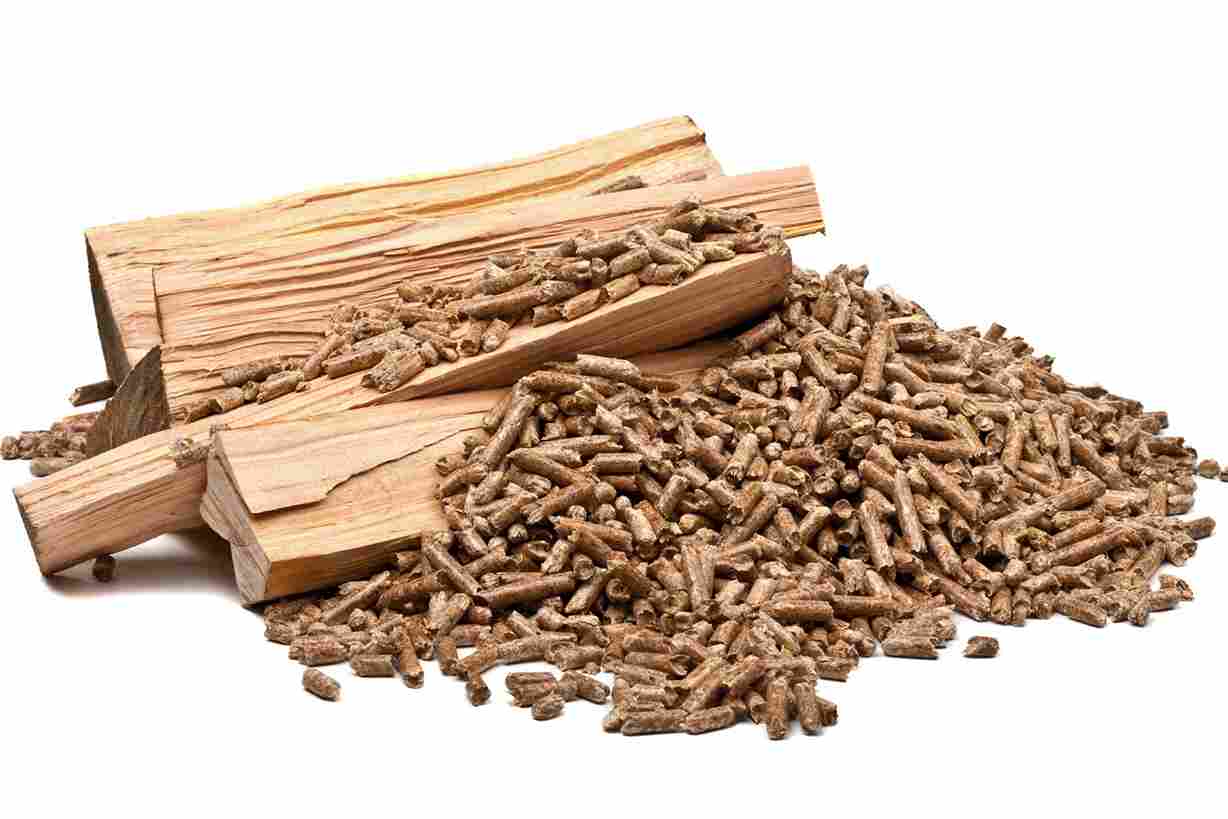
(Photo: © gualtiero boffi / Shutterstock.com)
Which is better - heating with logs or pellets?
Logs are an ideal choice for those who can source their own fuel, such as from local forests. The wood must be properly seasoned, meaning it must be stored until it reaches the lowest possible residual moisture content. Pellets are made from sawdust and pressurized. Their low residual moisture content gives them a high net calorific value. Pellets are easier to transport and store. Feeding and dosing into a wood heating system is automated and convenient.
Since both types of wood fuel have their own strengths and weaknesses, this question cannot be answered definitively. It is important that the boiler is suitable for the building and best meets the heating needs of all residents. A heating contractor can usually provide detailed, customized advice.
Is it always necessary to use a buffer cylinder?
A buffer tank captures heat generated by the boiler and stores it. This has two advantages: it ensures a continuous heat supply and prevents the need for frequent combustion restarts. This increases the boiler’s service life and ensures highly efficient fuel combustion. Use of a buffer tank may be a requirement for government subsidies.
The buffer tank takes up little space, but in most cases it ensures economical operation of the heating system.
Where can I buy wood fuel?
Wood fuel, especially wood pellets, are now the standard fuel for most fuel retailers. Like fuel oil, they are “pumped” into storage, which is quick and easy. Many sawmills and wood processing companies also offer pellets. Logs can be purchased at competitive prices from foresters or farms that are affiliated with forestry enterprises.
When purchasing, look for high-quality products. They are somewhat more expensive, but typically have a higher energy content and better combustion properties. This pays off ultimately when burning. High-quality pellets can be identified by a DIN Plus or EN Plus certificate.
Is wood heating suitable for both old and new buildings?
Many older buildings already have a boiler room. This can also be used for storing wood fuel. This makes wood heating an ideal choice for older buildings. However, wood can, of course, also be used to heat new buildings. In this case, the choice of system is crucial to ensure its efficiency. Simply click the “Request an Expert Consultation” button to receive a free, no-obligation consultation with a AHI Carrier wood heating system specialist.
When is the best time to buy a wood heating system?
There’s no best time to purchase a wood heating system. In practice, most homeowners take advantage of the warm summer months to install a new heating system. The reasons are obvious: central heating is practically unused in summer, and less hot water is needed. Having a good window of time before the next heating season allows for accurate planning.