MENU

The room temperature can be adjusted not only with a thermostatic radiator valve but also with a heating control unit. However, this option is only available to owners of heating systems. Those living in rented accommodation still have to set the desired temperature using thermostats. Adjusting the heating curve not only ensures the desired temperature is achieved but can also improve thermal comfort and reduce heating costs.

Heating curve function

A characteristic heating curve, as the heating curve is called in technical jargon, is a graphical representation of a mathematical formula. It describes the relationship between the outside temperature and the flow temperature. This means that if the outside temperature changes, it directly affects the flow temperature. The latter is the temperature of the heating water that flows from the heat generator to the radiator or heating system. Flow temperature has a significant impact on the efficiency of the heating system and is therefore a key factor when setting the heating curve.

It shouldn’t be set too high or too low. If the flow temperature is too high, heat loss increases, while if it’s too low, the house won’t warm up sufficiently. To find the optimal flow temperature, it’s worth trying different settings. It’s recommended to keep a log of your settings, flow temperature, and outside temperature. It’s also a good idea to consult with a contractor who can help you find the right values.

Heating curve adjustment is only performed in weather-compensated heating systems. In such systems, the outside temperature serves as the control variable, and the flow temperature responds to changes in the outside temperature. Simply put, the lower the outside temperature, the higher the flow temperature. These heating systems have one or more outside temperature sensors to record the outside temperature.

In addition to the outside temperature, when setting the heating curve, you must also consider the setpoint temperature or room setpoint. This is the desired temperature for the rooms. If the temperature drops below this setpoint, warm heating water should flow to the radiators if the heating curve has been adjusted optimally.

Image

Slope and level as key variables

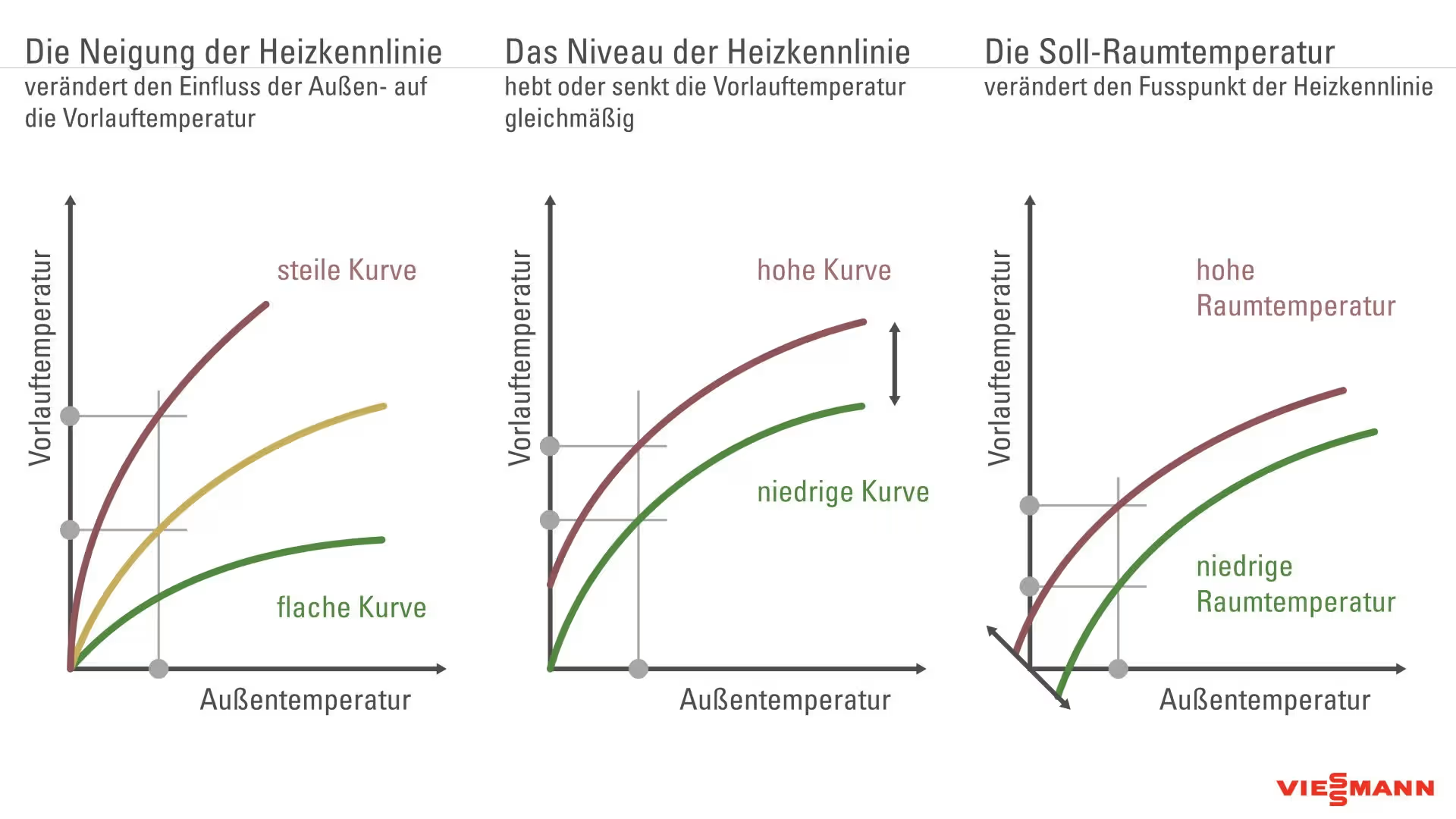
To adjust the heating curve, system owners have two key variables at their disposal: the slope and the level of the heating curve. The heat generator uses the slope to determine how sharply it should adjust the flow temperature as the outside temperature changes. The slope can be very steep or very flat. This depends, among other things, on the desired room temperature and the building’s energy status. If the heated house loses little heat due to good insulation, a flat curve is sufficient. However, if there is significant heat loss through the building envelope, a steeper slope is necessary to prevent a loss of comfort.

While the slope affects the behavior of the heating curve, the level allows for uniform adjustments of the flow temperature, either upward or downward. This means, for example, that if the rooms are cooler than desired, the heating curve level should be increased. If, on the contrary, the room is too warm, a decrease in the level is appropriate.

How to properly adjust the heating curve – video tutorial

Click the play button to watch the video. Please note that when you watch the video, data will be transferred to YouTube. For more information, please see our privacy policy.

If you have a Viessmann weather-compensated heat generator, you can adjust the heating curve in just a few steps, thereby affecting the boiler’s heating characteristics. The procedure is virtually identical for all heat generators and is described in the relevant operating instructions. This tutorial is based on the Vitodens 300-W wall-mounted gas condensing boiler, part number 5817263, manufactured on 01/05/2018.

Image

How to set the heating curve correctly

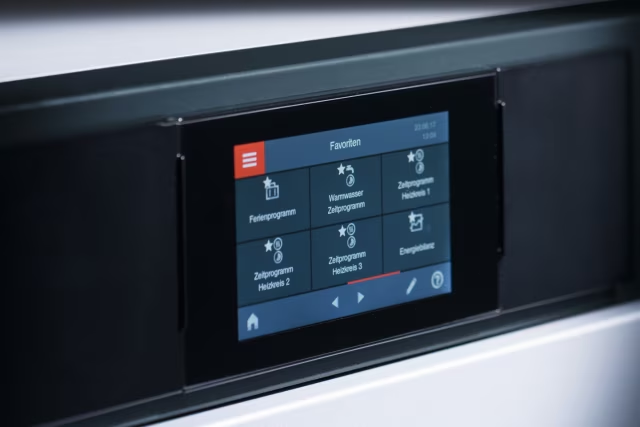
  1. Click on “Menu” or the menu symbol
  2. Then click on “Heating”
  3. Now select the desired “Heating circuit”
  4. Click on “Heating Curve”

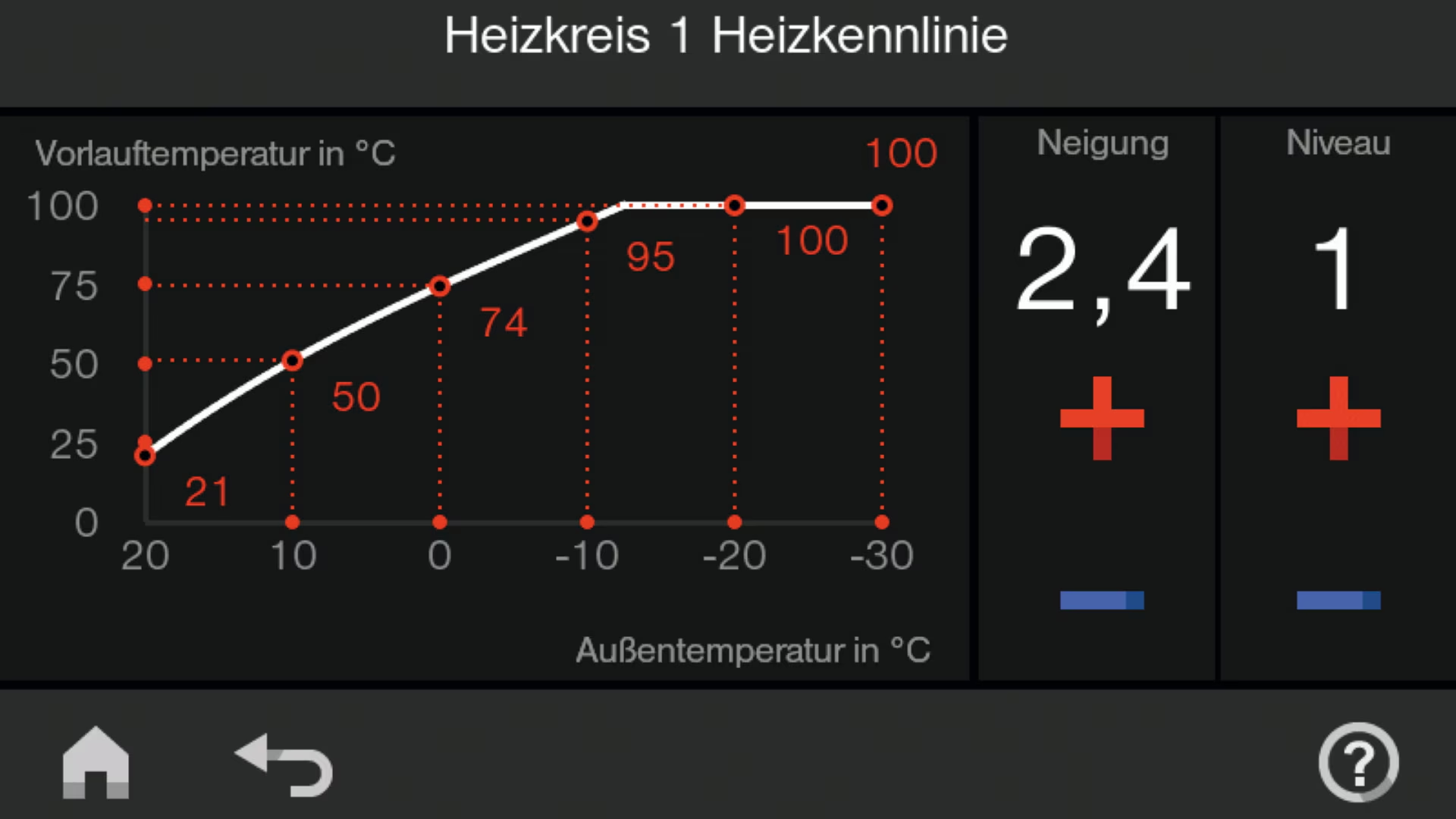
Use the +/- buttons to change the slope and level of the heating curve. The factory setting is 1.4 for slope and 0 for level. You can accept the change using the arrow symbol.

The graph clearly shows how the heating curve changes as you change the slope or level. The assigned flow setpoint temperatures for the heating circuit (shown on the vertical axis) are plotted against different outside air temperatures (shown on the horizontal axis).

Which values ​​are correct?

The slope and level you set depend on many factors, so it’s impossible to give a general answer. Besides the building’s thermal insulation, the type of radiators installed also plays a role.

However, the following standard values ​​for slope can be used as a guide:

  • 0.3 – 0.5 in a well-insulated house with underfloor heating
  • 1.0 – 1.2 for a well-insulated house with heating radiators
  • 1.4-1.6 for an old, detached building with radiators.

The following adjustments can be made to the heating curve level in an existing system:

  • If the room temperature is generally too low: Increase the level
  • If the room temperature is too low, especially on cold days: increase the slope
  • If the room temperature is too low in spring/autumn, but sufficient on cold days: increase the level and decrease the slope.
  • If the room temperature is too high in spring/autumn, but sufficient on cold days: lower the level and increase the slope

Benefits of an optimally adjusted heating curve

By optimizing the heating curve, system owners can ensure their heat generator produces only the amount of heat needed to achieve the desired room temperature. In addition to improved comfort (no longer too cold or too hot), this offers, first and foremost, financial benefits. Since less energy is required in the form of fuel, heating costs are reduced in the long term. Using fossil fuels such as gas or oil reduces the environmental impact.

A heating engineer helps set the optimal heating curve

To achieve the best results and avoid potential errors, it’s recommended to consult a heating contractor when first setting up your heating curve. Our local partner search will help you find a suitable heating contractor near you in just a few steps. You can also reach out to the Viessmann community.

Other Viessmann guides and tips

Open and closed loop heating control

Open and closed loop heating control

Read more
Activation of the night rollback

Activation of the night rollback

Read more
Heating check

Heating check

Read more
Topping up water for heating

Topping up water for heating

Read more
Hydrodynamic balancing

Hydrodynamic balancing

Read more
Heating season

Heating season

Read more