MENU

Pellet heating is a special form of wood heating that combines the clean heating technology of a log boiler with the superior ease of use of a wall-mounted gas heater. It is also available in a wide range of power outputs, making it suitable for virtually any heating need.

Design and operation of a pellet heating system

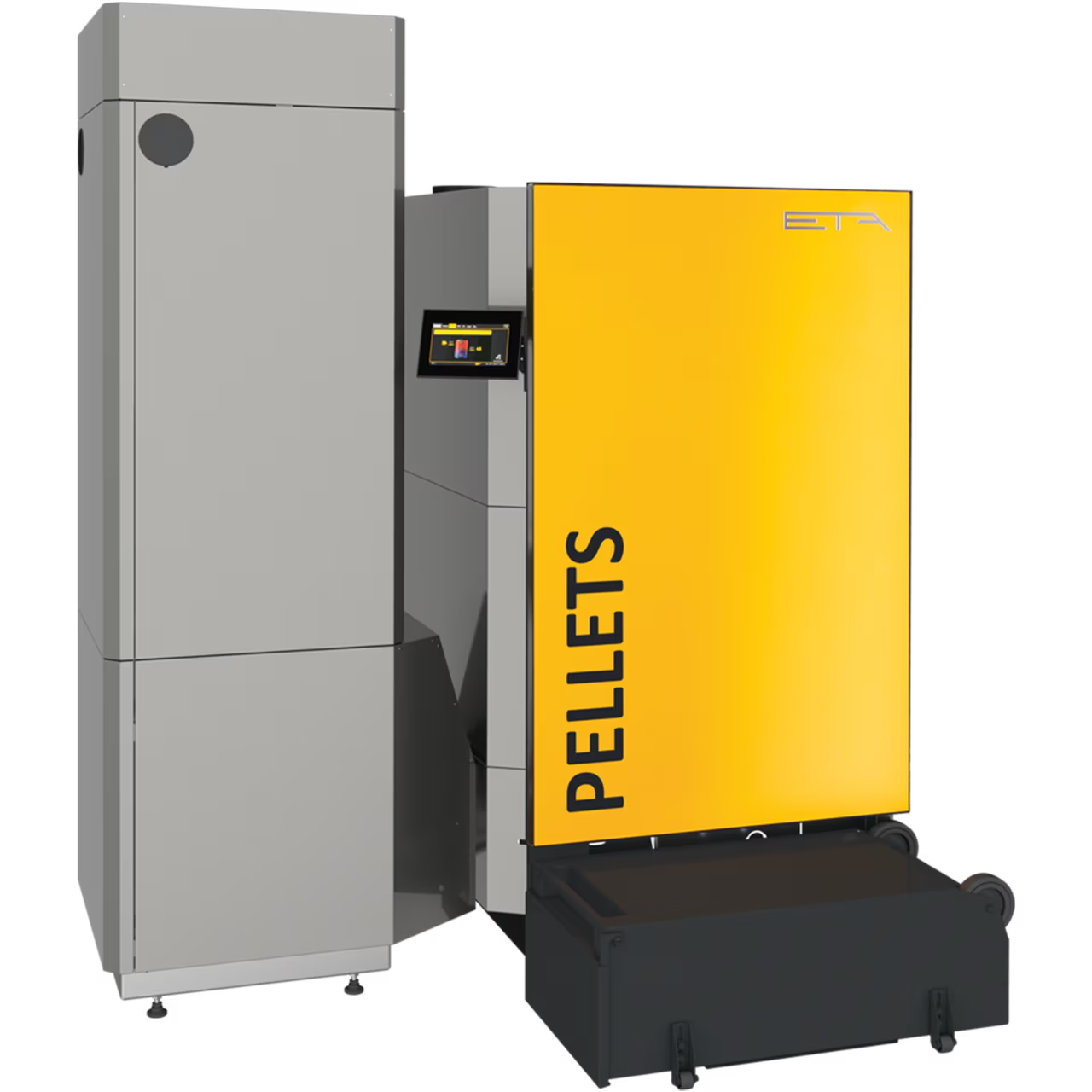
Semi-automatic and fully automatic pellet heating systems are available. With a semi-automatic pellet heating system, users must manually add pellets to the hopper. From there, the pellets are continuously dosed into the combustion chamber. With a fully automatic system, manual addition is eliminated. Instead, the feeding system delivers fuel from the storage tank directly to the boiler without human intervention.

In addition to the storage or hopper and feed system, the heating system consists of a pellet boiler with a robust housing, a combustion chamber made of heat-resistant material, a screw feeder, an ash discharge system, and a heat exchanger. Efficient combustion and particularly high efficiency are achieved by using combustion air through primary and secondary regulation with lambda support.

Lambda probes and flue gas temperature sensors monitor the combustion process

Before combustion begins, pellets are fed into the combustion chamber. Once the combustion chamber is charged, the automatic ignition process begins. A built-in lambda probe and flue gas temperature sensors monitor the combustion process and ensure complete pellet combustion at an optimal rate. The generated heat is heated by a built-in heat exchanger, which in turn transfers it to the heating circuit. For information on the combustion process, see the page How Pellet Heating Works .

Conveyor device

A fully automated pellet heating system also includes a conveyor system. In practice, this is usually either a screw conveyor or a vacuum system. The screw conveyor is shaped like a drill and transports pellets from the storage area to the pellet boiler via its rotating motion. It is typically installed at floor level and, due to its design, is not very flexible. To ensure an uninterrupted supply of pellets to the stove, the distance between the storage area and the stove must be small.

Vacuum systems are more flexible. Pellets are drawn through a suction turbine and fed to the pellet boiler via suction lines. Large storage facilities may have multiple suction points, ensuring fuel supply is always guaranteed, even under high heat loads. Vacuum suction systems can cover much longer distances and are therefore suitable for installations where the storage facility and boiler are not located adjacent to each other.

The difference between a pellet heater and a pellet stove

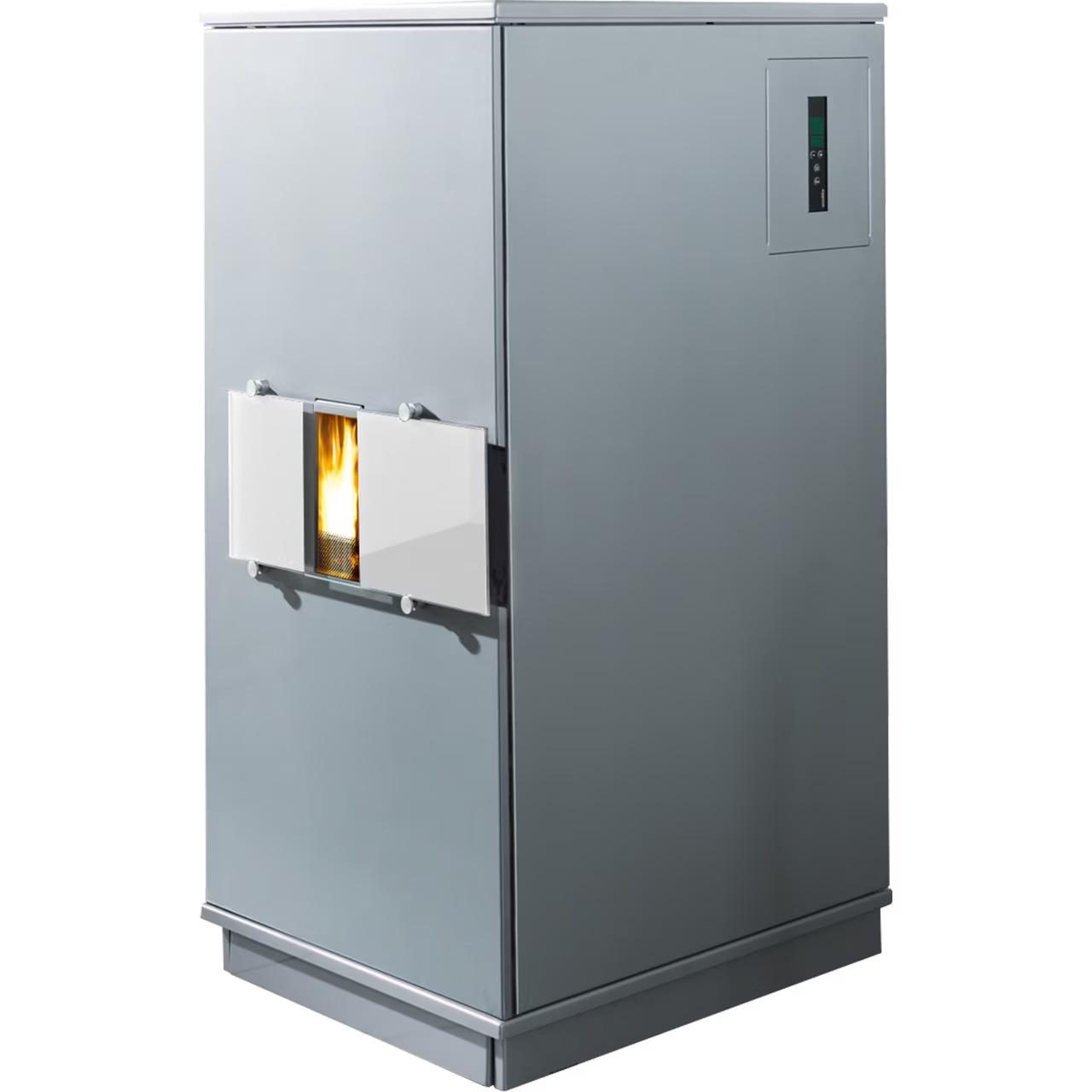
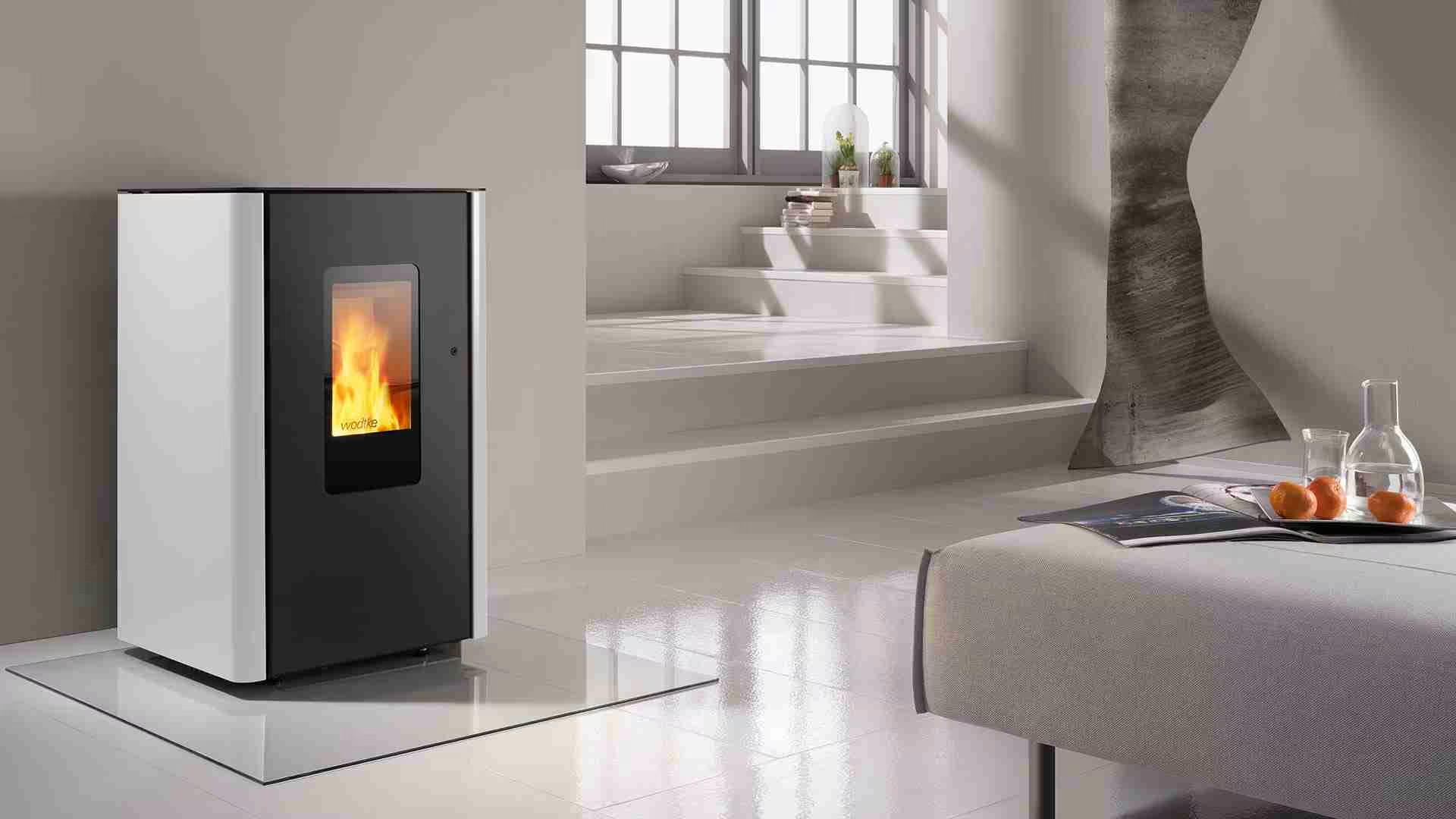
A pellet heating system or pellet boiler is sometimes confused with a pellet stove. However, there is a fundamental difference between these two types: A pellet boiler typically provides both central heating for the entire home and hot water. A pellet stove, on the other hand, typically functions as a fireplace, unless used in conjunction with a heat exchanger. It is often installed in living spaces to create a cozy feeling of comfort thanks to its high radiant heat. This effect is enhanced by a glass firebox door, which provides a clear view of the fire inside. Pellet stoves can also support a central heating system if equipped with a heat exchanger.
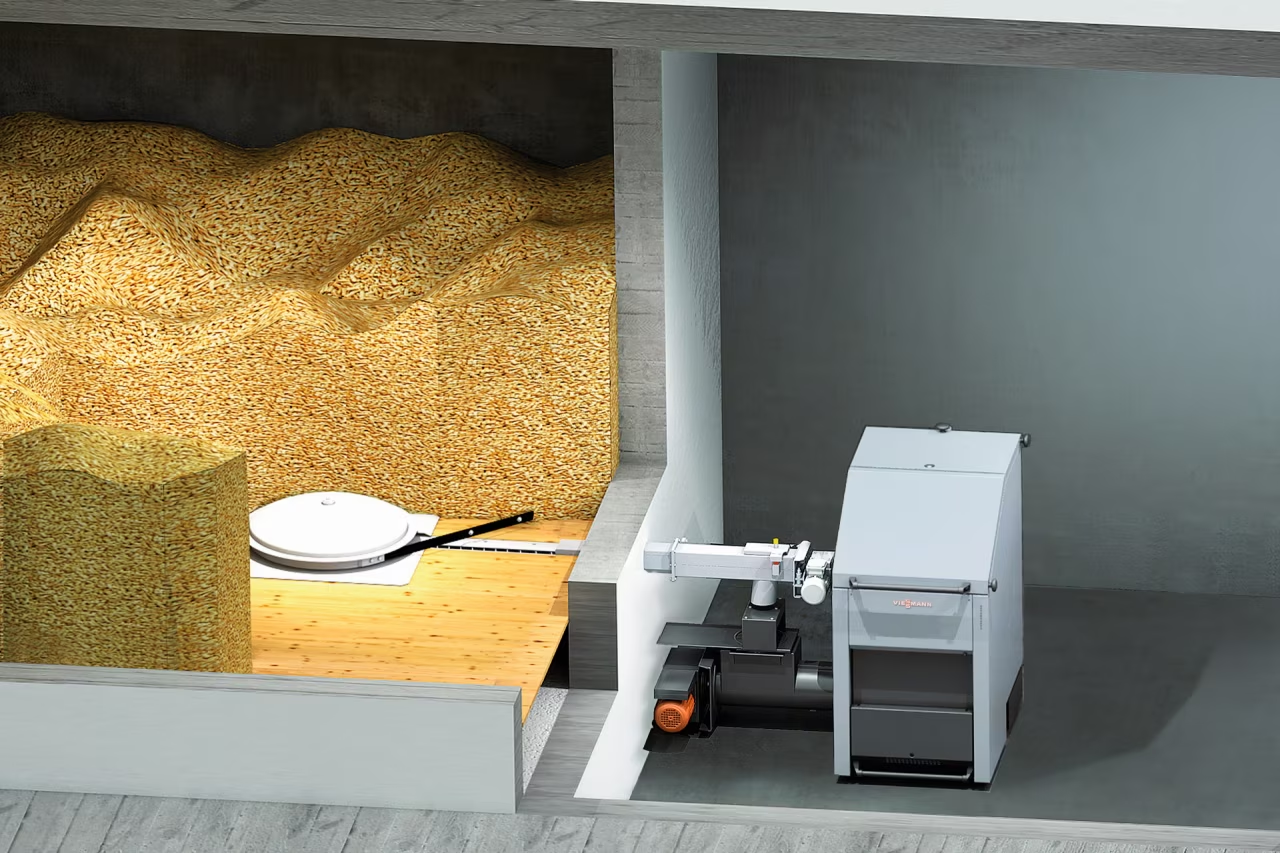
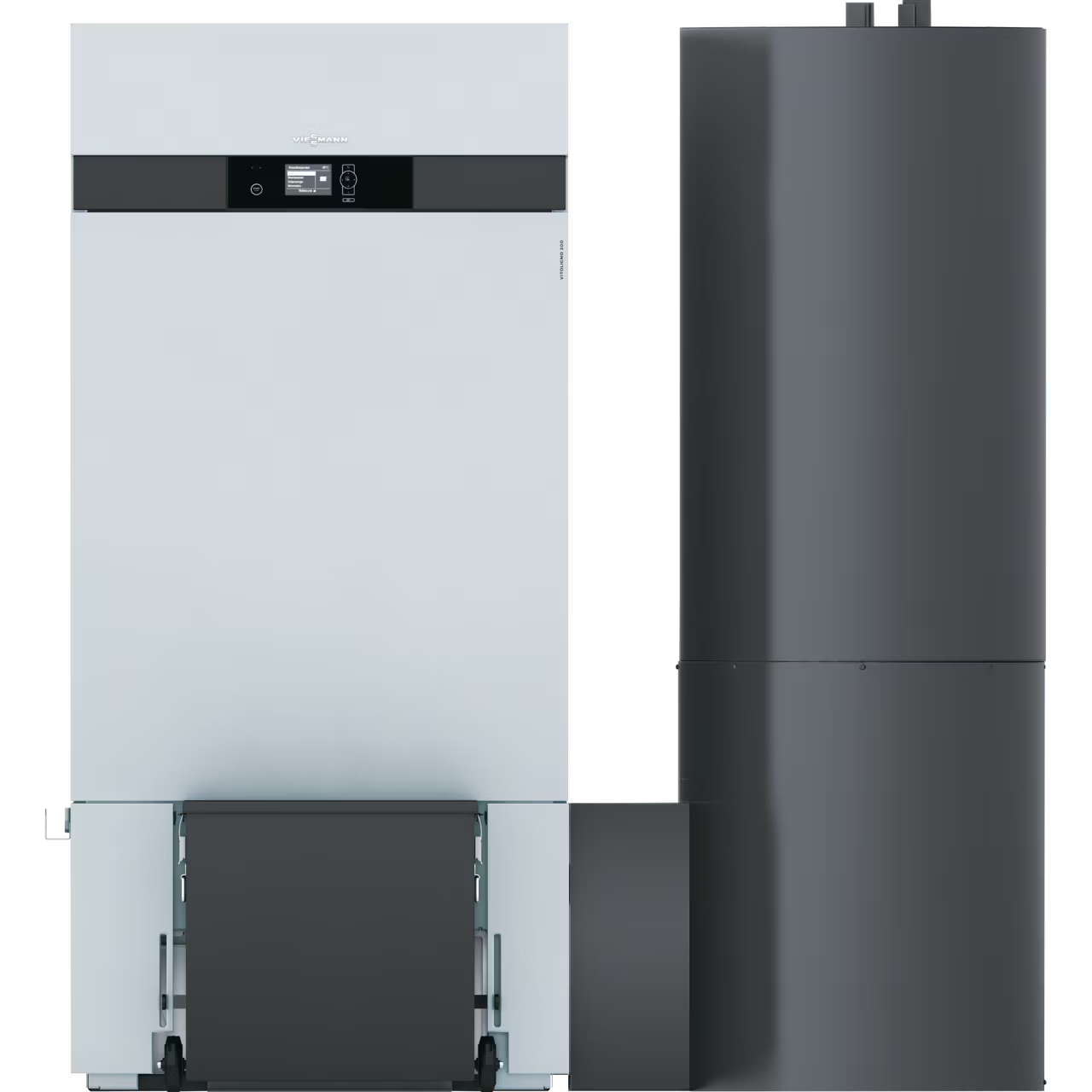
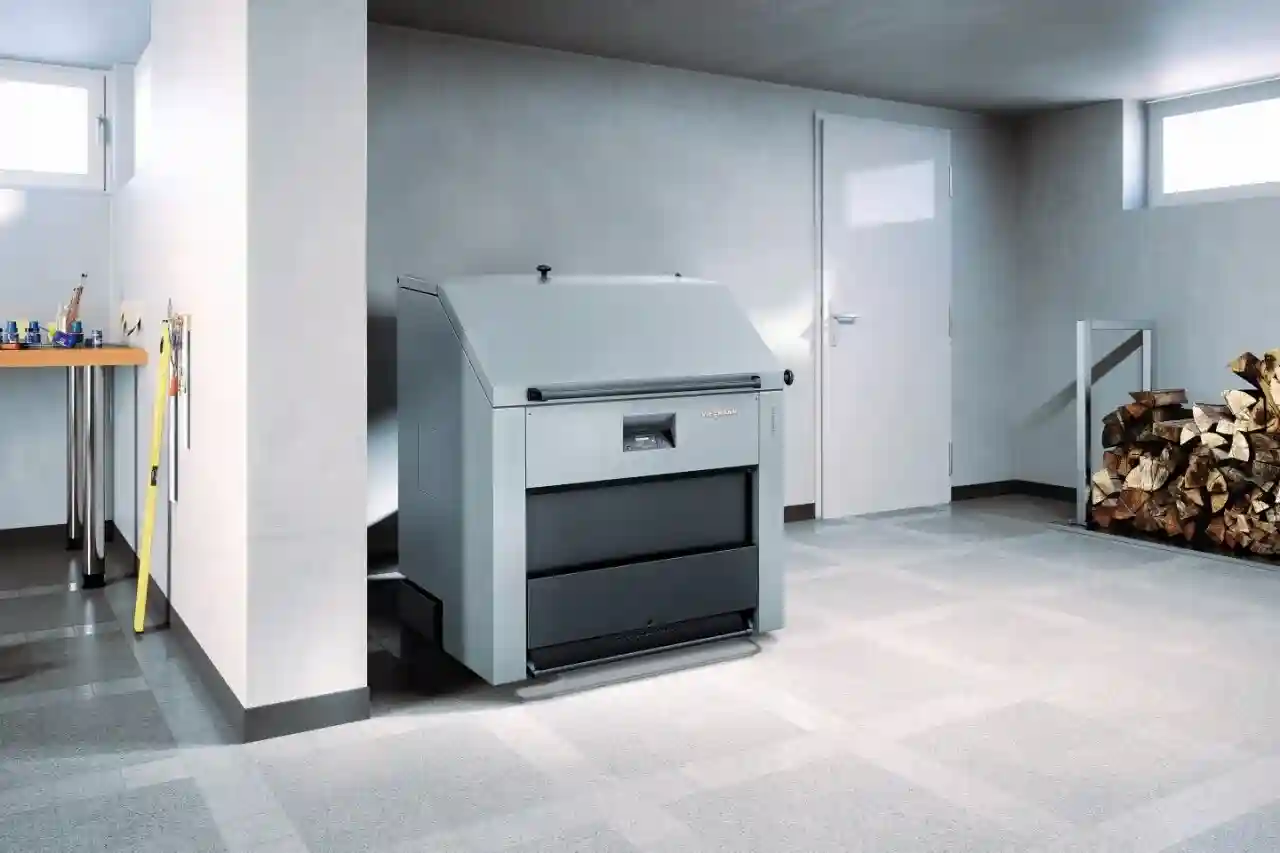
Viessmann Vitoligno 250-S

Buying tips and subsidies for pellet heating systems

Convenience and efficiency are two key characteristics of pellet heating systems. They combine the incredibly convenient operation of a gas heating system with the clean, economical technology of modern wood heating. Before purchasing a pellet heating system, there are several factors to consider. These include heating needs, the required space, the conveyor system design, and, last but not least, the available budget. The following section provides tips for long-term, cost-effective operation.

Determining the heat requirement

The efficiency of a heating system depends largely on whether it meets the heating needs of the building being heated. If the capacity is too low, the heating system will be forced to operate at full capacity for extended periods. In the worst case, it will fail to provide the required temperature, resulting in a loss of comfort. However, installing an oversized heating system will lead to excessive heating costs in the long run, making efficient operation impossible. When purchasing a pellet heating system, homeowners should primarily consider their heating and hot water needs.

As a rule, older, unrenovated buildings have higher heating needs than newer ones. A new pellet heating system should be designed accordingly. To select the appropriate system, it’s best to consult with a heating contractor. Based on a heating load calculation, a specialist will determine the required heating power to an acceptable and comfortable temperature. This calculation also takes into account transmission and ventilation losses, as well as the additional heating power. This will help you find the right pellet heating system much more quickly.

Checking warehouse space requirements

Depending on the model, pellet boilers are quite compact and require only a few square meters for installation. For a pellet heating system to automatically supply heat and hot water, it requires pellets and an appropriate transport system. Both require varying amounts of space, so it’s important to plan for them before purchasing. A popular pellet storage solution is fabric tanks, which are placed indoors along with a corresponding steel frame. Alternatively, underground tanks can be used. In both cases, sufficient space is required. If you previously heated with oil and are looking to replace your old heating system with a pellet system, you can also use your existing storage space.

Pellet feeding: fully or semi-automatic?

There are two options for transporting pellets from storage to the boiler: in semi-automated systems, a pellet bin is installed next to the boiler, which the homeowner must fill manually. If you want to purchase a fully automated pellet heating system, a feeding system is required. Depending on the system type, a screw conveyor or suction turbine delivers the fuel to the point of use. The preferred technology depends on the nature and amount of available space. For a more detailed description of the feeding system, see the Pellet Feeding and Storage section .

The best time to buy a pellet heating system

The best time to purchase a pellet heating system is during the warm summer months. During this period, demand for heating and hot water is significantly lower than in winter. Furthermore, the longer time period allows for greater planning flexibility.

Pellets as fuel

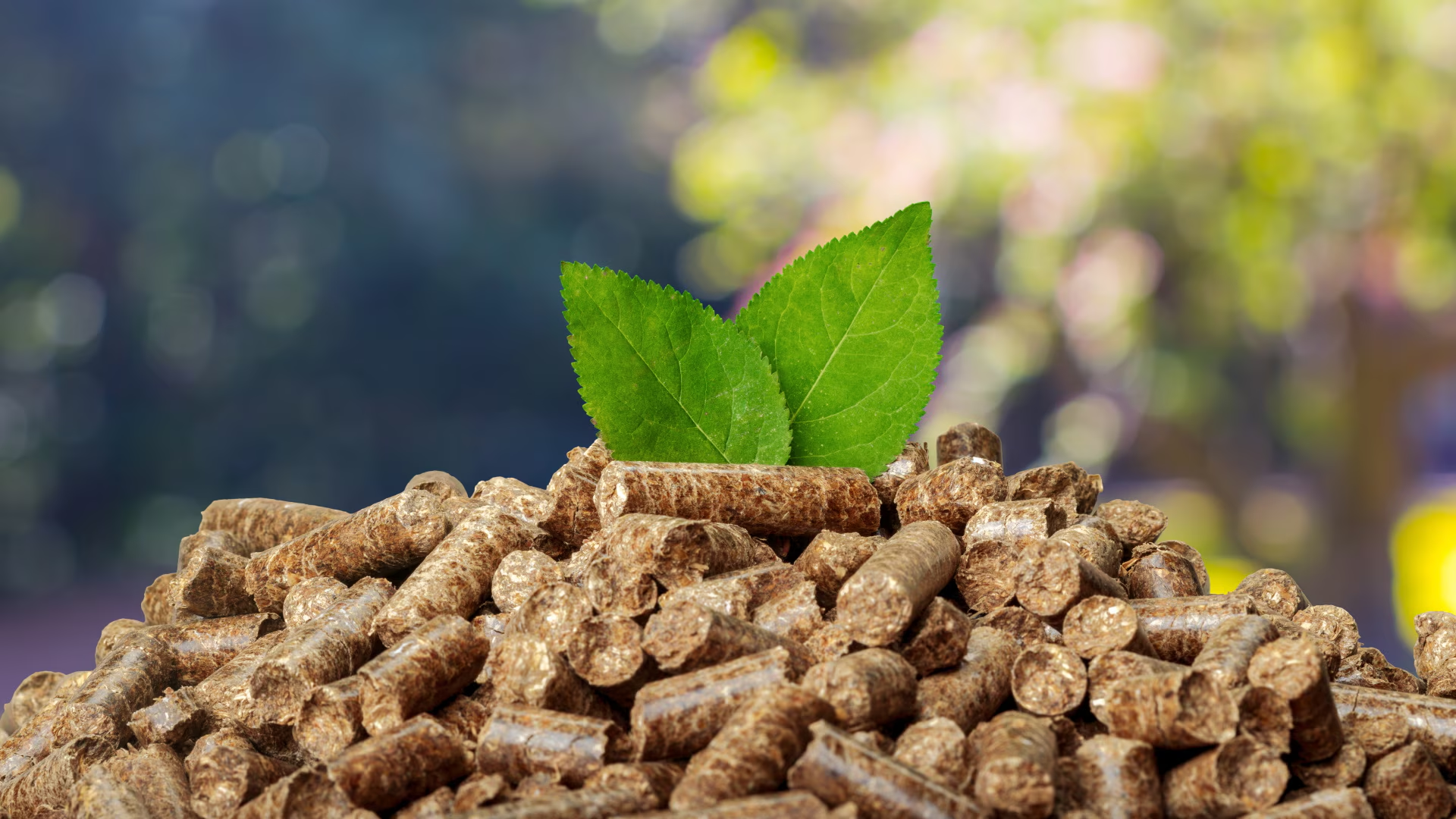
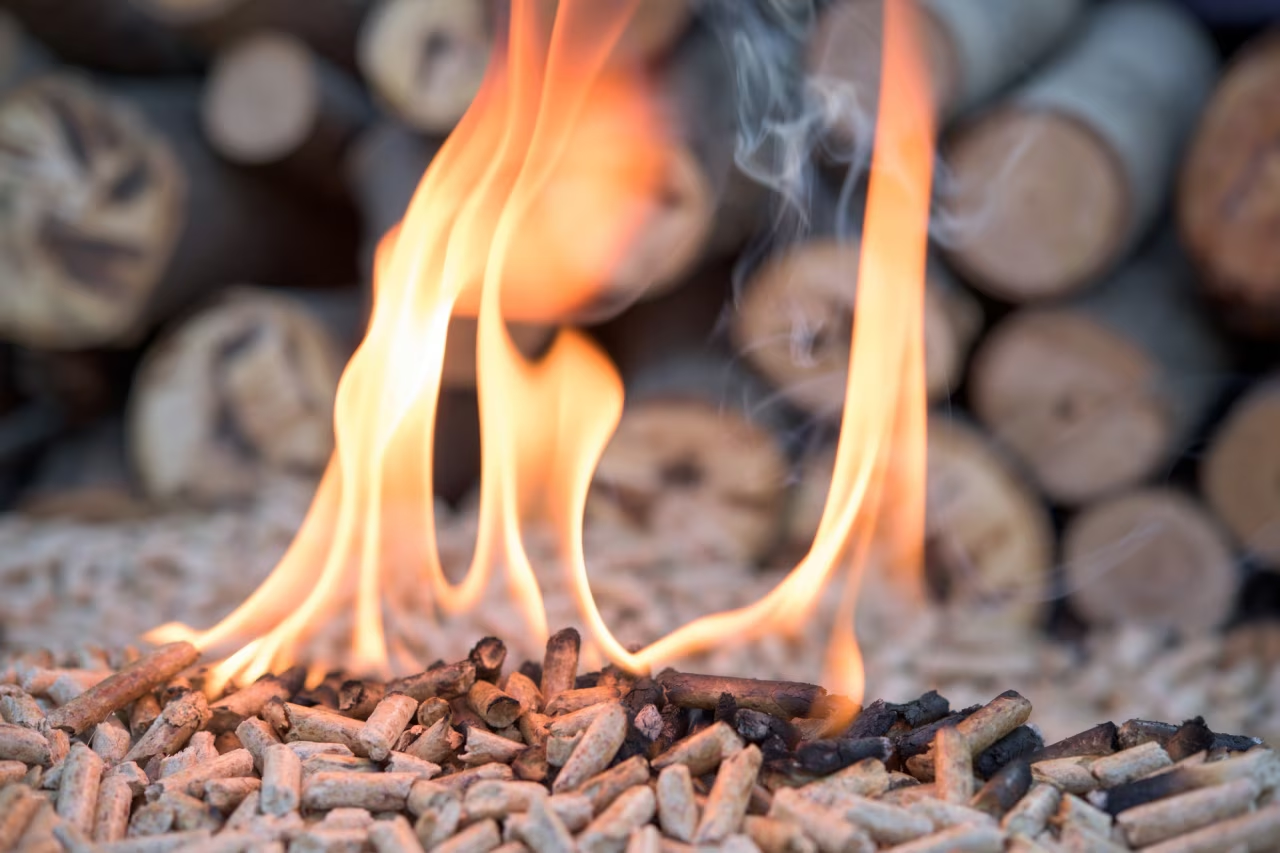
Pellets are the most compact form of wood energy and have a high gross calorific value. Pellets that meet DIN-Plus or ÖNORM standards are produced using 100% natural wood residues. This raw material consists of large quantities of waste generated in the wood processing industry as a result of planing or sawing.

Photo: © FabrikaSimf / Shutterstock.com

Fine-grained wood waste is compressed under high pressure and formed into pellets, i.e., pressed into a cylindrical shape. The fuel is stored and handled dry. Absolutely dry storage conditions are essential. This ensures efficient combustion in a pellet heating system.

Wood pellets are available in packages and in bulk. Bulk pellets are transported in silo tanks and fed into storage facilities via a hose system. Detailed information on pellets, logs, and other materials can be found in the “Biomass as Fuel” section.

The quality of the pellets is a key factor

In addition to efficient combustion technology, fuel quality is crucial for achieving the best results. Low-quality pellets burn too quickly and, in the worst case, can damage the boiler. When purchasing pellets, don’t just choose the cheapest ones. High-quality pellets have a smooth, shiny surface. They are also abrasion-resistant and don’t leave many crumbs in the packaging.

Color is another quality indicator. Granules should appear uniform in color. Significant variations in color indicate that lower-quality chips were used in their production. High-quality granules are certified DIN Plus or EN Plus. To verify the quality of the supplier’s products, system owners can request a sample for in-home testing.

Proper storage

Before installing a pellet heating system, homeowners must purchase fuel. To avoid having to order pellets every few weeks, experts recommend purchasing a year’s supply of pellets. The size of the supply ultimately depends on where the pellets will be stored. In practice, fabric containers suspended from a frame are often used. They are easy and inexpensive to install in a building.

The distance between the warehouse and the road should be no more than 30 meters, if possible.

Other storage options include underground tanks or an empty room in the basement. A conveyor delivers the pellets to the pellet boiler, where they release their energy. Pellet storage facilities must be accessible from the outside and located no more than 30 meters from the road. This is necessary to facilitate vehicle access for refueling.

Pellets must remain dry during storage. This is because too much moisture can cause the fuel to swell or stick together, which negatively impacts combustion properties. If storage space is limited, a small tank can be placed next to the pellet boiler and filled manually.

Additional information

Wood heating systems at a glance

Wood heating systems at a glance

Read more
Storage and supply of pellets

Storage and supply of pellets

Read more
How does pellet heating work?

How does pellet heating work?

Read more
Image

Expert advice on pellet heating

Request a consultation now →

Advantages of pellet heating

Automatic control, high efficiency, and attractive subsidy potential: A fully automatic pellet heating system from Viessmann offers numerous advantages. Pellet heating systems effectively combine the benefits of two heating systems: wood and gas. While wood heating is clean and environmentally friendly, gas heating is exceptionally easy to use. This combination is one of the main advantages of pellet heating. Furthermore, homeowners receive additional benefits when choosing a pellet heating system. The following overview details these benefits:

  • High energy content
  • clean combustion
  • Regenerative raw materials
  • CO₂ neutral combustion
  • Stable prices for pellets
  • High subsidies

High energy content and clean combustion

Wood pellets are made from sawmill byproducts and industrial wood waste. Through a complex process, the wood is compressed into pellets of uniform size—a prerequisite for fully automatic heating systems. The pressing process also means the pellets have a much higher energy content than logs or wood chips. Because pellets contain virtually no non-combustible materials, they burn extremely cleanly.

When using a Viessmann pellet heating system and the correct pellet quality, very little ash remains. The ash drawer typically only needs to be emptied manually once or twice a year. Pellets also don’t create an unpleasant odor in the building. The ash can be composted at home.

Renewable and environmentally friendly raw materials

Pellet boilers benefit from stable fuel prices

The advantages of pellet heating become even more apparent when compared to other heating sources, such as oil and gas. Oil prices, in particular, are subject to economic and political fluctuations, making long-term planning difficult. Pellet prices, of course, are also subject to economic fluctuations. However, these fluctuations occur only at the regional level. What is certain is that pellet prices have remained relatively stable in recent years and are lower than oil and natural gas prices. No significant price increases are expected in the foreseeable future.

A wide range of combinations

Viessmann pellet boilers operate very efficiently in both mono and dual mode. They can be combined with an existing heating system to reduce investment costs. For example, they can cover the bulk of heating and hot water needs, while the existing boiler only operates during peak loads. All Viessmann pellet boilers operate in modulating mode and constantly adapt to heating demand. Free solar energy can be used in combination with pellet heating and solar thermal energy.

High government subsidies

The aforementioned advantages of pellet heating are crucial to the high planned government subsidies compared to other heating systems. In Germany, these include subsidies from the Federal Funding for Energy-Efficient Buildings (BEG), which cover up to 55% of the system costs and are structured as follows:

Basic subsidy Oil heating replacement surcharge Low Emission Innovation Award
35% 10% +5%

Applications: From individual homes to businesses and local authorities

A distinct advantage: Viessmann’s powerful, fully automated pellet boilers are suitable for a wide range of applications. Pellet boilers like the Vitoligno 300-C are used to meet the increased heat demand in large apartment buildings or commercial buildings. This means there are practically no limitations to its use. Specific applications include:

  • Detached houses
  • semi-detached houses
  • Apartment buildings
  • Commercial enterprises
  • Local government premises
  • New buildings
  • Modernization
  • Residential and business premises

For more tips and information, visit the pellet heating guide at heizung.de .

Other Viessmann guides and tips

Pellet stove with heat exchanger

Pellet stove with heat exchanger

Read more
Geothermal collectors

Geothermal collectors

Read more
Gas Heating: Advanced Heating with Condensing Technology

Gas Heating: Advanced Heating with Condensing Technology

Read more