Heating System Upgrade – Start Where It Matters
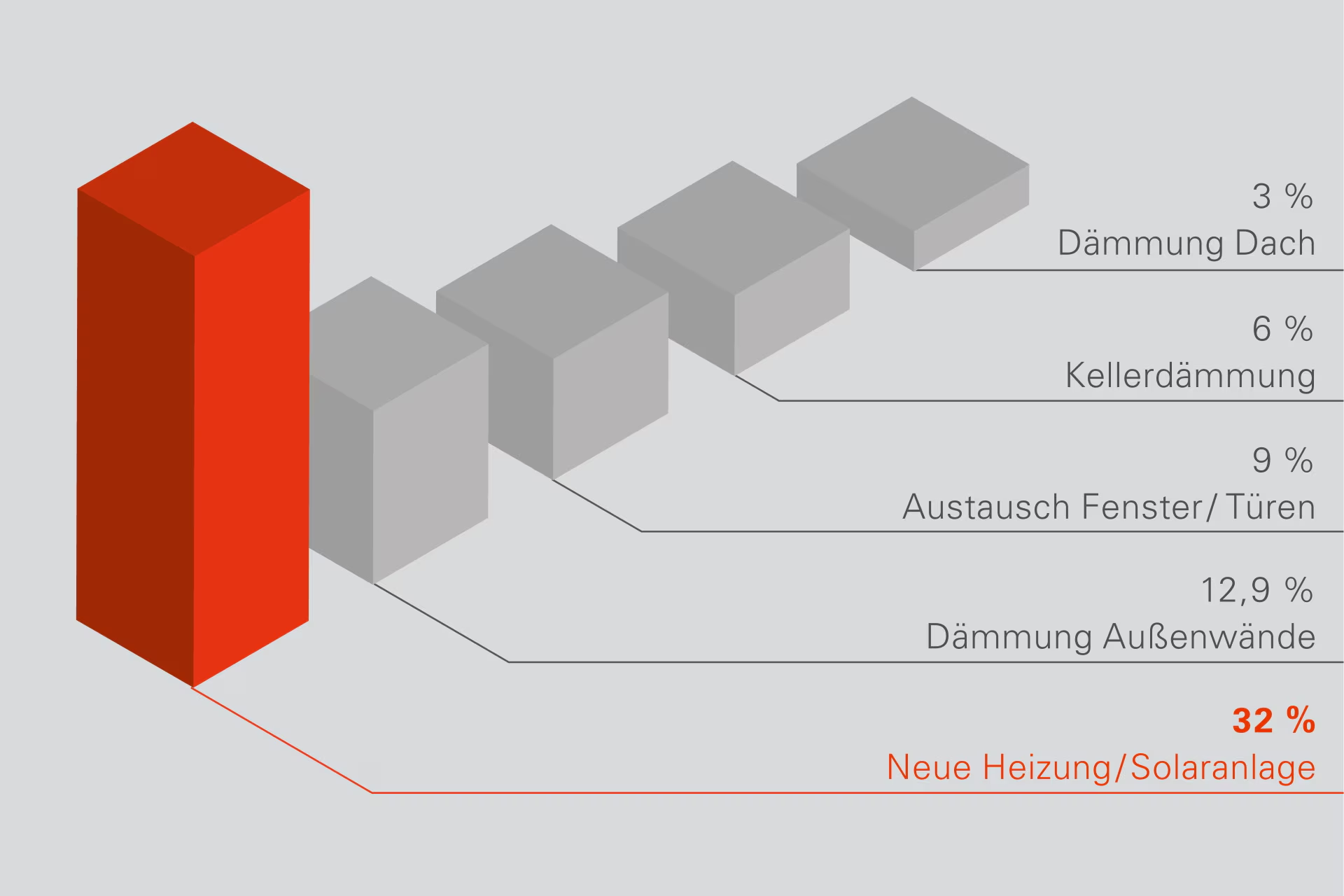
According to the North Rhine-Westphalia Energy Agency and other organizations, heating and hot water account for an average of 70 percent of household energy costs. Therefore, upgrading a heating system can pay for itself in a short time, even if it presents a financial challenge. Government subsidies can help make this measure cost-effective. To qualify, you must include renewable energy sources. This is because the government specifically supports heating systems that utilize renewable energy sources. Over time, these benefits not only benefit your wallet but also the environment.
When should I upgrade my heating system?
You don’t have to wait for the perfect time to upgrade your heating system—spring, summer, and fall are all suitable. The obvious advantage of replacing your heating system outside of the heating season is that it gives you more time for improvements; the work can be completed before the colder months arrive. However, replacing a heating system is also possible during the winter months and can usually be completed within one to three days. Beyond these factors, it’s crucial to monitor your costs and identify any weak points in your old heating system in advance.
In the following cases, it is advisable to make a replacement:
- boilers aged about 25 years or more
- Old boilers that are not yet out of order, but are already 20 years old (installed in the 2000s)
- Oversized boilers that take up a lot of space in the boiler room and operate at a constantly high boiler water temperature.
- If during the annual inspection the flue gas inspector finds any abnormal flue gas performance (e.g. flue gas loss greater than 11 percent).
- 30-year-old constant temperature boilers are subject to mandatory replacement under the German Energy in Buildings Act (GEG)