
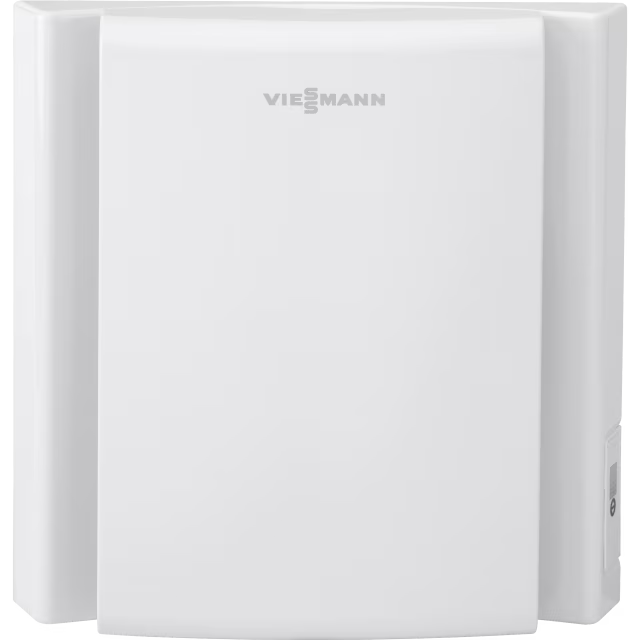
Vitovent 200-D
Ventilation
- Air flow: up to 55 m³/h
- Saving on energy costs
- Heat recovery up to 90%
- Quiet energy-saving fans
Photo: © jovana veljkovic / Shutterstock.com
The modernization of energy systems in existing buildings is constantly driven by rising energy prices in the residential sector. Older housing stock is being comprehensively modernized and now offers its residents amenities such as energy-efficient windows and doors, wall insulation, and a new heating system with convenient hot water.
Modernization also results in older apartments becoming so airtight that they don’t receive sufficient fresh air replacement. This results in high indoor humidity, which can lead to mold growth, especially in buildings with insulated exterior walls. Corners of rooms adjacent to exterior walls are particularly at risk, as this is where moisture condenses. A decentralized ventilation system with heat recovery is the most suitable solution in this case.
Decentralized ventilation with heat recovery not only ensures the required minimum air exchange rate, but also reduces the need for thermal energy by recovering heat from the exhaust air and transferring it to the cooler outdoor supply air. Heat recovery rates of up to 90 percent are achieved. This reduces heating costs and protects the environment. Energy is used very efficiently.
One of the advantages of this technology is its relatively simple installation. Decentralized ventilation systems can be installed specifically in individual rooms, eliminating the need for an air distribution system. All that’s required for simple installation is a wall diffuser or a hole drilled in the exterior wall of the relevant room, along with an electrical connection. Residential spaces can be equipped with multiple units operating independently. A combination of centralized and decentralized ventilation systems is also possible. The section on ventilation systems shows which system is most suitable for a given property.
To explain how decentralized mechanical ventilation works, it’s important to first make a distinction. Decentralized ventilation systems with heat recovery are generally divided into two groups: those with continuous operation and those with reversible operation. Both types can be controlled manually or on demand using CO₂ or humidity sensors. They are installed in an external wall.
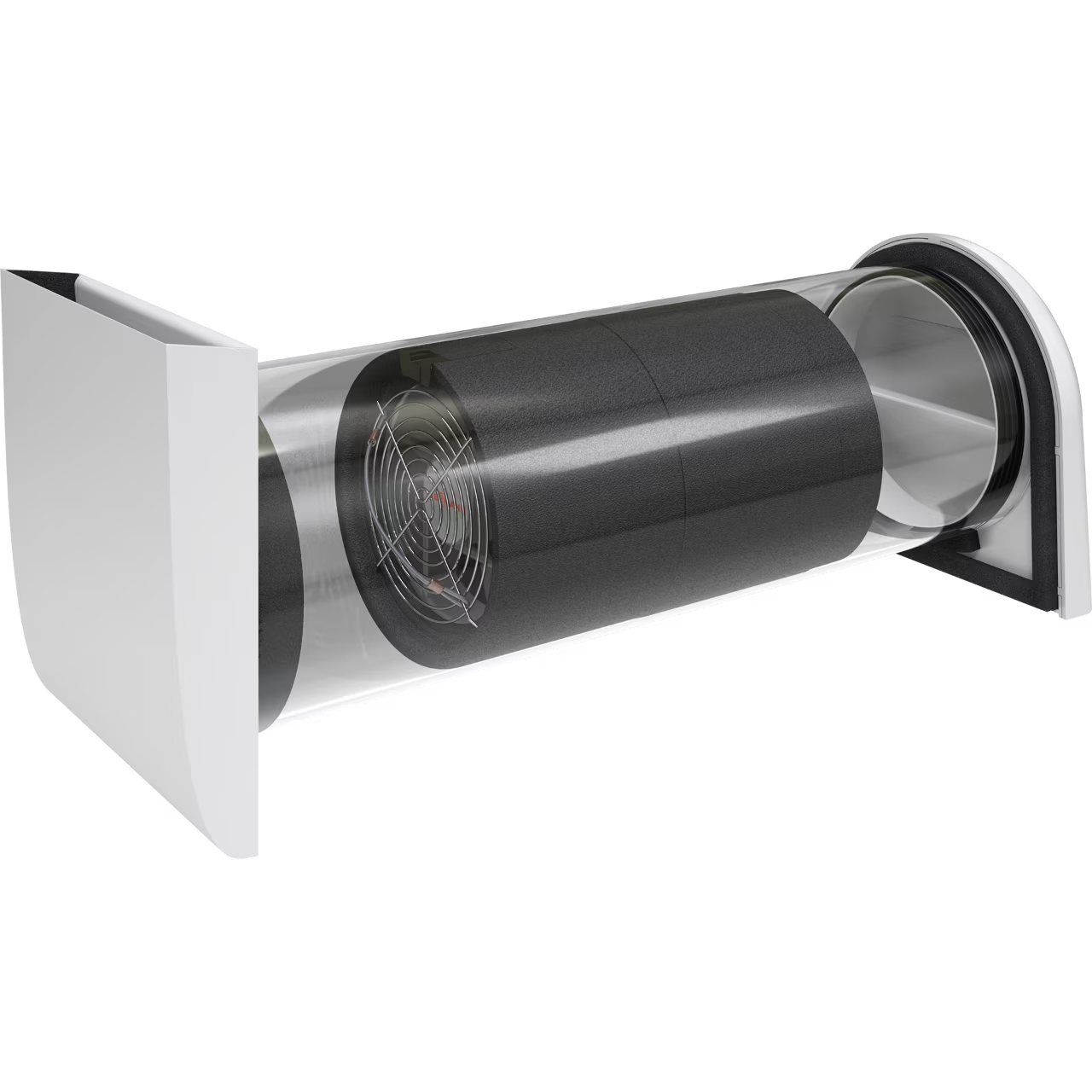
Decentralized ventilation systems with continuous operation are also called continuous-flow fans. They are a complete ventilation unit with a built-in cross-flow heat exchanger. The units have two fans that simultaneously supply air, creating two air flows. The outdoor and supply air flow brings fresh air into the room, while the exhaust and stale air flow removes stale air from the room. A cross-flow counter-flow heat exchanger is located between the two air flows. It recovers heat from the indoor air and transfers it to the supply air. This means that a significant portion of the heat remains in the room despite continuous ventilation.
Thanks to built-in filters and the unit’s appropriate design, neither dirt particles nor outside noise penetrate into the rooms. Continuous fans can supply air to and ventilate individual rooms; they can be installed in external walls in both supply air zones (living rooms, bedrooms, or children’s rooms) and exhaust air zones (kitchen, bathroom, or toilet). One device that utilizes this operating mode is the Vitovent 200-D decentralized ventilation system.
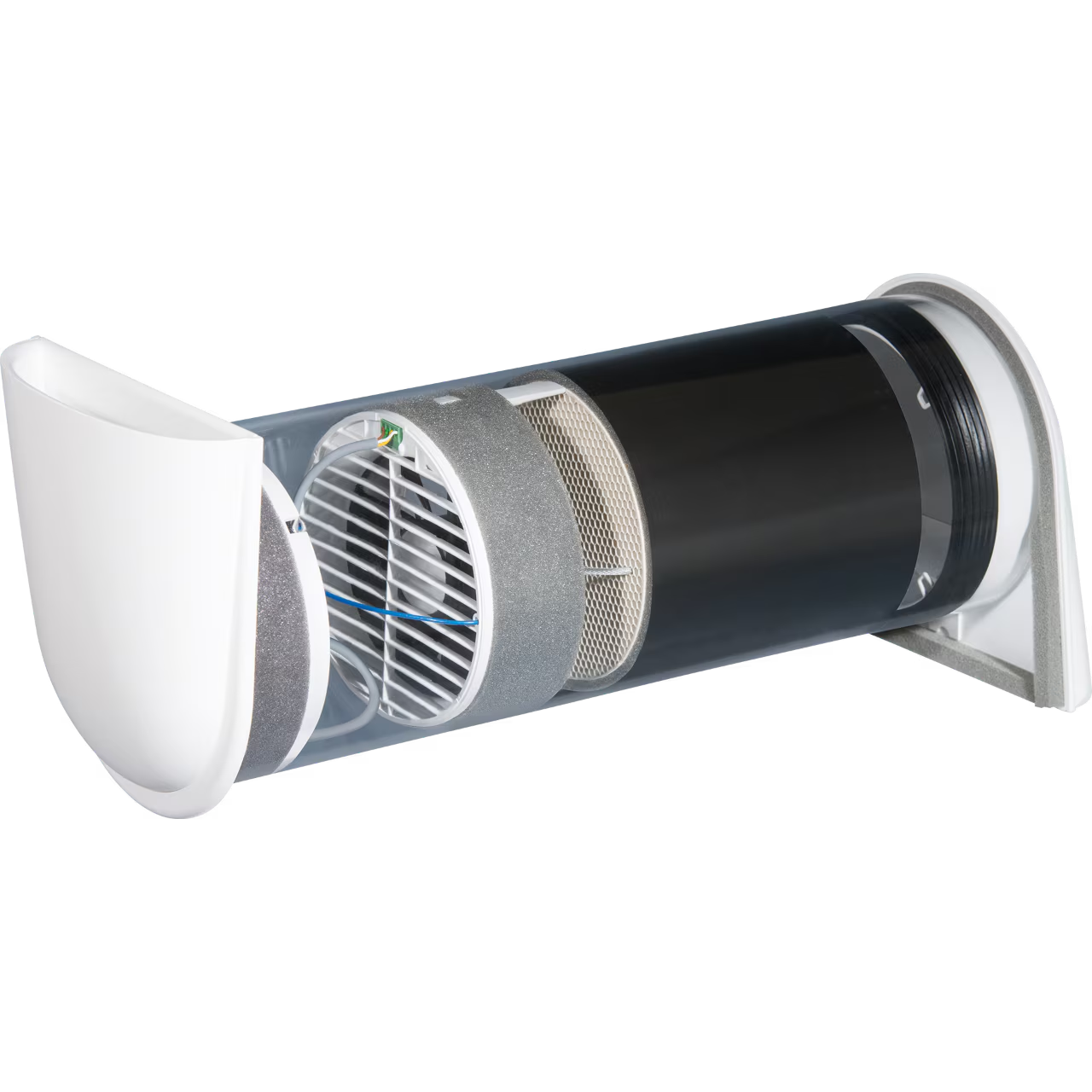
There are other designations for decentralized ventilation systems with reversible operation. These are called pusher-type units or pendulum fans. Unlike their continuous-flow counterparts, pendulum fans have only one fan. Two constantly interacting units are responsible for the required air exchange rate. While one ensures the removal of stale air, the other provides an influx of fresh air. Heat recovery is achieved by using a heat accumulator, which temporarily stores the heat of the exhaust air and transfers it to the supply air.
Other aspects of the decentralized ventilation principle with reversible mode include: both units are interconnected via a controller. This causes the fan rotation to reverse after approximately 70 seconds, reversing the airflow. These units are also equipped with filters to prevent external contaminants and provide protection against road noise. A pair of pendulum fans can simultaneously supply and exhaust air from two supply ventilation zones, provided there is air flow between the two rooms. These units are typically not installed in exhaust air zones. The Vitovent 100-D ventilation unit is a pendulum fan.
You can find more tips and information on this in the mechanical ventilation section on heizung.de .
When modernizing older buildings, ventilation is crucial. After modernization, they often achieve energy performance comparable to new buildings. Decentralized ventilation systems have proven themselves to be the most suitable solution for existing buildings. When purchasing, consider the following points.
When searching for a suitable ventilation system, the scale of the upgrade is an important factor. A major upgrade can achieve significantly different results than a partial upgrade. Depending on the building’s characteristics, a central ventilation system can be used for a major upgrade. A decentralized ventilation system can also be used in a new building. The ventilation system that is ultimately suitable for a given building depends on many factors. Among other things, it’s important to consider the characteristics of the living space, the type of use, and the number of occupants.
As mentioned, decentralized mechanical ventilation is primarily characterized by its room-specific use. Each individual ventilation unit requires its own electrical connection. Depending on the ventilation unit, this may be a 230-volt power supply, as with the Vitovent 200-D, or a data cable, as with the Vitovent 100-D. Since the units are installed in an external wall, homeowners must consider the building type when purchasing a decentralized mechanical ventilation unit. Finally, for use in new buildings, there are special wall units into which ventilation units can be inserted. Retrofitting units, on the other hand, is accomplished by drilling a hole.
Since stale air accumulates at the top of a room, ventilation units should be placed there whenever possible. Although these units operate quietly, highly sensitive individuals may be bothered by the airflow noise, especially in sleeping areas. To avoid this, consider the placement and design of ventilation units in advance.
Compared to central mechanical ventilation, the design costs of a decentralized ventilation system are lower. However, efficient and quiet operation require the contractor’s experience. An experienced installer will quickly determine the ventilation system’s dimensions and the optimal placement of air diffusers. They will also help you select the appropriate type of unit. Depending on the available space, consider a ventilation unit with an integrated cross-flow heat exchanger or a single fan and ceramic heat accumulator.
Get a free, personalized consultation on Viessmann ventilation systems from our qualified sales partners!
Request a consultation now →A decentralized ventilation system improves air quality and protects the building. Its costs are reasonable. In most cases, decentralized ventilation units are less expensive to purchase than a centralized ventilation system. However, exact costs can only be determined for each specific building.
Geothermal collectors for brine/water source heat pumps extract heat close to the surface and can be installed without a permit. You can read more about the differences here.