

Image: © Zvone / Shutterstock.com
To ensure heat flows from the boiler room or utility room to all rooms, the heating system requires a certain system pressure (also known as heating pressure). If it’s too low, it can negatively impact heating performance. Possible consequences include cold heating surfaces and annoying noise from the heating system. Finally, if the system pressure is too low, the heat generator will stop operating optimally, resulting in unnecessary heating costs. For this reason, it’s important to top up the heating system with water whenever the system pressure drops too low.
What role does water pressure play in heating?
To heat rooms to a comfortable temperature even in the depths of winter, a heat generator is necessary. It heats the heating water to the required flow temperature before it is supplied to the rooms. The heating pump is responsible for transporting water from the heat generator (usually on the ground floor) to the radiators (usually on the upper floors). It must create a certain pressure so that the water in the heating system can overcome this difference in altitude. The unit used for this is called a bar. One bar is approximately equal to the air pressure at the Earth’s surface. In addition to the difference in altitude, there are pressure losses in the pipes, fittings, and the heating surfaces themselves, which must also be compensated for.
Why does the heating system lose pressure?
In theory, a heating circuit is a closed system. However, in practice, air enters the heating pipes through various paths, forming bubbles. Air bubbles reduce heating output and also cause annoying noises. To eliminate this, it is necessary to bleed the radiators periodically. However, this always involves the loss of some heating water. This means that with each bleed, the system loses water, leading to a drop in pressure in the system. Therefore, it is necessary to top up the heating system periodically. Other possible causes of pressure loss in heating systems include an undersized safety valve (rarely), an incorrectly installed or faulty membrane expansion vessel (DEV), and other leaks.
Experience shows that the most common cause, other than a leak, is incorrect pre-charge pressure of the expansion tank (this is checked and corrected during maintenance) or a faulty membrane and filling the DEV with water.
Video: Bleeding air from a heating system
Click the play button to begin. Please note that when you watch the video, data will be transferred to YouTube. For more information, please see our privacy policy.
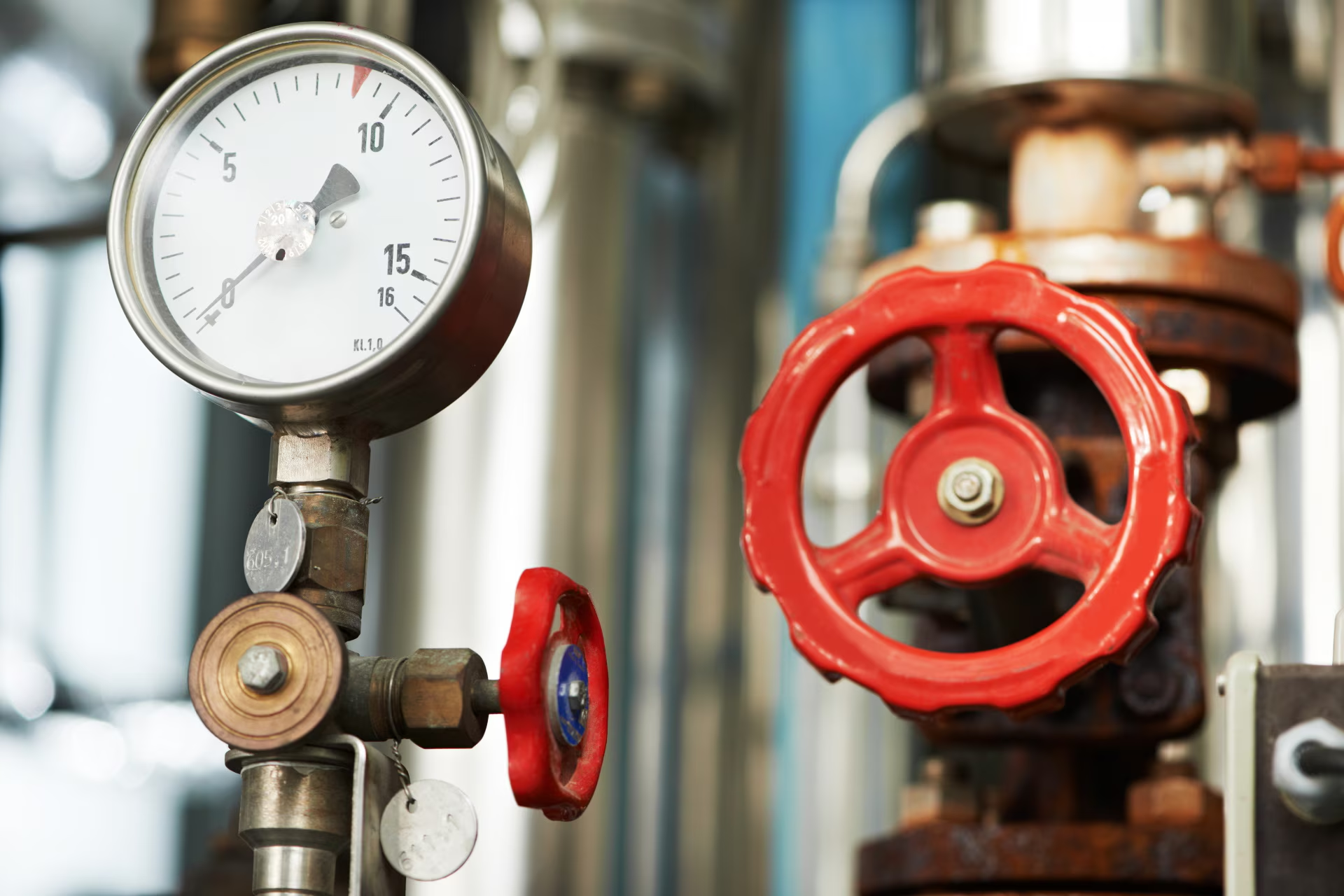
Image: © Dmitry Kalinovsky / Shutterstock.com
How to calculate the optimal pressure in the system?
The required system pressure, or the required filling pressure, varies from case to case. However, the formula required is relatively simple: to determine the optimal system pressure, multiply the height difference between the heat generator and the tallest radiator by 0.1. Add 0.5 bar to this result to compensate for pressure loss.
Formula
System pressure = height difference (meters) x 0.1 (no unit) + 0.5 (bar).
Here is an example
The height difference between the heat generator and the tallest radiator is 10 meters. Therefore, the minimum system pressure should be 1.0 bar (10 x 0.1). Adding a 0.5 bar tolerance yields a system pressure of 1.5 bar.
Video: Calculating Heating System Pressure
Click the play button to begin. Please note that when you watch the video, data will be transferred to YouTube. For more information, please see our privacy policy.
Topping up your heating system in 5 steps
If you want to top up your heating system and thereby increase the pressure, it’s best to call a contractor. This is because if it’s not done properly, the heating system could be damaged by contaminated water. A AHI-Carrier sales partner, on the other hand, knows exactly what to look for when topping up your heating system. The following points should be noted:
- The water must be clean, free from sediment and meet the requirements of VDI Directive 2035.
- The requirements of the Drinking Water Ordinance [Germany] must also be met.
- Under no circumstances allow heating water to enter the DHW circuit during filling
.
The following instructions for adding heating water are intended for system owners who have performed this job several times before.
- Turn off the circulation pump and fully open all thermostatic valves. Now you can bleed all radiators . In multi-story homes, it’s best to start from the bottom.
- Check the water pressure—either on your heater’s user interface or on a pressure gauge. The latter usually has color-coded marks indicating the ideal system pressure.
- Fill the appropriate hose with water until it overflows. Now connect the heating system to the water supply. Use special AHI-Carrier filler valves to prevent heating water from entering the hot water circuit.
- Now open both valves and add heating water until the ideal system pressure is reached. Use the formula above to calculate the system pressure.
- When the user interface or pressure gauge shows the desired value, you can close the valves and turn off the tap. To ensure that no air has entered the system, you can bleed the radiators again.
Important : The system pressure should remain constant after filling and should not fall below 1.3 bar. If this is the case, the job has been successful. If the pressure continues to drop, there may be a technical fault. In this case, contact your heating contractor.
How often should I top up my heating system?
The question of how often to top up a heating system should be determined individually for each system. In addition to the condition of the heating system itself, other factors play a role, such as frequent blowdowns or technical components such as the expansion tank. Regular pressure checks in the heating system are recommended during the heating season .
Sign a maintenance contract and enjoy peace of mind
Whether it’s topping up your heating system or checking safety equipment, it’s often worth contracting a maintenance service with a local contractor. This way, a heating specialist will visit you regularly to ensure your system continues to function properly. If necessary, the engineer will adjust the system pressure to the ideal level.

Ask the Experts: The AHI-Carrier Community
Do you have questions about refilling your heating system?