Ventilation system: advantages and operating principle
A controlled mechanical ventilation system ensures comfortable indoor conditions and may even be required by law. Learn more here!


© 2M media / Shutterstock.com
Many modern buildings are already equipped with mechanical ventilation systems. On the one hand, this requires a high level of energy insulation to ensure the most effective and safe regulation of indoor humidity. On the other hand, it is considered a comfort feature that enhances the value of the property.
AHI Carrier central ventilation systems are extremely energy efficient. A powerful heat exchanger recovers up to 98 percent of the latent heat in exhaust air and uses it to warm incoming fresh air. This significantly reduces household costs thanks to significantly lower energy consumption. Furthermore, CO₂ emissions are reduced, meaning that using central mechanical ventilation also reduces the environmental impact. Other features of central ventilation are described in the section ” Advantages of Mechanical Ventilation .”
The key difference between central and decentralized ventilation systems lies in their design. Centralized ventilation systems have a central ventilation unit that directs fresh air into the rooms through an air distribution system. Decentralized ventilation units, on the other hand, are installed entirely within the wall. From there, they supply the required volume of fresh air to the building.
Central ventilation can be divided into three groups:
In the simplest configuration, stale air is actively drawn in by a fan and expelled outside. Air diffusers in such systems are typically located in exhaust ventilation zones. These include the kitchen, bathroom, and toilet, which tend to have higher humidity and unpleasant odors than living spaces such as living rooms or offices. Fresh air, on the other hand, enters the home only passively through diffusers in the building envelope, window, and door openings.
In practice, mechanical ventilation systems that actively draw in both supply and exhaust air are often used. These combined supply and exhaust ventilation systems feature a central ventilation unit and an air distribution system. Not only is stale air actively drawn in and removed, but fresh air is also actively introduced into the home. To prevent unwanted airborne particles and noise, most systems are equipped with filters.
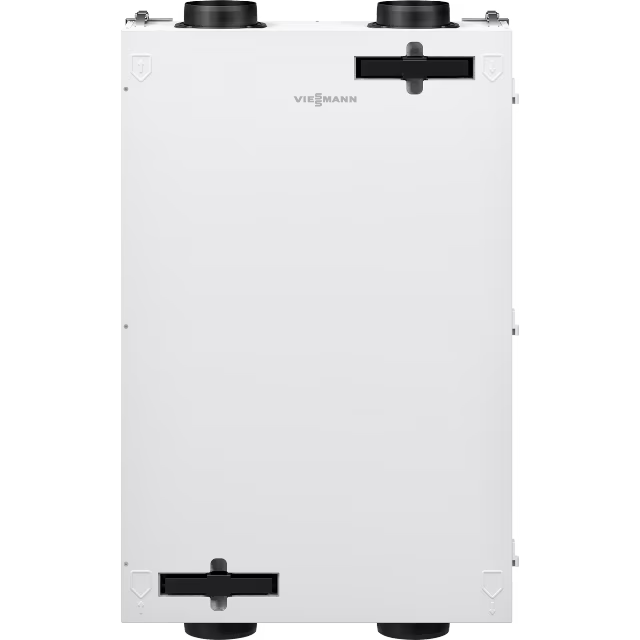
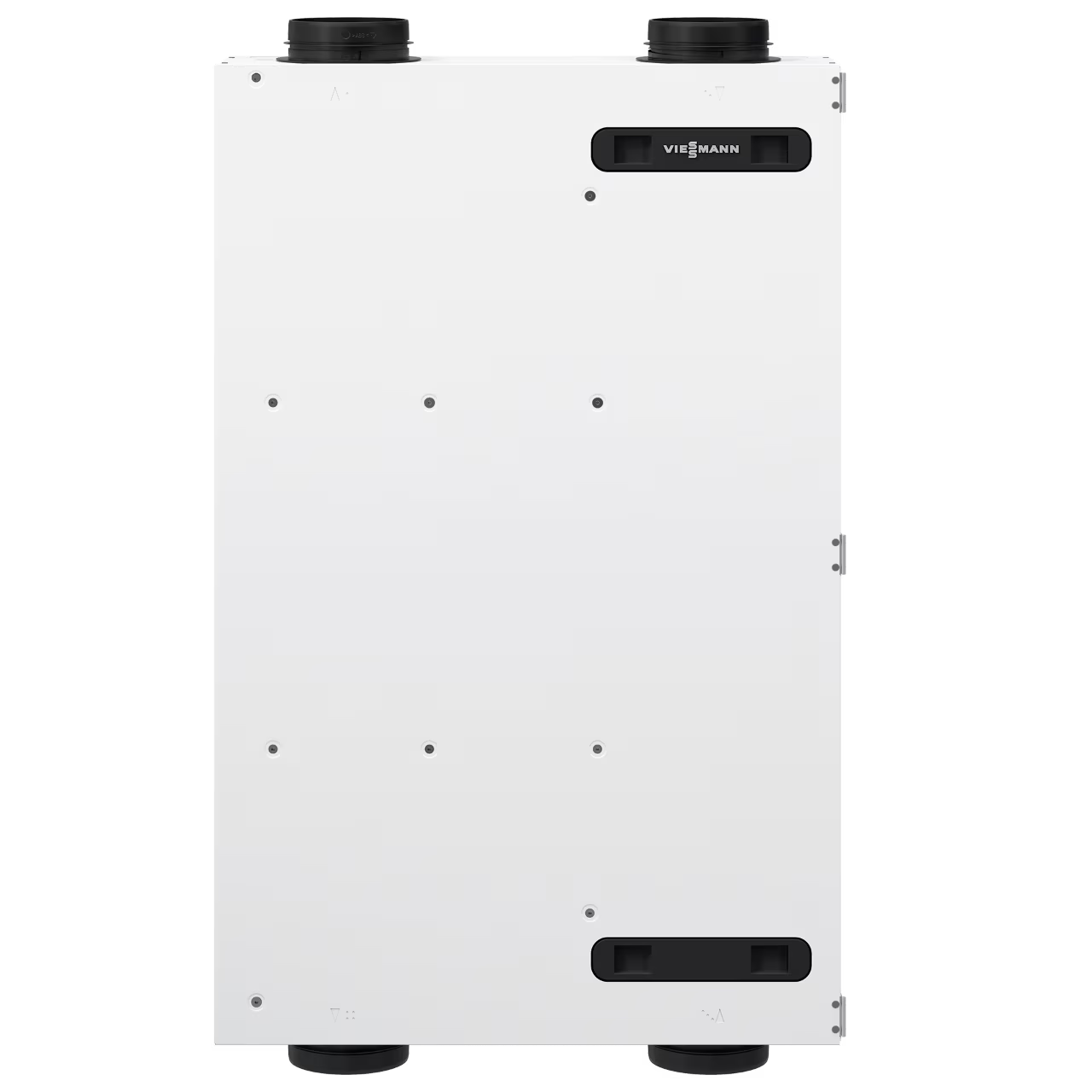
A central supply and exhaust ventilation system with heat recovery consists of a ventilation unit and an air distribution system. The ventilation unit has two fans and a heat exchanger. The two fans are used to move the air entering the building and the air being exhausted. On one side, the outside air/supply air flow introduces fresh air into the building. On the other side, the exhaust air/exhaust air flow removes stale air from the building.
Both air flows pass through a heat exchanger inside the ventilation unit. During cooler months, heat from the exhaust air is transferred to the supply air. This operating mode ensures that the ventilation system removes as little heat as possible from the building. All AHI Carrier central ventilation units operate in this manner. Thus, central mechanical ventilation with heat recovery operates in the same way as central mechanical ventilation with exhaust and supply air diffusers. The section ” Controlled Mechanical Ventilation ” explains whether central ventilation units are suitable and for which applications.
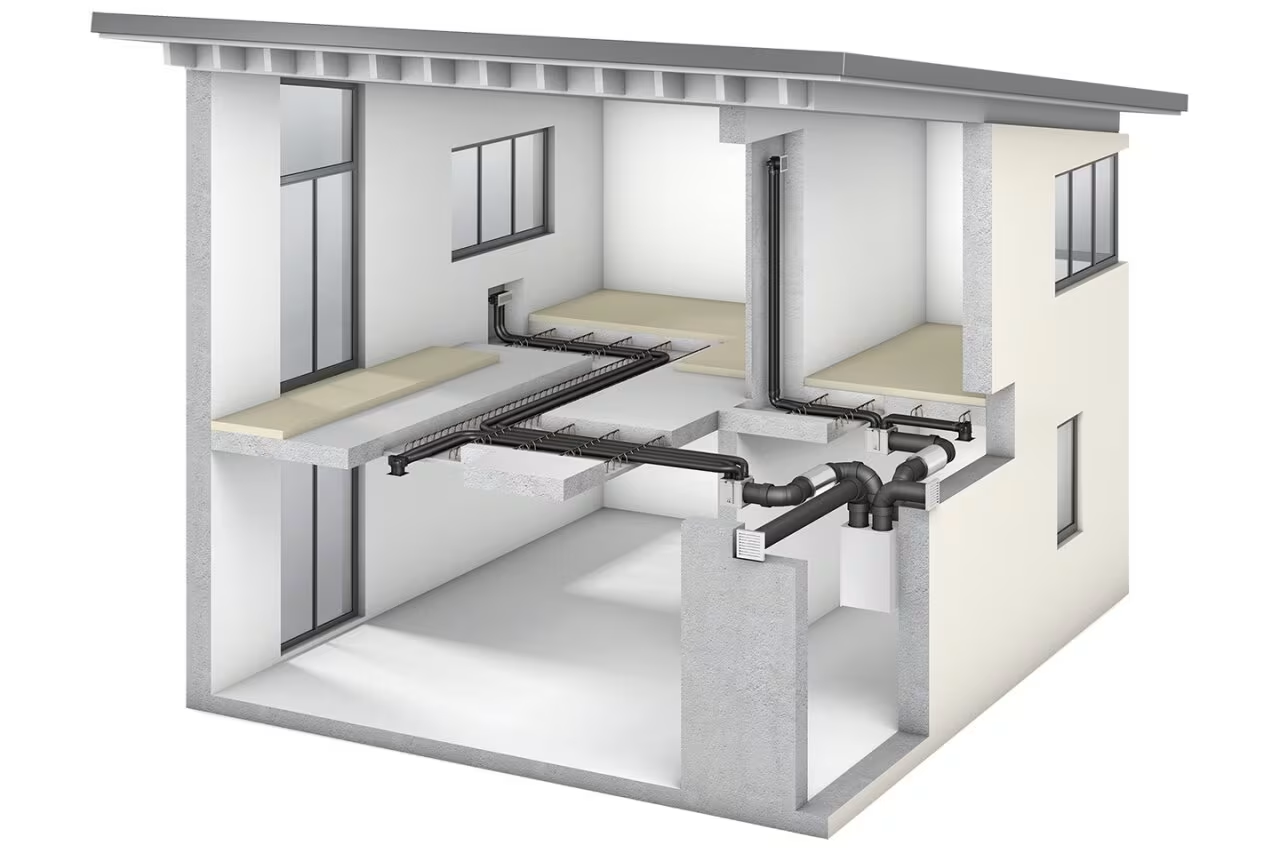
The operating principle of central mechanical ventilation with a ventilation system
If homeowners are considering purchasing a central mechanical ventilation system, they should conduct thorough research and clarify their requirements beforehand. The first question about a central mechanical ventilation system should be about their own requirements. Ultimately, this serves as the basis for subsequent investment. To simplify matters, buildings are divided into three types:
To more accurately calculate the required ventilation, it’s necessary to consider the number of rooms and occupants, as well as their usage patterns. Therefore, regardless of the application, homeowners should always entrust the planning and implementation of a mechanical ventilation system to a contractor. They can accurately determine how large a ventilation system should be to ensure maximum efficiency. In the next section, you can read about other considerations homeowners and remodelers should take into account when choosing the right ventilation system.
In existing buildings that haven’t been modernized, fresh air enters the home passively through leaky building cladding, door cracks, and window gaps. However, using a ventilation system in such buildings is a good idea, as the risk of mold formation is still very high. However, central ventilation is rarely feasible in older buildings that haven’t been modernized. This is because it requires significant planning, which is generally only practical during the construction or modernization phase. In principle, it’s important to note that while central ventilation is possible in older buildings, its installation will be more complex. This is because it requires structural modifications. Furthermore, the air ducts must be lined.
Central ventilation systems are often used in new buildings. They are installed early in the construction phase, even when the building is still incomplete. Once the building is completed, they are no longer visible. Therefore, a central ventilation system in a new building should always be planned in advance. For residential buildings, a ventilation concept according to DIN 1946-6 is developed for this purpose. The ventilation system is used to ensure the minimum air exchange rate associated with health risks and to protect the building. Most building owners choose central ventilation during the construction phase. This is usually sensible, but not always necessary. With optimal planning and implementation, decentralized mechanical ventilation can also effectively supply new buildings with fresh air.
A controlled mechanical ventilation system ensures comfortable indoor conditions and may even be required by law. Learn more here!

Decentralized mechanical ventilation helps prevent mold growth in existing buildings. Learn what to consider during the planning stage.
Learn more about the features of both systems in this comparison of central and decentralized ventilation systems. Read now!
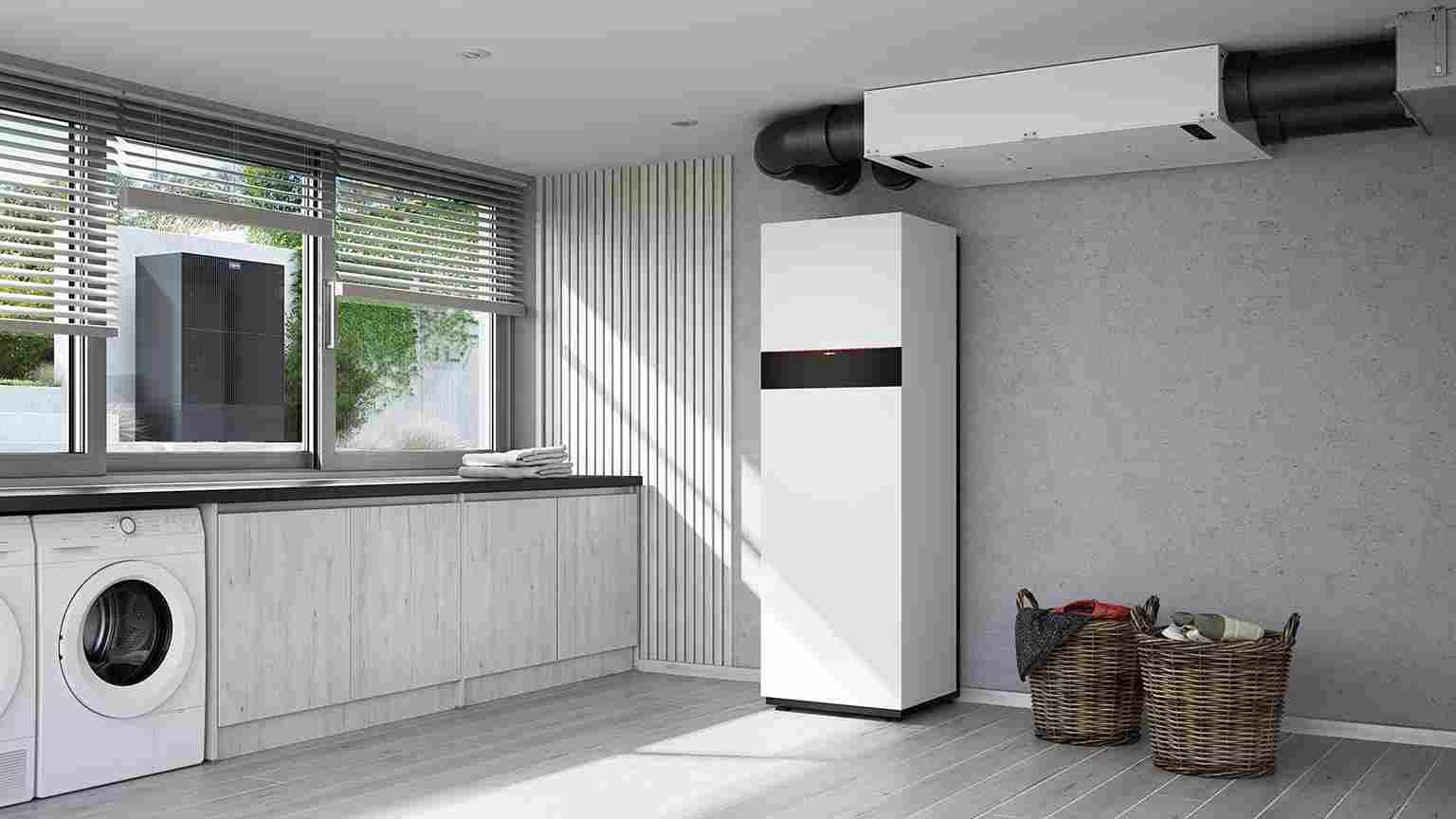
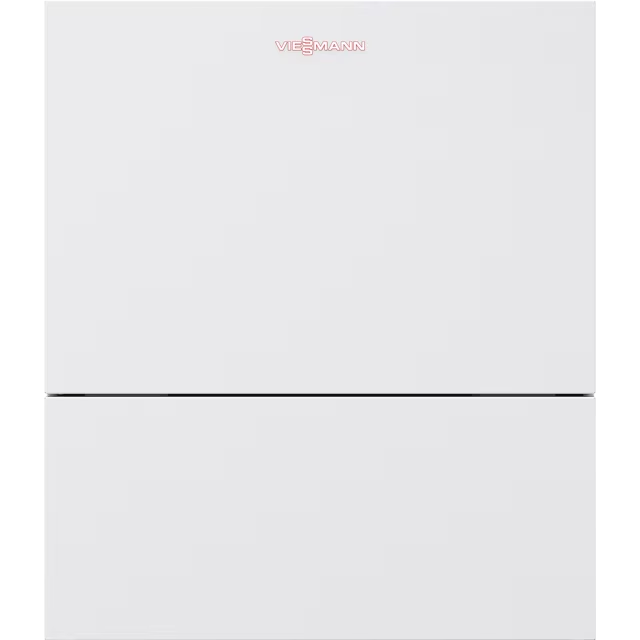
Heating system in combination with the Vitoair FS ventilation system
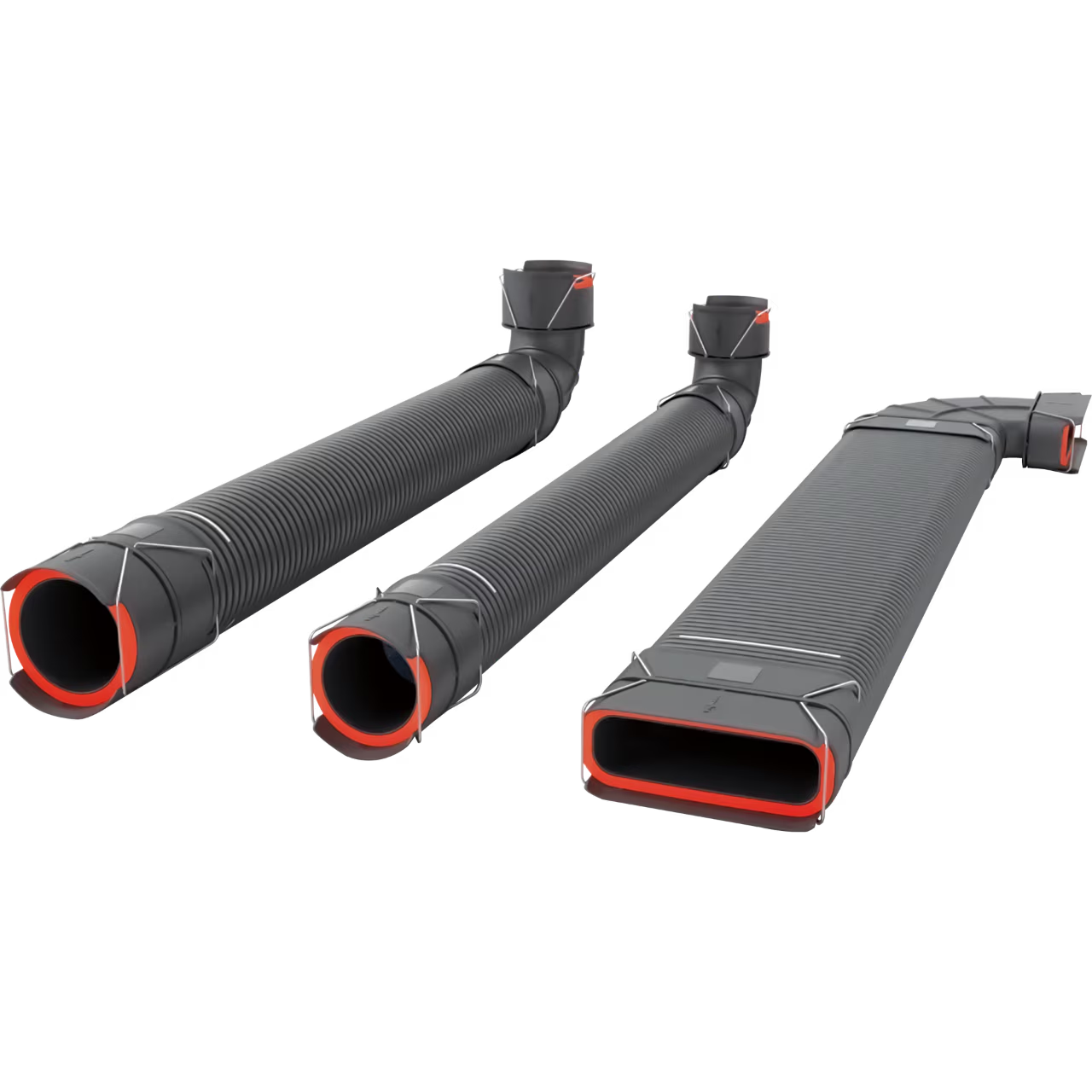
The operating principle of central mechanical ventilation also involves the installation of air ducts. There are several installation options. The most common are the following methods:
This type of installation is often used in new buildings. In this case, flat ducts are first laid directly on the unprepared floor, followed by insulation. If necessary, underfloor heating pipes are laid over this, followed by a final layer of screed. After this, the air ducts are no longer visible. Only floor or ceiling diffusers indicate the presence of a ventilation system underneath.
An alternative to installing air ducts on unfinished floors is installation in concrete. For this purpose, round air ducts are typically placed within the steel ceiling reinforcement during the initial construction phase. Only then is the concrete poured. This installation method is suitable for both partially finished ceilings and concrete ceilings poured in place. The advantage of this installation is that no additional floor structure is required. However, detailed preliminary planning with a design engineer is necessary.
Depending on the room’s height, ventilation systems can also be installed in suspended ceilings. The Vitovent 200-C and Vitovent 300-C flat ceiling units are particularly suitable for this purpose. These units can be mounted directly to the ceiling. The air ducts leading to individual rooms are integrated into the suspended ceiling, making them invisible.
A building’s central mechanical ventilation system consists of a ventilation unit and an air distribution system. The air distribution system is concealed in the floor or built into the wall, with only the air diffusers visible. The air exchange rate is independently regulated by the central ventilation unit.
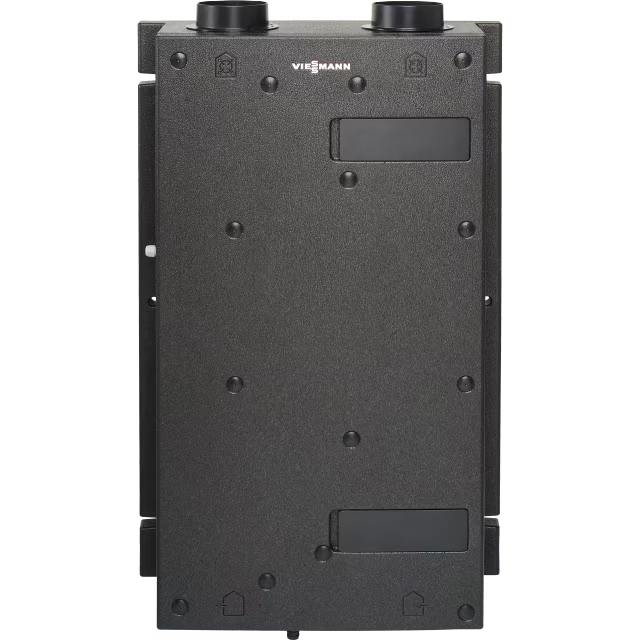
Depending on the building’s characteristics and individual requirements, various central ventilation systems should be considered. Ceiling-mounted units, such as the Vitovent 200-C and Vitovent 300-C , have a very low installation height and can be integrated into a suspended ceiling. Wall-mounted units, such as the Vitovent 300-W , are somewhat larger and can provide airflows from 300 m³/h to 400 m³/h.
All AHI Carrier central ventilation units can be controlled via the ViCare and VitoGuide apps. To do this, the control system must be integrated with the corresponding heat generator and connected via the Vitoconnect unit. This way, the ventilation system and heat generator form a central building management unit, both visually and technically. An example is the Vitoair FS ventilation system , which can be installed flexibly: under the ceiling, on the wall, or lying flat in the attic.
All AHI Carrier central ventilation systems feature heat recovery. This means they extract heat from the exhaust air and then transfer it to the supply air. This increases efficiency and saves on heating costs.
You can find more tips and information on this in the “Mechanical Ventilation” section on heizung.de .
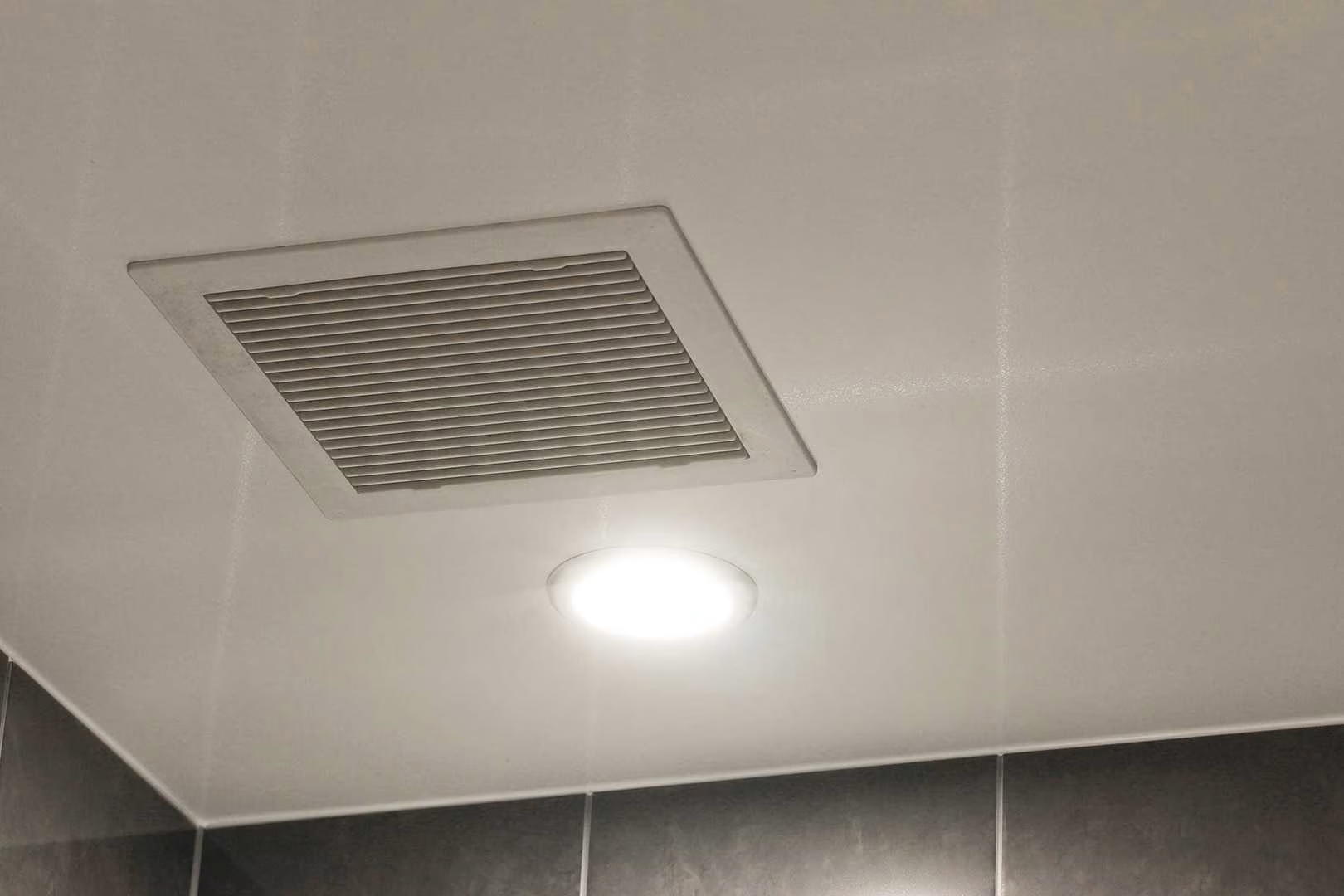
Bathroom Ventilation: Due to the high humidity in bathrooms, ventilation is especially important and, in some cases, even required by law. Learn more about bathroom ventilation options in our guide.
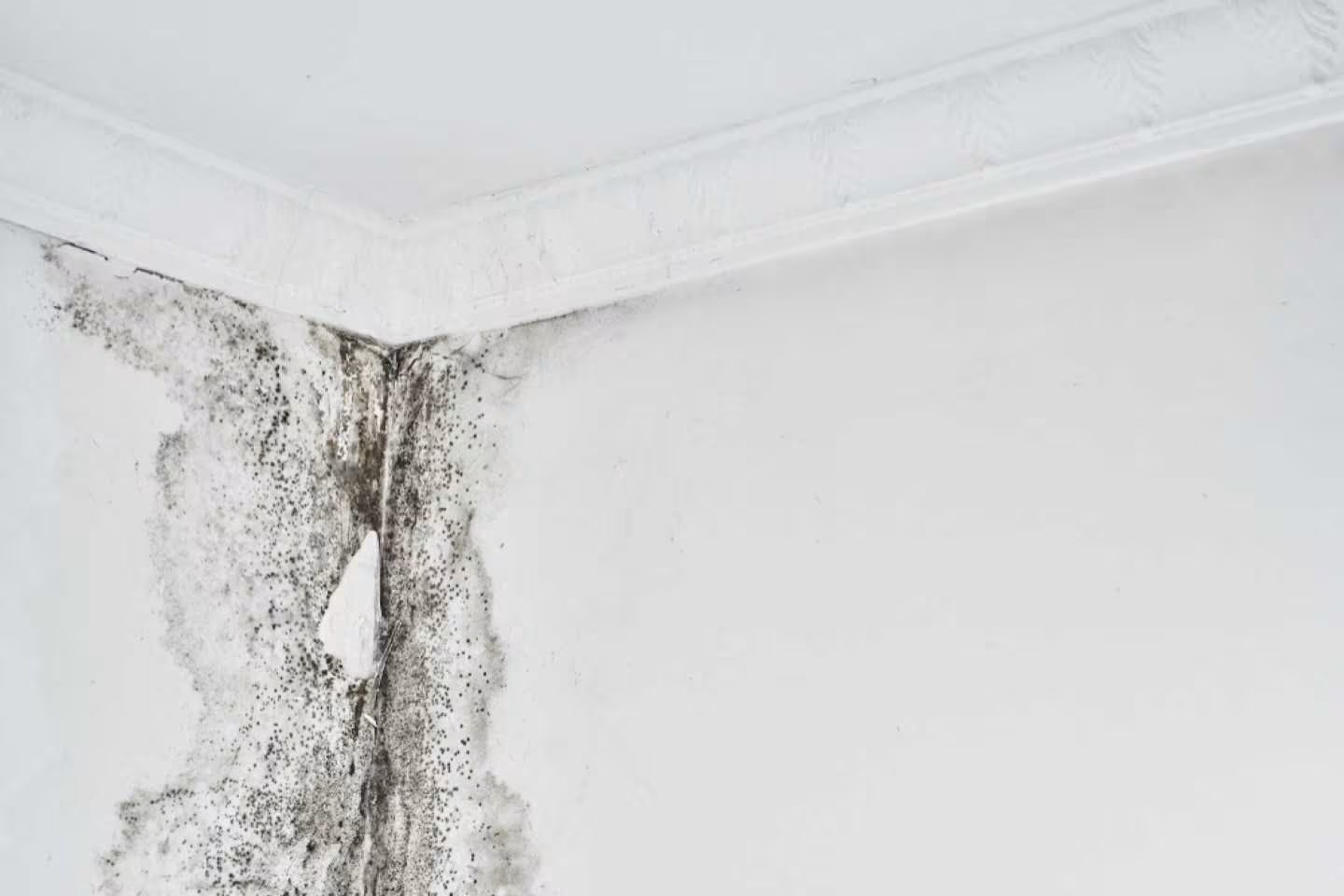
We’ll show you how to prevent mold, from simple practical tips to installing mechanical ventilation systems.
Our heating equipment dictionary contains information and explanations of heating equipment terms, as well as technical terms specific to AHI Carrier.