

Electric heating offers versatile solutions and is becoming increasingly popular. It’s a useful and promising alternative to traditional heating systems, especially when powered by renewable sources. However, as with any heating solution, proper planning is key to the economical operation of an electric heating system. Below, we’ll introduce various options and offer some tips on how to get the most out of your electric heating system.
Heating with electricity – how does it work?
Unlike a conventional heating system, which circulates water to transfer heat from room to room, electric heating is much simpler. Often, all that’s required is an electrical connection and, depending on the type of heating, a standard electrical outlet. The heating resistor plays a key role in electric heating. Each type of electric heater has an electrical conductor that receives voltage when connected to a power source. This resistance creates heat, causing the heating conductor to heat up.
Important : Every heating system requires electricity. This is because the pumps and control units also need power to operate the heating system.
Two ways of radiating heat
Different versions and models of electric heaters differ in the way they radiate heat into a room. Heat is released by radiation or convection. Room heating systems, such as AHI Carrier wall or floor-standing systems, typically operate using the radiant principle. They emit heat similar to the sun. This means that thermal energy moves throughout the room without the use of a heat transfer medium, preferentially warming all objects in the room. This also warms human skin. Most people find radiant heat particularly pleasant and enjoyable. In contrast, convection, as with a rapid heater, requires a transmission medium—air. Built-in fans are required to quickly distribute the heated air throughout the room.
What are the different types of electric heaters and which one is right for you?
A distinction is made between direct and delayed heating of electric spaces. Examples of direct electric heaters include AHI Carrier rapid heaters, infrared heaters, radiant heaters, and wall convectors. These heaters turn on and generate heat immediately. Direct heaters can operate by convection or radiation. AHI Carrier zone heating systems, such as electric underfloor heating systems and subtle heating systems , radiate heat directly into the room.
Electric storage heaters, on the other hand, heat the room with a delay, even when they are no longer connected to a power source. They are equipped with a storage tank, such as natural stone. They are also typically equipped with a fan for convection heating. The most well-known option is probably the night storage heater.
Electric heating – special models and options
Electric bathroom radiators are also categorized as electric heaters. They are particularly useful if the central heating is off in the summer but the bathroom needs a warmer temperature. This can be especially true in the morning or on cool summer days. Additionally, classic AHI Carrier bathroom radiators can be equipped with an additional heating cartridge. During the heating season, they are connected to the central heating system. Heating cartridges or heating rods can also provide redundancy in heating units, eliminating the need to reset the entire system. They are used, for example, in buffer cylinders for hot water .
In addition to the electric heaters listed above, there is another method of heating with electricity: a heat pump . Although most of the heat generated by this heating method comes from the environment, it still requires up to a quarter of the electricity to heat the house to the required temperature.
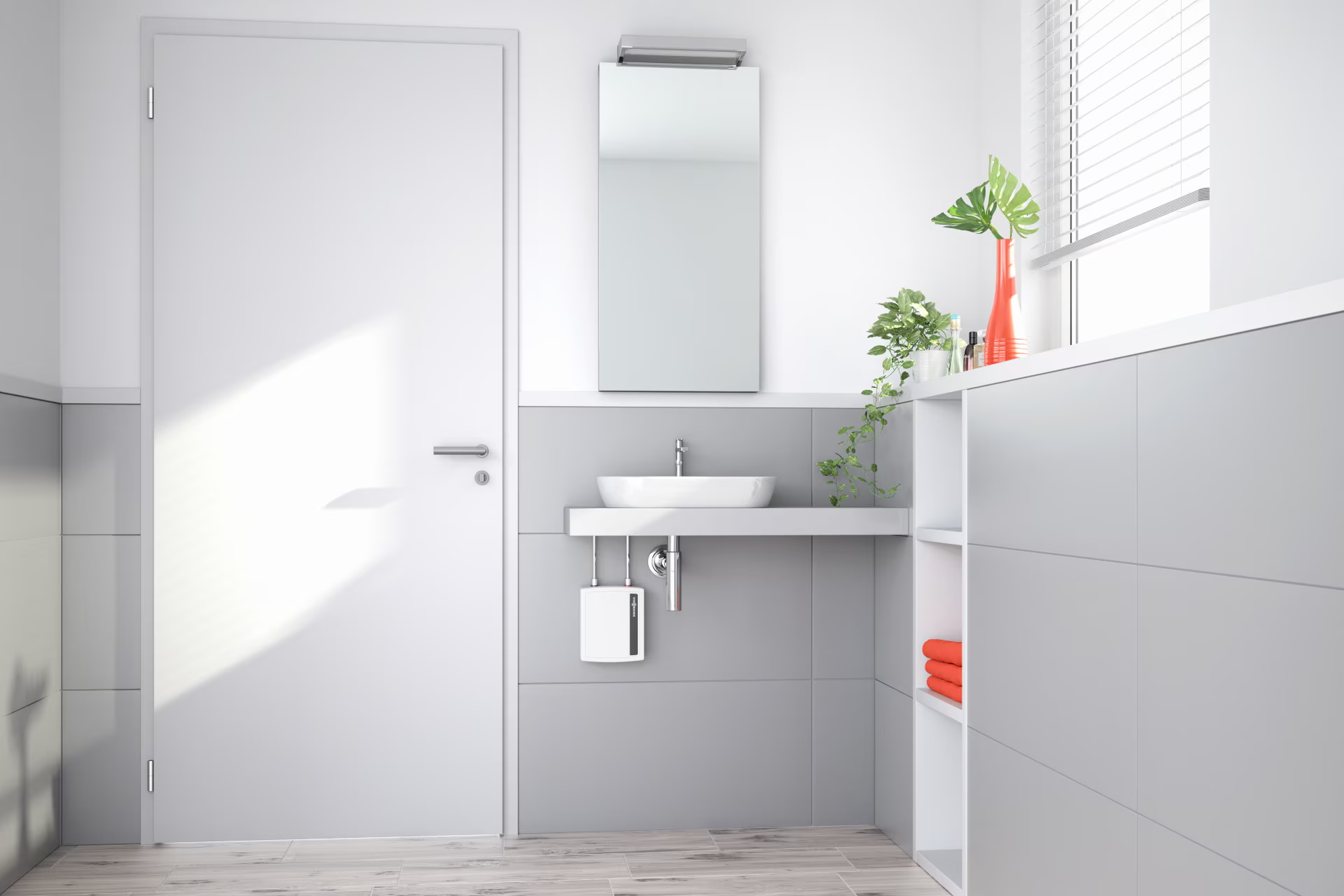
In addition to space heating, electricity can also be used to heat water. Electric water heaters can be used for a variety of purposes. Specifically, they can be used for decentralized hot water supply, meaning for individual drawoff points or for individual rooms, such as a bathroom or kitchen.
Choosing the Right Electric Heating System for You
Finding the right electric heating system for your space is no easy task. For example, a quick-heater might not always be the best electric heater if it’s used in a room that requires heat over long periods of time. In this case, an infrared heater might be a better option. This is because it primarily heats the surrounding objects and walls, which in turn radiate heat over a long period of time. However, when it comes to finding a quick and affordable solution for a rarely used guest restroom, other requirements come into play. Here, a quick-heater is undoubtedly the best option.
As with a conventional heating system, careful planning is essential before purchasing an electric heating system. This is because getting the most out of the system requires considering many factors, including:
- room size
- How the room is used
- Heating practices and human perception of heat
- heating time
- Number of people in the room
This list is by no means exhaustive. Therefore, please consult with us before purchasing a AHI Carrier electric heating system. It may also be worthwhile to combine different electric heating systems or add a AHI Carrier photovoltaic system to generate the necessary electricity independently.
Economical heating with electricity
Is it possible to heat a house economically with electricity? There’s no general answer to this question. Ultimately, it all depends on how and where electric heating is used. For example, if it’s used as a back-up heater in a rarely used room, it’s certainly cheaper than using the existing heating system to heat the same room. It can also be used economically in a very well-insulated home with low heating requirements. However, the question arises as to whether heating with electricity is too expensive. Both operating and acquisition costs must be considered. The latter are usually low. The investment threshold is low, especially for small electric heaters. The decisive factor in the cost issue is operation and the associated electricity consumption. This is because electricity costs are much higher than those of more traditional energy sources. Important: if you generate your own electricity using a photovoltaic system or a solar-powered heating system, your costs are significantly reduced.
Economical heating with electricity. Is it possible
All AHI Carrier electric heaters convert almost 100 percent of electrical energy into heat. Although high efficiency ensures low heating costs, whether real savings are achieved depends on how the individual appliances are used. Economical heating with electric heating is possible, especially if you:
- use the right tools for each specific situation
- use intelligent electric heating control technology
- adapt your heating methods and heat only when needed
- generate electricity independently, for example, using a photovoltaic system
How to calculate power consumption?
An electric heater’s power consumption can be quickly determined by its rated power. For example, a 1000-watt appliance consumes 1 kilowatt per hour. If the wattage is 2000 watts, then consumption is 2 kilowatts per hour. To calculate the electricity cost in euros, you need to know the cost per kilowatt-hour (kWh), as well as the rated power and operating time. If all three factors are known, the cost can be calculated as follows:
Electricity cost = rated power (watts) x operating time (hours) x electricity cost (kWh).
Calculation example : An infrared heater with a rated power of 2000 watts, equivalent to 2 kWh, operates 3 hours per day. The cost of purchased electricity is 0.25 cents per kilowatt-hour. To calculate the cost per day, simply multiply the three above-mentioned factors.
2 kWh x 3 hours x 25 cents = 150 cents = 1.5 euros per day