
Topics at a glance
The popular heat pump heating system plays a crucial role in the current energy transition, as it doesn’t require fossil fuels to provide sufficient heat for heating and hot water. When making a purchasing decision and planning, several aspects of this heat generator need to be considered: choosing the right type of heat pump, finding the optimal installation location, and cost. But beyond that, especially in the case of an air-to-water heat pump with an outdoor unit, noise levels are an important factor to consider. But how noisy is a heat pump in general? Are there any limits? And what can be done to reduce the noise level of a newly installed or existing heat pump? We’ll answer these and other questions in the following guide.
How noisy is a heat pump?
Heat pumps operate using compressors and fans, the latter primarily found in air-source heat pumps, which generate noise. Noise levels average between 50 and 65 decibels (for outdoor units). A-weighted decibel, or dB(A), is a unit of measurement of sound pressure or noise level, based on the internationally standardized A-weighted frequency curve. Specific noise level values for AHI Carrier heat pumps can be found in the product documentation or, best, consult your installer. It’s important to note that these values are approximate. It’s also important to note that 50-65 decibels are measured when standing directly next to the heat pump. At a distance of three meters, this value is below 45 decibels.
Heat pump volume comparison
The perception of loudness and noise varies greatly. To categorize how loud 45 decibels actually is, a comparison is helpful. This value is roughly equivalent to the hum of a refrigerator or the sound of gentle rain. Normal traffic in close proximity produces around 70 dB(A). A conversation is around 60 dB(A). Even a whisper can be described as 30 dB(A). The fall of a feather produces just over 0 dB(A) and is thus at the limit of human hearing.
Factors Affecting Heat Pump Volume
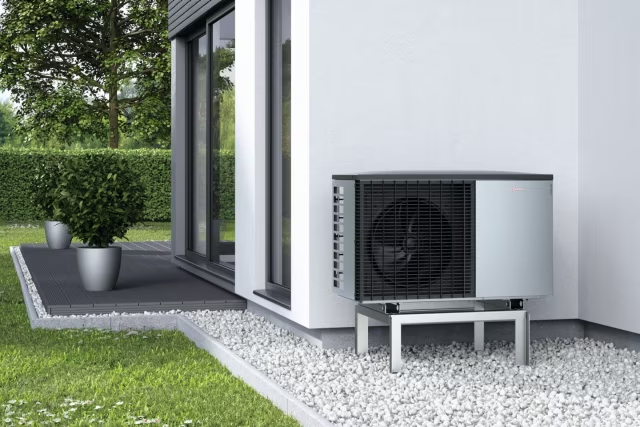
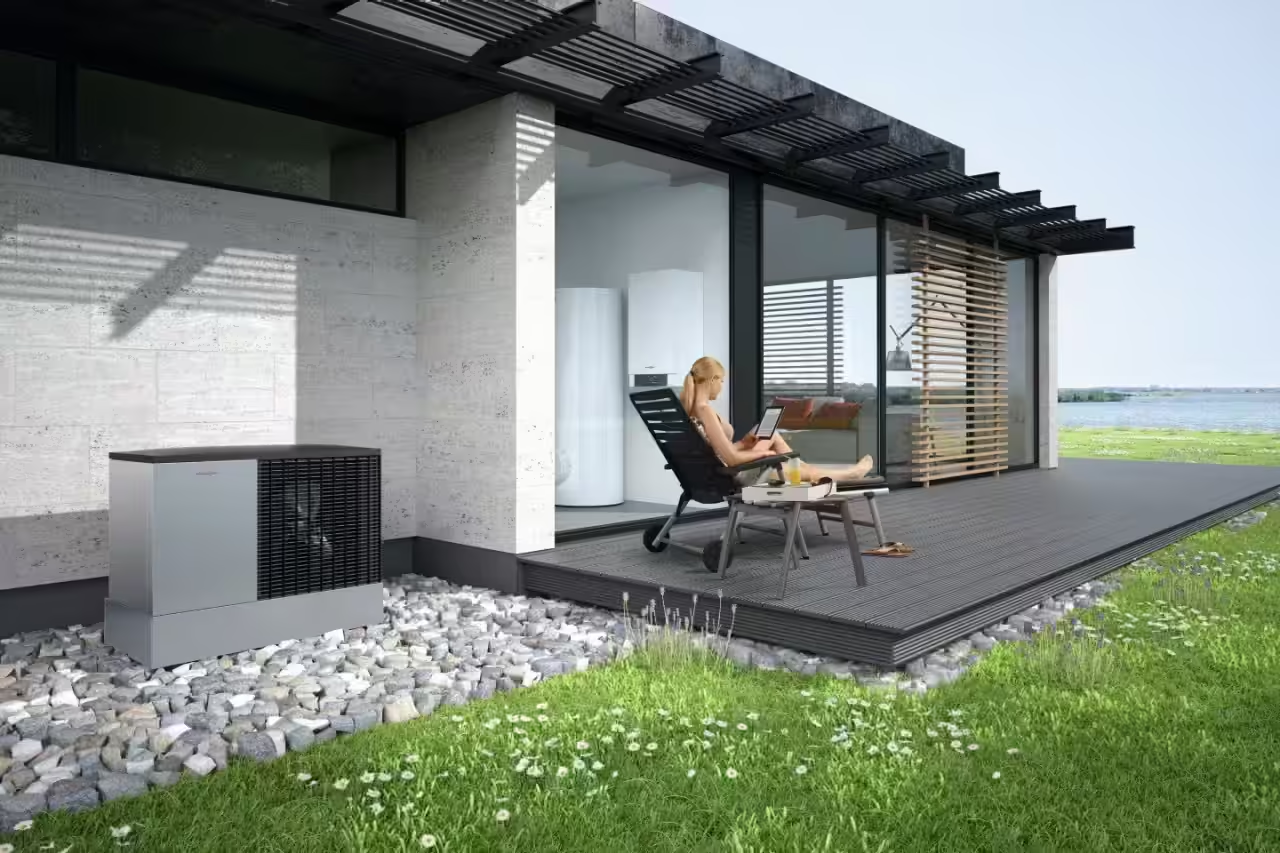
The appropriate installation location is crucial when it comes to heat pump noise levels. As mentioned, the decibel value decreases with distance from the unit. Installation location also plays a crucial role. Noise emissions can increase under overhangs or between two walls. These locations are best avoided during installation. Power also determines the noise level of a heat pump. Heat pumps with lower power ratings are significantly quieter. Furthermore, two fundamental factors determine the volume of a heat pump: indoor/outdoor installation and the type of heat pump. There are various characteristics to consider when choosing a design—indoor and outdoor units, as well as split designs—which you’ll find in the next section. A purely outdoor installation in a monoblock design, where all the main processes take place outside in the unit, is somewhat louder compared to an indoor unit or a split design. For water-to-water and brine-to-water heat pumps, volume plays a secondary role.
Factors at a glance:
- Installation location
- Design/Construction
- Heat pump type
More information about the heat pump

Heat pump tips
Request a consultation now →Noise reduction measures
There are a variety of measures to reduce heat pump noise, but they should always begin with professional consultation and planning. Our AHI Carrier partners inspect potential installation sites and plan specific measures in advance.
Measures to reduce noise levels when installed outdoors and indoors
It’s also important to note that outdoor heat pumps should be located at least three meters away from adjacent properties. Ideally, the outdoor unit shouldn’t face a bedroom or children’s room window. Exhaust fans should also be installed away from other houses, if possible. As mentioned above, the outdoor unit should also avoid being located under an overhang or even in an alcove or corner. There, the sound can be amplified as an echo. For indoor units, a sound-absorbing base, such as a concrete base with a rubber mat, can help. Supply and exhaust vents should not be located near a bedroom, even in your own home. Also, avoid installing a heat pump in a completely empty room; if necessary, install a soundproof door.
Downstream Solutions and What You Can Do Yourself
As already noted, installation location and its position relative to your home and neighboring properties are crucial. However, conditions may change over time. Noise reduction measures for existing units, such as additional insulation of the compressor or other components, and installation of a soundproof enclosure, should be performed by your trusted installer. One of the final steps should be relocation of the heat pump, which should also be performed by a qualified installer.
Storage tanks and underfloor heating are especially important for ensuring quiet operation at night. Storage tanks and underfloor heating systems accumulate heat within the building. When installed, the heat pump’s output can be reduced at night. This reduced output significantly reduces noise levels. Furthermore, a hot water storage tank makes nights quieter by deferring water heating to the early morning hours. Storage tanks and panel heaters are also easily retrofitted.
But you can also help reduce noise levels yourself, for example, by planting a hedge or constructing soundproof walls. Special soundproofing panels can be equally useful.
How loud can a heat pump be? – Limits and standards
The noise level of a heat pump depends largely on the time of day and the residential area. Heaters should operate more quietly at night than during the day. Depending on the type of residential area, heat pumps may be louder in purely industrial areas. To provide specific reference values and a basis for interpretation, the Federal Emissions Control Act (BImSchG) has issued the Technical Instruction on Noise Protection, or TA Lärm, as an administrative regulation. Below is an overview of the values in various areas during the day and night.
| Accommodation | Limit value day | Maximum value at night |
| resort area | 45 dB(A) | 35 dB(A) |
| Clean residential area | 50 dB(A) | 35 dB(A) |
| General living area / small living area | 55 dB(A) | 40 dB(A) |
| Mixed-use area | 60 dB(A) | 45 dB(A) |
| Urban area | 63 dB(A) | 45 dB(A) |
| Commercial zone | 65 dB(A) | 50 dB(A) |
| Industrial zone | 70 dB(A) | 70 dB(A) |
For detailed information, including the benefits of AHI Carrier heat pumps in terms of volume and noise, please see the section “Air-to-water heat pumps : volume and sound“.