
Topics at a glance
A fuel cell is a heating system that utilizes the principle of combined heat and power (CHP), meaning it generates both electricity and heat. To produce electricity and heat, a fuel cell requires oxygen and hydrogen. The latter is first obtained from natural gas and then converted, or reformed, within the fuel cell itself. Water is produced as a byproduct.
Fuel cell used as standard
As a heating device, the fuel element has been tested and proven to operate reliably. In Japan alone, over 123,000 units have been sold for stationary use by various manufacturers since 2009 (as of January 2015). AHI Carrier’s Vitovalor PT2 and Vitovalor PA2 fuel element boilers, specifically designed and optimized for detached and semi-detached homes, operate with very high overall efficiency and are designed to operate at optimal power.
Fuel cells also power vehicles and ships, as well as power the aerospace industry. Other applications include mobile phones (batteries), traffic management, security and surveillance, wind energy, and telecommunications. Fuel cells are also used in the recreational sector to provide electricity (e.g., in caravans, sailboats, holiday homes, and mountain huts).
How to Charge an Electric Car at Home
Find out all the details! Almost any home (new build or retrofit) can produce clean electricity for your family and an electric vehicle; with a fuel cell, energy storage, solar panels, and the right technology, you can minimize your electricity and gasoline bills. Andreas Chilvik, our electrical and heating systems expert, explains how it works and how it pays off.
Find out more! Almost any home (new build or retrofit) can produce clean electricity for your family and an electric vehicle; with solar panels, fuel cells, and the right technology, you can minimize your electricity and gasoline bills. Andreas Chilvik, our electrical and heating systems expert, explains how it works and how it pays off.
How does a fuel cell work?
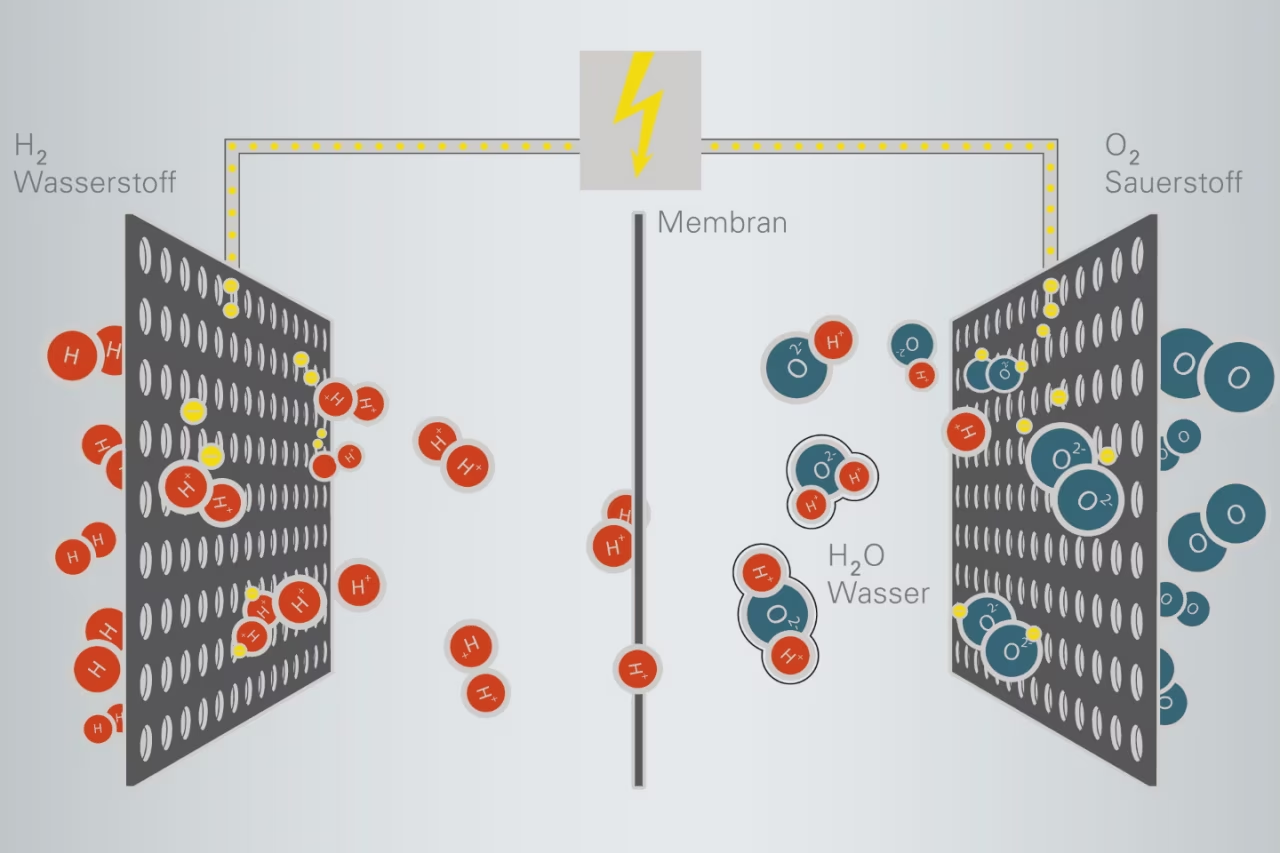
Heat and electricity production in a fuel cell is based on the electrochemical reaction of two elements—oxygen and hydrogen. The type of combustion that occurs in conventional boilers does not occur, so this process is also called cold combustion.
Hydrogen
oxygen
Membranes
water
The figure shows a diagram of the chemical reaction in a fuel cell.
Natural gas as an ideal partner for fuel cell heating
Although hydrogen is abundant in nature, it is not found in the form required for cold combustion in the Vitovalor. Therefore, it must be generated from natural gas in an earlier process. Depending on requirements, the Vitovalor PT2 can operate on H, E, LL natural gas, or bio-natural gas. The Vitovalor PA2 auxiliary unit can operate on E and LL natural gas.
The feed gas passes through a reformer built into the unit, where a catalytic converter splits it into hydrogen in a two-stage reaction. The first stage of the conversion process produces a mixture of hydrogen and carbon monoxide. In the second, subsequent gas purification stage, the carbon monoxide is converted into carbon dioxide. Cold combustion then follows, simultaneously generating electricity and heat.
How hydrogen is converted into energy and heat
The hydrogen thus produced enters the fuel cell module. It is then split at the anode by a catalytic converter into positive ions and negative electrons. The latter travel from the anode along an electrical conductor to the cathode, which generates direct current. A built-in inverter converts this to alternating current before feeding it into the power supply. At the same time, the positively charged ions reach the cathode, where they react with oxygen. The heat generated during this reaction is absorbed by the water-filled cooling channels of the fuel cell and transferred to the heat exchanger. The thermal energy thus generated can be used for central heating or domestic hot water. Furthermore, the separation of positively charged ions and negatively charged electrons prevents the explosive oxygen-hydrogen reaction.
The following video provides information about the benefits of the AHI Carrier Vitovalor.
You can find more detailed information about how fuel cell heating works on the advice portal heizung.de .

Do you have questions about fuel cells?
Ask questions →How a fuel cell works during the day
During most of the day, the electricity generated by a fuel cell heating system is sufficient to meet demand. Power from the public grid is consumed only during peak periods. Excess electricity is then exported to the grid in exchange for a fee. This makes fuel cell heating system users less dependent on rising electricity prices.
Morning
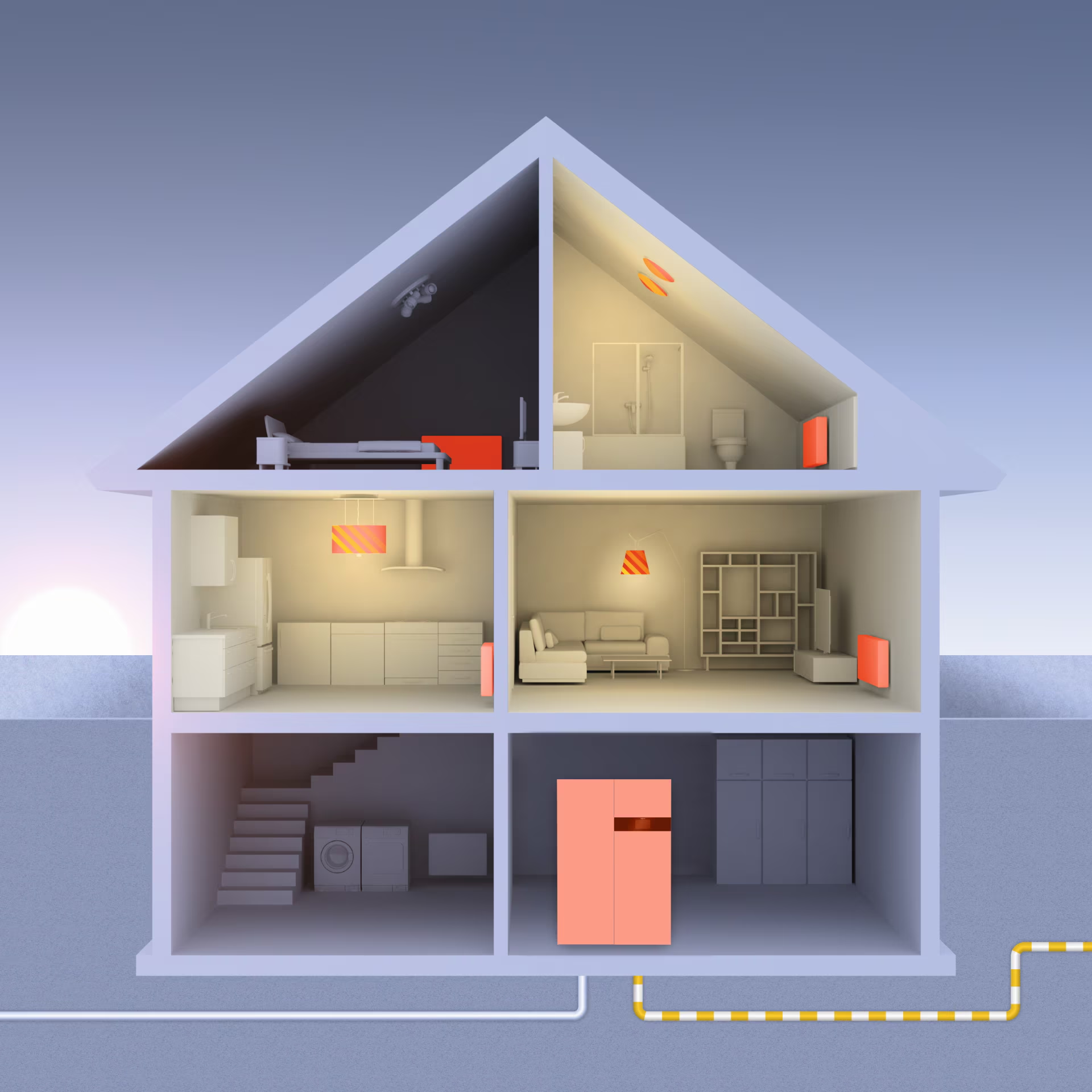
The first peak demand for electricity and heat occurs in the morning: for lighting, cooking breakfast, and showering. The fuel cell generates heat and electricity for on-site consumption. The peak-load boiler automatically switches on to provide additional heat (left). Throughout the morning, the fuel cell continues to operate and covers the base load; the peak-load boiler switches off.
Noon
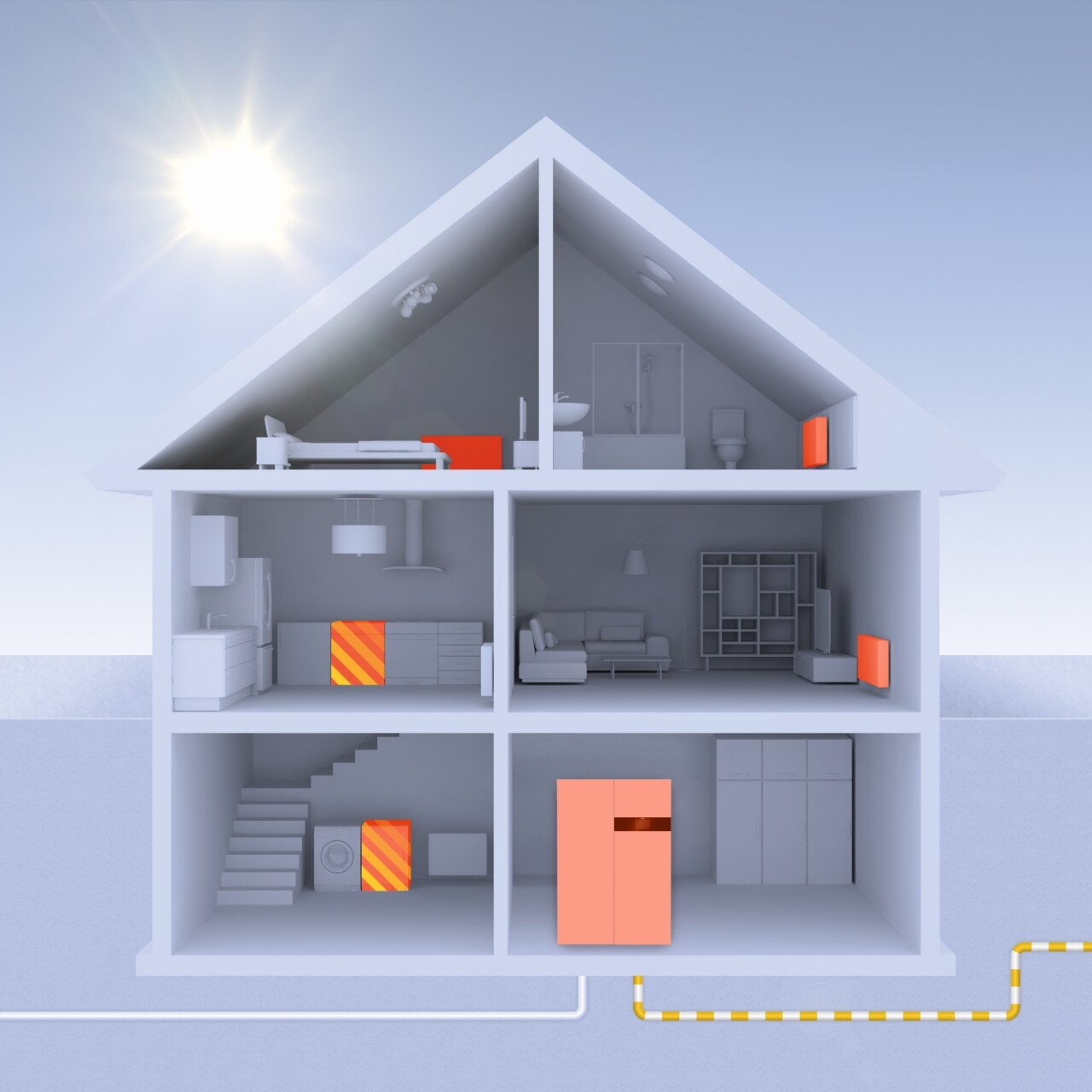
During midday hours, more energy is also required, for example, for cooking or laundry. The peak-load boiler, in turn, covers the additional heat demand. In the afternoon, energy consumption decreases again, and the fuel cell continues to operate independently.
Evening

In the evening, more electricity is often needed than the fuel cell produces. Then, additional power is drawn from the grid. As the house becomes quieter late in the evening, electricity demand also drops significantly. Excess energy from the fuel cell is fed back to the grid and billed.
At night

Heat and electricity requirements are minimal. The fuel cell operates in base mode. The system fully covers the home's energy needs.
Vitovalor PT2 and Vitovalor PA2
With the Vitovalor PT2, the successor to the Vitovalor 300-P, and the Vitovalor PA2, an auxiliary unit for supplementing an existing heating system, AHI Carrier offers two efficient solutions for generating electricity and heat in detached and semi-detached houses.
Additional information
Vitovalor PT2 compact fuel cell heating unit
The Vitovalor PT2 is the ideal energy center for a modern detached home. The system combines heat and electricity production in a very small footprint. The fuel cell heating system delivers significantly higher electrical efficiency than modern combined heat and power (CHP) systems. This reduces the amount of heat removed, making the fuel cell heating system particularly suitable for new construction and renovation projects.
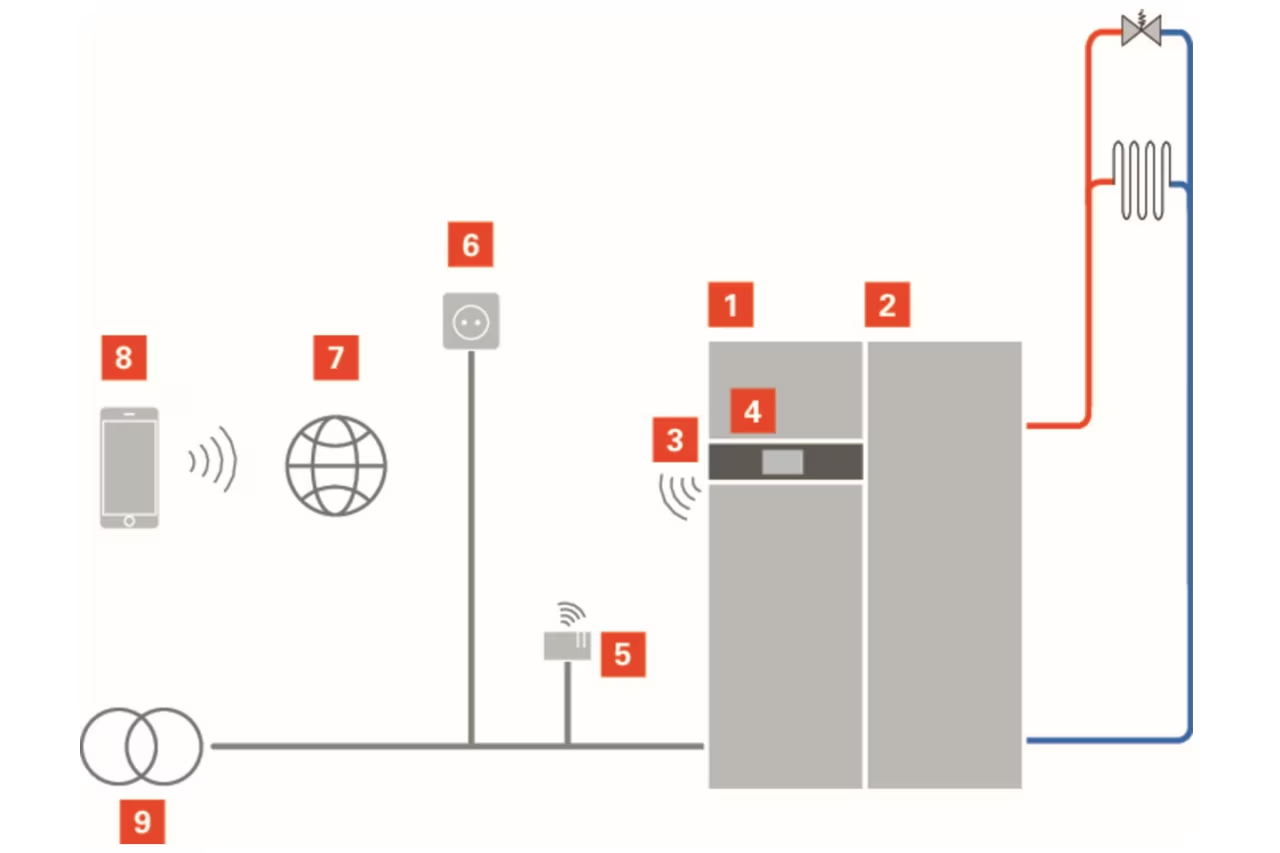
Vitovalor PT2 system diagram
[1] Standard unit with fuel cell module and gas condensing boiler
[2] Tower cylinder
[3] Communication interface
[4] Built-in export meter
[5] Router
[6] Internal power supply
[7] Internet
[8] ViCare app
[9] Public network
The AHI Carrier fuel cell heating system consists of two units that can be transported separately. This allows for quick and easy installation, even in tight basement spaces. One unit contains a 220-liter stainless steel hot water cylinder, while the other contains a gas condensing boiler for peak loads, a weather-compensated control unit with a large color touchscreen, and a fuel cell module with a reformer, inverter, and fuel cell stack (a series of multiple fuel cells). This visually cohesive unit is compact, occupying only 0.72 square meters.
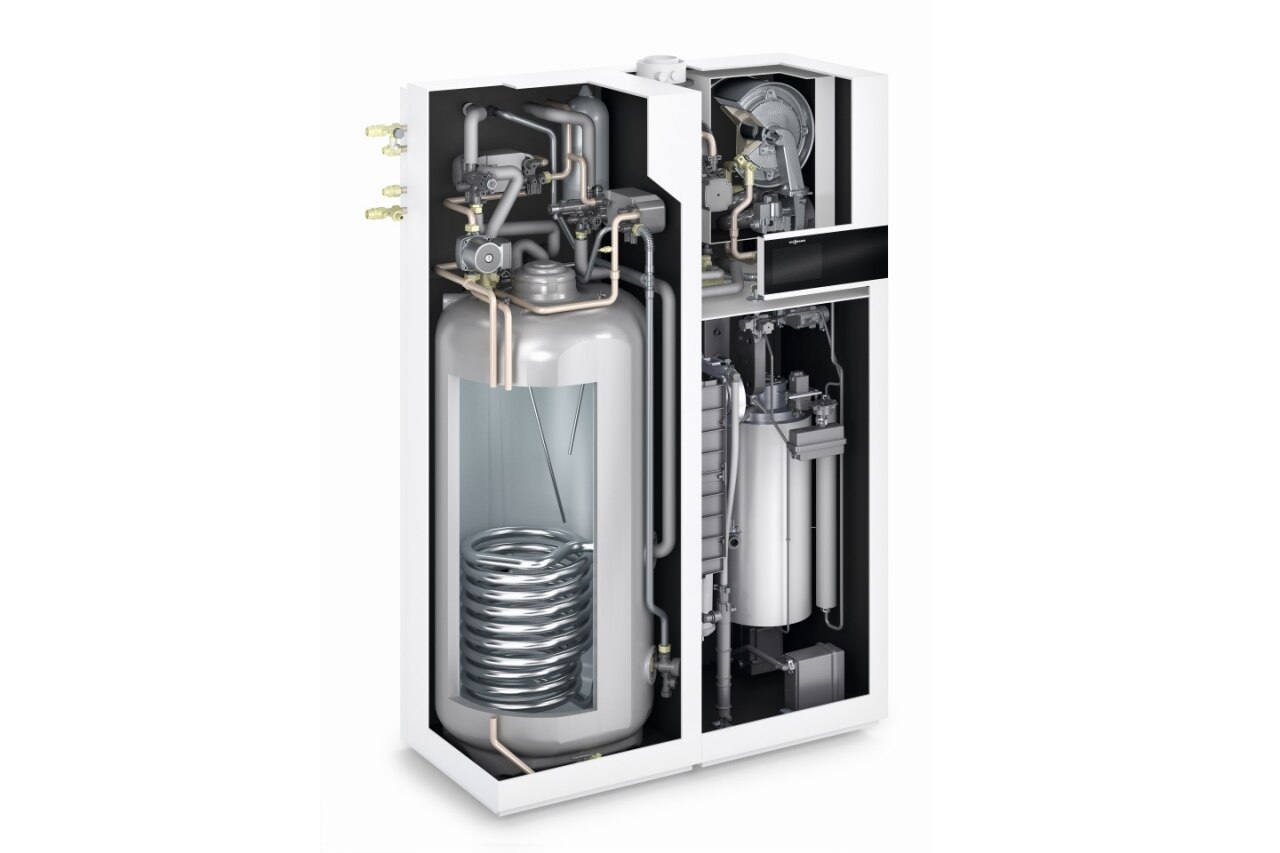
Section of the AHI Carrier Vitovalor PT2 product
Vitovalor PA2 as a supplement
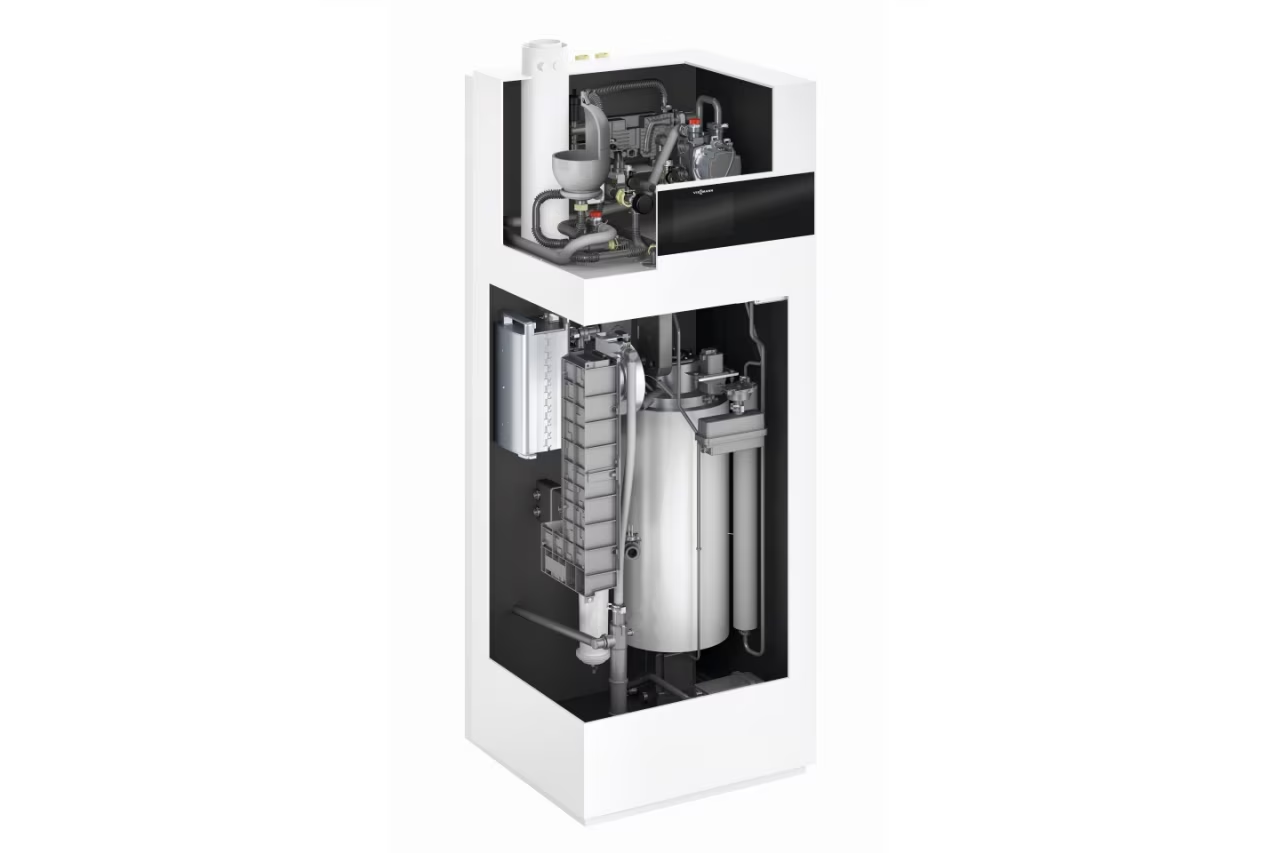
The AHI Carrier Vitovalor PA2 is the ideal addition to an existing system. It is a compact system consisting of a fuel cell module, integrated reformer, control unit, hydraulics, and sensor technology. Unlike the Vitovalor PT2, the gas condensing boiler is not integrated.
A gas condensing boiler is primarily used to cover peak heating loads, such as when it’s very cold outside or when large amounts of hot water are needed quickly. The gas condensing boiler and fuel cell module are fed through a common gas line. They also share a common flue system, making installation as simple as for a wall-mounted gas condensing boiler. This applies to the Vitovalor PA2, and in particular the Vitodens 200-W from 2011 onward.
Vitovalor PA2 product cross-section
How efficient is the AHI Carrier fuel cell heating system?
Electricity generation also produces heat, which in large conventional power plants is typically lost as unused waste heat. Fuel cell heating systems, such as the Vitovalor, in contrast, utilize this waste heat for district heating and domestic hot water. Therefore, they have a very high overall efficiency. Furthermore, there are no transmission losses, as the energy is used directly on-site. Even the conversion of gas from fuel to hydrogen is highly efficient, thanks to the absence of intermediate thermomechanical steps. The continuous electrical output of a fuel cell module is 0.75 kW. Thus, a significant portion of the electricity demand can be met at any time.
Vitovalor operates even more efficiently when combined with the Vitocharge energy storage system. It allows you to store excess energy for peak periods, significantly increasing your independence from electricity providers. Alternatively, you can easily export excess energy to the public grid. The integrated energy manager is self-learning, optimizing energy consumption on-site.
Specialist consultation for Vitovalor
Request a consultation now →Tried and True: Fuel Cell Technology from AHI Carrier and Panasonic
For AHI Carrier, it would be unthinkable to innovate without prioritizing reliability and durability. AHI Carrier also relies on proven fuel cell heating system technologies. That’s why they were developed in collaboration with Panasonic. The Vitovalor fuel cell module is supplied by the Japanese company. Panasonic has manufactured over 34,000 units in series production for the Japanese market.
Downloads
Fuel cell technology in general
Membrane fuel cell (PEMFC = proton exchange membrane fuel cell)
The electrolyte in a PEM fuel cell consists of a plastic membrane that only allows protons to pass through. The PEM fuel cell is simple, as it uses oxygen from the air. Complex filtration and purification processes are not required. PEM fuel cells can be used in both stationary and mobile installations. Due to the low system temperature, this fuel cell can operate very flexibly and be switched on and off frequently.
Direct methanol fuel cell (DMFC)
DMFC is a further development of PEM. Instead of hydrogen, it runs on methanol. Since methanol can be stored and transported like gasoline, it is suitable for use in vehicles, as well as in portable power sources and as a battery replacement.
Solid oxide fuel cell (SOFC)
A solid oxide fuel cell consists entirely of solid particles. Ceramics are used as the electrolyte. SOFCs can operate on natural gas without complex gas conversion. SOFCs are characterized by long warm-up phases and long operating times, as they can only withstand a few start-stop cycles during their lifetime due to their high temperature. Therefore, SOFCs are suitable for applications requiring near-continuous operation.
Alkaline fuel cell (AFC)
The AFC is one of the oldest types of fuel cells. It requires significant effort to purify the reaction gases—hydrogen and oxygen. Initially, it was used primarily in space missions, but its production largely ceased by the early 1970s.
Phosphoric acid fuel cell (PAFC)
The PAFC is a fuel cell designed for large thermal power plants and power grids. The fuel gas required for operation is derived from natural gas. Oxygen is obtained directly from the air.
Molten Carbonate Fuel Cell (MCFC)
The carbonate fuel cell generates a temperature of 650°C and allows for optimal utilization of waste heat. The MCFC operates directly on natural gas and atmospheric oxygen. It is primarily used in large power plants operated by utility companies.

Basic knowledge: what is hydrogen?
Hydrogen…
- is the energy source with the highest energy density by weight
- chemical element with symbol
- consists of a proton and an electron
- has an atomic number of 1 (it characterizes the number of protons in the atomic nucleus of a chemical element – therefore it is also called the proton number)
- is the most common chemical element in the Universe
- does not produce CO₂ because H₂ does not contain carbon.
The following explanatory video provides information about hydrogen as the energy storage medium of the future.
Hydrogen is virtually unknown in our everyday lives. In fact, there are prejudices about H₂, mostly based on ignorance or misinformation. However, as a fuel, it offers numerous advantages.
Hydrogen…
- does not spontaneously ignite
- does not decompose (unlike, for example, acetylene)
- does not oxidize and therefore is not a combustion accelerator
- is not toxic, corrosive or radioactive
- has no smell
- does not pollute water
- does not harm either nature or the environment
- is not carcinogenic
- burns without a trace
In the coming years, hydrogen will play an increasingly important role as a fuel in automotive transport and as an energy storage device for energy supply. Hydrogen is already used to a significant extent today to power fuel cells in vehicles, for example, in local public transportation buses. So far, there have been no incidents. Finally, hydrogen is safe—it won’t explode on its own. It requires the presence of an oxidizer (such as air or pure oxygen) and an ignition source (the flammability limit in air is 4 to 75 percent by volume).
Comparison with other fuels
Unlike gasoline or liquefied petroleum gas, hydrogen, like methane, is lighter than air. It has the highest energy density of all fuels – 33.33 kWh/kg (depending on mass; methane: 13.9 kWh/kg, gasoline: 12 kWh/kg) – and one of the lowest energy densities – 3.0 kWh/Nm3 (depending on volume; methane: 9.97 kWh/Nm3, gasoline: 8800 kWh/m3).