What to do in case of malfunction?
We explain what’s important in the event of a faulty AHI Carrier heating system and what to pay attention to.


(Photo: © mariakray / Shutterstock.com)
If a malfunction occurs and the heating system loses water, this can lead to problems with heat distribution. This can reduce indoor comfort and even cause irreversible damage.
Heating systems are complex systems consisting not only of a boiler or hot water tank, but also of numerous fittings, valves, and piping. When the system starts operating, a circulation pump delivers hot water from the heat generator to all heating surfaces in the building. The coolant distributes the heat and ensures that all rooms reach the desired temperature. If the heating system malfunctions and loses water, it will only operate to a limited extent. Some radiators will gurgle. Some will stop emitting heat, and heat distribution throughout the house will be disrupted. If the heat generator is located high up in the house or if the heating system is losing a lot of water, it may not emit any heat at all. The system overheats, risking irreversible damage, and in the worst case, requiring replacement of the entire system. Fortunately, safety mechanisms such as a low-water indicator or integrated pressure monitoring reliably protect your AHI Carrier heating system from this.
Important to know: If a building’s structure is exposed to excessive moisture, it can also cause damage to floors, ceilings, or walls. Mold problems also often arise when homeowners fail to detect leaks promptly.
Are the radiators in your home making gurgling sounds? Are some heating surfaces cold, or is your heat generator malfunctioning? In all of these cases, there’s usually a fault, and the heating system is losing water. To check this, simply look at the pressure gauge. It’s located near the heat generator. It displays the pressure in the system and indicates a water loss if the pressure drops significantly below one bar.
It’s always possible for a heating system to lose some water due to leaky connections or something similar. The problem only arises when the pressure drops sharply over a short period of time. A resumption of pressure drop shortly after refilling the heating system also indicates water loss. Another sign is damp spots on the walls, ceiling, radiators, or under the heat generator. This also indicates a leak and water loss in the heating system.
We explain what’s important in the event of a faulty AHI Carrier heating system and what to pay attention to.

Is maintenance necessary at all, and if so, how often? What costs should you expect? Answers to these and other questions are provided in the following guide.
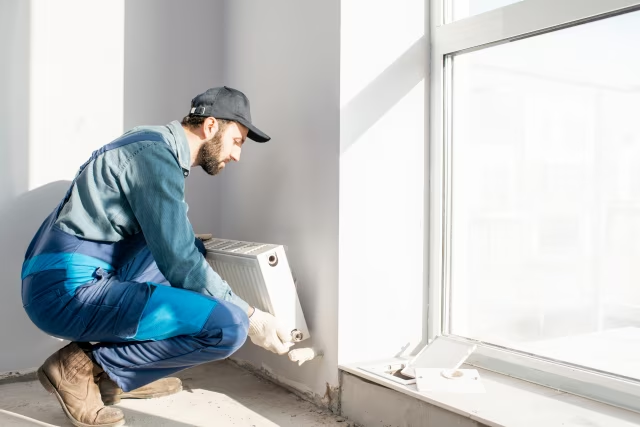
If you are considering replacing your radiators, this review will provide you with the most important information.