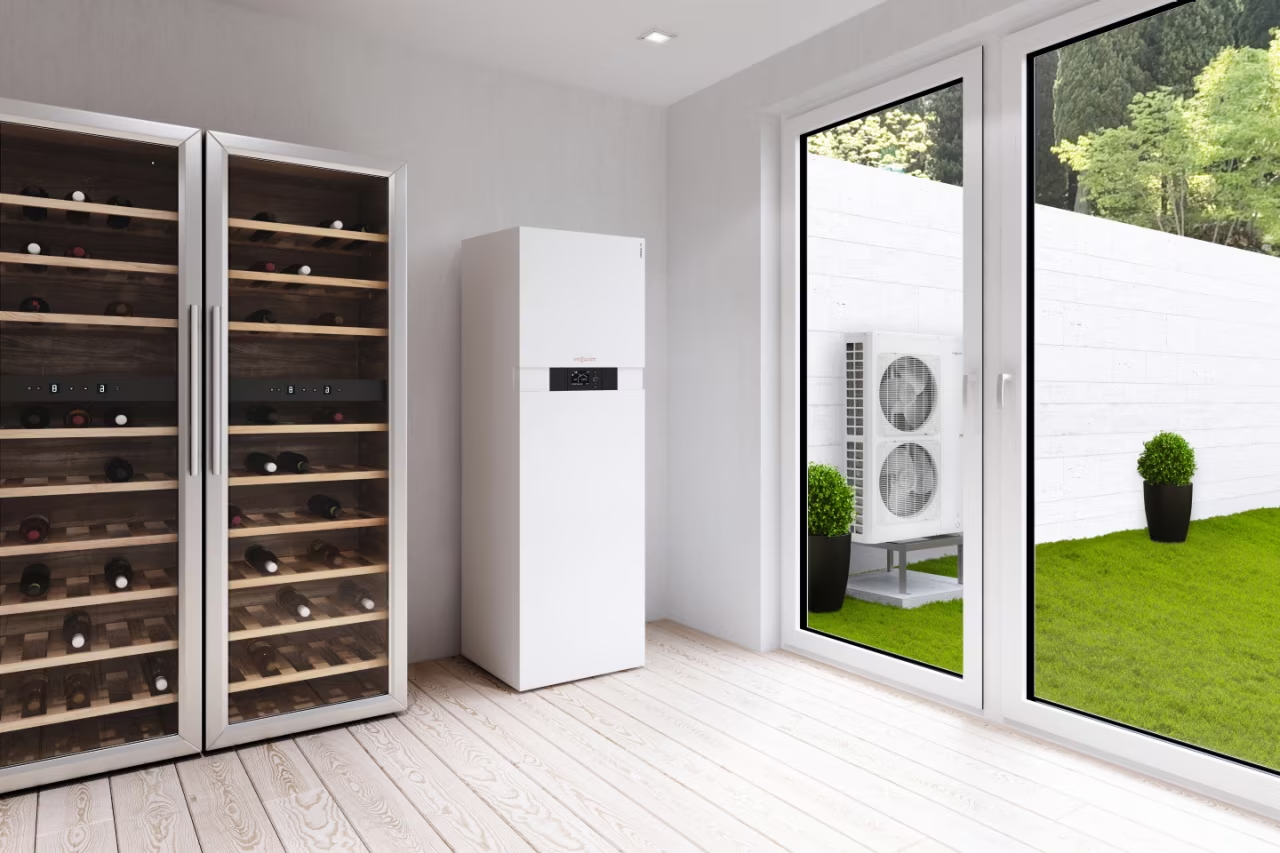
Alternatives to oil heating
Want to become less dependent on fossil fuels, reduce CO2 emissions, and save on heating costs? Our guide will tell you which alternatives to oil heating will help you achieve this.


Photo: © ArTono / Shutterstock.com
Anyone living in an older building sooner or later wonders how to most effectively modernize their heating system. Heating system modernization can also be of interest to owners of new buildings. Beyond the requirements of the Energy Performance of Buildings Act (GEG) , there are many reasons to install a new heating system in an older building. However, many homeowners are deterred by legal requirements and high investment costs. In our guide, we’ll answer the main questions related to heating system modernization in older buildings.
Many homeowners are initially unsure whether their home is even considered an old building. It’s difficult to provide a comprehensive definition of an old building because there are significant differences between the ages of buildings in terms of construction fabric, materials, and floor plans. To make our recommendations as helpful as possible for system owners, we base the question of what constitutes an old building on practical considerations. We also include modern existing buildings as old buildings. So, if you’re planning to upgrade your heating system and don’t live in a new building, our guide will also provide a convenient overview.

Since the first Energy Saving Ordinance (EnEV) of 2002, Germany has required the replacement of boilers commissioned before October 1, 1978. This regulation was amended several times until 2015 and was finally incorporated into the German Energy Conservation Ordinance (GEG), so it now applies to all oil and gas boilers over 30 years old. Exceptions and other considerations can be found in our guide to mandatory replacement of oil heating systems .
Those considering upgrading their heating systems in existing buildings have a free choice of all heating technologies and fuels until 2026. From 2026 onward, installation of new oil-fired heating systems will only be permitted as hybrid systems, meaning they integrate renewable energy sources. This is the goal of the German government’s climate package, adopted in the fall of 2019. However, there are exceptions for existing buildings, such as when a gas connection is not possible.
In addition to these obligations, before purchasing a AHI-Carrier heating system, you should discuss aspects such as boiler room fire safety with your heating contractor and the responsible flue gas inspector. Furthermore, safety considerations should be taken when installing a tank or wells for geothermal probes in the case of a brine/water heat pump.

Since older buildings vary greatly depending on their age and history, different types and amounts of work are required. To properly install and operate a new heating system in an older building, it may be necessary to upgrade the rooms, flue system, chimney, and insulation. Only a heating system installer can provide precise information after a thorough inspection.
How can I get financing to install a new heating system in an old building?
With the launch of the Federal Funding for Energy-Efficient Buildings (BEG) in January 2021, nationwide funding offers were consolidated. The Federal Export Control Authority (BAFA) offers grants for individual modernization measures, including heating system replacements, as well as for heating system optimization. Depending on the type of heating system or measure, subsidies of between 20 and 45 percent (excluding bonuses and additional percentage points) are provided to cover the relevant costs.
Kreditanstalt für Wiederaufbau (KfW) is responsible, among other things, for loan financing of the complete reconstruction works.
Consultations and support
It’s worth analyzing both financing options based on your needs and capabilities. Your contractor or certified energy consultant will be able to provide you with detailed information about grants and subsidy programs. If you don’t already have a heating system installer, you can easily find one through the AHI-Carrier installer directory and request a consultation.
Our Förderprofi service will also help you with your application and calculation of possible subsidy options.
There’s no single answer to this question, as many factors come into play. There are, in principle, a variety of AHI-Carrier heating systems to choose from when it comes to upgrading heating systems in older buildings. The focus is on innovation and efficiency—with changing climate policies, new heating systems must reduce the use of fossil fuels. There are several ways to achieve this.
Not every system is suitable for every existing building. Depending on the technology used, there are a number of different requirements that must be met. Therefore, it’s all the more important to clarify certain points and define your selection criteria in advance. Below, you’ll learn what to consider before making a decision and which heating systems are best for older buildings.
The first question is what energy source you would like to use for heating in the future, or how important are environmental friendliness and independence from energy suppliers to you? Furthermore, the purchase and operating costs will almost certainly play a role when choosing a new heating system.
When making a general transition to renewable energy sources, the following heating systems can be considered:
If you’re still using a constant-temperature boiler for oil or gas heating, consider replacing it with a high-efficiency oil condensing boiler. If you’re using a gas heating system, we recommend installing an efficient gas condensing boiler. It costs about the same as a low-temperature gas boiler but is much more efficient.
Before upgrading a heating system, it’s important to consider individual and technical criteria. Always check the following:
How big is the installation space and is there enough space for energy storage (e.g. do pellet heaters, pellet storage and conveyor device require a specific installation space)?
Is the existing flue system sufficient for modern heating systems? Remember that new condensing boilers operate with lower flue gas temperatures. Appropriate measures must be taken to protect the pipes and chimney from damage.
In older buildings, in particular, there are no standard sizes for window or door openings to access the boiler room. Are the passageways and rooms spacious enough to accommodate the new heating system? Our professional sales partners will be happy to advise you on these matters.
You should consider the following factors:
With the Vitodens and Vitoladens, AHI-Carrier offers efficient heating solutions for fossil fuels. AHI-Carrier condensing boilers are highly efficient because they utilize the heat stored in flue gases. They also offer an attractive price-performance ratio. Vitodens and Vitoladens can be complemented with the AHI-Carrier Vitosol solar thermal system . It handles a significant portion of domestic hot water heating and can serve as a backup central heating system, especially in spring and autumn. This also reduces fossil fuel consumption, as the solar system utilizes free solar energy to generate heat.
In addition to the Vitosol combination, older buildings can rely entirely on renewable energy sources—for example, Vitocal heat pumps or AHI-Carrier biomass heating systems. Heat pumps utilize free ambient energy from the air or ground. When using an air-source heat pump , in particular, it’s important to consider appropriate upgrades to the energy systems in the older building. The building’s heat demand should be as low as possible for the system to operate efficiently.
We also offer carbon-neutral heating options with boilers fueled by logs, pellets, and wood chips. AHI-Carrier Vitoligno, in particular, is an excellent alternative to existing oil-fired condensing boilers. The old oil tank can be used to store pellets. A micro-CHP system with a fuel cell can also be used under certain conditions (only during large-scale energy modernization projects) to significantly reduce heating demand in a building.

(Bild: © SN-Photography / Shutterstock.com)
What should be considered when planning a new heating system for an old building? What kind of rooms are needed for a heating system installer to install the new system? And what steps should be taken after installation?
Here you will find answers and useful empirical data on the topic of installing heating systems in older buildings.
A modern condensing boiler requires a flue system adapted to lower flue gas temperatures. Furthermore, it is necessary to ensure the collection and drainage of condensate formed in the flue system. A standard drain connection near the boiler is sufficient for this purpose.
Access to the boiler room must be from the hallway through a fire door. There must be no other rooms directly adjacent to the boiler room. The heating contractor will provide more detailed information during the site inspection.
Many doors in older buildings haven’t yet been standardized to the accepted 80 cm width. Ensure your doors are wide enough to accommodate the system. For compact gas systems, kitchen or bathroom doors should be wide enough, depending on where the gas boiler is installed.
In older buildings, pay attention to the boiler’s tilt height, i.e., the diagonal of the unit, not just the height. This is because the heating system installer will have to tilt the boiler for transport and installation. The tilt height is always greater than the installed height. It’s best to confirm this during an on-site meeting with the heating system installation contractor.
In addition to the heating system, you may have upgraded your doors, windows, or façade to ensure adequate thermal insulation. This changes air circulation and humidity in an older building, as natural air exchange is reduced. To prevent mold growth, it’s essential to ensure fresh air exchange and regular ventilation. Decentralized mechanical ventilation is also an option—you can learn more about it in our guide to mechanical ventilation.
Want to become less dependent on fossil fuels, reduce CO2 emissions, and save on heating costs? Our guide will tell you which alternatives to oil heating will help you achieve this.

For the KU module to be economically viable, the device must operate continuously for as long as possible. Read here to learn why this makes sense.
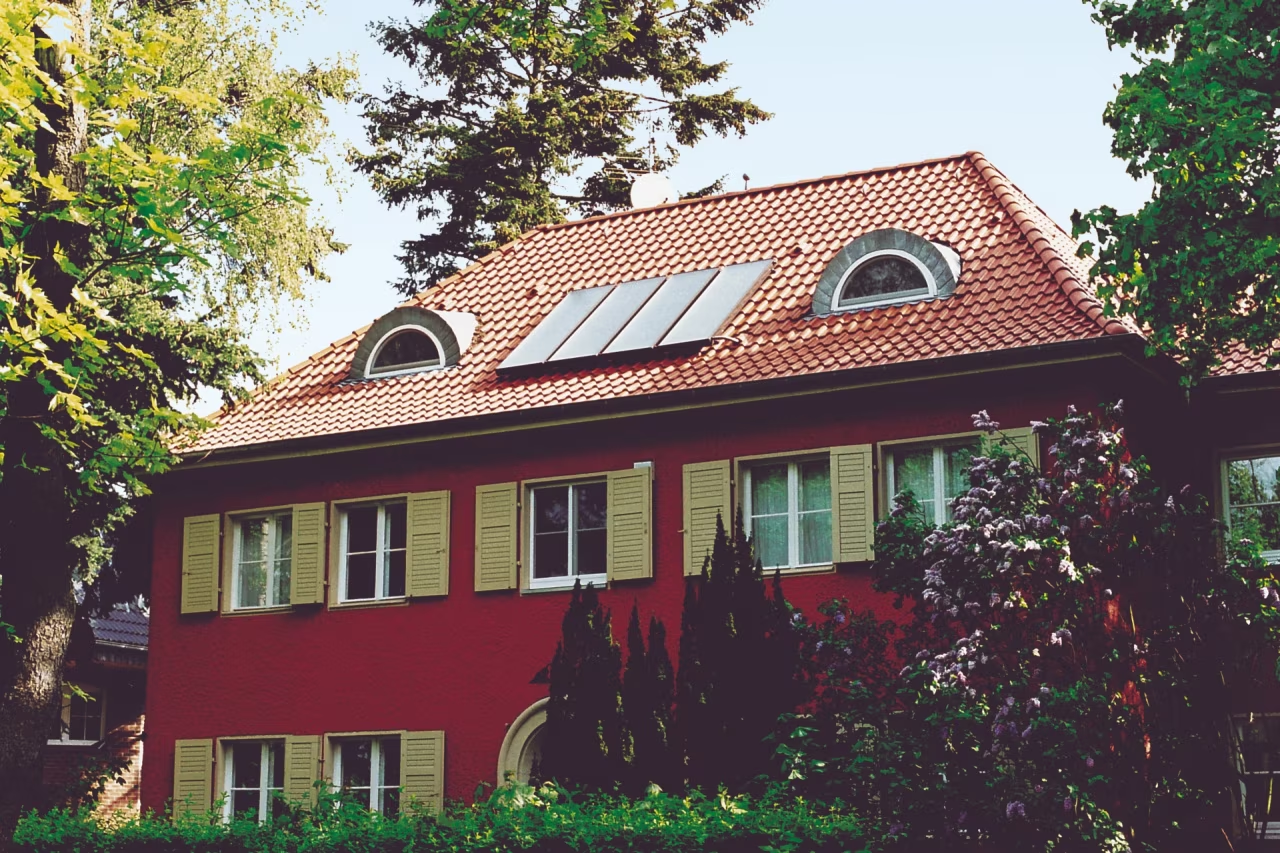
Retrofitting a solar panel and saving on heating costs? With AHI-Carrier components and a carefully selected design, it’s no problem. Learn more about the technology, requirements, and financing.
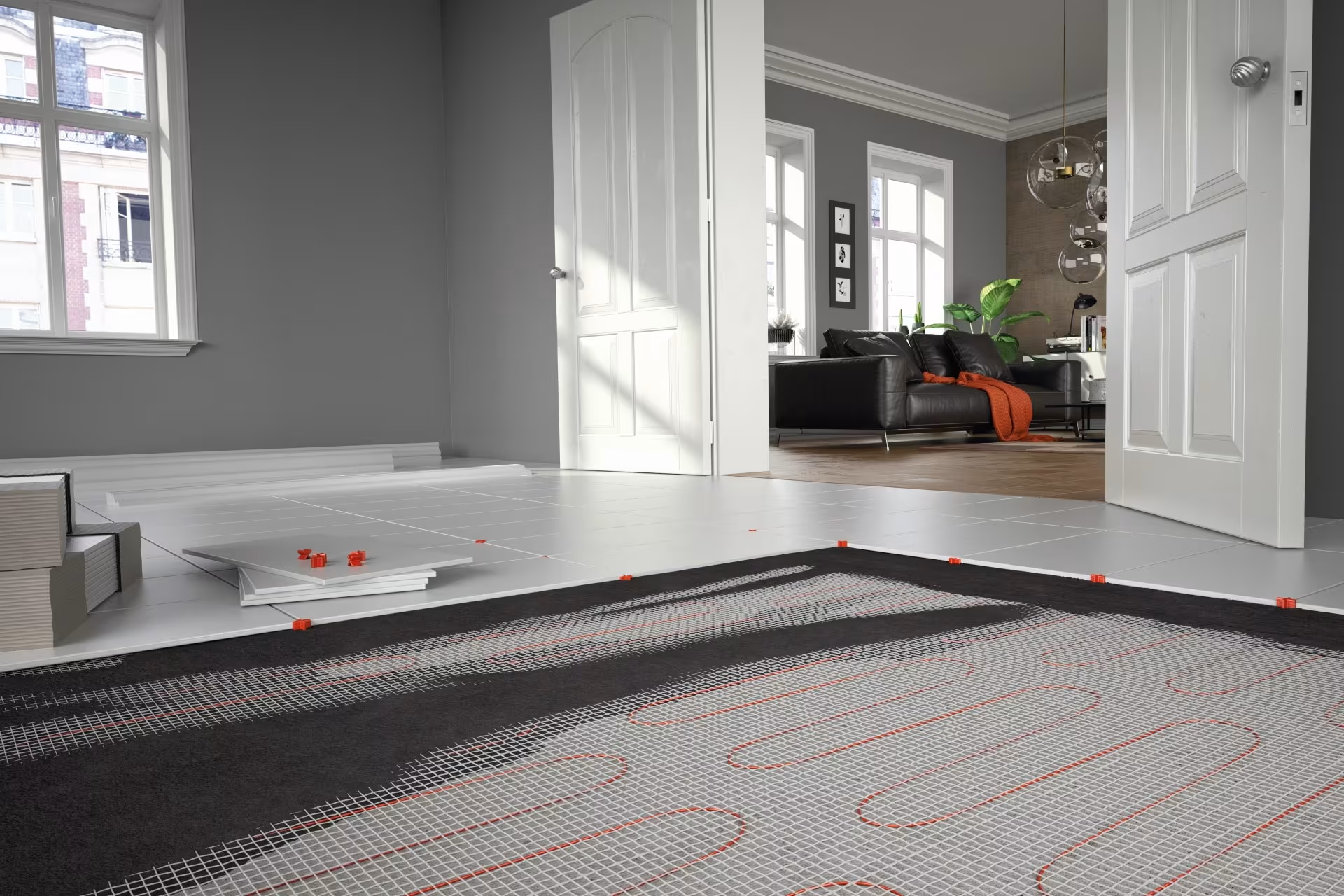
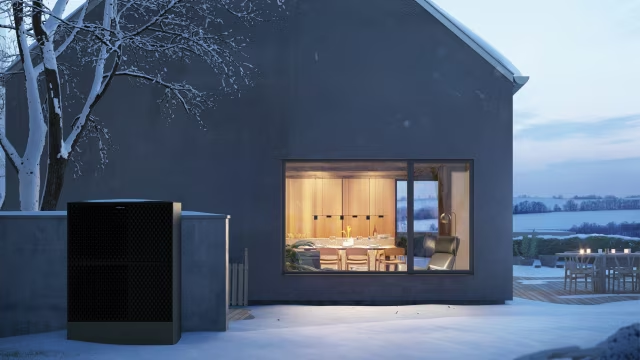
Renting a heat pump means becoming less dependent on gas and oil. We explain the benefits of renting a AHI-Carrier heat pump.