The Rosenstein quarter in Stuttgart has an impressive, future-oriented concept of heating, cooling and energy supply with a focus on connecting sectors. The technologies used include a large heat pump, a cogeneration plant and a photovoltaic system.
Rosenstein quarter in Stuttgart. Photo: © Holger Leicht/Siedlungswerk GmbH Wohnungs- und Städtebau, Steffen Schmid
Siedlungswerk GmbH Wohnungs- und Stäädtebau is developing and building 500 apartments in the Rosenstein district of Stuttgart, which will be supplied with heat, cold and electricity by a multi-mode energy system from AHI-Carrier.
The first phase of construction on the site of the former pharmaceutical company Haidle & Maier, known as "Schmidtgen-Areal" in the new Stuttgart-Rosenstein district, was completed in 2017. The building plot on Nordbahnhofstraßße and Eckartstraßße covers an area of about 8600 m². Here, 125 residential buildings with a total living area of about 11,400 m² were built in accordance with the KfW Efficiency House 55 standard.
The area, which is in the immediate vicinity of the S21 main line station, is located right next to the Pragfriedhof Park, close to the new European Quarter and the "Rosenstein Development Zone", where the previously vacated sections of the railway track were located. From here it is a stone's throw to the Schlossgarten. A passenger railway stops at the complex and takes residents directly to Schlossplatz, in the heart of the state capital, in a matter of minutes.
In the architectural competition held in the spring of 2012 for the first part of the project, Ackermann+Raff from Stuttgart and Tübingen won. Immediately to the south, on the former Staiger site (at the corner of Nordbahnhofstraßße and Friedhofstraßße), the second phase of the Siedlungswerk was located. It was realized by the winner of the second architectural competition, KBK Architekten GmbH Belz Lutz from Stuttgart, and construction began in 2018.
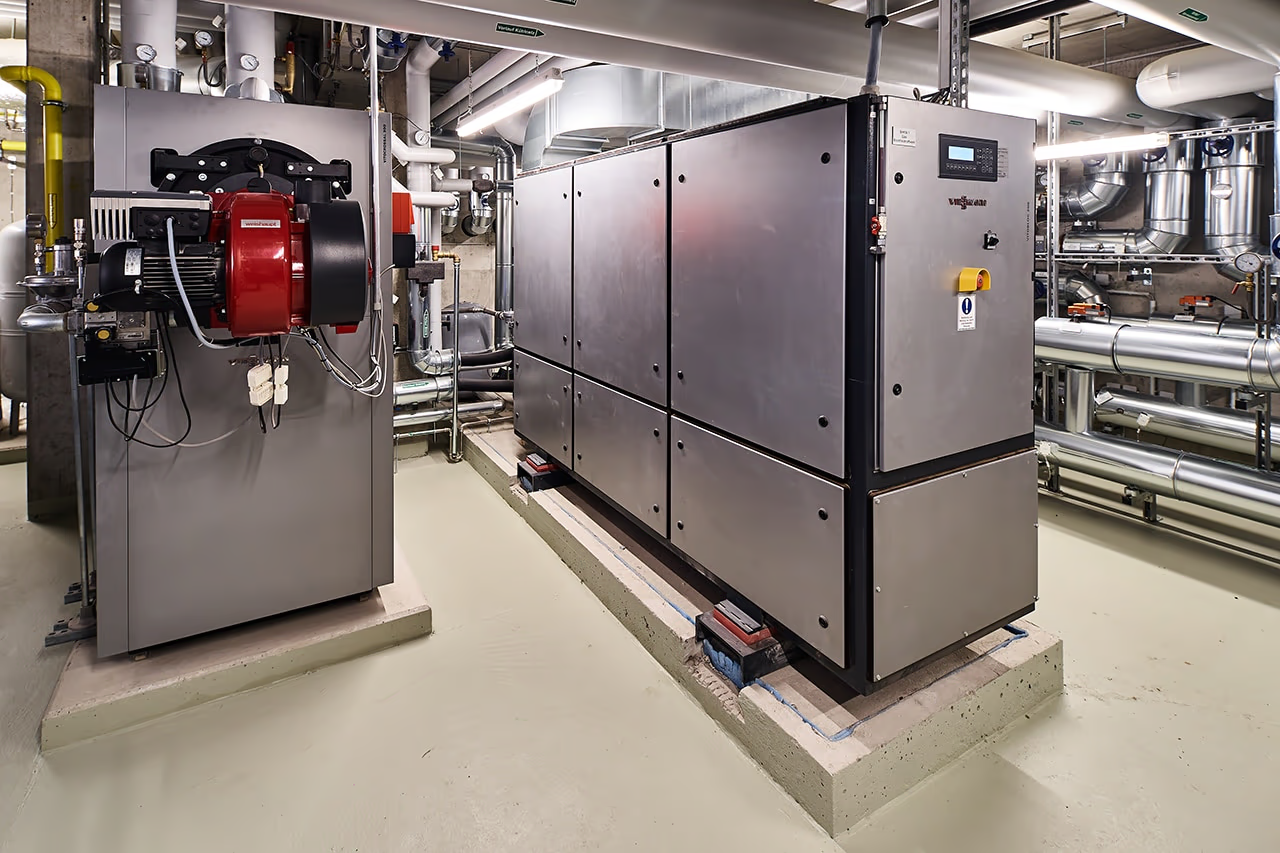
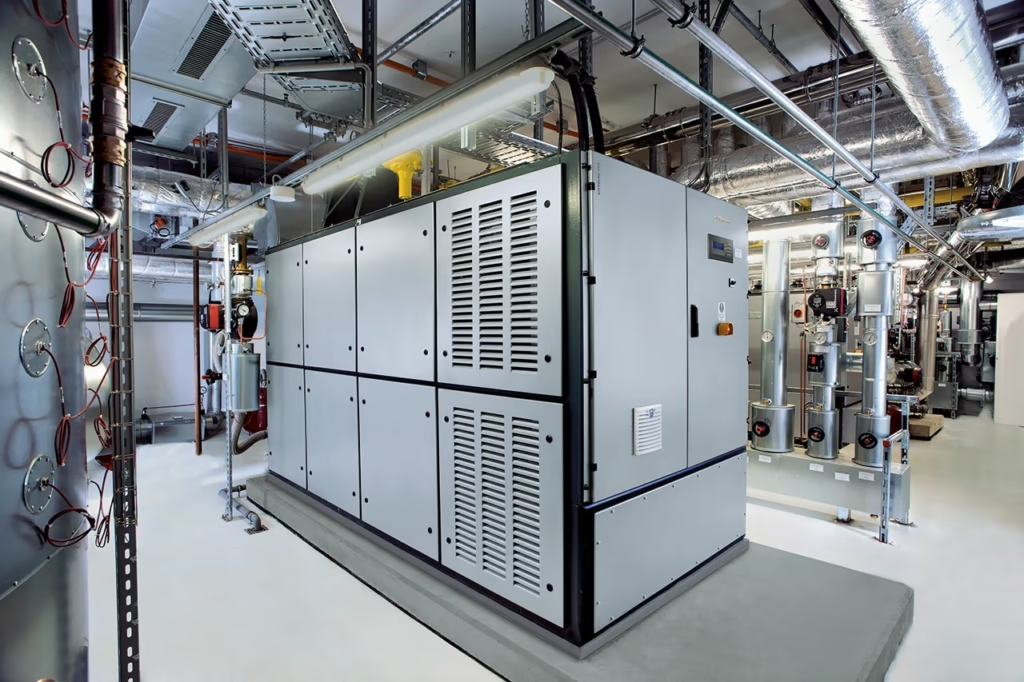
Vitocrossal 300 gas condensing boiler (left) and Vitobloc 200 cogeneration unit. Photo: © Holger Leicht/Siedlungswerk GmbH Wohnungs- und Städtebau, Steffen Schmid
The residential buildings in the Rosenstein quarter were built according to the Efficiency House 55 standard (EnEV 2014) in accordance with the KfW bank's financing guidelines. To achieve these values, the customer and the energy planners opted for a future-proof heating, cooling and power supply concept with perfectly matched components from AHI-Carrier; a concept that has made it possible to combine a favorable energy balance with a reduction in the use of fossil fuels and minimal CO2 emissions.
In this modern residential quarter, the principle of interconnection of sectors is realized: in addition to the ice energy storage as the main energy source for heating and cooling, a large heat pump, a gas condensing boiler, a cogeneration plant and a photovoltaic system provide the building complex with heat, cooling and electricity. Urban life without your own car is quite possible here, as residents use a car-electric car-sharing scheme. The electricity required to charge electric vehicles is generated by a cogeneration plant and photovoltaic modules directly in the residential complex itself.
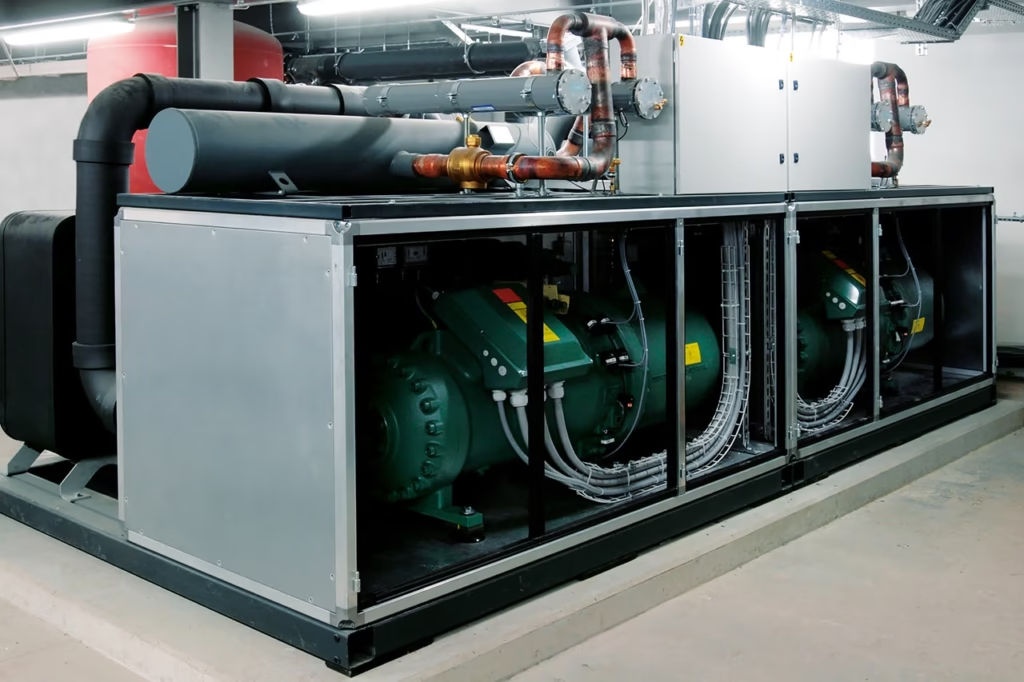
The heating plant is located in the basement of the residential complex and is based on the Vitobloc EM 50/81 cogeneration unit. The cogeneration plant works on the principle of cogeneration: a long-lasting natural gas engine generates heat and electricity in a coupled process. In this process, the mechanical energy is converted into electricity, which is used as a drive for the Vitocal 350-G heat pump for heating and cooling. Thermal energy, on the other hand, is absorbed through a Vitotrans 200 heat exchanger connected to a cogeneration plant and is used for space heating or DHW.
During peak loads, such as on cold winter days, the system is supported by a state-of-the-art Vitocrossal 300 gas condensing boiler with a capacity of 605 kW. The perfect interaction of all components makes it possible to obtain the necessary thermal energy and part of the electrical energy directly in the residential complex itself. This reduces both energy costs and dependence on utilities for energy supply.
An ice energy storage unit with AHI-Carrier technology was installed in the ground at the southern end of the site of the first phase of the construction of the residential complex. The concrete block, which is about 17 meters long, 9 meters wide and 6 meters deep, is filled with approximately 800 m³ of water and serves as a long-term energy storage device for the heat pump: during the heating season, the pump extracts energy from the ice storage until the water inside it freezes. This uses the crystallization energy that is released when water freezes into ice. This process provides the same amount of energy as is needed to heat one liter of water from 0 °C to 80 °C. The energy obtained in this way is used to heat floors in residential buildings during the heating season.
In regeneration mode, the ice thaws again. This change in physical condition can be repeated as often as necessary, and the technology requires little to no maintenance. At the end of the heating season, there is a selective formation of ice, which can then be used as a cooling source to keep the building cool on hot days. In the summer, cooler nighttime outdoor temperatures can be used to cool the water in the storage facility or the building itself with solar air sinks.
AHI-Carrier ice storage systems do not require a permit and can even be used in water protection zones. The use of crystallization energy and the combination of three energy sources - ambient air, solar radiation and earth - are a guarantee of high efficiency.
Vitocal heat pump. Photo: © Holger Leicht/Siedlungswerk GmbH Wohnungs- und Städtebau, Steffen Schmid
Intelligent energy management ensures that the ice energy storage, solar air absorbers and heat pump work together reliably and efficiently. This means that all relevant system data is continuously evaluated. The results form the basis of a reporting system that is created by a team of experts and transmitted to the operator. The performance figures of the heat pump can be optimized, for example, taking into account individual requirements. The result is the lowest possible energy consumption and a correspondingly attractive seasonal productivity factor.
By putting the recommended actions into practice, you can fully exploit the potential of the system, which will save on operating costs.
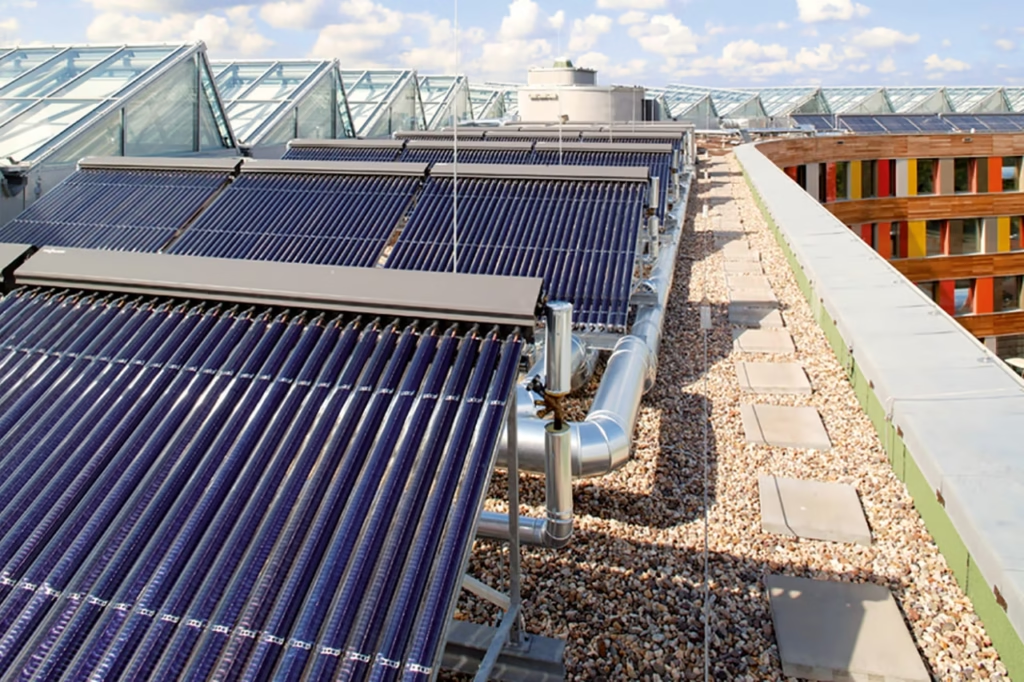
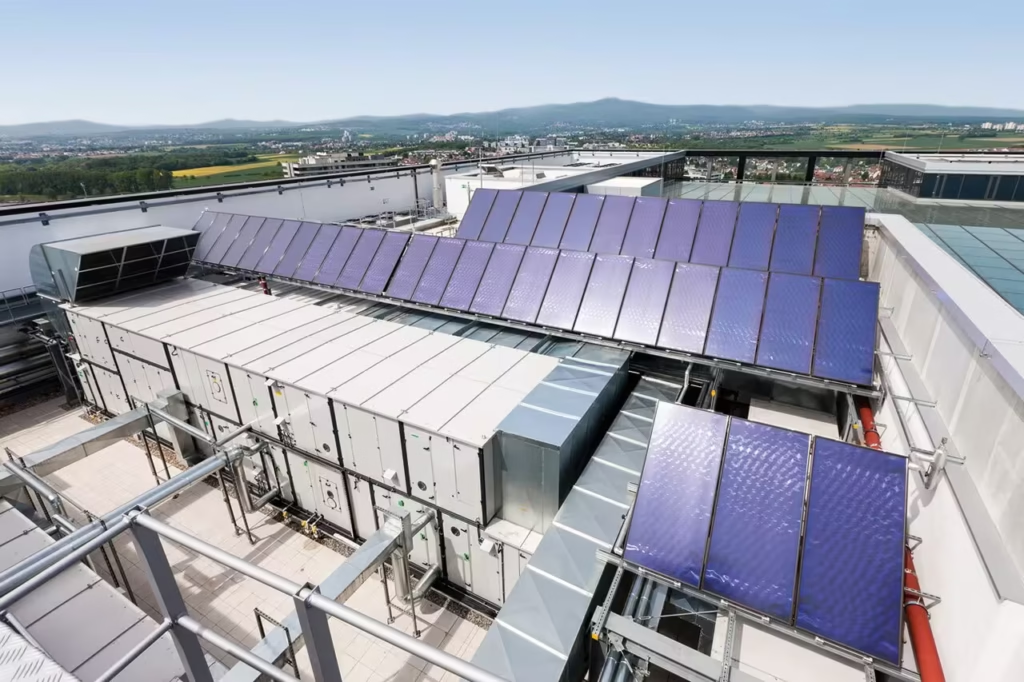
Solar air absorbers have been installed on the flat roofs of four of the seven buildings since the first phase of construction. In the summer, the 351-square-meter system feeds the resulting solar energy into a frozen ice storage facility to thaw it and regenerate it for the heating season. Regeneration always occurs when the absorber is warmer than the ice storage, so it is possible even on a mild winter day.
Solar air absorbers are open, unglazed collectors. They use the heat of the surrounding air as well as sunlight to regenerate the ice storage facility and as a direct heat source for the heat pump. Unglazed solar air absorbers are particularly suitable for ice energy storage systems because they provide energy even at low air temperatures and no solar radiation. Absorbers constantly use the free energy of the environment - both from the ambient air at night and from solar radiation during the day.
Two more sections of the flat roof are used to generate electricity using a 408-square-meter photovoltaic system. Using solar energy in this way saves about 260 tons of CO2 per year. This is equivalent to driving two million kilometers by car in a year.
The photovoltaic system also provides electricity to the building's ventilation system, elevators and lighting, as well as a swimming pool for electric vehicles.
After housing, mobility is another basic human need. That is why Siedlungswerk has developed an individual mobility concept for the new residential quarter as part of the research partnership "LivingLab BWe mobil" of the Electric Mobility Showcase of the Federal Republic of Germany.
Having an electric car sharing scheme directly at your place of residence opens up new mobility opportunities and is an environmentally responsible alternative to your own car. The electricity generated in the residential complex is first stored in the battery system and then supplied to household consumers or used to charge electric vehicles as needed. This has a positive effect on both the energy balance and CO2 emissions. After all, electric vehicles not only reduce noise levels, but also reduce pollutant emissions.
The innovative concept of mobility as an essential component of urban life has received a consistently positive response and attention throughout Germany. This has created new cooperation mechanisms and demonstrated how electromobility can be a significant component of an effective overall energy concept.
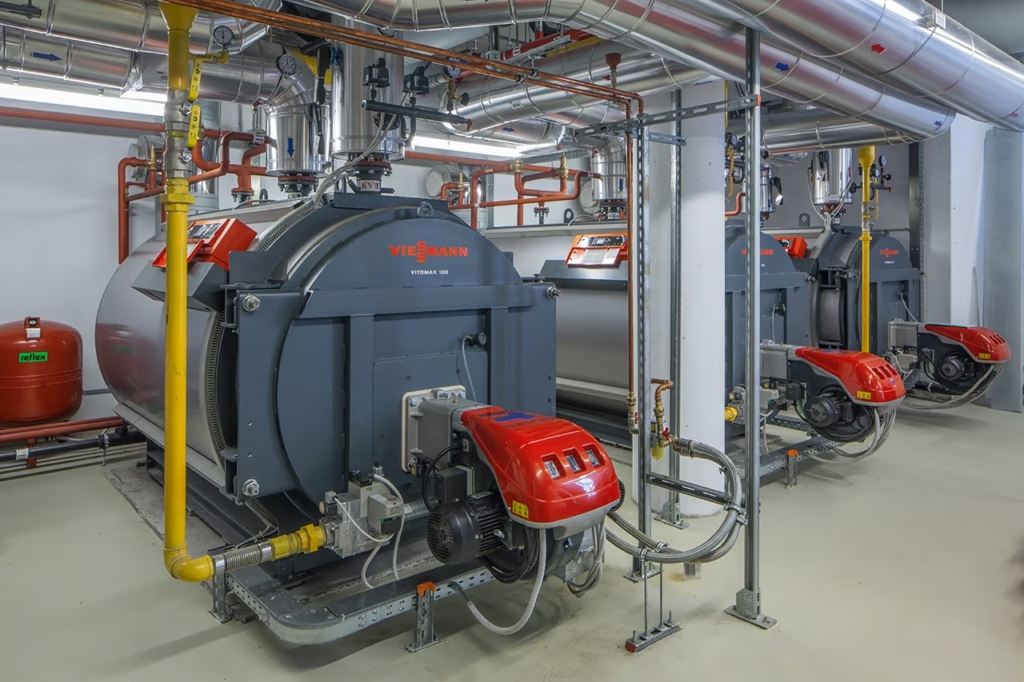
The SkyTower, which is 137 meters high, is the tallest building in Romania and is an impressive sight at night thanks to the intricate choreography of the lighting. A three-unit Vitomax 100-LW cascade heating system is used to generate heat.
The construction of the municipal building in Dessau focused on high energy efficiency. The architects and structural engineers opted for one of Germany's largest solar thermal systems with 115 tube collectors, the Vitosol 200-T.
Lotte World Tower is located in the city center and houses apartments and offices, as well as shops and restaurants. A climate-safe energy supply is provided by 12 large AHI-Carrier heat pumps.
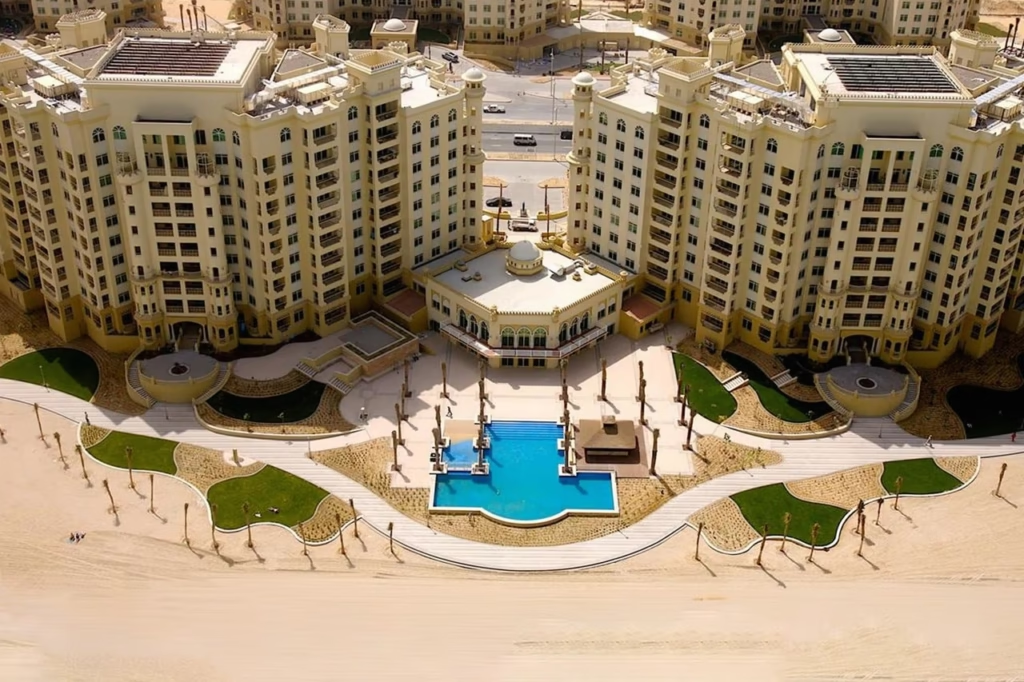
On the Palm Jumeirah, Vitosol 200-F solar collectors provide hot water to 14 apartment buildings, and three Vitocrossal 300 boilers heat the pool and hammam in the luxurious Ottoman Palace Hotel.
Deutsche Börse Eschborn has received LEED Platinum certification due to the building's sustainable design and environmental performance. Heat and electricity are supplied by two gas condensing boilers AHI-Carrier Vitobloc 200 and Vitosol 200-F.
The design idiom of the Leica headquarters in Wetzlar is captivatingly unique. It reminds you of lenses, lenses and rangefinders. AHI-Carrier completes the complex with a sophisticated innovative energy system.