
Topics at a glance
A fuel oil tank is a crucial component of a fuel oil heating system. Because this proven and reliable heating technology remains widely used, fuel oil storage is also a key consideration for many homeowners. In this section, you’ll learn about the different types of fuel oil tanks, common sizes, legal regulations, and requirements for cleaning and disposing of old tanks.
Different types for individual needs
When adding a fuel oil tank to a new condensing boiler or replacing an existing one, it’s important to select the right model. Individual circumstances play a significant role in this case. Fuel oil tanks currently available on the market can be divided into three types:
- Modular tanks
- Underground storage tanks
- Site-built tanks
Modular tanks for installation in a row or as a block
Modular tanks are comparatively small in size, making them suitable for locations with limited space and narrow access. To store a sufficient amount of fuel, several tanks can be connected together and installed in a row or as a block.
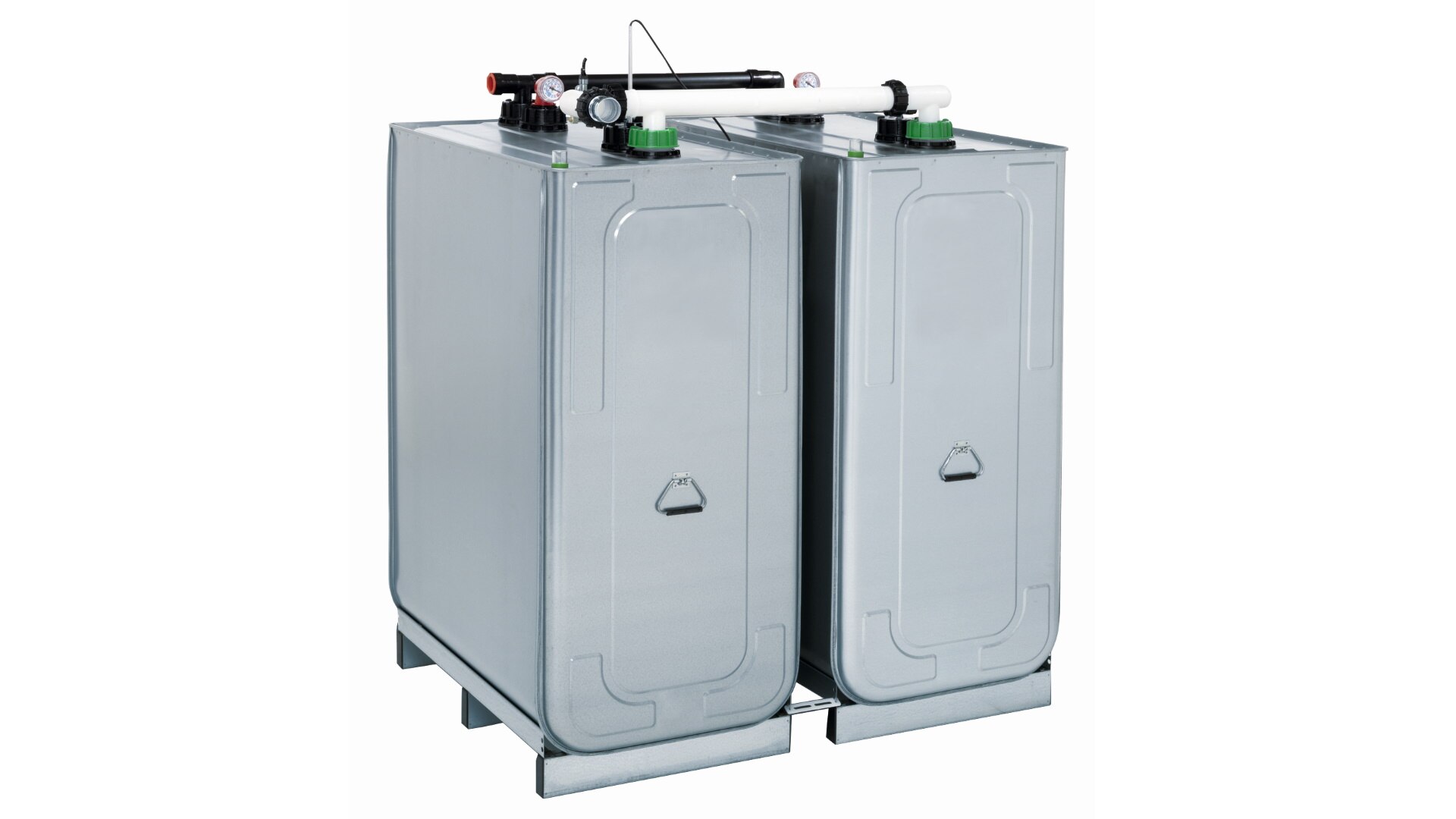
AHI Carrier Vitoset fuel oil tank in steel/plastic design
The AHI Carrier Vitoset accessories include fully sealed double-walled steel/plastic tanks (Vitoset DWT) and plastic tanks (Vitoset KWT). Both models are available in sizes corresponding to specific products and are approved for storing up to 5,000 liters of fuel oil in rooms with combustion equipment. Special manufacturing technologies ensuring precise wall thickness, combined with type testing and approval by independent organizations, guarantee consistently high product quality. Production and quality control under the supervision of independent inspection bodies such as TÜV ensure maximum operational safety.
Underground storage tanks for small residential spaces
If there is insufficient space in a residential building, the fuel oil tank can be installed underground. Underground tanks are buried in the garden and are therefore barely visible. However, this requires more effort for the necessary excavation work. Additionally, safety requirements are particularly high. An underground fuel oil tank must have, among other things, an appropriate monitoring device that immediately signals any oil leak.
On-site built-in fuel oil tanks for individual premises use
As the name suggests, these fuel oil storage tanks are assembled directly on-site. This has the advantage that they can easily be adapted to spatial conditions, and narrow access does not pose a problem. Steel tanks are welded; plastic tanks are laminated. However, the complex assembly is time-consuming and somewhat more expensive.
The correct size depends on various factors.
The size of the fuel oil tank depends on the size and energy characteristics of the home, as well as the heating system of the residents. Generally, fuel oil storage should be sufficient for one year. In detached homes heated by Vitoladens 300-C or Vitoladens 300-T , tanks with a capacity of 2,500 to 4,000 liters are typical. However, with good insulation, the requirement can be significantly reduced. AHI Carrier partners are reliable consultants in this area and will support you in designing a fuel oil tank that takes into account spatial conditions and all legal requirements.
Plan for sufficient space for the fuel oil tank
When considering tank size, spatial considerations also play a role. When calculating the space required for a fuel oil tank, the available room height is an important parameter. For a 3,000-liter fuel oil tank, approximately 1.5 square meters of space should be planned for with a room height of 2 meters. If the fuel oil tank can only be 1.5 meters high, approximately two square meters of space is required.
Small oil tanks may be placed in the same room as the boiler. However, a minimum distance of one meter must be maintained. Alternatively, a protective barrier can be installed. If the capacity exceeds 5,000 liters, special regulations apply to the fuel oil tank. It must be installed separately from the boiler in a different room. This is typical, for example, in apartment buildings or commercial and public buildings heated by boilers such as the Vitoradial 300-T or Vitorondens 200-T .
Regular cleaning for smooth operation
Fuel is stored in the fuel oil tank for a relatively long period of time. This sometimes leads to deposits that can interfere with the heating system. To prevent this, it is recommended to clean the fuel oil tank regularly. For steel tanks, the recommended intervals are five to ten years, and for plastic tanks, eight to 15 years. Service providers first pump out the remaining fuel oil, temporarily store it, and clean the inside of the fuel oil tank. The tank is then filled with fuel oil.
Proper disposal of old fuel oil tanks
If you decide to purchase a new AHI Carrier fuel oil tank, the old one must be disposed of. First, it must be professionally cleaned. This should be done by a contractor certified in accordance with the German Water Management Act (WHG). The relevant regulations are set out in the German Ordinance on Means of Handling Substances Hazardous to Water (AwSV). It is best to entrust disposal to a qualified company. Important: For fuel oil tanks with a capacity of over 1,000 liters or underground tanks, any changes, such as dismantling, must be reported to the responsible authorities.