
Topics at a glance
An air source heat pump can extract heat from the surrounding air even at temperatures as low as -20 degrees Celsius. Even at this temperature, the refrigerant used will evaporate.
The refrigeration cycle process as part of the operating mode
An air-source heat pump uses ambient air as a heat source to supply the entire building. During operation, a built-in fan actively draws air in and directs it toward a heat exchanger, the evaporator. A refrigerant circulates within it, whose physical state changes at low temperatures due to its thermal properties. When it comes into contact with the “warm” outside air, it heats up until it eventually begins to evaporate. Because the temperature of the resulting vapor is still relatively low, the vapor continues to flow into an electrically driven compressor. This increases the pressure, which also increases the temperature. When the refrigerant vapor reaches the required temperature, it enters the next heat exchanger, the condenser. Here, it transfers its heat to the heating system and condenses.
The heat thus recovered can be used for heating or hot water. Before the cooled refrigerant can be reheated and compressed, it first passes through an expansion valve. This reduces the pressure and temperature to their original levels, after which the cycle can be repeated.
Air source heat pump
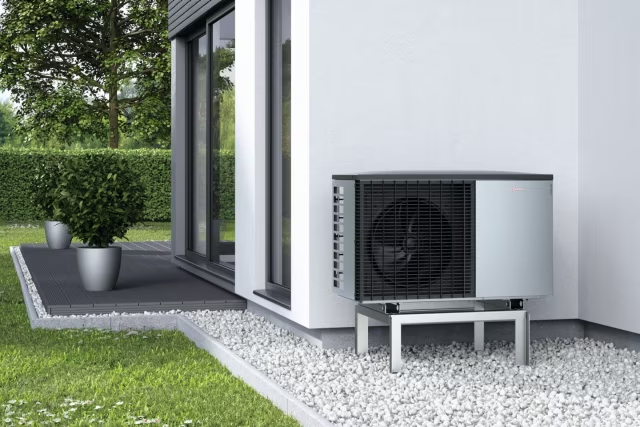
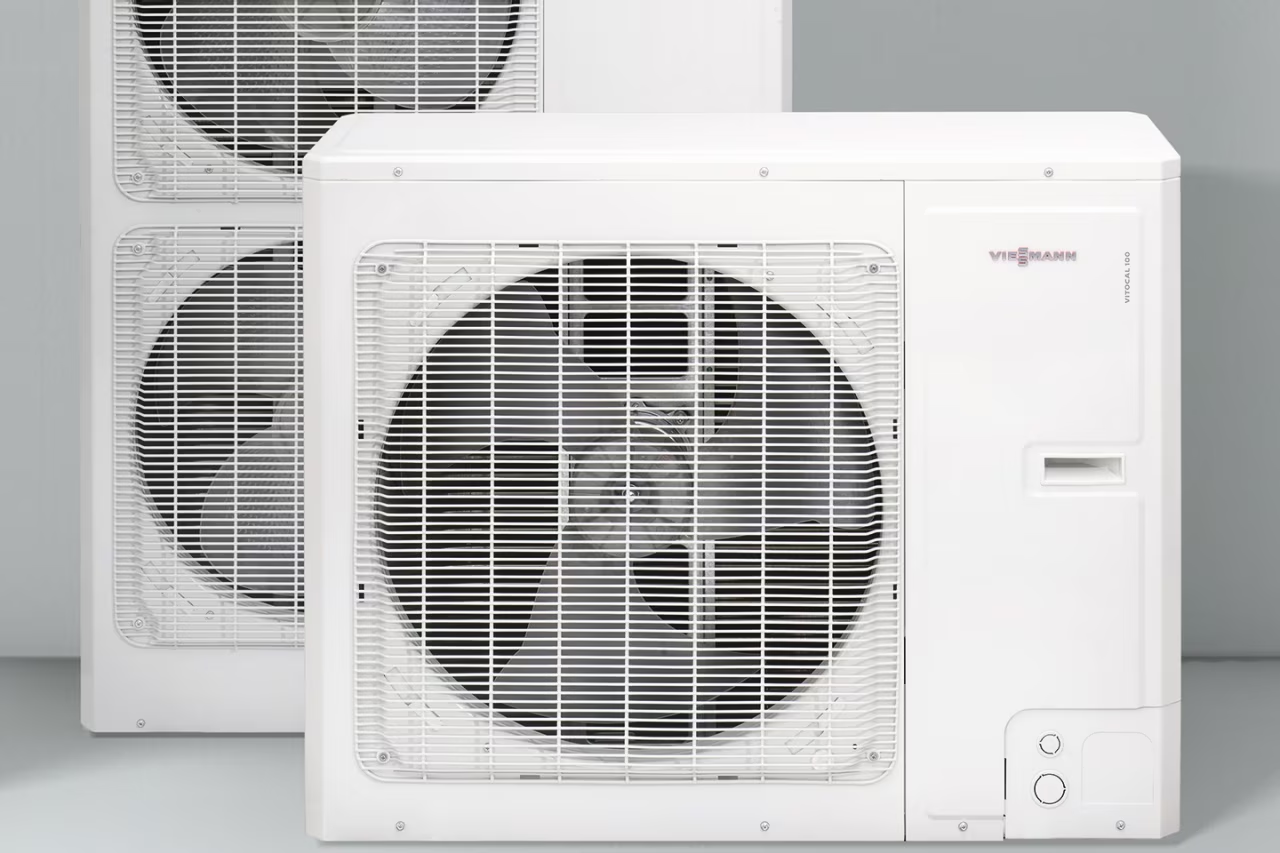
Air-source heat pumps use the free energy in the ambient air for heating. They are ideal for retrofit projects and offer flexibility in placement.
Heat from the air
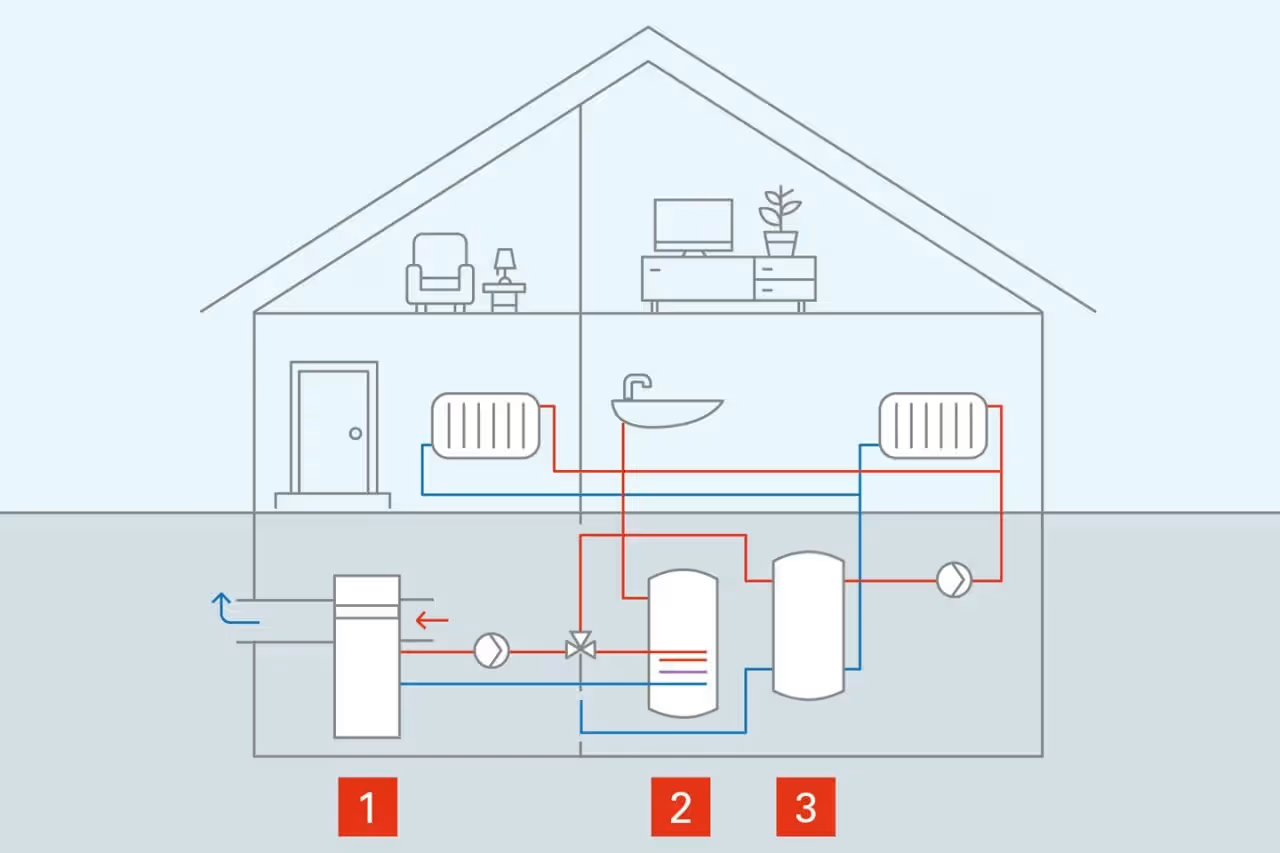
[1] Vitocal air source heat pump
[2] DHW cylinder
[3] Heating water buffer tank
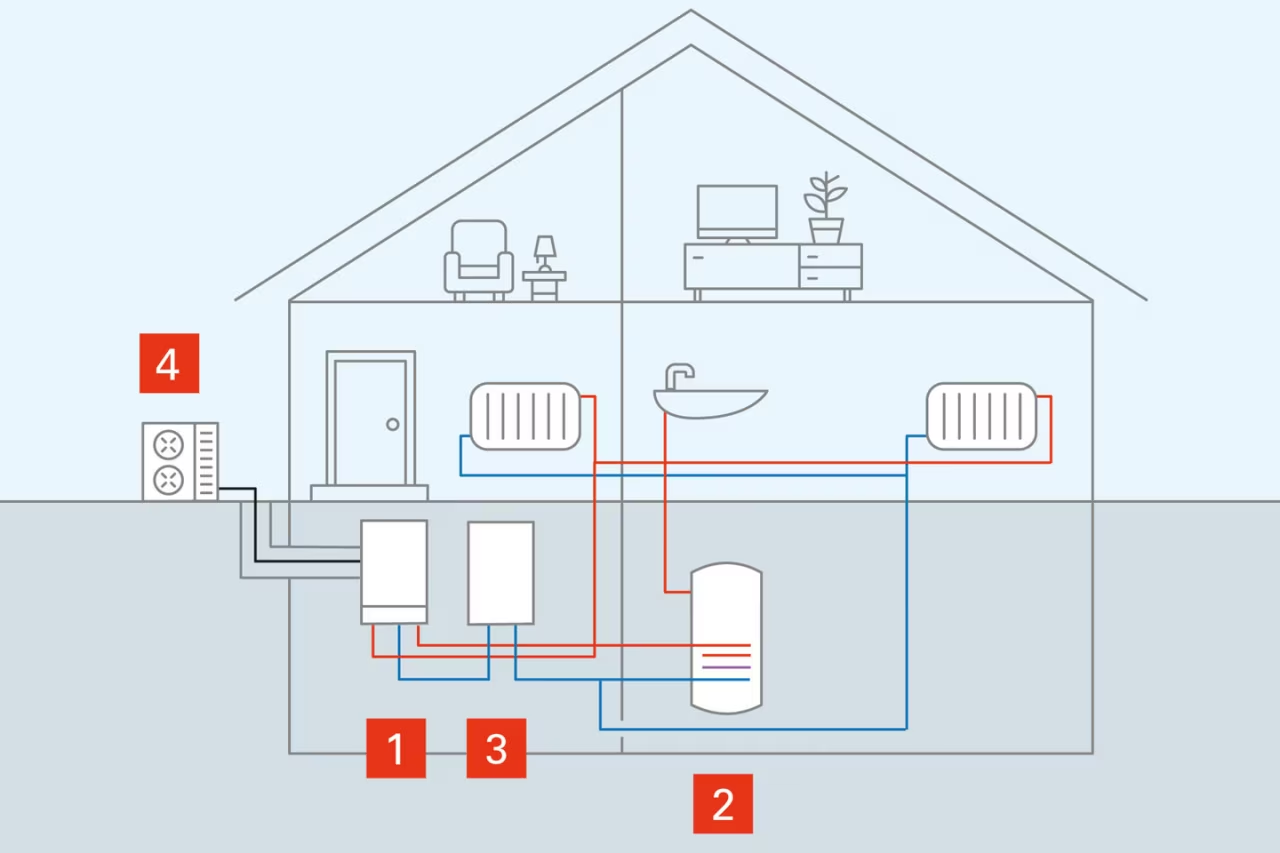
Heat from air (with outdoor unit)
[1] Vitocal split air source heat pump
[2] DHW cylinder
[3] Buffer tank for heating water
[4] Outdoor unit

Heat pump expert advice
Request a consultation now →Heat pump downloads
Optimized components ensure cost-effective operation
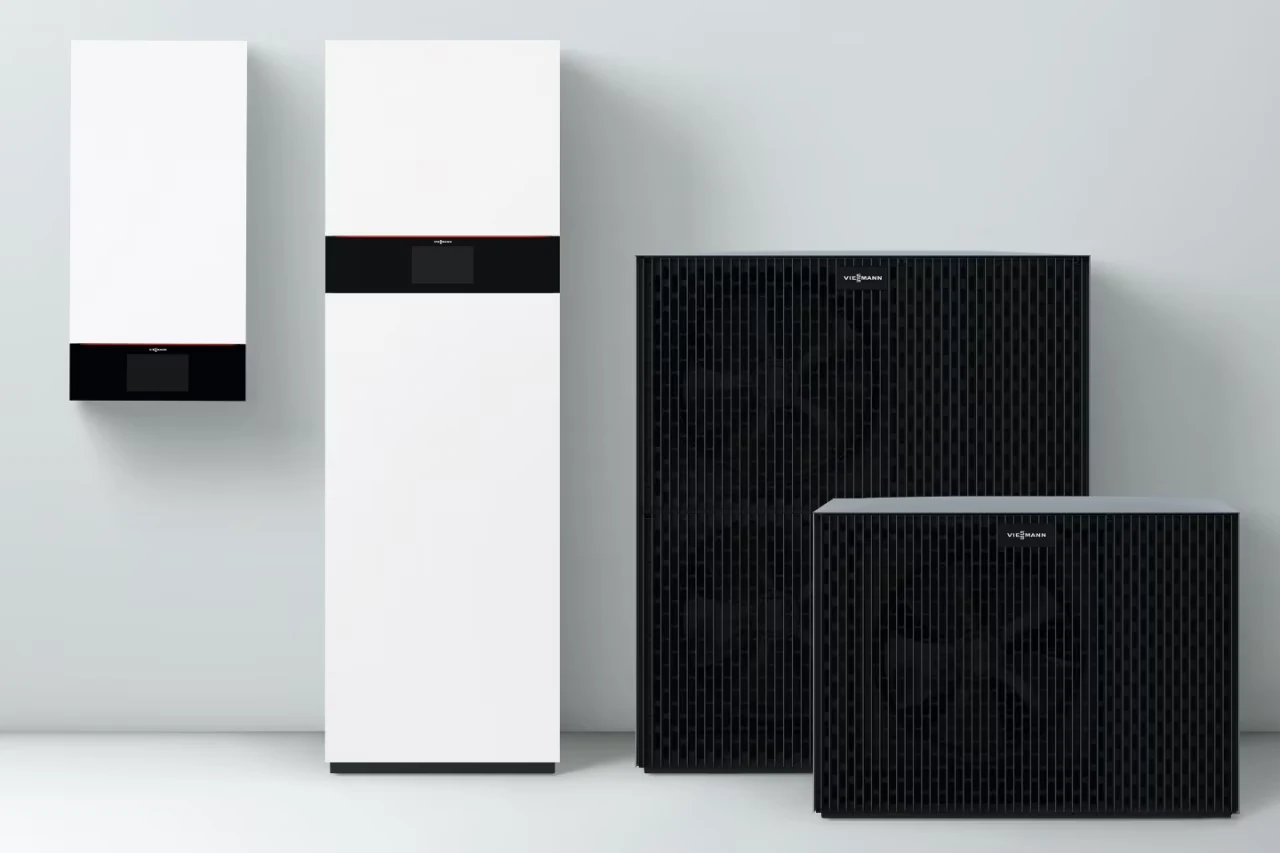
Modern AHI-Carrier air-source heat pumps boast exceptional efficiency, achieving a coefficient of performance (COP) of up to 4.0 at an outside temperature of 2 degrees Celsius and a flow temperature of 35 degrees Celsius. COP is the instantaneous ratio of the input drive energy to the useful heat produced. Such a high value can only be achieved by harmonizing components. In this case, an energy-saving, high-efficiency pump, a variable-speed fan, a compressor with anti-vibration mounts, and an electronic expansion valve ensure the highest possible efficiency. AHI-Carrier air-source heat pumps are also among the quietest units available and are optimized for the use of self-generated energy from photovoltaic systems.
Improving Life Cycle Assessment with Clean Electricity
Heating with clean energy is considered climate-friendly. Depending on the power output and outside temperature, only a portion of the drive energy typically needs to be used as electricity. For some time now, many energy suppliers have been offering special tariffs for heat pumps, which are not only more attractive financially than standard electricity tariffs but also more environmentally friendly. By combining an efficient air-source heat pump with clean electricity, system owners simultaneously protect their wallets and the environment.
Cooling with an air source heat pump
Although the primary function of an air-source heat pump is heating, its reversible mode allows it to be used for cooling as well. This ensures a pleasant microclimate in all rooms, not only during cooler months but also during warmer ones. For more information, see the article Passive and Active Cooling .
Other AHI-Carrier guides and tips

Purchasing a heat pump
Heating using ambient energy is becoming increasingly popular. This is supported by statistics showing that more and more people are considering purchasing a heat pump. Find out what to consider when purchasing one here.


Saving energy and reducing heating costs
With the right measures and our professional advice, you can easily save energy and reduce your heating costs.