
Topics at a glance
How does a heat pump work?
A heat pump works similarly to a refrigerator, only in reverse. While a refrigerator extracts thermal energy from food, that is, from the interior of the refrigerator, and directs it outside, a heat pump does the opposite: It extracts thermal energy from the environment outside the building and uses it to heat the interior. In addition to indoor or outdoor air, a heat pump can extract thermal energy from groundwater and the earth. Since the temperature of the heat extracted is usually insufficient to heat the building or provide hot water, thermodynamic processes are used to increase the temperature.
The refrigeration cycle process is the basis of the heat pump operating principle.
Regardless of the heat source used to generate heat, the four-stage refrigeration cycle process is always part of the heat pump’s operating mode.
1. Evaporation
For a liquid to evaporate, energy must be added to it. This is easily observed with water. When a pot of water is heated to 100 degrees Celsius (thermal energy is added), the water begins to evaporate. If more thermal energy is then added, the water’s temperature doesn’t continue to rise. Instead, the water completely turns to steam.
2. Gas compression
When a gas, such as air, is compressed (the pressure increases), its temperature also increases. This can be felt by keeping the opening of a bicycle air pump closed and compressing the air—the pump cylinder becomes warm.
3. Condensate
Since energy cannot be lost, when water vapor condenses, the thermal energy previously used for evaporation is released again.
4. Expansion
If the pressure of a liquid under pressure suddenly decreases, the temperature drops significantly. This can be observed, for example, on a liquefied gas cylinder in a camping stove. If the valve is opened, ice can form on the liquefied gas cylinder’s valve, even in summer (the pressure here drops from approximately 30 bar to 1 bar).
Continuous repetition of the process
These processes occur in a closed circuit inside a heat pump. A liquid (refrigerant) that evaporates at very low temperatures is used to transfer heat. Thermal energy, for example, from the ground or outside air, is used to evaporate this liquid. Even temperatures as low as minus 20 degrees Celsius are sufficient to generate energy. The cold refrigerant vapor, for example at -20 degrees Celsius, is then highly compressed. In doing so, it heats up to 100 degrees Celsius. The refrigerant vapor condenses and releases heat into the heating system. Subsequently, the pressure of the liquid refrigerant drops significantly. This causes the liquid temperature to drop back to its original level. The process can then begin again.

Heat pump expert advice
Get a free, personalized consultation on our heat pumps from our qualified sales partners!
Request a consultation now →The operating principle of a heat pump using the example of an air-source heat pump
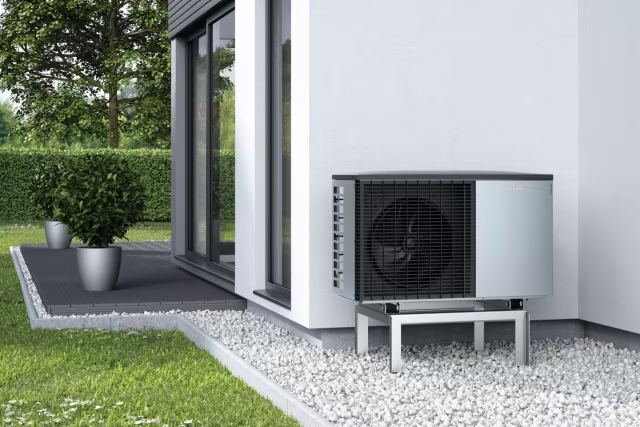
The easiest way to explain this process is with an air-source heat pump: An air-source heat pump can consist of one or two units. In either case, a built-in fan actively draws in ambient air and directs it into a heat exchanger. A refrigerant, which changes its physical state at very low temperatures, passes through the heat exchanger. Upon contact with the ambient air, the refrigerant heats up and gradually turns into vapor. To increase the heat generated to the required temperature, a compressor is used. This compresses the vapor, increasing both the pressure and temperature of the refrigerant vapor.
The second heat exchanger (condenser) then transfers the energy of the heated steam to the heating circuit (underfloor heating, radiators, heating buffer, and/or domestic hot water cylinder). In the process, the refrigerant, still under pressure, cools and liquefies again. Before entering the circuit again, the refrigerant first expands in the expansion valve. Once it reaches its original state, the refrigeration cycle can begin again.
A Simple Explanation: Heat Pump
Compression requires electric current.
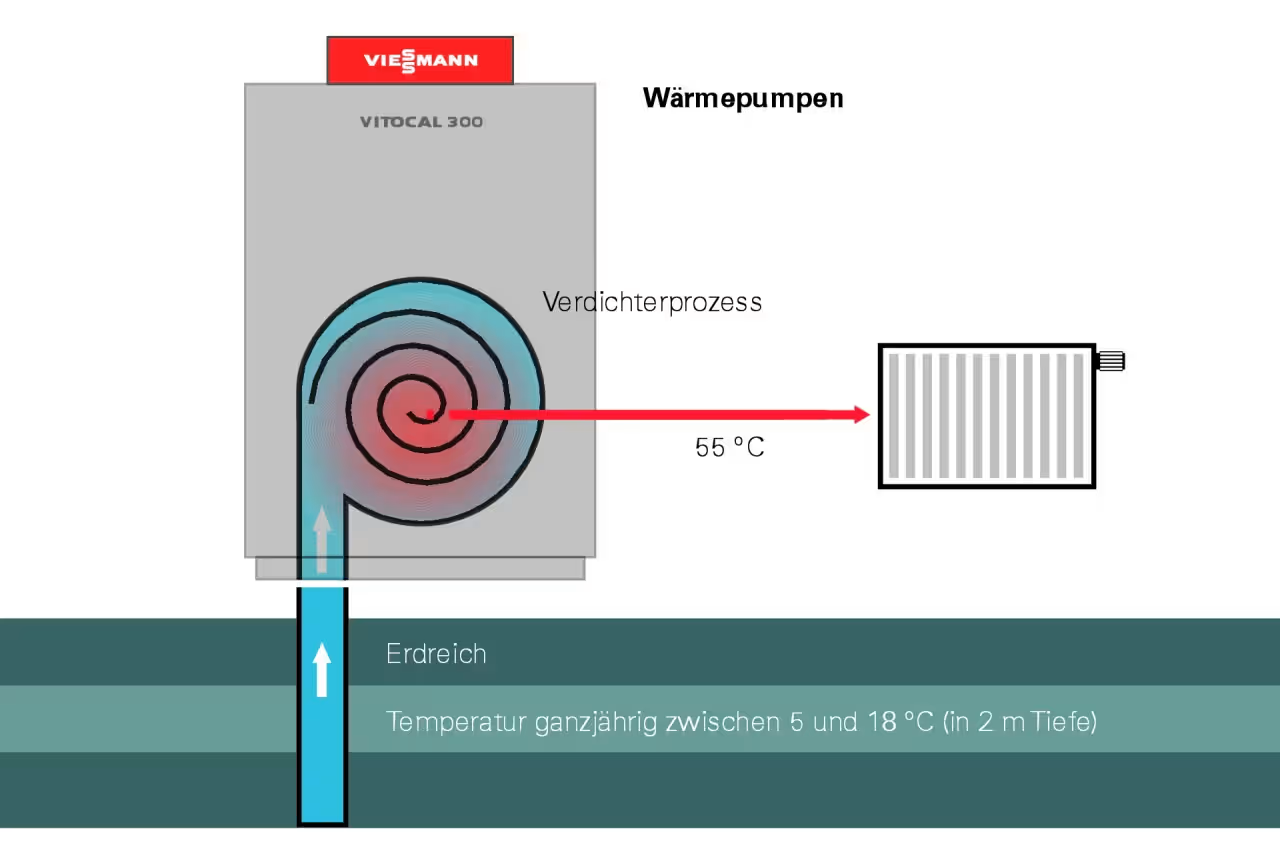
The compressor is the most important component of the refrigeration circuit. This is because without compression, the outlet temperature is too low to heat the building to a comfortable temperature—especially on very cold days with double-digit subzero temperatures.
In practice, a variety of compressors are used, including piston or scroll compressors, all of which are electrically driven. Energy consumption for compression depends on many factors, including heat demand, compressor technology, and, finally, the temperature difference between the heat source and the heating system. As a general rule, the higher the temperature difference between the heat source and the flow temperature, the more work the compressor must do.
Electricity for heat pumps improves heat pump life cycle assessment
For some time now, electricity providers have been offering special tariffs for heat pumps with improved terms for end consumers. In this case, system owners receive a double benefit. These tariffs help reduce heating costs to a minimum. At the same time, the electricity is usually generated using renewable energy sources. The energy is “clean,” further enhancing the heat pump’s already positive life cycle assessment.
Additional information