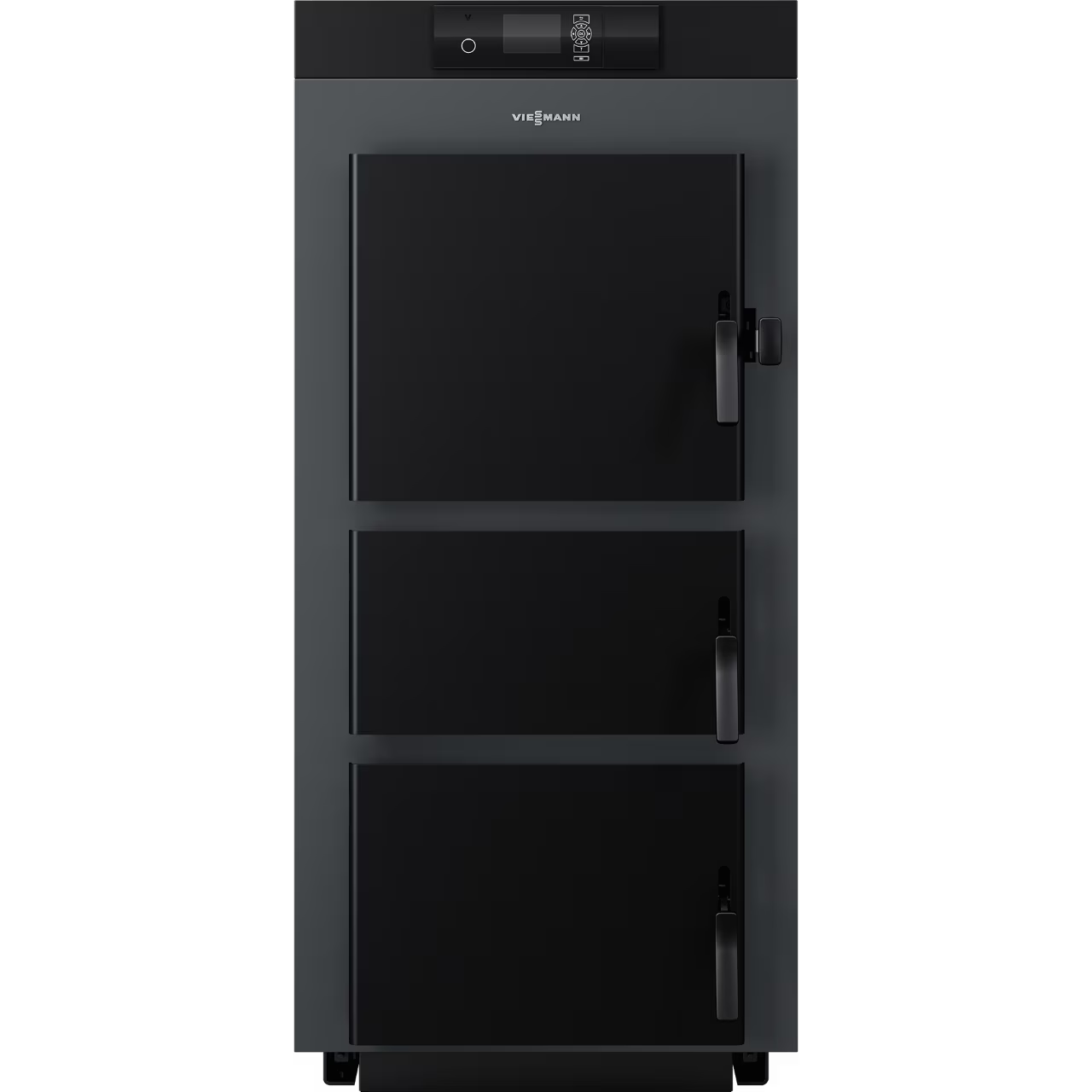

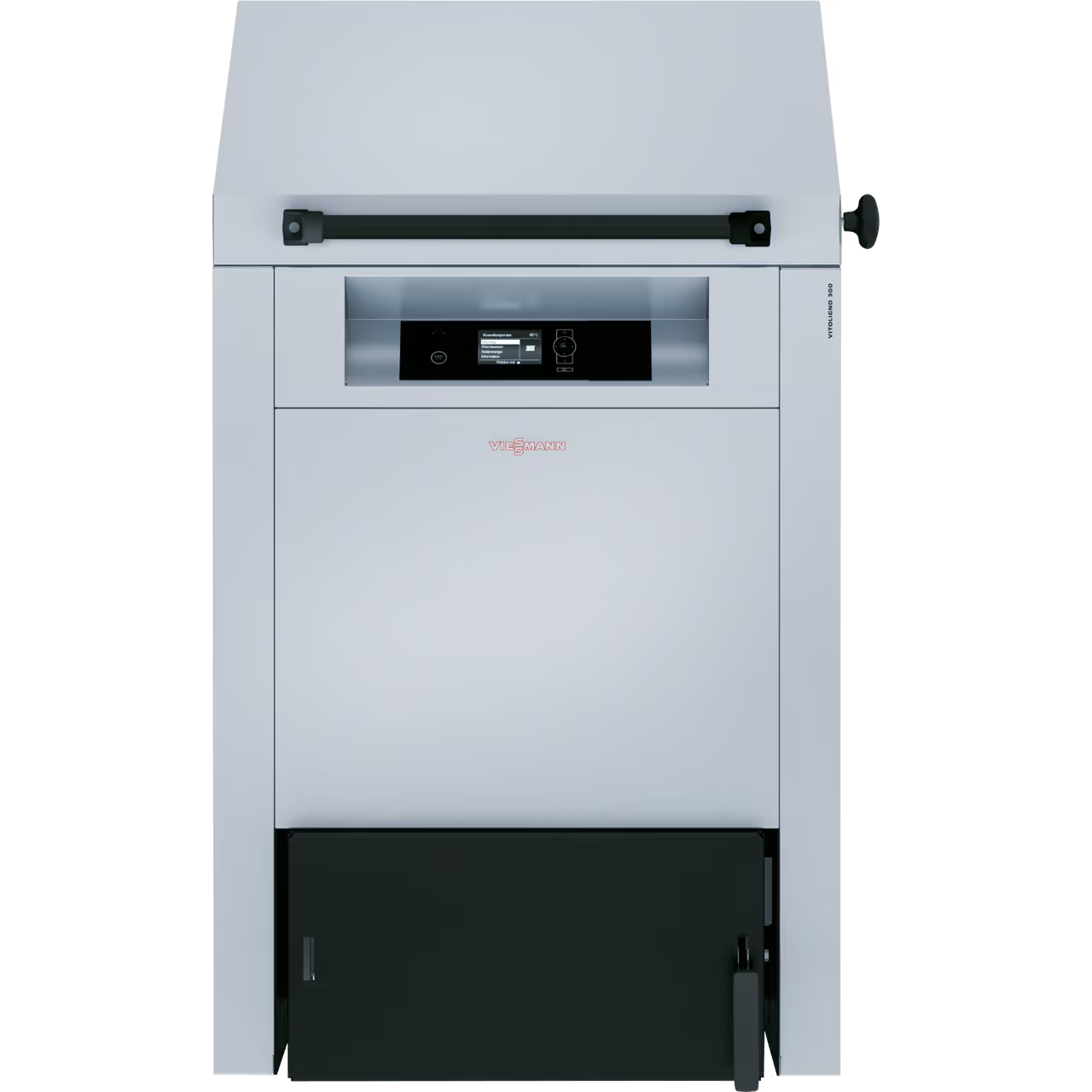
Vitoligno 300-S
Boiler on Lump Wood
- Nominal heating power: 33 - 75 kW
- Heats up in just a few minutes
- An ideal complement to oil and gas heating systems
- Long recharge intervals and burn-out times
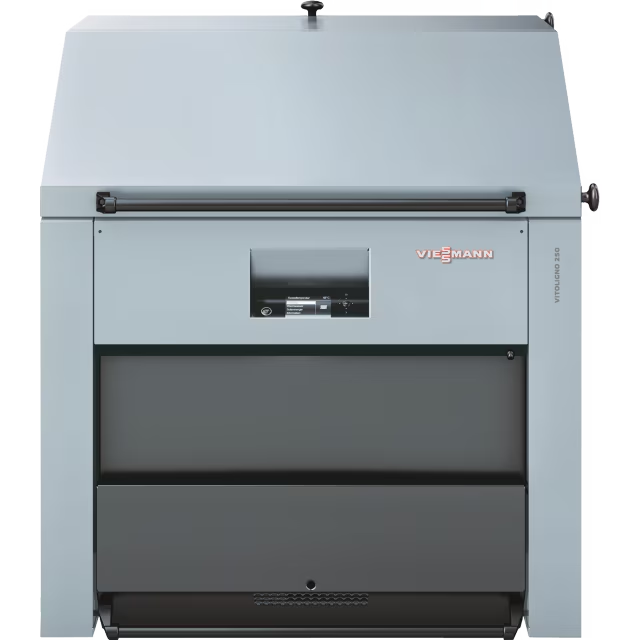
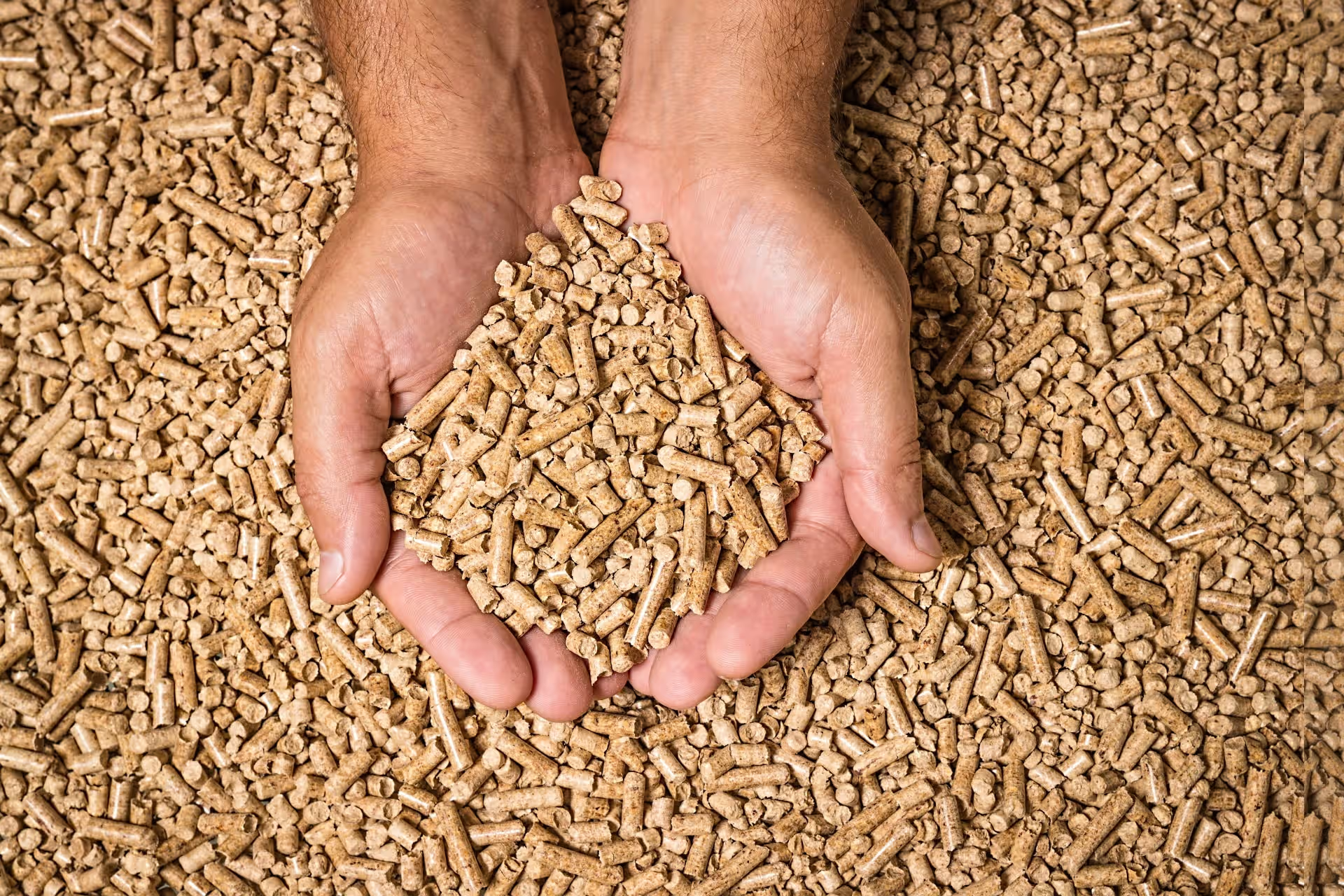
Photo: © tchara / Shutterstock.com
The operating principle of a pellet heating system differs significantly from that of a log heating system. Both the fuel supply and combustion process differ.
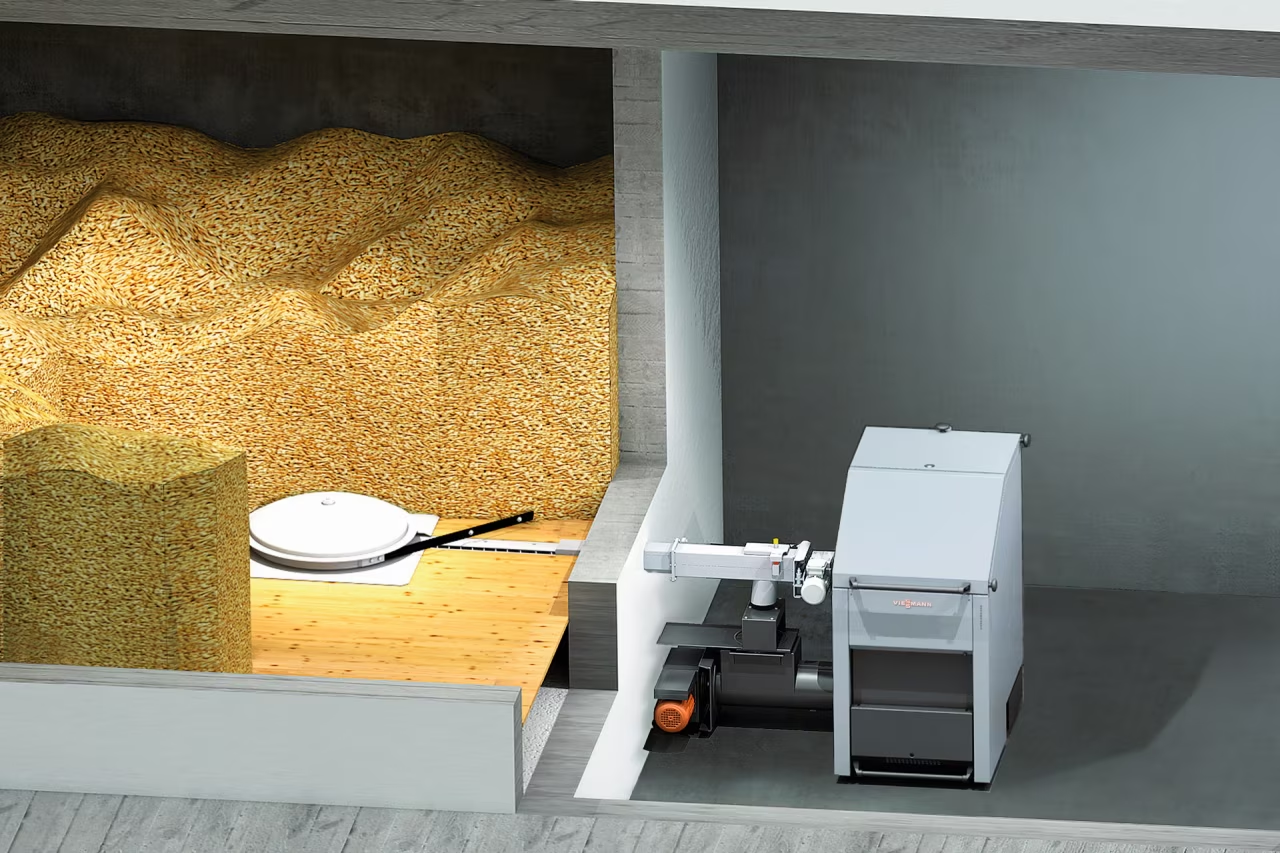
Before fuel can be burned, it must enter the combustion chamber. Semi-automatic pellet boilers have a pellet hopper that the user fills manually. Fully automatic pellet heaters are connected to the hopper via a feeder system.
The feeder can be mechanical, pneumatic, or a combination of both. In pellet heating systems, mechanical feed systems often take the form of a screw conveyor. The rotating auger steadily transports pellets from storage to where they are needed. Another option is a vacuum feed system. Here, a suction turbine creates a vacuum that draws pellets from storage into the boiler through hoses.
The ideal conveyor system depends primarily on the type and volume of available space. Vacuum conveyor systems can cover distances of up to 25 meters. Screw conveyors are better suited for pellet heating systems located near the storage area. It’s important to remember that the distance between the warehouse and the road should not exceed 30 meters. Otherwise, vehicles will not be able to cover this distance. For more information and tips, visit the section on pellet heating .
Automatic ignition and safety equipment are integral parts of a pellet heating system. Ignition occurs when pellets from the storage area enter the combustion chamber. Built-in lambda probes and flue gas temperature sensors continuously monitor the combustion process. Heat from the combustion chamber warms a heat exchanger surrounded by water. The water then transfers heat to the heating circuit. If the temperature drops below the required level, the boiler automatically restarts. Ideally, a wood-burning heating system is combined with a buffer tank. This stores hot water and makes it available when needed.
An important feature of a wood-burning heating system is a backfire prevention device. During combustion, the fire usually burns in a controlled manner. However, in rare cases, flames can backfire and damage the exhaust system. In the worst case, they come into contact with fuel still outside the combustion chamber. To prevent this, backfire prevention devices are installed. The most common methods include drip trays and rotary shutoff valves.
Photo: © Mr_Mrs_Marcha/ Shutterstock.com
An air supply is necessary for pellet combustion. All Viessmann pellet heating systems are equipped with primary and secondary air control systems with lambda sensors to ensure staged combustion. This ensures efficient operation with low emissions. Pellets burn almost completely, resulting in high efficiency—over 90 percent. The heat exchanger is automatically cleaned, preventing loss of heat transfer capacity.
The ribbed grate also cleans itself, rotating 360 degrees, further enhancing system reliability. Ash falls into a screw conveyor located below, which delivers it to the ash pan. Since the pellets burn almost completely, very little ash is produced. The ash pan only needs to be emptied manually once or twice a year. All boilers are also thermally insulated and lined. The system is controlled by the Ecotronic system controller.
Heating with pellets is a good alternative to heating with oil or gas. Read interesting facts about this special type of heating in the following sections.
A pellet heating system operates automatically, providing maximum convenience when heating with wood. This requires proper pellet storage and feeding technology.