

Topics at a glance
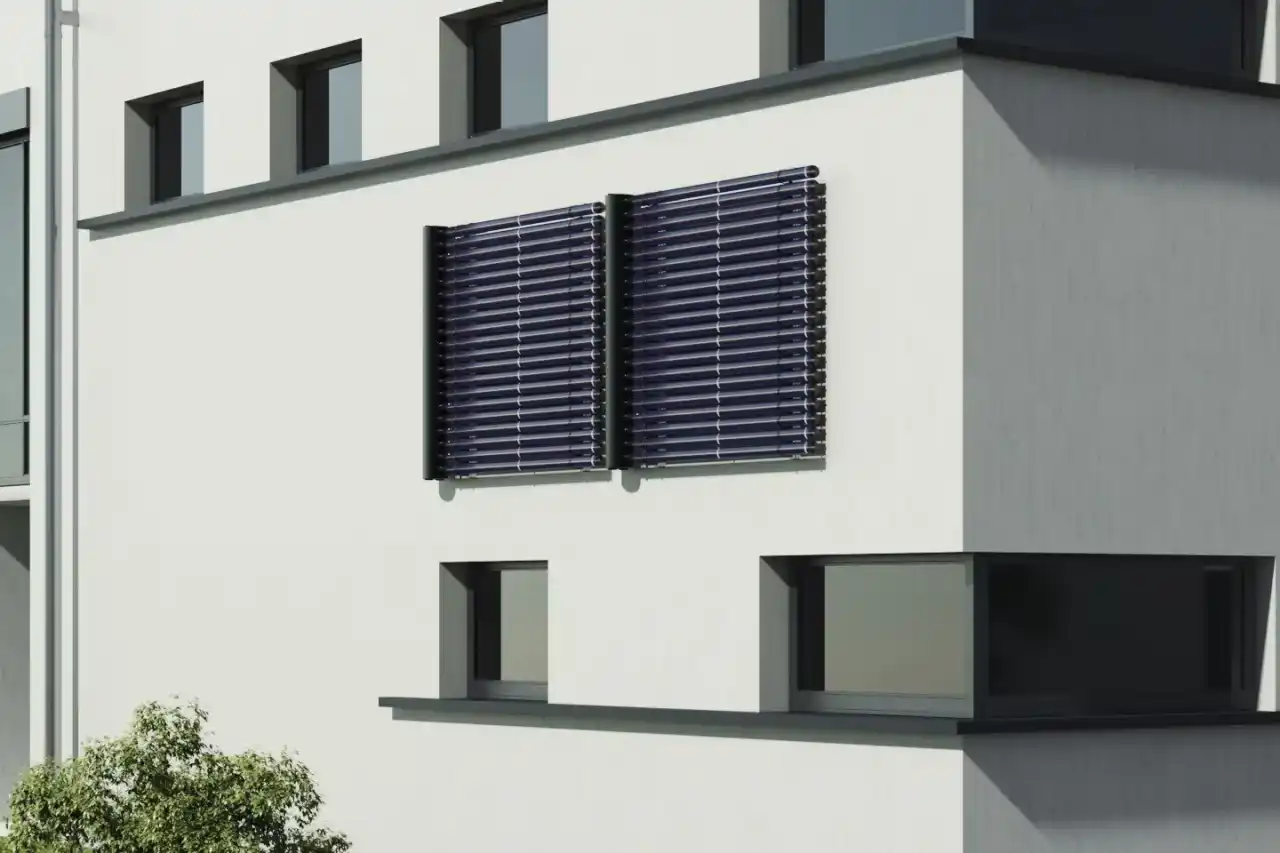
Solar collectors form the basis of a solar thermal system. As the name suggests, they collect sunlight. This is then converted into useful heat, which can be used to heat hot water or as a backup source for central heating in the home. This saves energy costs and helps reduce CO₂ emissions from fossil fuel combustion.
Basic principle and types
Leaving aside a few specialized technical solutions, collectors with a circulating coolant are primarily used in Germany. This coolant typically consists of a mixture of water and glycol antifreeze. The coolant is contained in a pipe. Depending on the installation method, collectors are classified as tubular and flat-plate collectors. However, they share the same feature: an absorber converts solar radiation into heat. The coolant absorbs the heat and transfers it away from the collector. This process is the same in every collector.
Vacuum tube collectors – the principle of the Thermos flask
In tubular collectors, the absorber is placed in a glass tube under a vacuum (evacuated), similar to a thermos flask. The vacuum provides excellent thermal insulation properties and reduces heat loss. This is especially beneficial when collector temperatures are high, in other words, under the operating conditions typical of solar backup central heating systems.
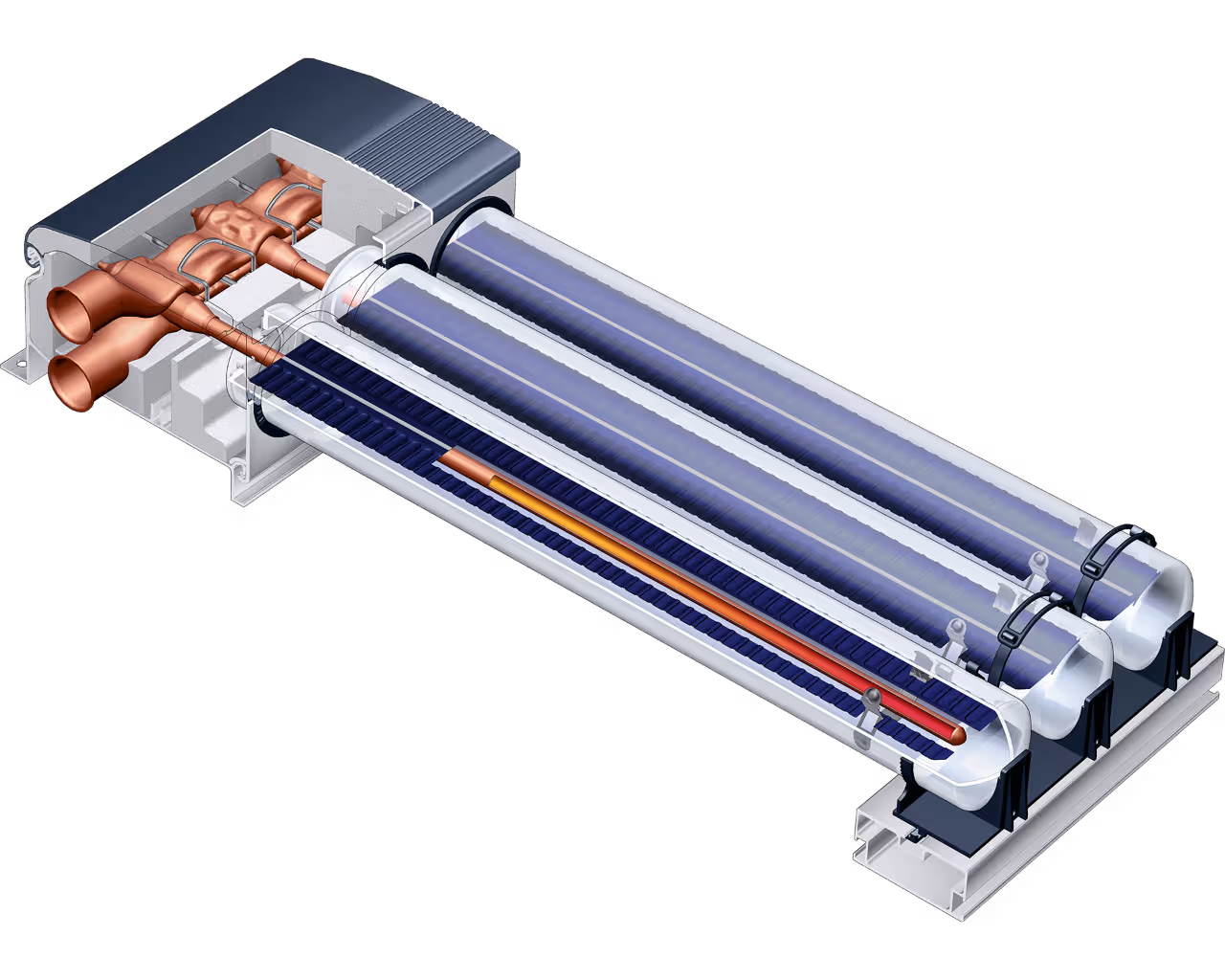
Collector body with highly efficient thermal insulation
Absorber panel with selective coating inside the vacuum tube
Duotec double-pipe heat exchanger
ThermProtect heat pipe with automatic temperature-dependent shutdown
Basic tire with tube clamp in the same color as the body
In general, tube collectors can be differentiated based on their design: in direct-flow evacuated tube collectors, the coolant circulates through absorber tubes located inside the tubes. In heat pipe systems, the coolant does not flow through the tubes. Instead, the coolant (usually water) evaporates in a copper tube beneath the absorber. The vapor condenses in the aptly named condenser at the upper end of the tubes—this is where the energy is transferred to the coolant in the collector. The advantage of heat pipe collectors is their reliable heat absorption.
AHI Carrier offers the following evacuated tube collectors based on the heat pipe principle:
Flat plate collectors – meandering tubes
In flat plate collectors, the absorber is typically protected from external influences by a casing made of coated sheet steel, aluminum, or stainless steel, and a front cover made of low-grade solar control glass. An anti-reflective (AR) coating on the glass can further reduce reflection. Thermal insulation of the collector housing reduces heat loss.
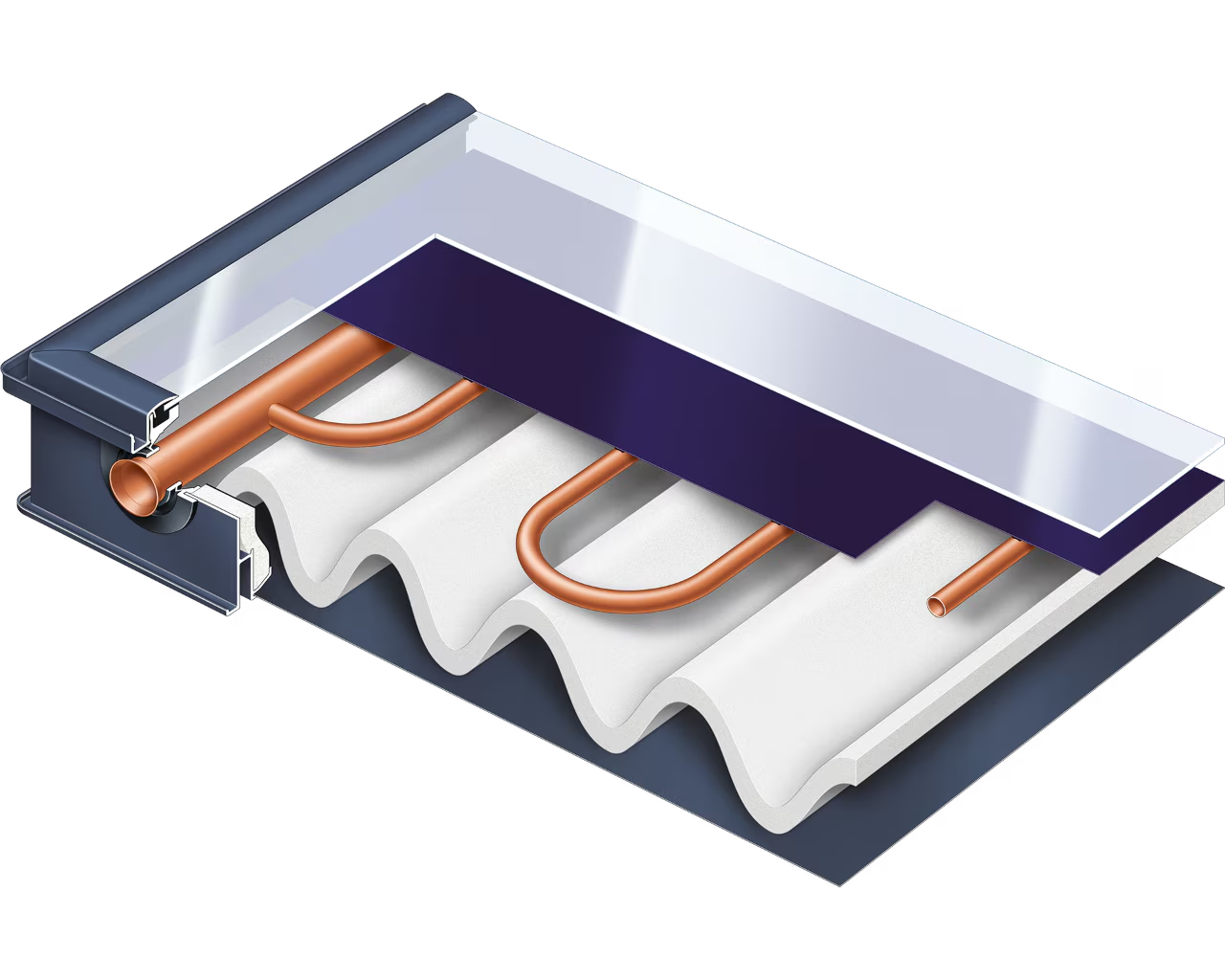
Folded aluminum frame with double glazing around the entire perimeter
Stable, highly transparent lid made of special glass
Selective absorber with switchable absorbent layer ThermProtect
Meander absorber
Highly efficient thermal insulation
The absorber pipe is laid in a meander pattern, ensuring reliable flow through the collector. The absorber pipe is also welded at the bends, ensuring optimal heat transfer right to the edges. The floor plate is connected to the collector frame along its entire perimeter. The plate seal is seamless and made of flexible, weather- and UV-resistant sealing material.
AHI Carrier offers the following products:
Proper planning and installation
Thanks to a variety of designs, solar collectors can be installed in virtually any building concept, both in new construction and in retrofit projects, both on the building itself and adjacent to it. They can be installed on pitched and flat roofs, on walls, or even freestanding on the ground. In all cases, the collector and mounting form a single, static unit. AHI Carrier offers fully load-tested systems for all traditional roof types and suitable for all collectors within its standard product range, ensuring increased reliability and peace of mind during the planning and installation stages.
Options for fastening the lifting mechanism
The slope and orientation of the collectors are critical
The amount of energy available for heat generation is greatest when radiation strikes the collector surface at a right angle. At our latitude, this is impossible to achieve with a horizontal surface. However, the collector surface can be tilted accordingly. Furthermore, orientation also determines the proper use of solar energy. In the Northern Hemisphere, south-facing is ideal.
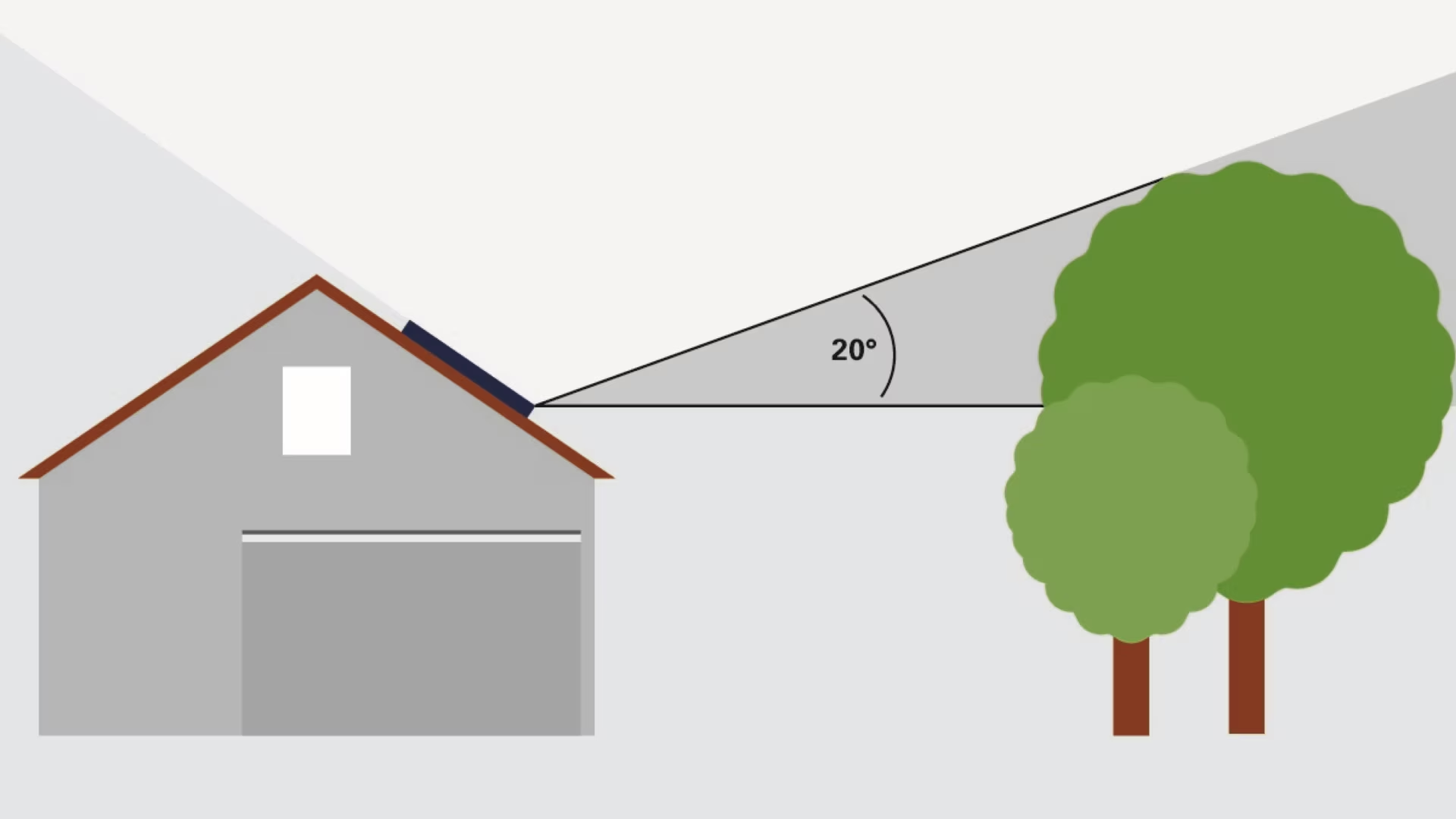
Avoid shading solar collectors

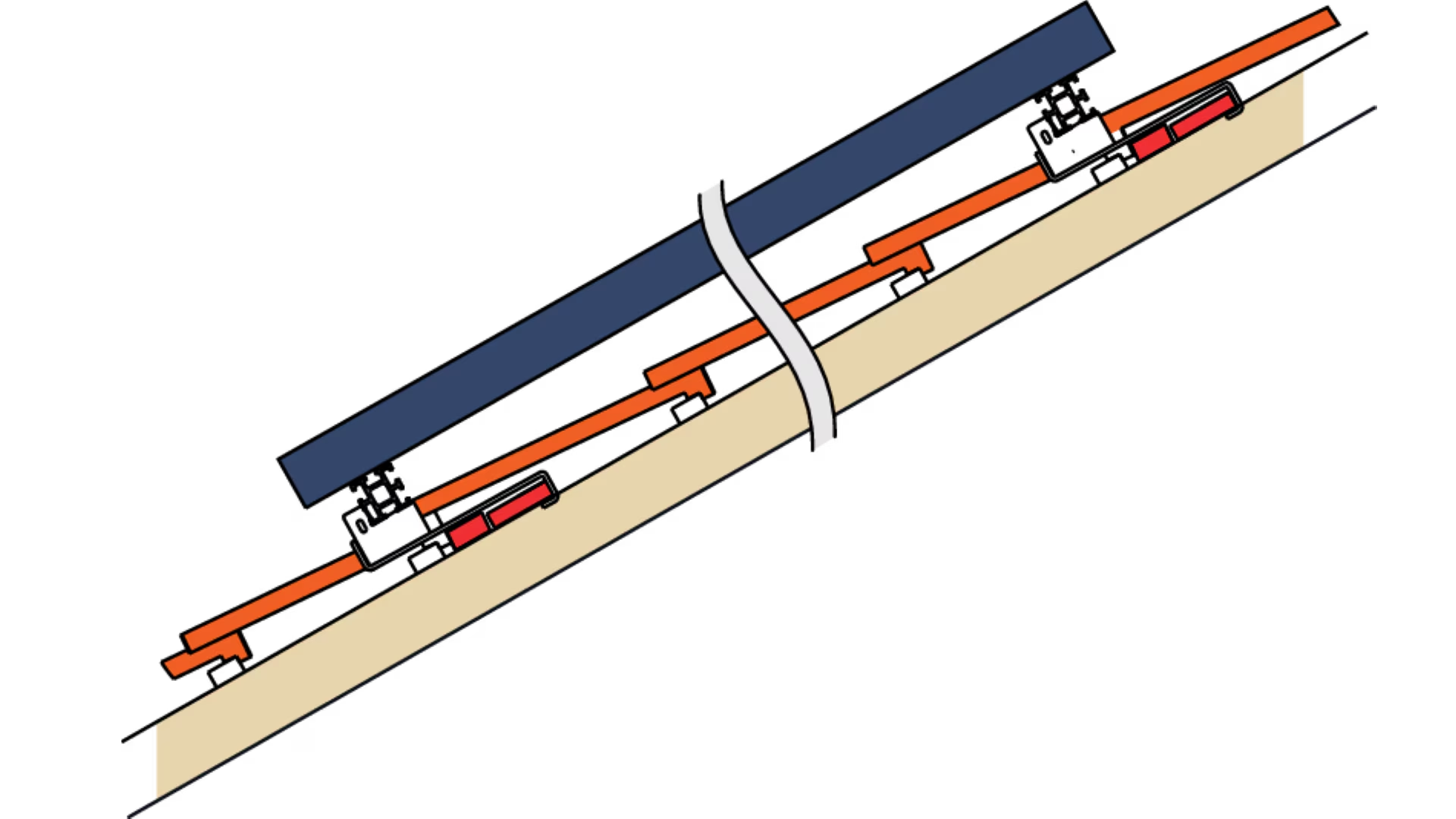
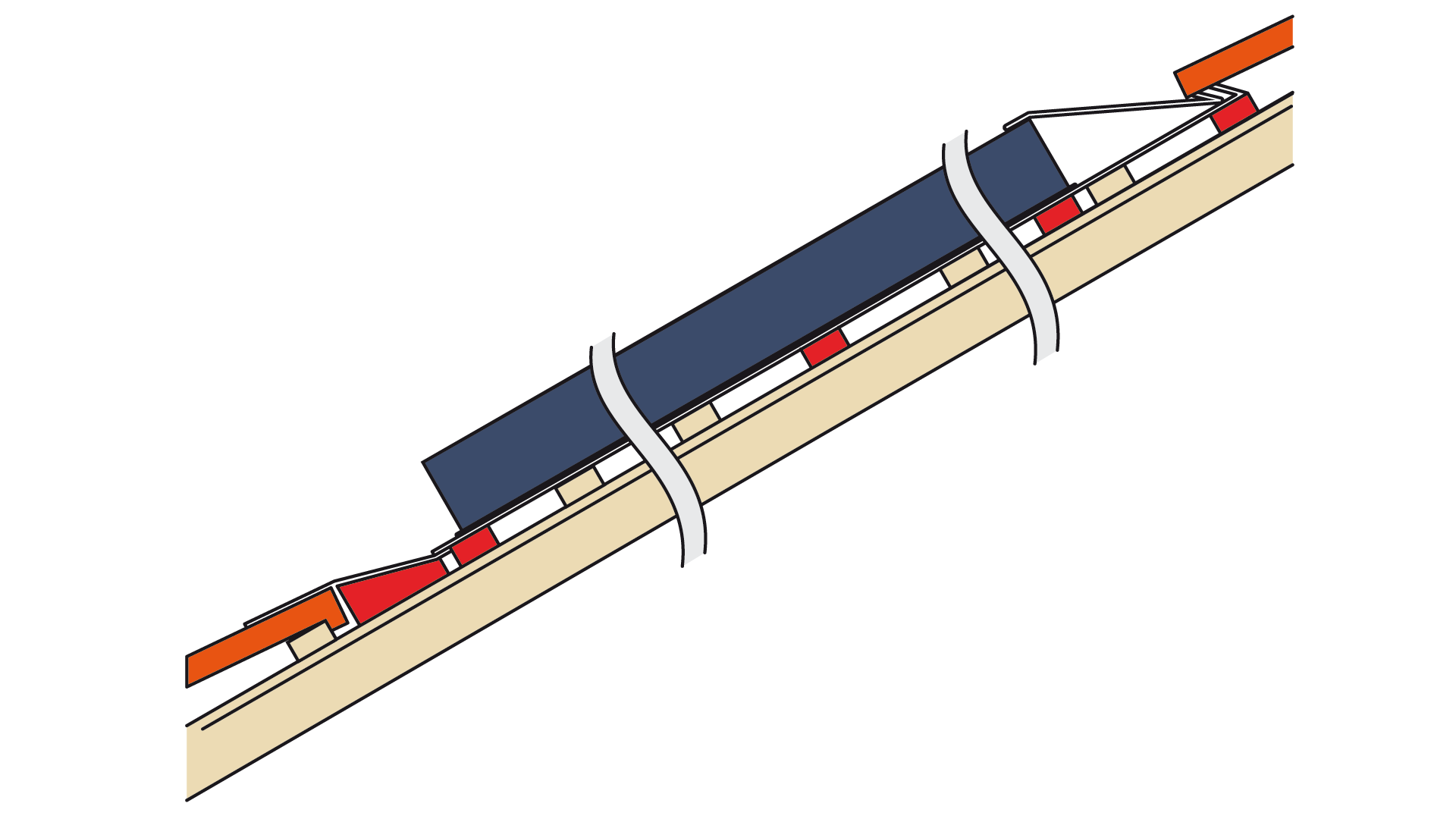
Collector Installation: Above Roof Installation and Roof Integration
Performance characteristics – what is important?
A key value to consider before purchasing a solar thermal system is the collector efficiency. This value represents the proportion of solar radiation that is converted into useful thermal energy. This value is determined according to European standard EN 12975 and can be found in the device datasheets.
When calculating the efficiency of solar collectors, energy flow and heat loss are also taken into account. This means that not all light reaching the surfaces can be used to generate heat (optical losses). Furthermore, a small portion of the heat generated by the collectors is also lost (thermal losses).
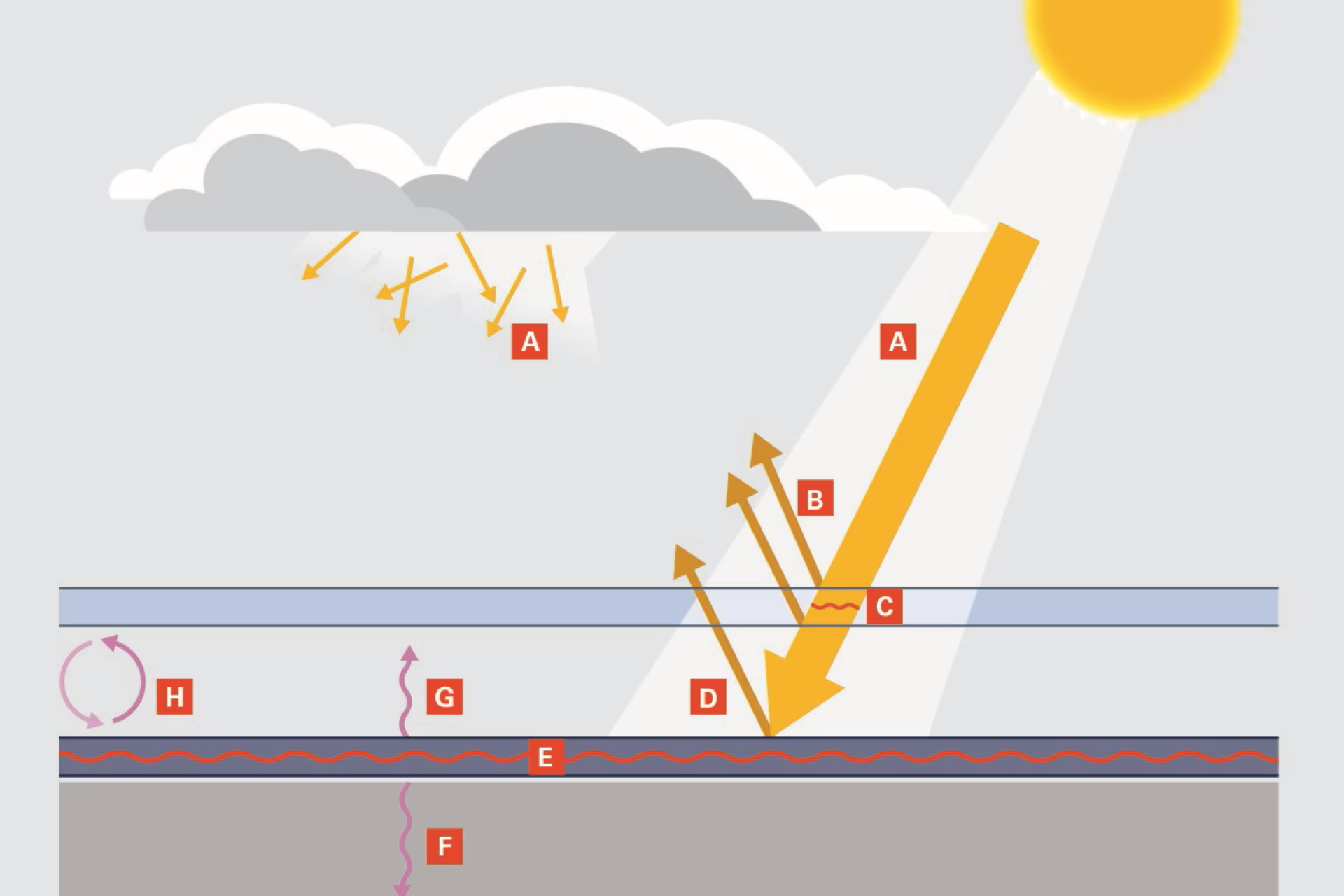
Energy flows in the collector : A Irradiation at the collector E Absorber heated by radiation
Optical losses: B Reflection on the glass unit C Absorption on the glass unit D Reflection on the absorber
Heat losses : F Thermal conductivity of the collector material G Thermal radiation of the absorber H Convection
ThermProtect overheating protection with automatic temperature-dependent shutdown
If heat is not removed from the collector (because the pump is stopped and the coolant is not circulating), the collector reaches its so-called stagnation temperature. The risk of overheating increases with the temperature difference with the surrounding environment. Stagnation temperatures of 200 degrees Celsius and above lead to undesirable consequences. In this case, the solar medium will evaporate and rapidly expand within the solar panel circuit. The resulting high thermal load on the components and the coolant itself leads to damage.
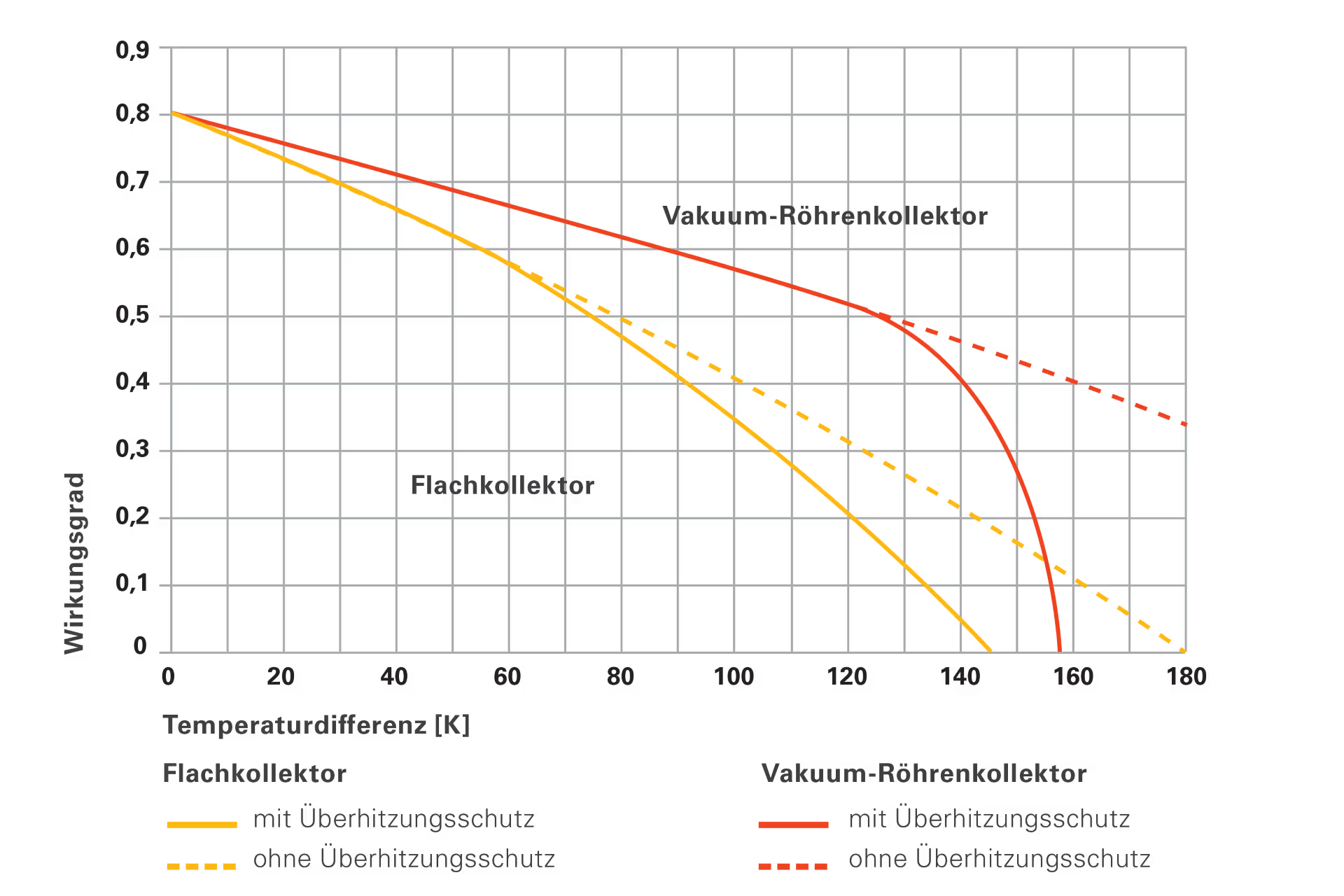
Characteristic efficiency: the risk of overheating increases as the temperature difference with the ambient temperature increases. This is where collectors with overheat protection come in handy.
ThermProtect and the heat pipe principle for overheating protection
AHI Carrier counteracts this phenomenon with a special absorbent coating—ThermProtect. During operation, the absorber radiates more and more heat as it heats up. This increases the collector’s heat loss, but at the same time, the collector’s temperature rises only slightly, and the stagnation temperature remains significantly lower than normal. How exactly does this happen?
ThermProtect modifies the crystalline structure of flat-plate collectors. Their optical properties also change at a temperature of 75 degrees Celsius. This means the internal temperature of the collectors cannot rise above 145 degrees Celsius. When the temperature drops again, the crystalline structure returns to its original state.
Conversely, evacuated tube collectors use the heat pipe principle to protect the system from overheating. If solar radiation is too high and heat transfer begins to decline, a gradual shutdown occurs based on temperature. This prevents condensation on the heat exchanger. The coolant can no longer liquefy, and heat is no longer transferred. Heat transfer resumes only after the temperature within the solar circuit has dropped.

Request a specialist consultation
Get a free, personalized solar thermal system consultation from our qualified sales partners!