
MENU

With a solar thermal system, you can harness free solar energy and reduce your monthly electricity bills. Furthermore, by installing a solar thermal system, you demonstrate your commitment to protecting the environment by sustainably reducing CO₂ emissions. Investing in such a solar thermal system also helps increase the value of your property.

Whether residential, commercial, or local government buildings, Viessmann technology can future-proof your system and ensure optimal interaction between all system components. With over 40 years of experience developing and manufacturing solar thermal systems, you can count on our high quality and technical expertise. Solar thermal energy is also the ideal complement to a heating system. All Viessmann systems are designed to work in conjunction with a solar system, so it makes no difference whether you choose a new oil or gas condensing boiler, a wood-fired heating system, or a heat pump.

What is a solar thermal system?

Essentially, a solar thermal system can be used for hot water heating and backup central heating. Solar energy is free, so you not only save on fossil fuels, but you’ll also find that your investment in a solar thermal system pays for itself in just a few years. After all, there are no energy source costs.

Solar thermal system design

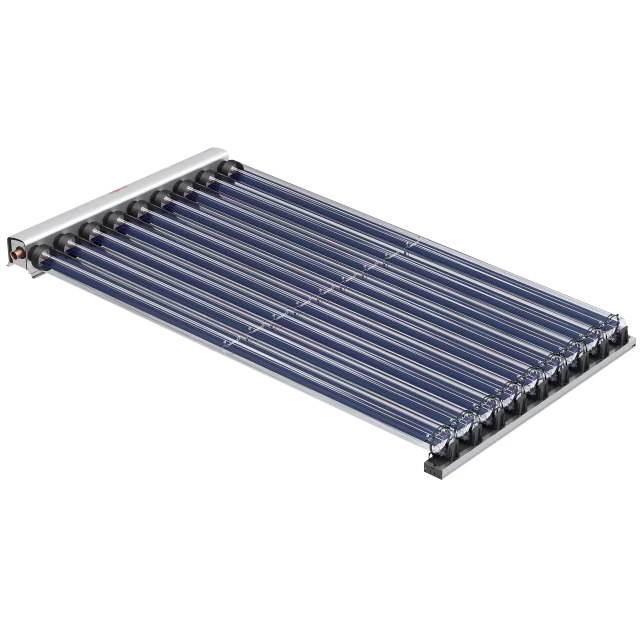
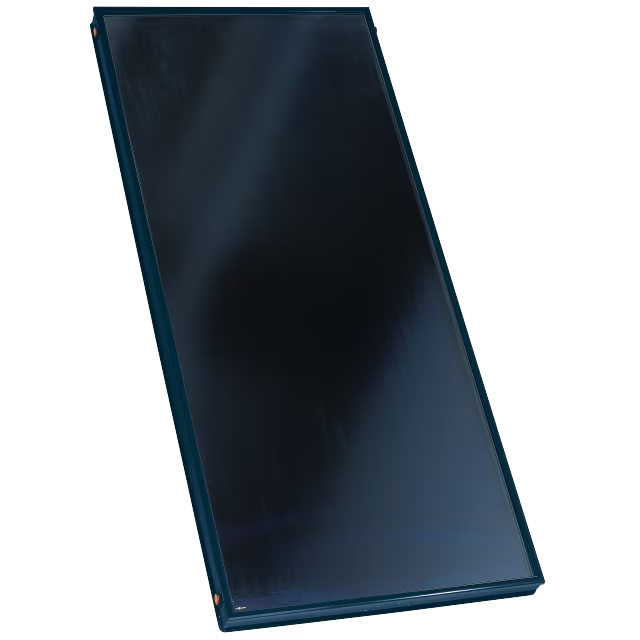
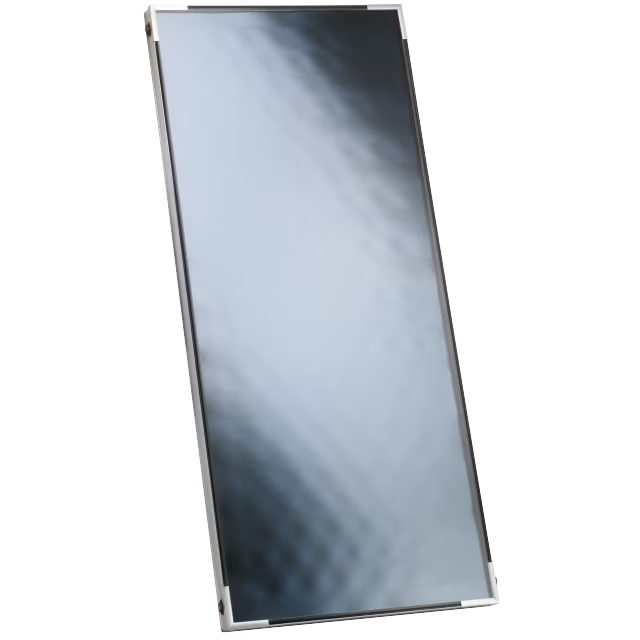
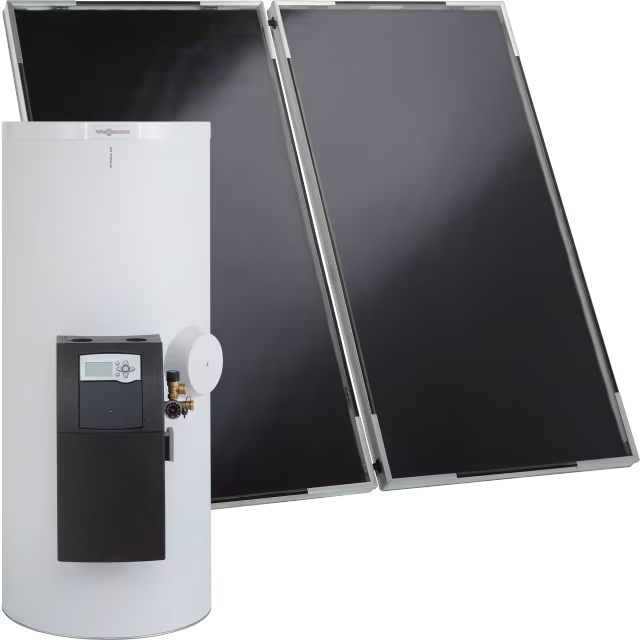
To harness the sun’s energy, collectors are needed to capture its rays. Viessmann Vitosol has developed tubular and flat-plate collectors for this very purpose. These collectors absorb the sun’s rays and convert them into useful heat. In addition to the collectors, a solar thermal system consists of an absorber, a solar circuit, and a solar fluid or medium. When rays strike the collectors, the energy is converted into heat in the absorber. This heat is first pumped to a buffer tank or hot water tank, and from there it is distributed throughout the house—either as a reserve for the heating circuit or to heat domestic hot water. The heat is first transported to a suitable storage tank via the solar fluid. From the hot water tank, the heat is released to draw points, such as taps or showers, as hot water as needed.

How does a solar thermal system work?

Our expert Karsten Kuhlmann explains in detail how a solar thermal system works.

Should solar thermal energy always be combined with underfloor heating?

It’s a common misconception that solar thermal energy for backup central heating is only possible in combination with underfloor heating systems. Traditional radiators can also be used with solar thermal systems. The average annual yield is only slightly lower and is determined primarily by the slightly higher return water temperature from the radiators.

Differentiation depending on application options

You can use solar energy for your own needs in two ways. Detailed information on domestic hot water heating and backup central heating can be found in the following sections.

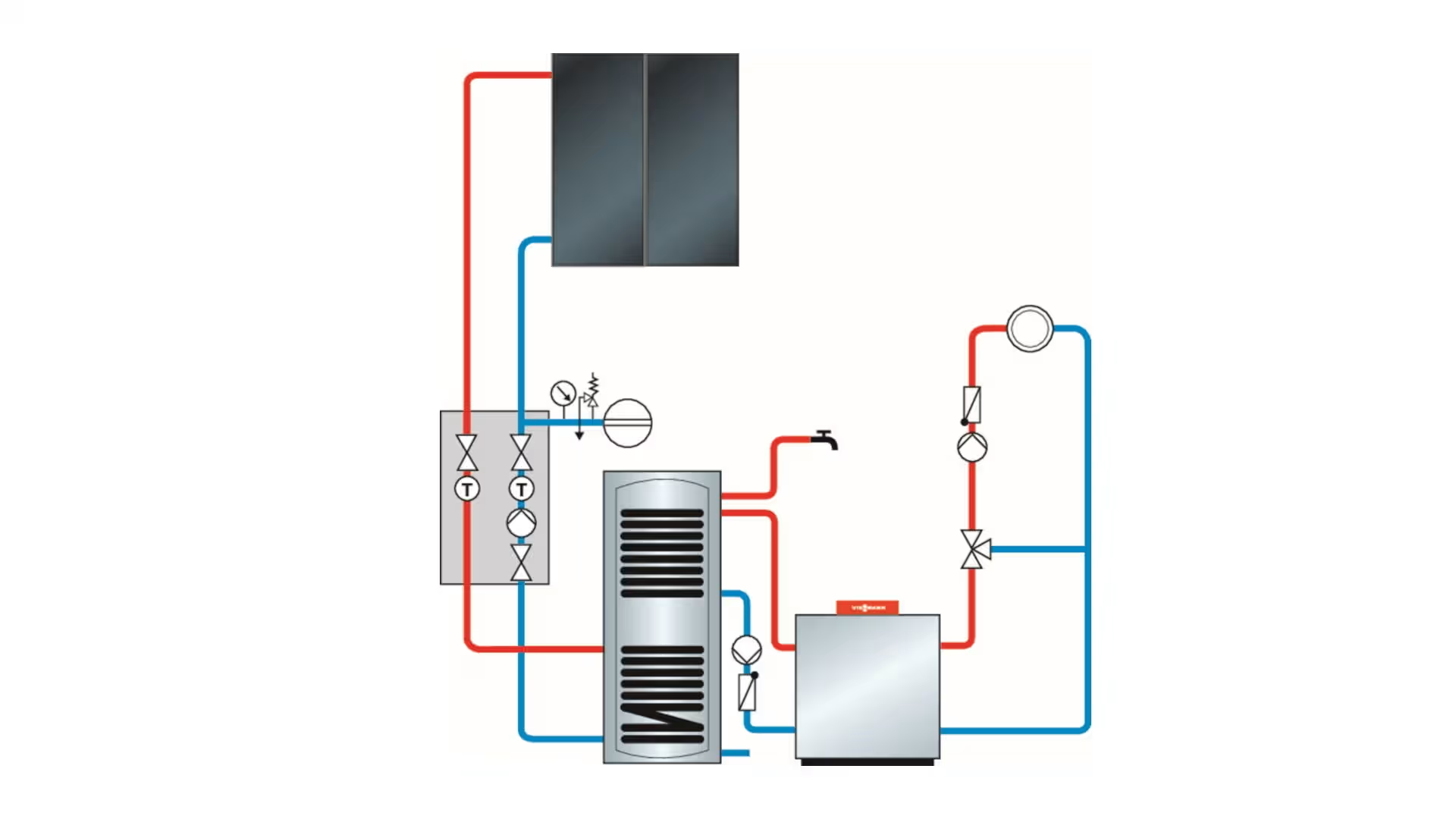
Diagram: Heating domestic hot water using solar energy

This solution is based on a dual-mode DHW cylinder, such as the Vitocell 300-B. With sufficient solar radiation, the solar environment in the solar thermal system heats the water in the DHW cylinder through the lower indirect coil.

When the temperature drops due to hot water consumption, such as for a bath or shower, the boiler is activated as needed to provide additional heating via the second circuit. Installation of Viessmann Vitosol solar collectors is simple thanks to integrated flow and return pipes, which also ensures a relatively low investment.

Further options for combining a solar system with Vitocell products also provide a high level of convenience for heating domestic hot water. You can also use dual-mode Vitocell 100-U/W or Vitocell 100-W DHW cylinders, combination cylinders, or buffer cylinders for water heating, such as the Vitocell 360-M. We have the right DHW cylinder to meet any need. All appliances can be easily connected to a solar thermal system.

What should be considered when designing a solar thermal system?
When designing a solar thermal system for a detached or semi-detached house, the following rule of thumb applies: if the collector area is oriented between southeast and southwest, then for every 100 liters of cylinder volume, use 1.5 square meters of flat-plate collector area or 1.0 square meters of tubular collector area. Yield losses due to unfavorable orientation or tilt can be compensated for by slightly increasing the collector area. Our qualified partners can assist you with the design.

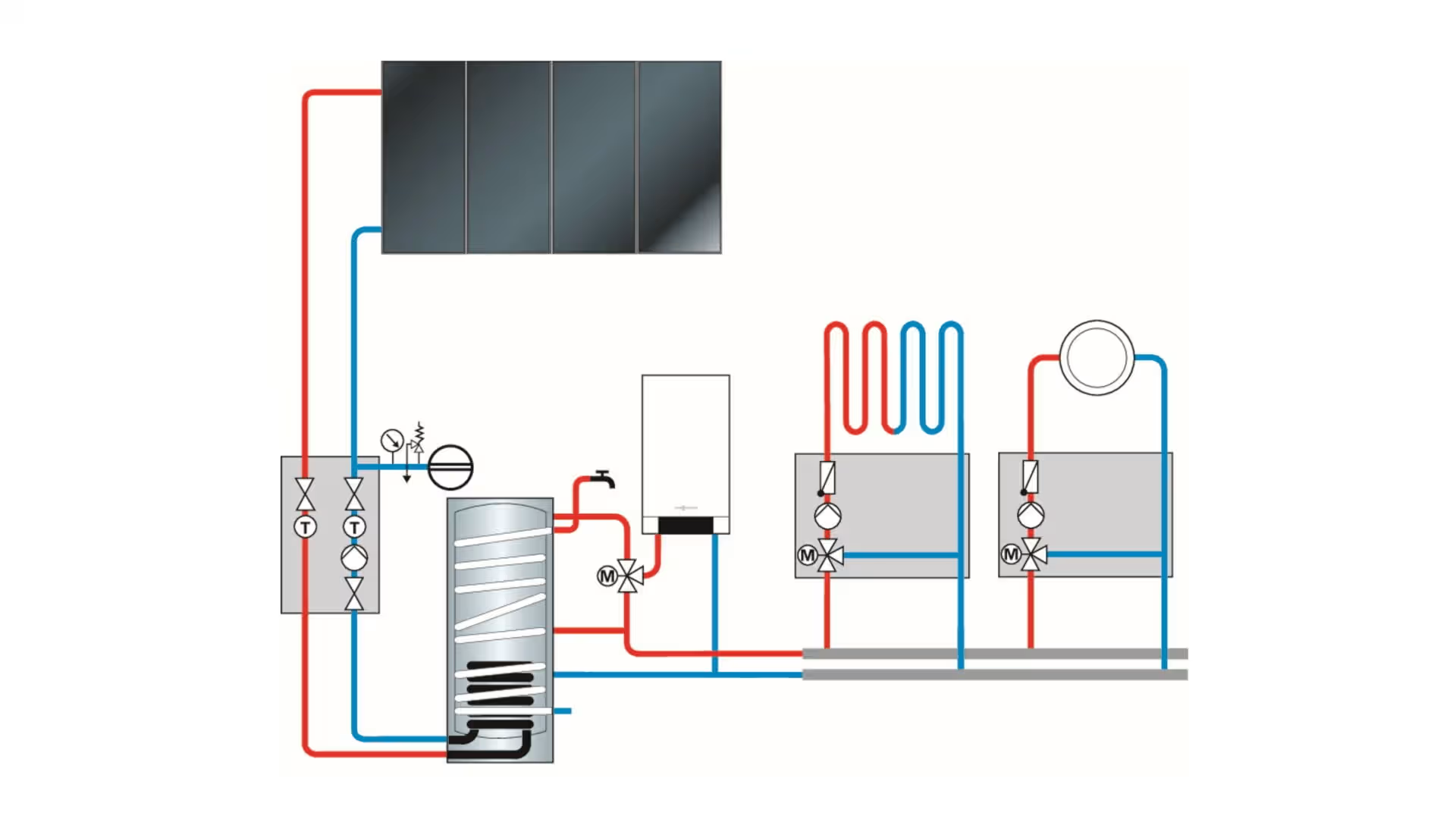
Diagram: Solar hot water heating and backup central heating

The solar heat generated by the solar collectors can also be used to raise the heating water temperature. For this purpose, the heating circuit uses the water in the solar cylinder, which is continuously heated by the solar collectors, through a heat exchanger. The control unit checks whether the desired room temperature can be reached. If the temperature falls below the set value, the boiler is activated. Solar systems for domestic hot water heating and backup central heating require an area of ​​approximately one square meter for every ten square meters of living space.

Gas condensing boilers Oil condensing boilers
Image

Expert advice on solar thermal systems

Get a free, personalized consultation on our solar thermal systems from our qualified sales partners!

Request a consultation now →

Harnessing the Saving Potential of Solar Thermal Energy

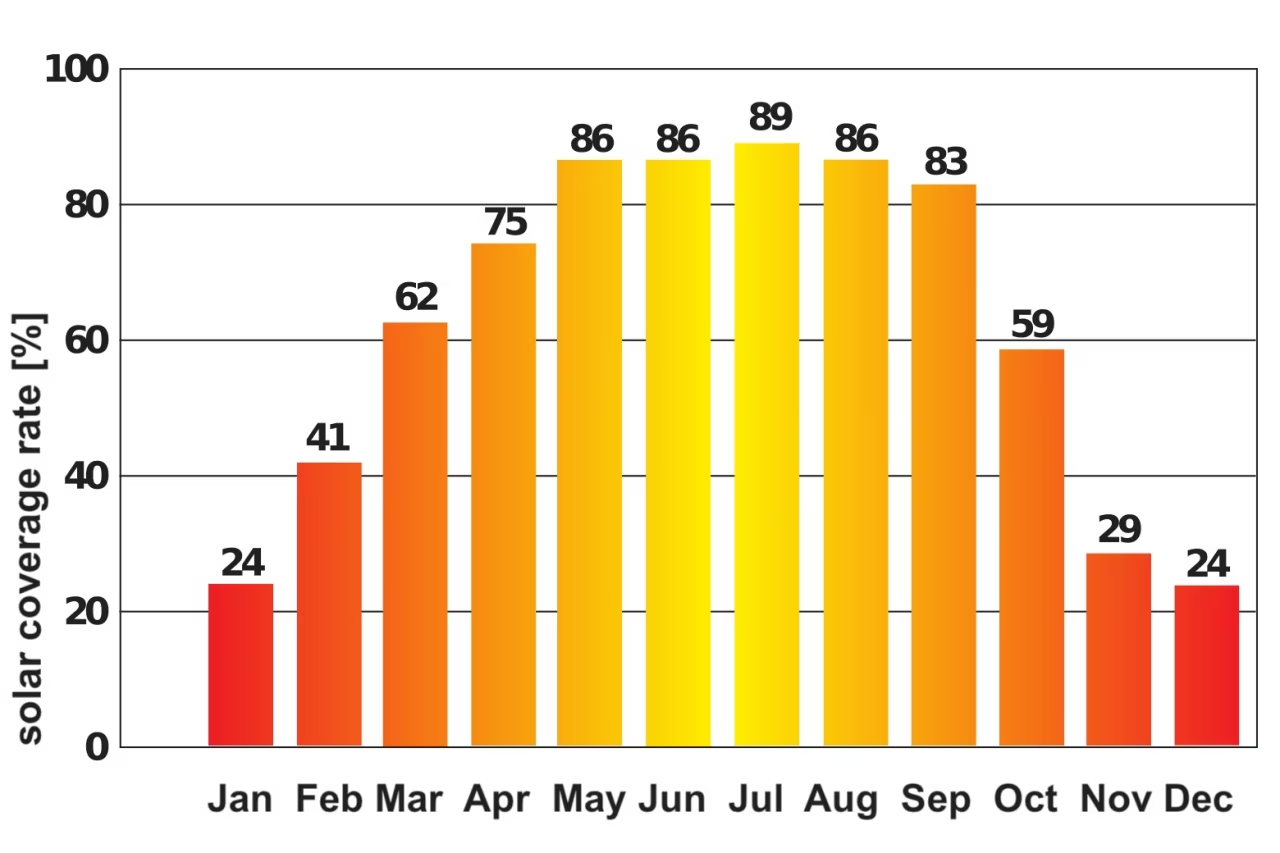
One important area of ​​potential savings is hot water heating. In our climate, solar collectors combined with a hot water cylinder offer a compelling alternative to a boiler, especially during the summer months. In a detached house, solar energy covers up to 60 percent of the energy needed to heat the hot water. By combining hot water heating with hot water heating, you can save approximately 35 percent of the total energy required annually. Even in spring and fall, using solar energy for backup heating allows you to frequently turn off your boiler.

Image

The following table illustrates the savings potential:

Technology Saving gas CO₂ savings/year Energy cost savings/year
Gas condensing boiler + DHW combi cylinder with solar heating support* 29% 20% €1030

*The values ​​shown were determined through simulation using standard household profiles for Potsdam. A single-family house with a four-person household (existing with a gas boiler) has 150 square meters of living space and a gas consumption of 2,500 cubic meters. Consumption costs are rounded using standard values ​​(EID). Energy prices from the Federal Statistical Office were used to calculate cost-effectiveness. Investment costs: Viessmann gross list price plus average installation costs nationwide (may vary individually).

Note: Our calculations are theoretical examples based on various assumptions and subject to certain general conditions. We assume no liability for their accuracy or applicability to real-world systems. Actual costs and potential savings may vary and should be calculated on a case-by-case basis based on the specifics of a particular location and general conditions.

Detailed information on potential savings is provided in our Modernisation Compass brochure, which is available here in PDF format:

Check the requirements before purchasing a solar thermal system

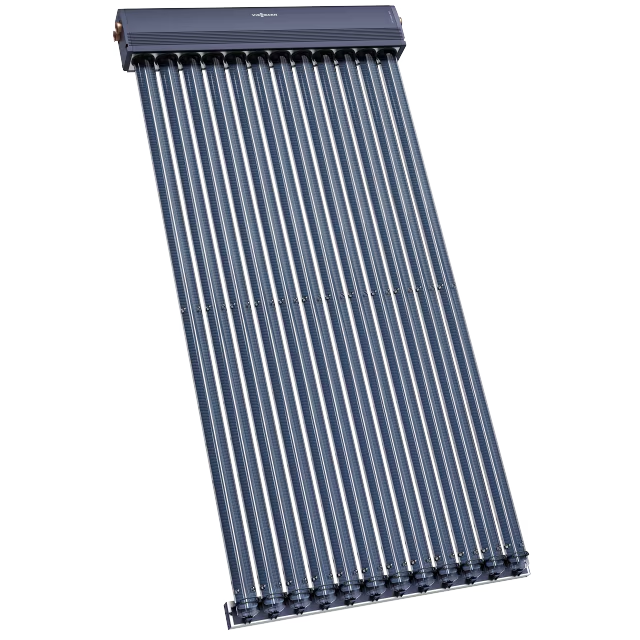
Viessmann tubular collectors

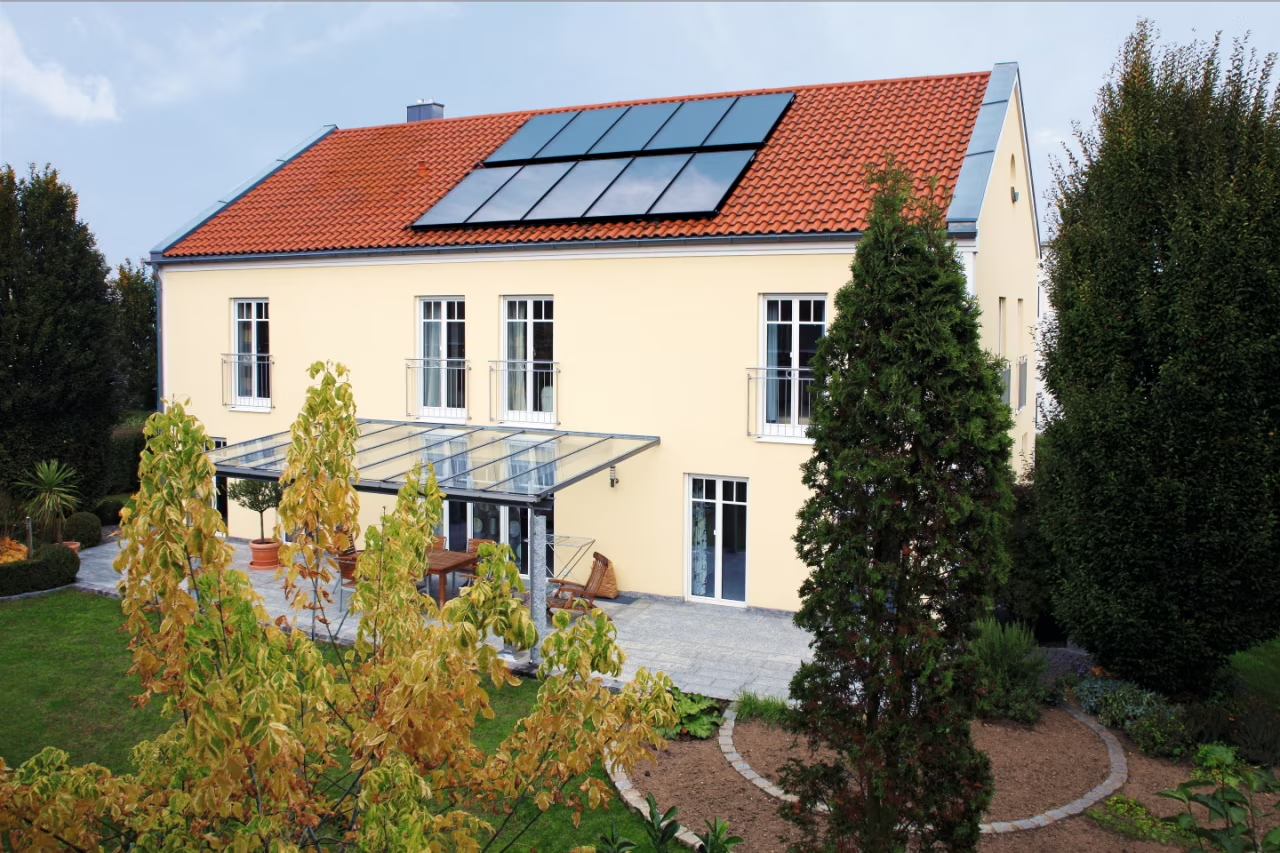
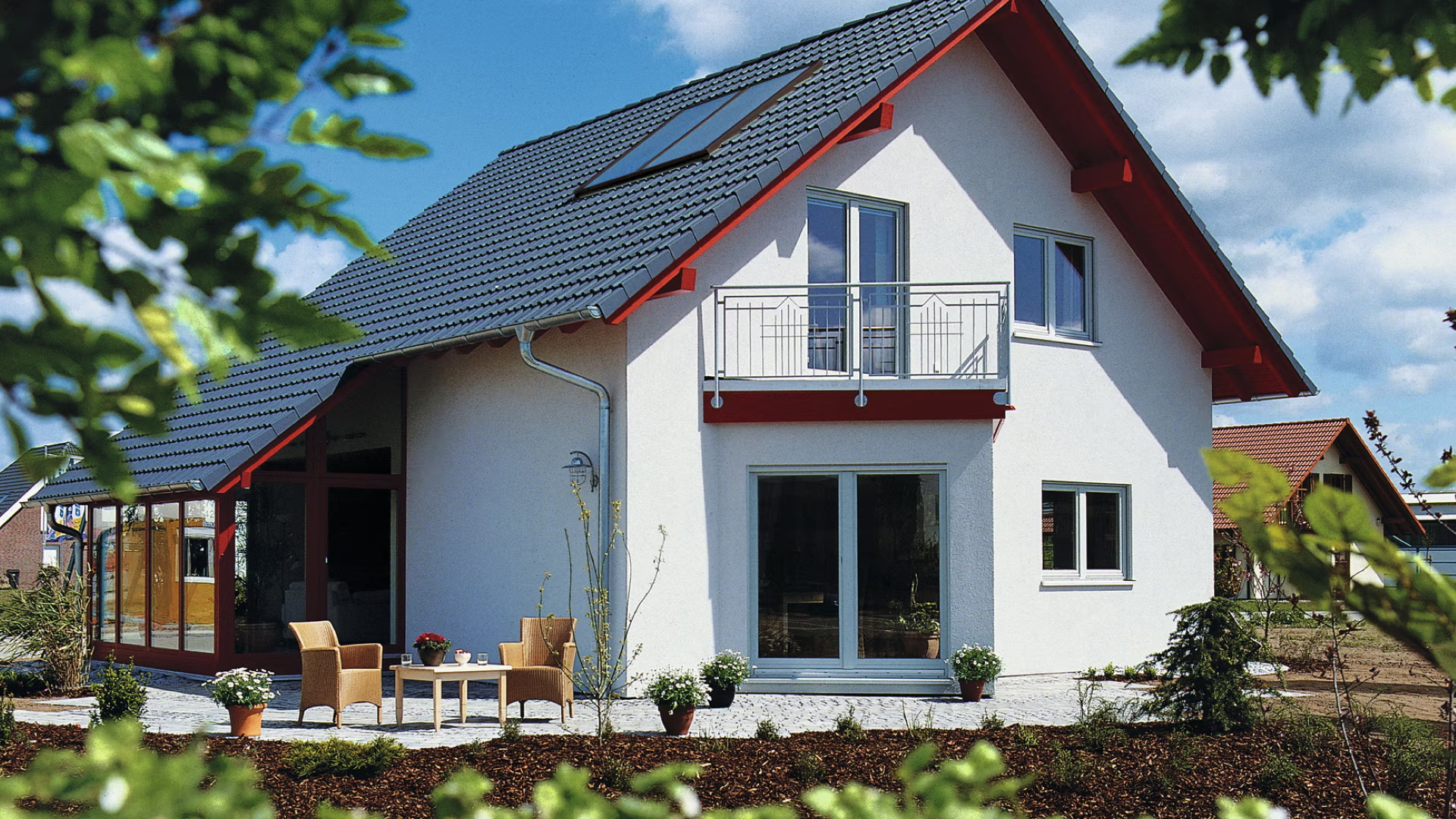
The performance of a solar thermal system depends significantly on site conditions. Particularly good results can be achieved on south-facing roofs with a slope of 30-40 degrees. If the roof faces east or west, homeowners can expect 20 percent lower performance for the same slope. A slightly less favorable orientation can be compensated for by a larger collector area. In addition to roof orientation and slope, it is important that the roof be large enough and, if possible, unshaded. If neighboring houses, trees, or mountains cast shadows on the roof surface for extended periods of time throughout the year, solar yield will decrease. Energy savings will be lower, and as a result, cost effectiveness will suffer.

If you’re considering a solar heating system, you should consult with our qualified partners. These specialists will assess local conditions and quickly determine the best way to install the technology and integrate it into your heating system. They can also provide professional planning and install the solar system to ensure reliable and cost-effective operation over the long term.

Quality characteristics of solar thermal systems

For a solar thermal system to be profitable, the technology must operate reliably over a long period of time. An important quality characteristic to consider is the Solar Keymark certification. This is a quality mark for solar energy products based on European standards. It guarantees the efficient operation of solar thermal energy and is a mandatory requirement for current government subsidy programs.

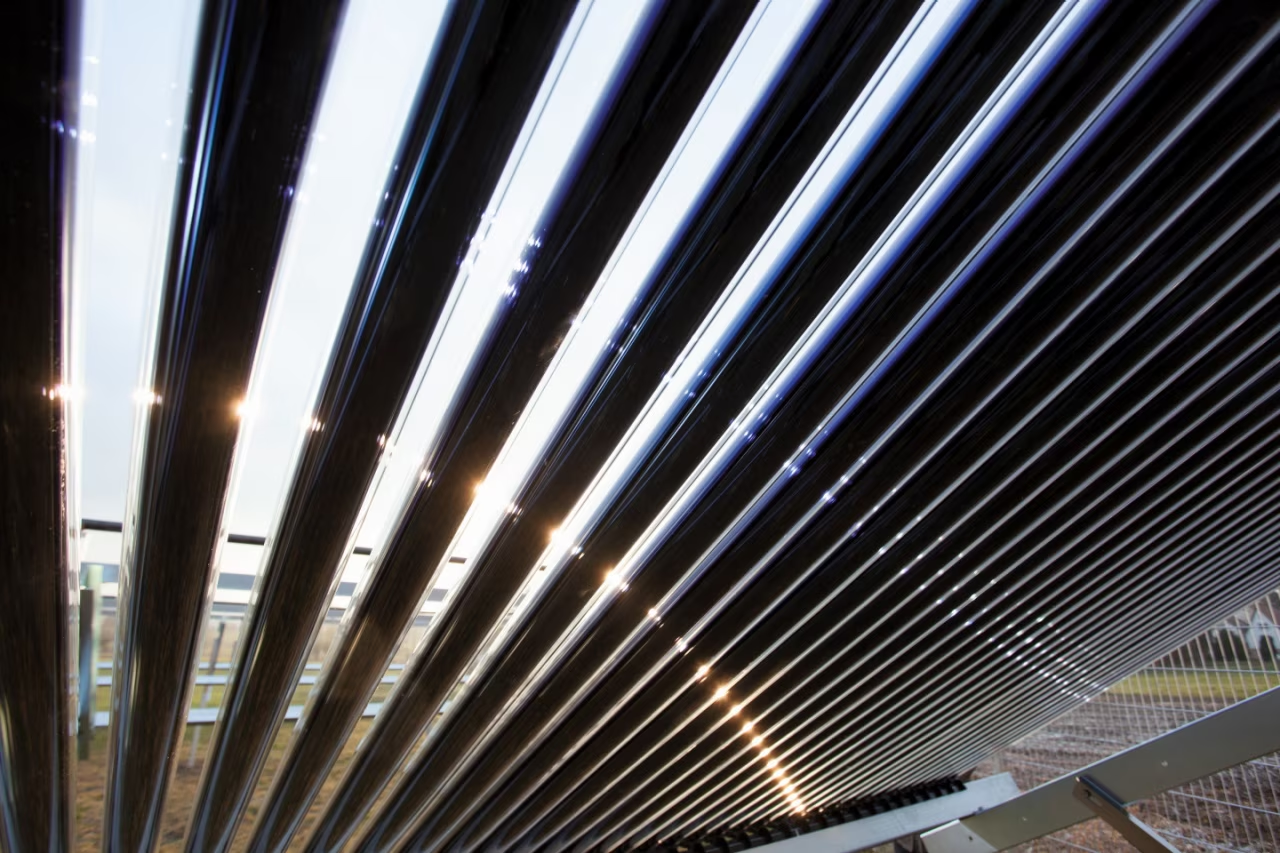
Viessmann solar thermal systems boast high performance and durability. Vitosol solar collectors are made from corrosion- and UV-resistant materials. This is impressively confirmed by quality testing in accordance with EN 12975. This also ensures consistently high heat output. The patented ThermProtect temperature-dependent shutdown function also provides reliable protection against overheating. The absorbers in new Viessmann flat-plate collectors, such as the Vitosol 100-FM, change their properties (surface structure) to emit more energy. Viessmann evacuated tube collectors, such as the Vitosol 200-TM, stop transmitting solar energy to the solar environment when a certain collector temperature is exceeded. The advantage: planning solar thermal systems becomes simpler, and installation is less labor-intensive. Components such as pre-cooling tanks and stagnation coolers are eliminated. This increases safety and reduces investment costs.

Solar heat for commercial processes

Solar thermal systems are of particular interest for commercial processes that require relatively low levels of heat. Collector technologies currently available on the market (excluding concentrating systems) can harness solar heat to provide heat up to 80 degrees Celsius throughout Central Europe.

Alternative solutions for high demand

Some industries require process heat at very high temperatures. These include food, fertilizer, and building materials production, as well as pharmaceutical companies and hospitals. To meet these high heat demands, Viessmann offers a range of solutions for generating heat, steam, electricity, and cooling. Fossil energy sources such as oil and gas, as well as renewable energy sources such as wood and biogas, can be used as energy sources. Large heat pumps are best suited for generating heat using ambient energy. Gas-fired combined heat and power plants are ideal for the simultaneous production of electricity and heat.

Product range

With a wide range of flat-plate and evacuated tube collectors, Viessmann offers flexible and individual solutions for every application.

Related articles

How does solar thermal energy work?

How does solar thermal energy work?

Read more
Solar Thermal System Calculation - Size and Design

Solar Thermal System Calculation - Size and Design

Read more
Renewable energy sources

Renewable energy sources

Renewable energy solutions offer a variety of options for cost-effective modernisation of the housing stock in line with subsidy criteria and climate protection requirements.

Read more