
Topics at a glance
To better understand how a brine/water heat pump works, it’s worth looking at the system’s structure. The heat pump itself is located above ground and, in addition to a compressor, has two heat exchangers—an evaporator and a condenser. In practice, either geothermal probes or geothermal collectors are used to extract heat from the ground.
Collectors and probes supply the heat pump with thermal energy
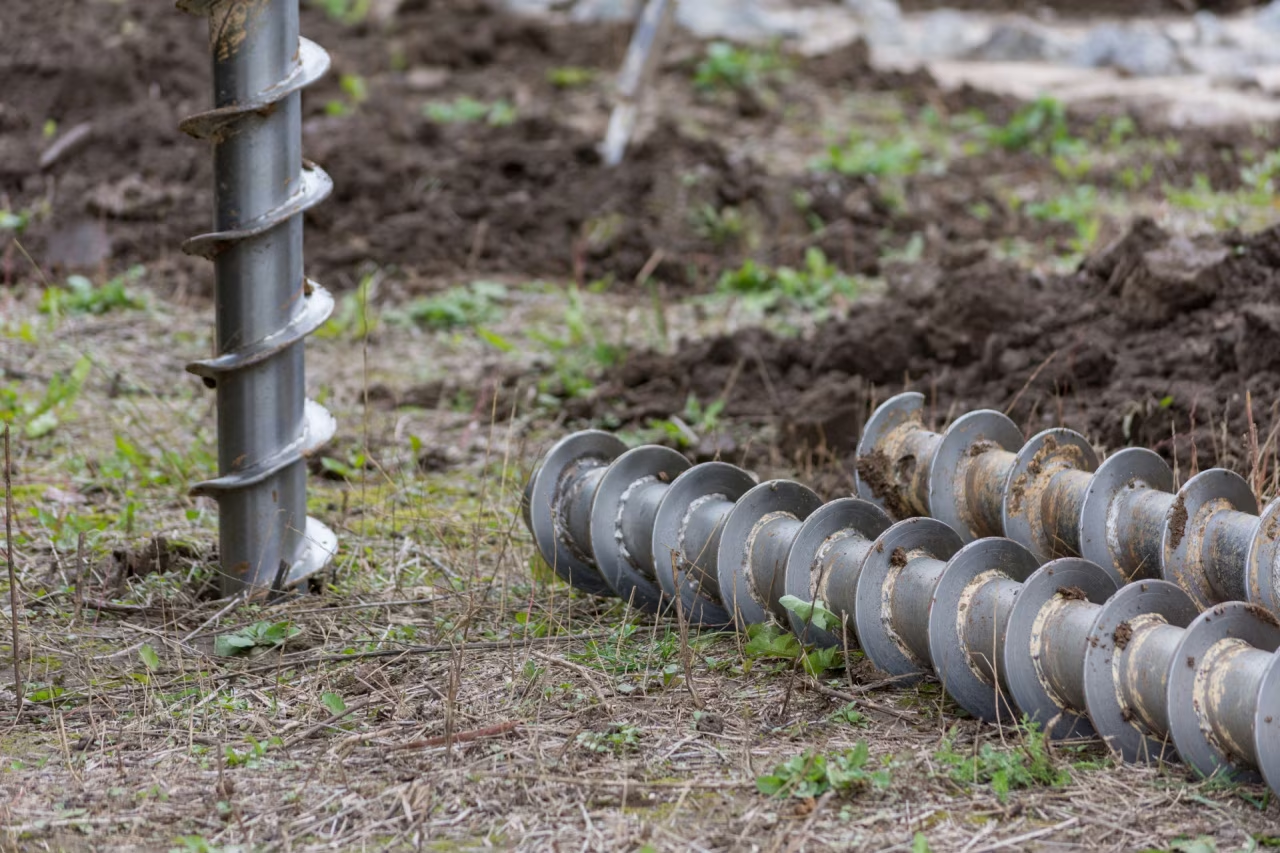
Geothermal probes are lowered deep into the ground using boreholes. Geothermal collectors, on the other hand, are located just below the surface but have a large surface area capable of absorbing thermal energy. Both collectors consist of a closed circuit circulating a frost-resistant liquid (brine). A built-in pump ensures the brine is constantly moving and transfers heat from the ground to the heat pump.

Heat pump expert advice
Get a free, personalized consultation on our heat pumps from our qualified sales partners!
Request a free consultation →The refrigerant circuit as the functional basis of a heat pump
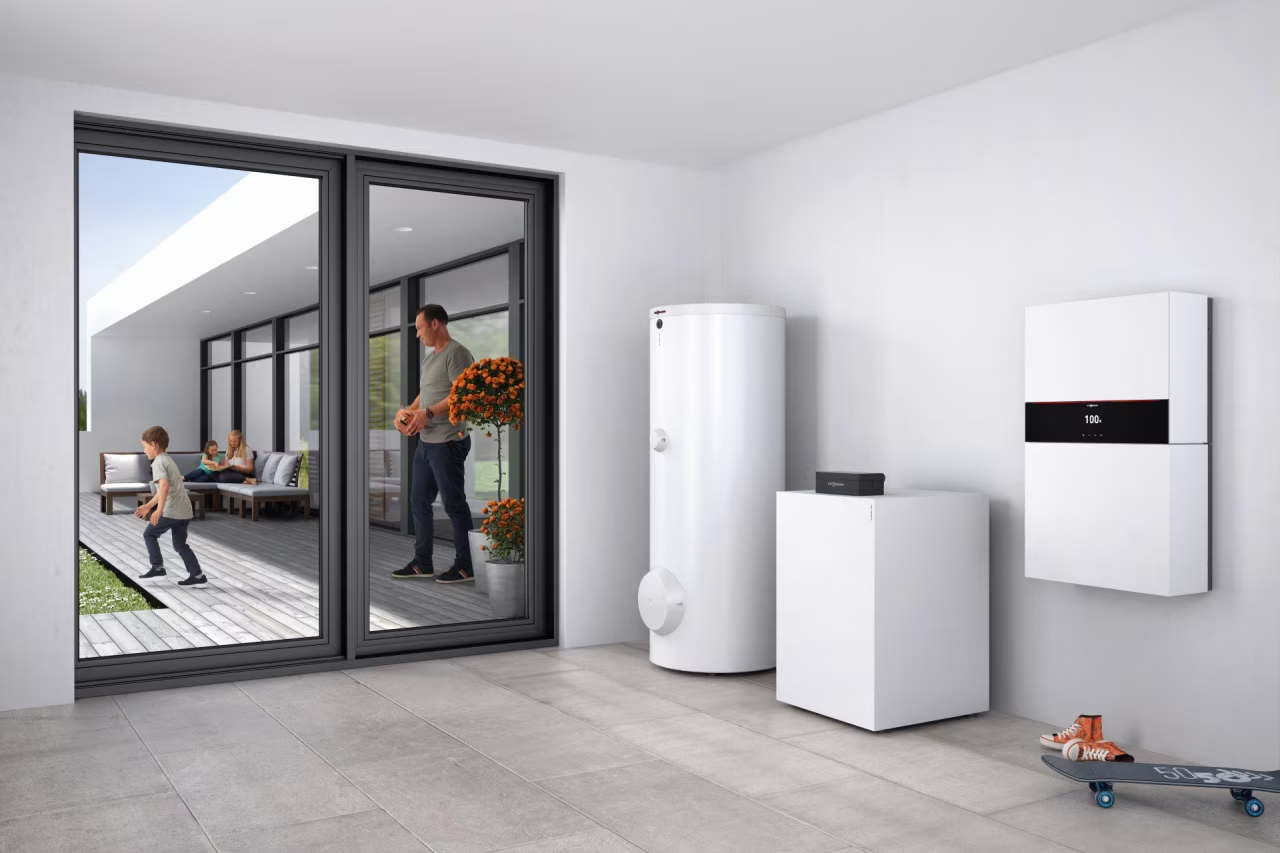
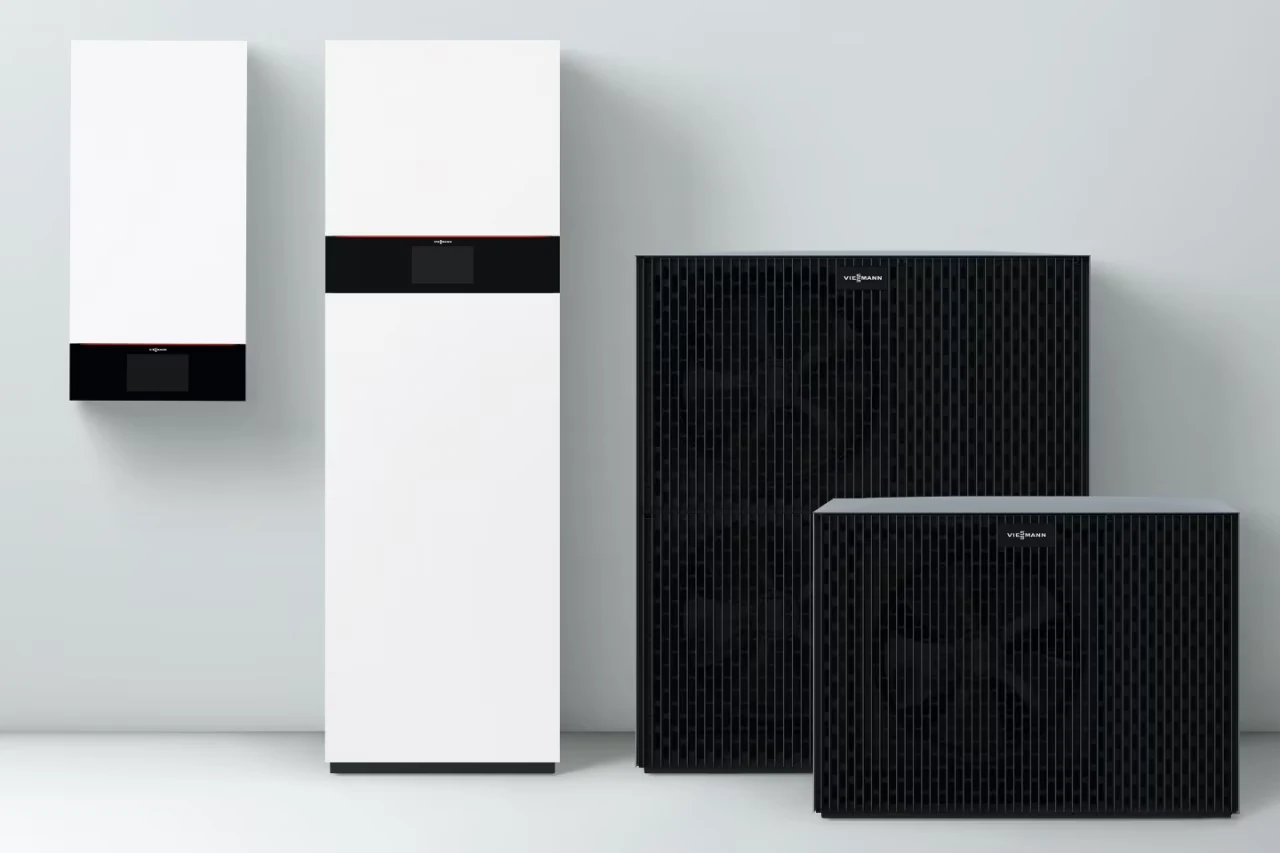
Vitocal 300-G brine/water heat pump with other systems
The refrigerant evaporates using thermal energy captured through geothermal collectors or probes. Due to its unique thermal properties, its physical state changes at low temperatures. With the addition of heat, the refrigerant becomes a vapor, and its temperature rises. To raise this temperature to the required level, the refrigerant vapor is compressed by a compressor. This increases not only its pressure but also its temperature. In the second heat exchanger (the condenser), the refrigerant vapor transfers the previously captured heat to the heating system and condenses. Before the recondensed refrigerant can reabsorb geothermal heat, it first expands in an expansion valve. This causes both the temperature and pressure to drop. Once the pressure returns to its original state, the process can begin again.
Efficiency depends on many factors
A heat pump generates heat by first evaporating a refrigerant using ambient energy and then compressing it. This compression process requires a drive current.
VDI Directive 4650 is used to predict the efficiency of such a system. This calculation method calculates a seasonal performance factor based on the heat pump’s COP and various system parameters. COP is the instantaneous ratio of generated useful heat to the drive energy used as electricity under standard conditions. SPF, in turn, is the sum of all COPs that occurred over the course of a single year. To determine the actual SPF, it is necessary to consider the quantities of heat and electricity (read from heat and electricity meters) together.
The difference between the heat source temperature and the flow temperature in the heating system has a decisive impact on the system’s efficiency. For example, if the initial temperature is 10 degrees Celsius and the flow temperature is 30 degrees Celsius, a brine/water heat pump only needs to increase the refrigerant temperature by 20 degrees Celsius. If the heating system consists of small-surface radiators and the minimum flow temperature is 50 degrees Celsius, the compressor must use twice as much energy to achieve the required temperature.
Brine/water heat pumps for single-mode operation
Thanks to a relatively constant and high heat source, brine/water heat pumps operate very efficiently year-round. Depending on the application, they typically provide sufficient heating and domestic hot water as the sole heat source. In some cases, combined operation with an existing heating system also makes sense. The latter can be activated during peak loads and guarantees a high level of comfort in living spaces at all times. To ensure economical operation, several factors must be considered in advance. Detailed information and tips on this can be found in the ” Heat Pump ” section.