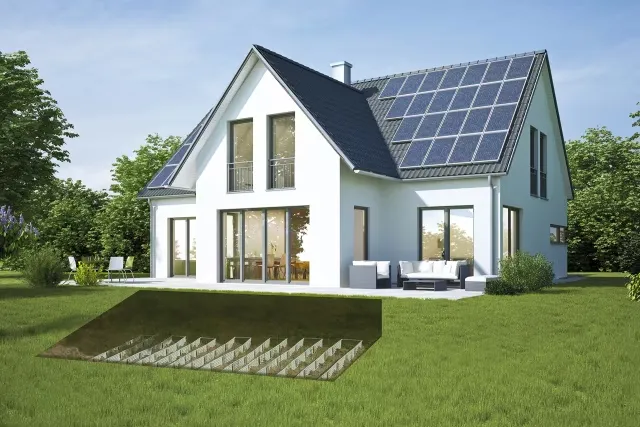
Geothermal collectors
Geothermal collectors for brine/water source heat pumps extract heat close to the surface and can be installed without a permit. You can read more about the differences here.


(Photo: © Elizaveta Galitckaia / Shutterstock.com)
Thin-layer heating is an electric underfloor heating system often installed in bathrooms, showers, and toilets. Other areas where it can be used include children’s rooms or bedrooms, where it provides fast and convenient heating at the touch of a button.
Thin-layer heating is characterized by a very low installation height and is ideal for renovation and new construction projects. It can be quickly installed over existing screeds without the need to remove the entire floor. Proper installation is crucial for cost-effective operation. You’ll feel the benefits most in areas where the floor isn’t covered with heavy carpet or large furniture.
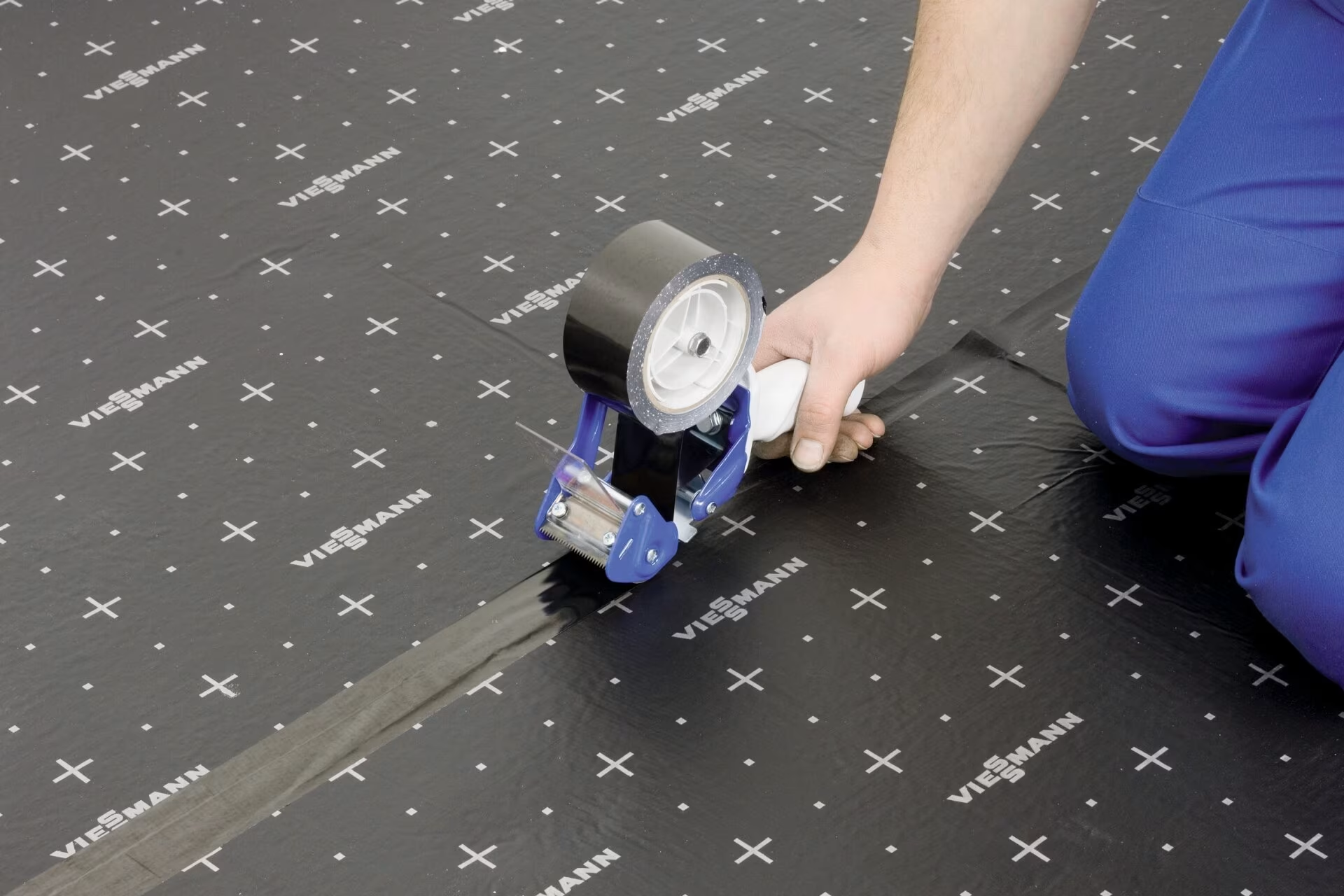
Insulation mats for thin-layer heating are glued together
Thin-layer heating mats are intersected by multi-wire electrical conductors arranged in a serpentine pattern. The heating mats are laid next to each other and directly under the floor covering.
To ensure that thin-layer heating mats perform at their full potential, they must be completely encased in a flexible, heat-resistant tile adhesive or leveling compound. Only after the adhesive or mixture has dried can the chosen flooring be installed. Parquet and laminate are equally suitable, as are tiles and ceramics.
Once installed, the thin-film heating system becomes invisible and inaccessible, even for spontaneous adjustments. Therefore, it is crucial that the system is installed correctly from the start. The substrate is crucial here. Ideally, it should be heat-resistant, resistant to twisting, thermally insulated, and have no loose parts.
First and foremost, thermal insulation is crucial for the efficient operation of an electric underfloor heating system. Without thermal insulation, thin-layer heating mats must apply greater power to achieve the desired effect. This, in turn, leads to higher heating costs. In some cases, it makes sense to install decoupling and thermal insulation mats.
Theoretically, thin-layer heating can be installed in any room, provided the floor surface is not covered with carpets or other similar materials. This will slow down the rate of heat rise. In practice, thin-layer heating systems are often used in wet rooms such as bathrooms, kitchens, and tiled showers, which is why they are also called tile heaters. This type of heater can also be used in rooms such as children’s rooms, bedrooms, or living rooms. If the flooring is laminate, the heating is also called laminate heating.
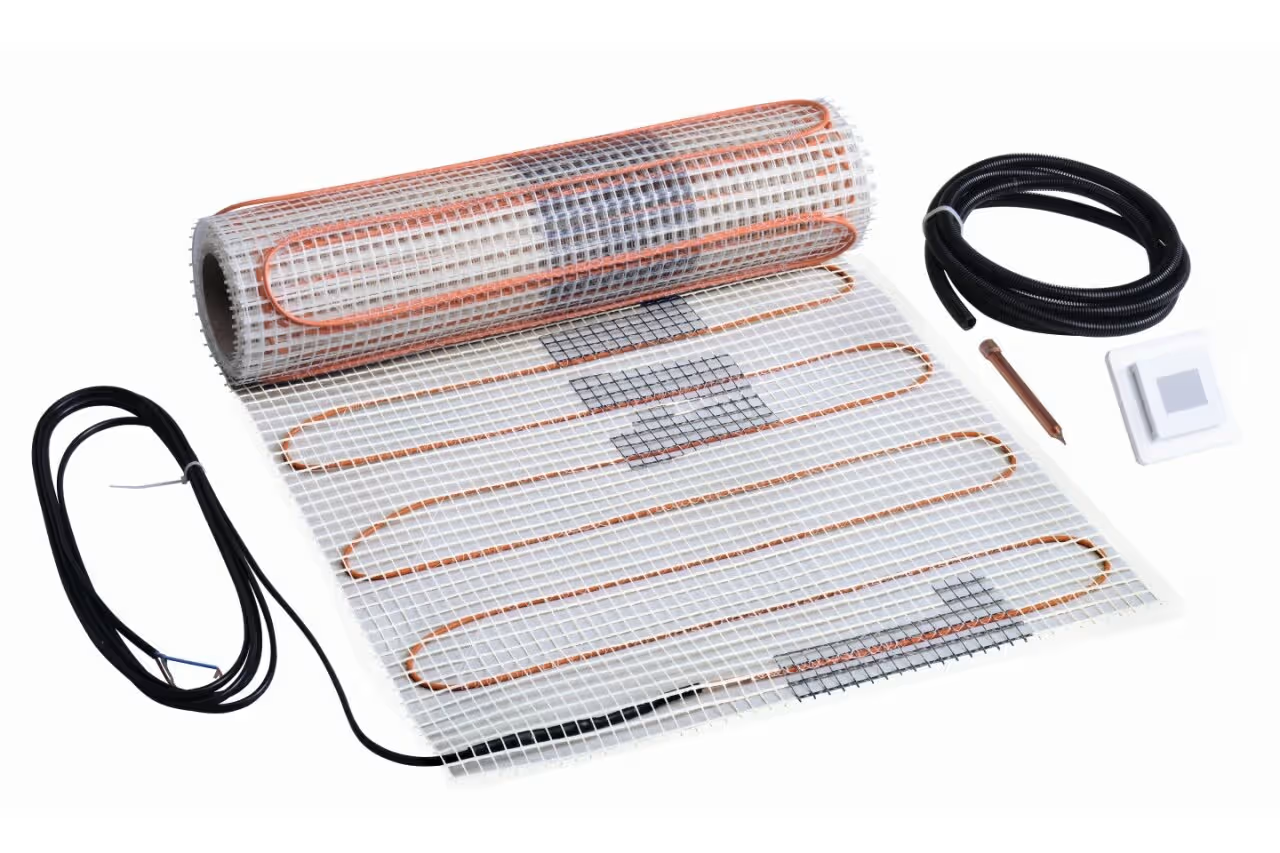
The heat output of a tile or laminate floor heating system is regulated by a thermostat with a switch. It is connected by cables to the heating mats and a floor temperature sensor. Menu navigation is generally clear and intuitive, so the desired temperature can be set in just a few steps. If you want to make your heating more eco-friendly, you can choose a green electricity tariff.
Those who choose thin-layer heating benefit from several advantages. The heating system not only provides comfort but also impresses with its efficiency.
As noted, thin-layer heating operates like traditional underfloor heating. Most of the generated heat energy enters the room as radiant heat. This ensures uniform heat distribution throughout the room and also results in a cost-effective effect: even with a relatively low room temperature, occupants still feel comfortable. Depending on subjective perception, the average room temperature can be reduced by one to two degrees without losing comfort. This, in turn, leads to heating cost savings of up to six percent for every degree Celsius saved.
AHI Carrier thin-layer heating systems are supplied as kits with all necessary components. This means they can be installed and commissioned very quickly, without requiring significant modifications to the floor structure. Thin-layer heating mats are either self-adhesive or installed floating on the screed. An optional control system learns occupant heating patterns and helps ensure an optimal balance of cost savings and well-being.
Geothermal collectors for brine/water source heat pumps extract heat close to the surface and can be installed without a permit. You can read more about the differences here.