


AHI Carrier vitosol 100-FM on the roof of a house
Topics at a glance
Every day, the sun emits free energy that homeowners can harness with a solar system. A solar thermal system is very simple: collectors capture radiant heat and convert it into thermal energy, which is then absorbed by a storage tank. Depending on the size of the system, this heat can be used to heat domestic hot water or as a backup for central heating.
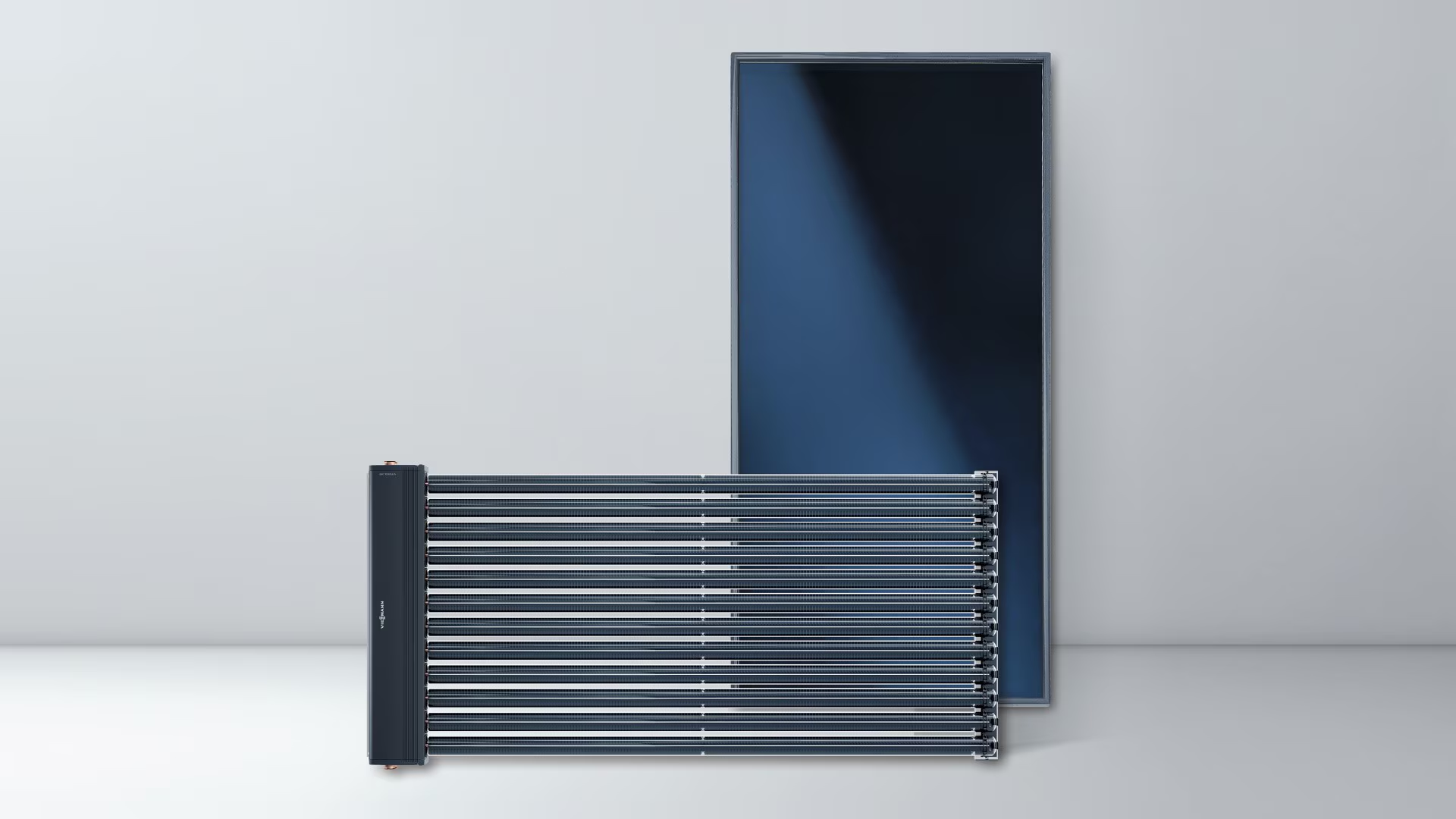
Functions of AHI Carrier solar collectors
Solar collectors are essential for the functioning of a solar thermal system. This is because they capture sunlight and convert its energy-rich radiation into heat. In addition to flat-plate collectors, AHI Carrier offers highly efficient evacuated tube collectors for its Vitosol series.
Vitosol series →Collectors
Flat plate collectors for solar thermal energy: purpose and location
Flat plate collectors, such as Vitosol 100-FM and Vitosol 200-FM, consist of a thermally insulated aluminum frame covered with highly transparent special-purpose glass facing the sun. This allows most of the radiant heat to enter the collectors, where it reaches the absorber. The absorber heats up and transfers thermal energy to the solar fluid flowing through meandering pipes inside the collector.
Evacuated tube collectors for solar thermal energy: How they work
Evacuated tube collectors, such as Vitosol 200-TM and Vitosol 300-TM, consist of individual tubes connected by a manifold. The tubes contain an absorber and a heat-transfer medium. The medium evaporates during heating, condenses in the manifold, and transfers solar energy to the solar heat-transfer fluid. The vacuum inside the collector tubes reduces heat loss and ensures efficient operation of the solar thermal system.
ThermProtect reliably protects against overheating
AHI Carrier solar collectors are equipped with the patented temperature-dependent shutdown system called ThermProtect.
For flat plate collectors, it uses a special absorber coating that changes its properties depending on temperature. When the collector temperature rises above the shutdown point, a change in crystal structure causes more heat to radiate outward. This lowers the collector temperature and protects the solar collectors from overheating.
In evacuated tube collectors such as Vitosol 300-TM and Vitosol 200-TM, the temperature-dependent shutdown occurs through a self-regulating heat pipe. This prevents condensation of the heat-transfer medium in the heat pipes when temperatures rise above 150°C.
ThermProtect works without additional components, simplifies solar thermal system design, and ensures safe operation of all new AHI Carrier solar collectors.
A thermal storage tank buffers solar energy in the home.
If solar energy input exceeds the home’s heating demand, the solar cylinder absorbs energy from the solar system before releasing it later to consumers. This helps ensure maximum solar heat utilization in the home. The type of energy storage device used depends on the purpose of the solar thermal system. If the system is used to heat domestic hot water, our sales partners will install a hot water cylinder. If the solar system is used as a backup for central heating, they will install a buffer tank.
Hot water cylinder for solar thermal domestic hot water systems
Hot water cylinders, such as the Vitocell 100-B/-W, are filled with hot water. They are equipped with two serpentine heat exchangers, which are positioned in the cylinder like immersion heaters. While the lower heat exchanger directs hot solar fluid through the cylinder, the upper heat exchanger is connected to a boiler, such as the Vitodens 300-W gas condensing boiler.
If the solar system’s output is insufficient to raise the hot water to the required temperature, the control unit activates the second heat exchanger. This ensures that the hot water always comes out of the pipes warm, even on cloudy days or during periods of particularly high demand.
This process is particularly effective when all system components are perfectly matched, as in the Vitosol 141-FM solar hot water system from AHI Carrier.
Buffer tank for heating water in solar systems for central heating backup
If the solar thermal system is designed to support central heating, a buffer tank for heating water is installed. It is filled with water that is heated by solar energy through a heat exchanger.
If this heat is not sufficient to reach the required temperatures, a AHI Carrier gas heating system, wood-fired heating system, or heat pump provides the additional energy needed.
Solar thermal system: functionality depends on solar circuit
The solar circuit delivers heat from the collectors to the home. It connects the system components and is filled with a solar fluid (a mixture of water and antifreeze). The coolant is heated in the solar collectors and pumped into the storage tank. Here, the coolant releases thermal energy, heating the storage tank while cooling. This energy is then returned to the solar collectors on the roof, and the cycle can continue. To ensure that a solar thermal system achieves its full potential, a number of safety features are required.

Solar heating expert consultations
Get a free, personalized consultation on our solar thermal systems from our knowledgeable sales partners!
Request a consultation now →