MENU

Propane heat pumps operate in much the same way as heat pumps used to date. They are environmentally friendly heating devices that derive their heating energy from ambient energy. The use of the natural and “green” refrigerant propane (R290) makes this climate-friendly heating system even more environmentally friendly.

Viessmann has brought some components necessary for using R290 to market maturity in its latest generation of heat pumps. In the following article, we’ll explain why this refrigerant is needed, what benefits it offers, and when it’s appropriate for you.

Transition from synthetic refrigerants to environmentally friendly propane

For a long time, fluorinated hydrocarbons (“F-gases”), such as R134a or R410A, were used as refrigerants. These synthetic refrigerants are now recognized as harmful to the climate. Their shortage is regulated by the “F-gas Regulation” (Regulation (EU) No. 517/2014 on fluorinated greenhouse gases). The regulation’s provisions make the use of harmful refrigerants with a high GWP expensive and unprofitable. Refrigerants with very high global warming potential are now completely banned. The damage these synthetic refrigerants can cause to the climate may only become apparent upon their disposal.

Global Warming Potential (GWP) – What does it mean?

Global warming potential (GWP) indicates the impact of a greenhouse gas (such as a refrigerant) on climate. The higher the value, the worse the impact. The reference value is CO₂, with a GWP of 1. The environmentally friendly refrigerant propane (R290) has a GWP of 3. Long-used refrigerants, such as R410A, have a GWP of over 2,000.

R290 refrigerant and safety in residential buildings

Propane, like any refrigerant, is subject to special safety requirements. In the case of propane gas, safety has been thoroughly tested. Using a prototype, the renowned Fraunhofer Institute succeeded in developing in 2019 an R290-based heat pump that requires very little refrigerant. For reference, for a heating output of five to ten kilowatts (kW), which is necessary for detached houses, the amount of refrigerant for a heat pump is typically around 80-90 grams. The maximum amount of 150 grams should not be exceeded, as this requires higher safety requirements. The Fraunhofer Institute prototype required only 20 grams of R290 per kilowatt of output.

Heat pumps with R290 are also suitable for indoor use

Based on these studies, it became possible to develop propane heat pumps for private users in detached homes to market maturity. Thanks to reliable safety concepts and special innovative heat exchangers, R290 heat pumps are also well suited for indoor use.

The following aspects indicate the safety of propane heat pumps:

  • The refrigeration circuit is hermetically sealed and has no contact with the water circuit.
  • Low amount of refrigerant used
  • Mandatory safety distances to basement doors and light wells
  • Compressors are specially designed to prevent propane leakage.

Advantages of propane as a refrigerant for heat pumps

The revised refrigerant requirements based on the F-Gas Regulation have made R290 (propane) a very attractive refrigerant. This is because heat pumps using propane as a refrigerant are not subject to the F-Gas Regulation. With a GWP of 3, it is significantly less harmful to the environment and climate. Its thermodynamic properties, high efficiency, and cost are in no way inferior to previous refrigerants. Furthermore, it is readily available worldwide.

Good to know: anyone operating heat pumps with conventional refrigerants needn’t worry; they can still be sold. Subsequent refilling during servicing shouldn’t be a problem either, as refrigerants can be easily recycled for reuse. The aforementioned F-gas regulation only affects newly manufactured and commissioned units. For this purpose, Viessmann offers a well-equipped alternative in the Vitocal series.

The advantages of Vitocal propane heat pumps at a glance:

  • Low operating costs due to high efficiency and reliability
  • Flow temperature 70°C at outside air temperature minus 15°C
  • Existing radiators can be used; no conversion required for underfloor heating
  • Attractive, high-quality design of indoor and outdoor units
  • Advanced acoustic design for low operating noise
  • Installation area of ​​only 0.52 m² (Vitocal 252-A)
  • Environmentally friendly refrigerant R290 with GWP = 3
  • Works well in combination with an existing condensing system (Vitocal 250-AH)
  • Easy operation thanks to the built-in WiFi interface via the ViCare App
  • Closed refrigeration circuit: no refrigeration equipment certificate required for installation

vitocal 250-A

Monoblock and split heat pumps for all power ranges

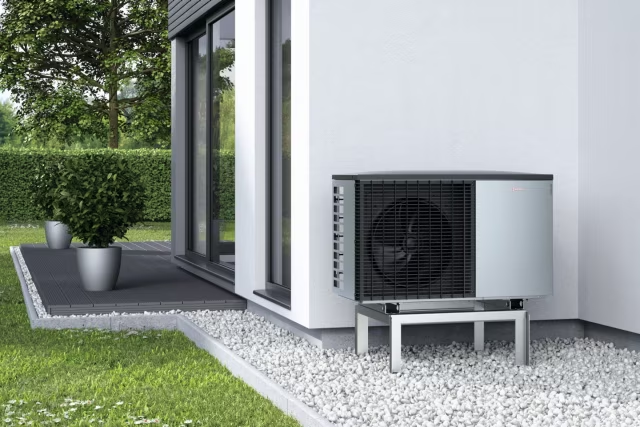
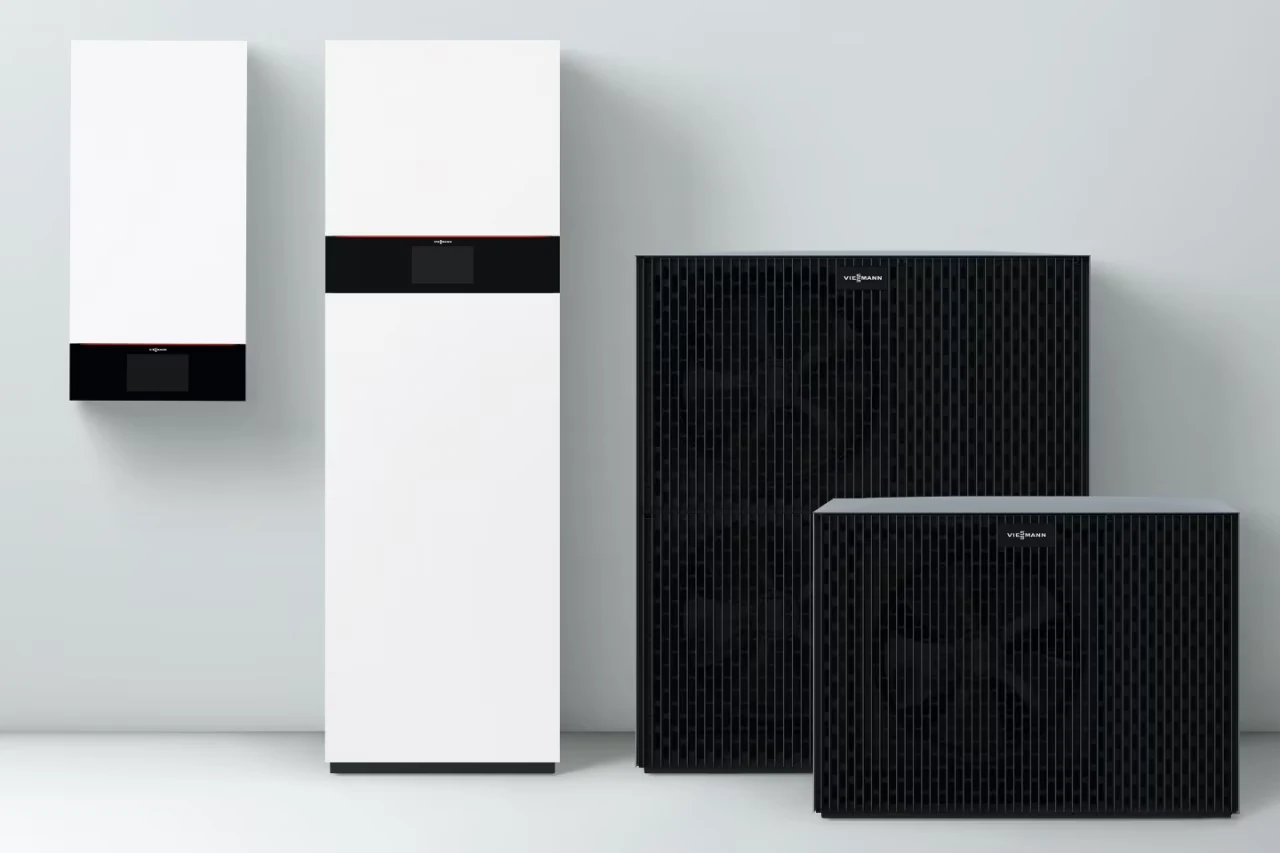
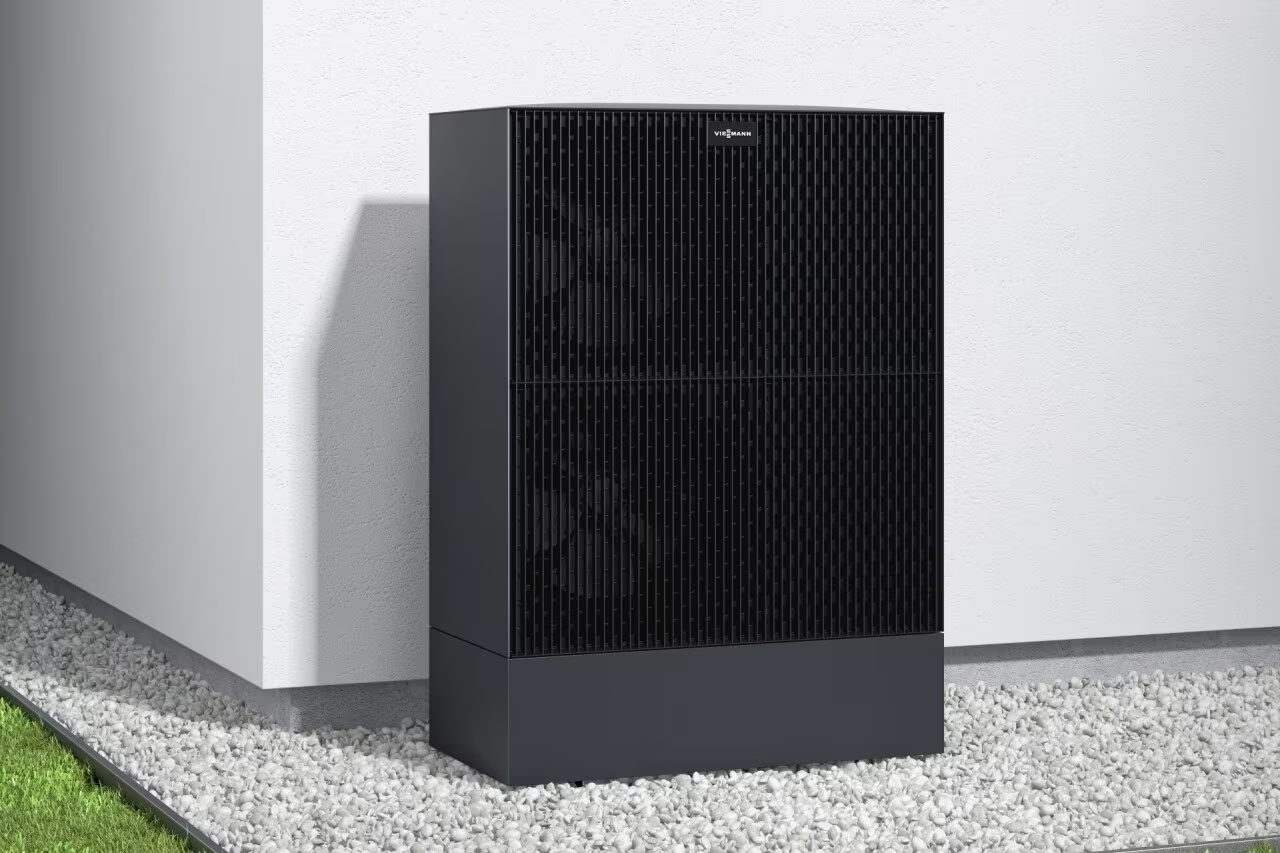
Using propane as a refrigerant in heat pumps has virtually no real limitations. Propane heat pumps are available for residential use in all power ranges from four to 25 kilowatts. Commercial use is also possible, with heating outputs starting from 80 kW. With the latest generation of Vitocal 250-A, 250-AH, and 252-A heat pumps, Viessmann has developed compact and powerful monoblock heat pumps using propane as a refrigerant, in which the entire refrigerant circuit is located in the outdoor unit.

Heating System Retrofit: Propane Heat Pumps in Existing Buildings

When it comes to modernizing a heating system, using R290 as a heat pump refrigerant isn’t an obstacle, but a compelling argument in its favor. This is at least the case with the new generation of Viessmann air-source heat pumps. With the new Vitocal 25x-A, modernizing a heating system is a breeze. These monoblock heat pumps easily achieve flow temperatures of 70 degrees Celsius, even at outside temperatures as low as -15 degrees Celsius. This means existing radiators can continue to be used simply and efficiently. Switching to underfloor heating is not required. The following video explains the benefits of using the new Viessmann heat pumps in existing buildings:

Propane heat pumps are in no way inferior to environmentally friendly heating systems using other refrigerants. However, whether cost-effective operation makes sense, for example in older buildings, depends on the conditions. Adequate energy insulation and the combination of large heating surfaces are always advantageous when it comes to heat pumps. However, new-generation heat pumps, whose environmentally friendly propane refrigerant is just one of many advantages, provide efficient operation even without a complete upgrade and in combination with older radiators.

The key is good planning and careful oversight by a heating contractor. They can clarify all on-site dependencies, recommend optimization measures, and handle important work during implementation. Looking for an installer for your new heat pump? You can find one here: find an installer .

Cost Issue: Propane has no price difference

Using propane as a refrigerant in a heat pump is irrelevant in terms of heating system acquisition costs. Looking to the future, the opposite is likely: if refrigerants with high global warming potential (GWP) are used in the future, this will lead to increased costs and effort in the form of future applications due to the F-Gas Regulation and the “phase-down”—i.e., the anticipated shortage of these refrigerants. Therefore, R290 is a promising refrigerant for heat pumps.

Subsidies for propane heat pumps

Interested in a propane heat pump for your home? Now is the time to consider government subsidies. These are available in the form of grants or loans. The key criteria for applying is whether the project is a one-off project or a step in a series of further steps, such as a comprehensive modernization program.

xxxDUMMY SUBSIDYxxx

Related articles

Heat Pump: All information at a glance

Heat Pump: All information at a glance

The heat pump provides heating in an environmentally responsible and efficient manner. Learn more about the types, incentives, and subsidies available, as well as the Viessmann product range, here.

Read More
Air Source Heat Pump: Overview and Products

Air Source Heat Pump: Overview and Products

Air-source heat pumps are quiet. Learn more about how they work, their advantages, and our products here.

Read More
Purchasing a heat pump

Purchasing a heat pump

Heating using ambient energy is becoming increasingly popular. This is supported by statistics showing that more and more people are considering purchasing a heat pump. Find out what to consider when purchasing one here.

Read More