Photovoltaic modules
Photovoltaic modules provide sustainable electricity generation using solar energy. Find the right module for your energy needs now!


The core of a photovoltaic system, or PV system for short, is the photovoltaic module. It consists of a large number of solar cells. Each individual cell undergoes the photovoltaic effect—the process that converts sunlight into electrical energy. There are two different types of modules: monocrystalline and polycrystalline. But how do they differ, and which modules are suitable for which applications?
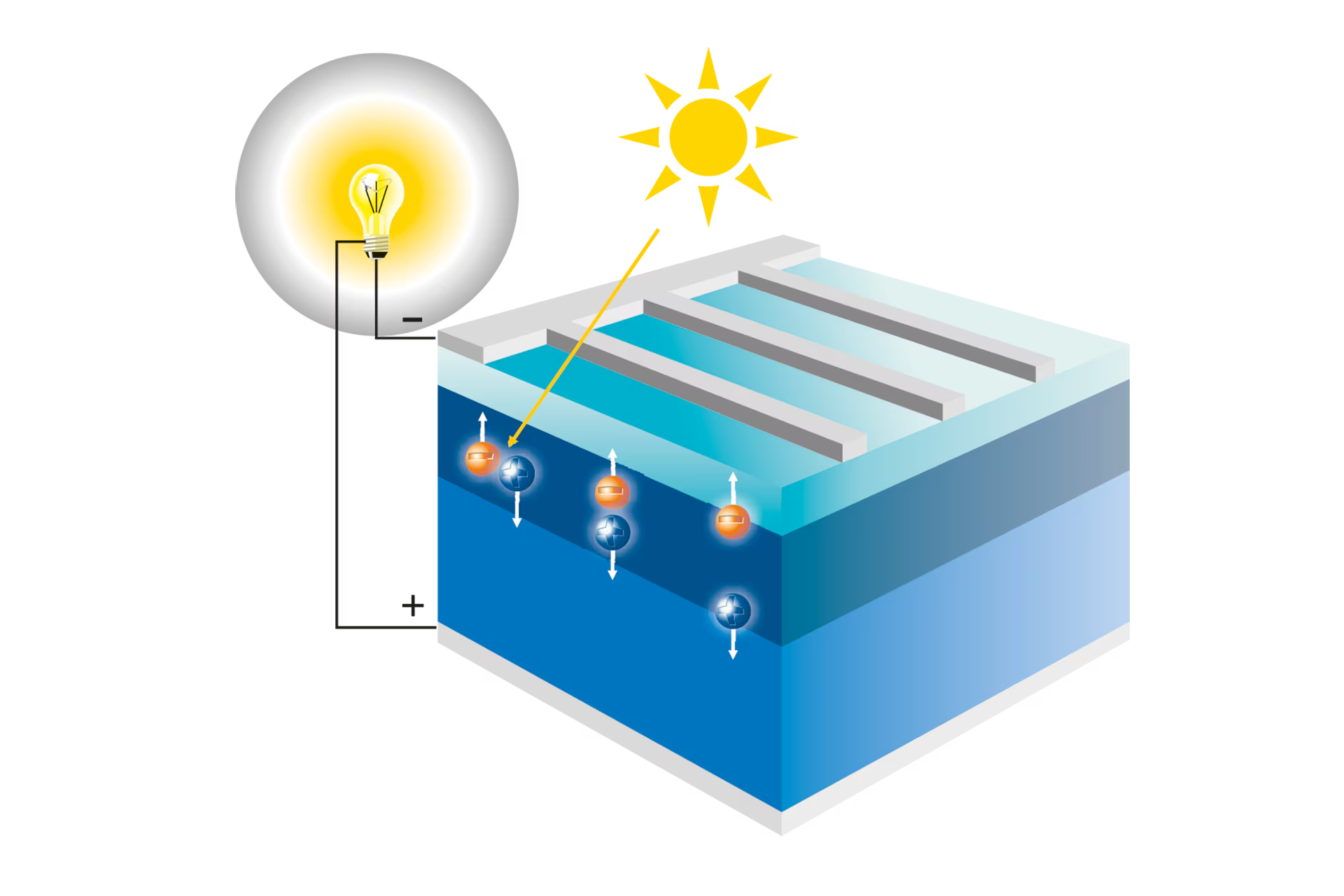
A silicon solar cell with its individual components
Essentially, electricity is generated in a photovoltaic module (PVM) thanks to varying levels of doping within the solar cell. This means that regardless of whether the module is monocrystalline or polycrystalline, the silicon atoms exist in a stable crystalline structure. During the solar cell manufacturing process, extraneous atoms are added, resulting in the presence of free electrons in the top layer. Experts call this an n-doped layer. Conversely, the bottom layer of the cell (the p-doped layer) has too few electrons, hence the term “positively charged holes.”
Between them is a boundary layer. Electrons move from top to bottom to find empty spaces—a p-n junction. When sunlight hits a photovoltaic module, the electrons migrate back to the unsaturated atoms in the upper n-layer. There are metal contacts on the top surface and on the back of the modules. Electrons discharge through these contacts and enter the circuit.
The production of photovoltaic modules is similar. Both types are based on molten silicon. However, in the monocrystalline version, single-crystal rods are drawn from liquid silicon. This results in a particularly smooth surface. Polycrystalline modules, on the other hand, are cast from blocks. During solidification, rather heterogeneous crystals are formed. These are then cut into slices.
But it’s not just their manufacturing that makes them different. Vitovolt’s monocrystalline modules are completely black and have a power output of up to 325 watts. In contrast, the polycrystalline models are dark blue and reach a power output of up to 285 watts. Wp stands for “peak watt” and refers to the maximum power output under testing conditions.
By choosing the AHI Carrier Vitovolt 300 model, you receive the following benefits:
Photovoltaic modules provide sustainable electricity generation using solar energy. Find the right module for your energy needs now!
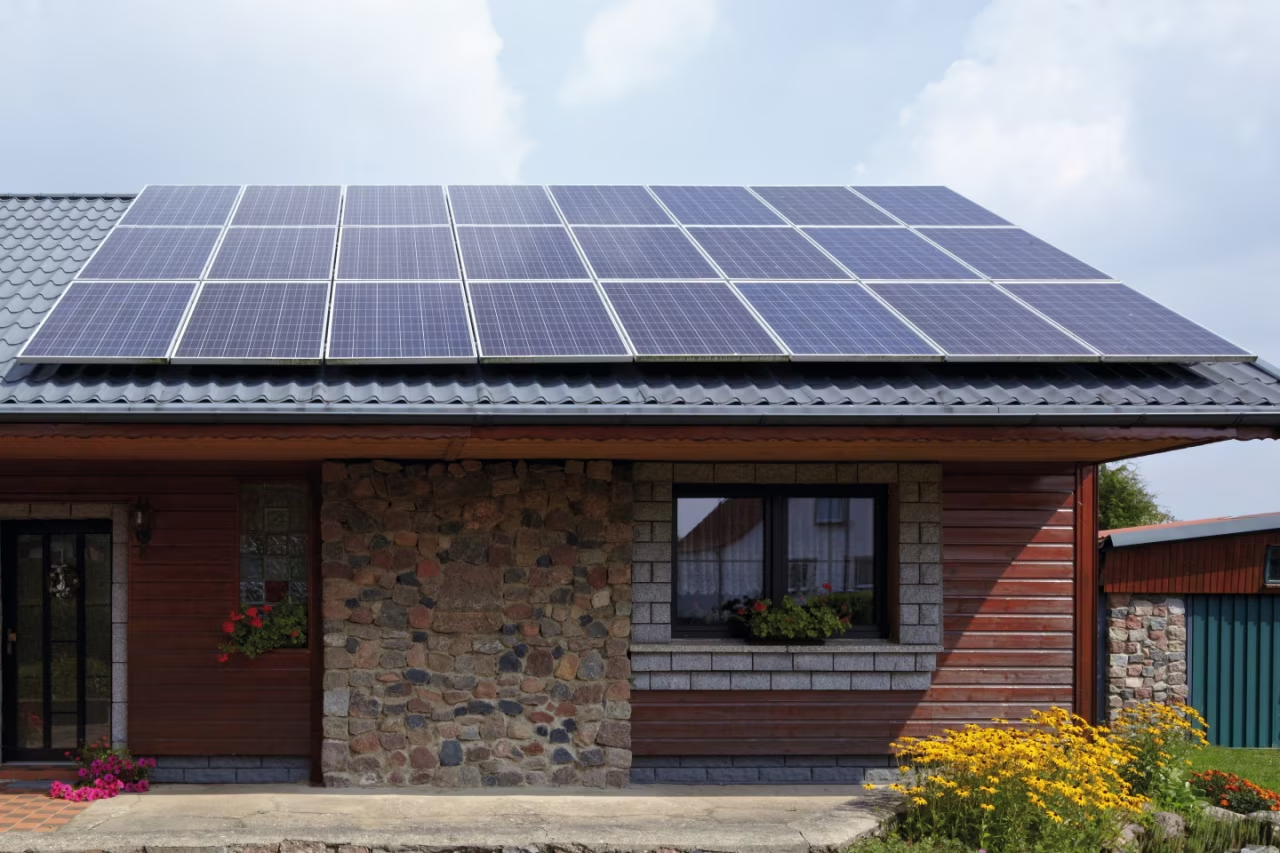
Store your self-generated electricity and increase your self-consumption with a AHI Carrier solar energy storage system for photovoltaic systems. Learn more here!
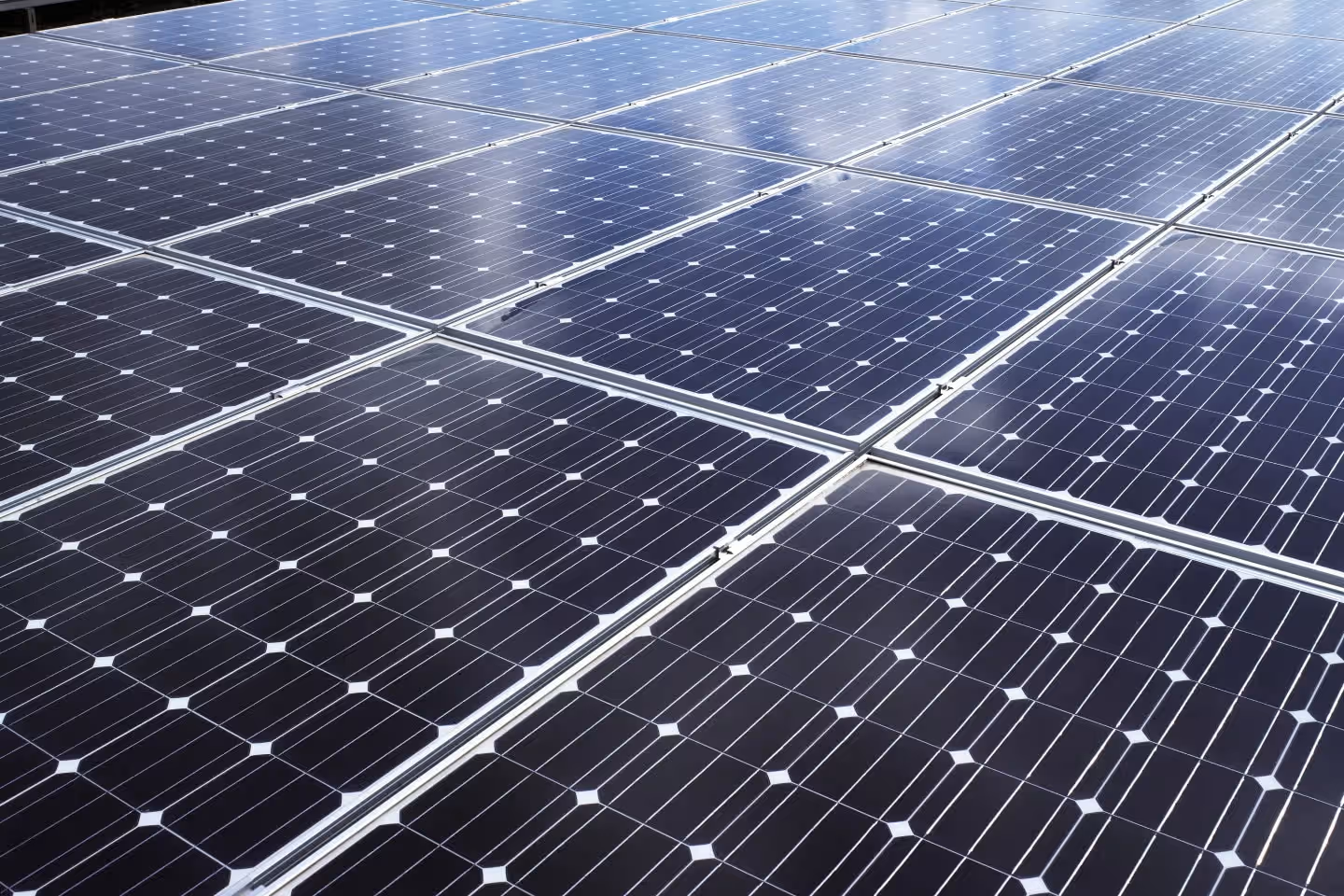
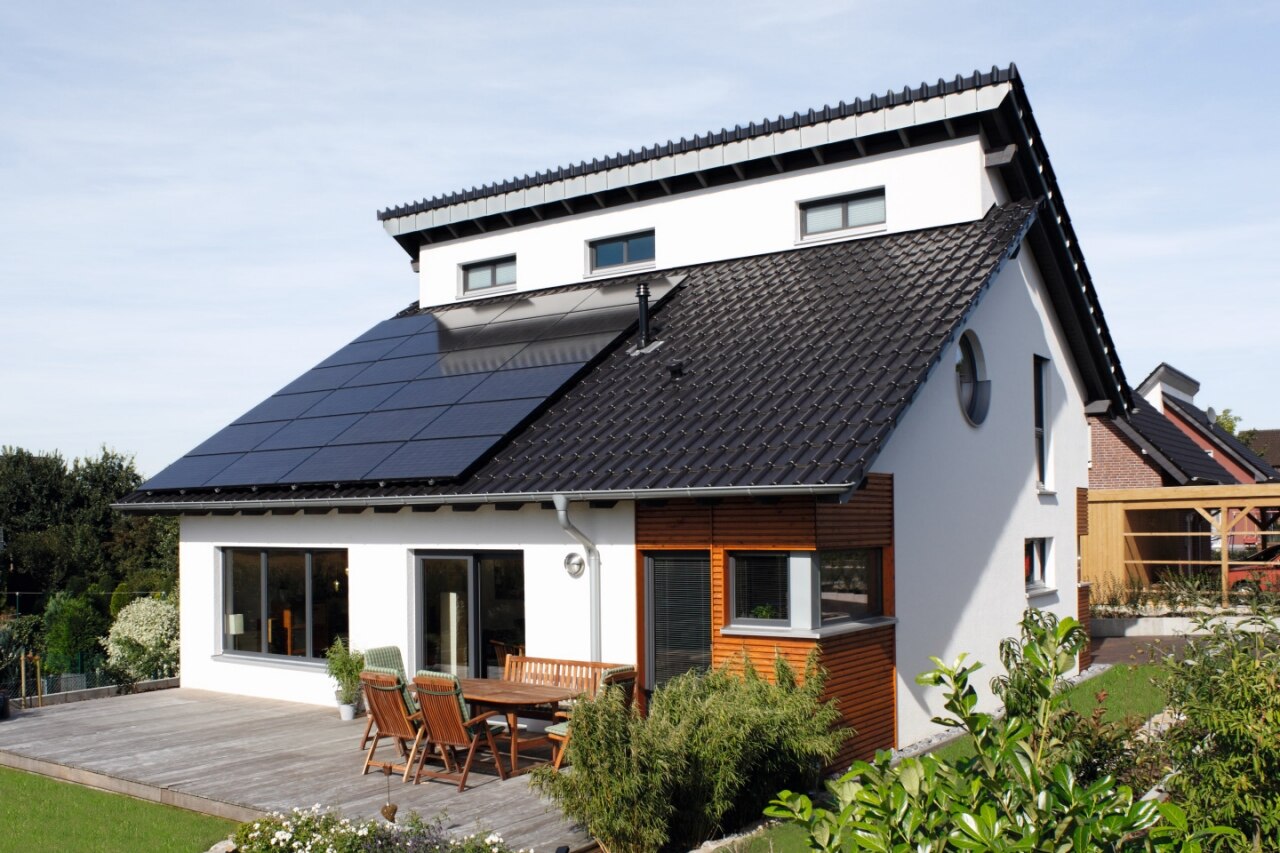
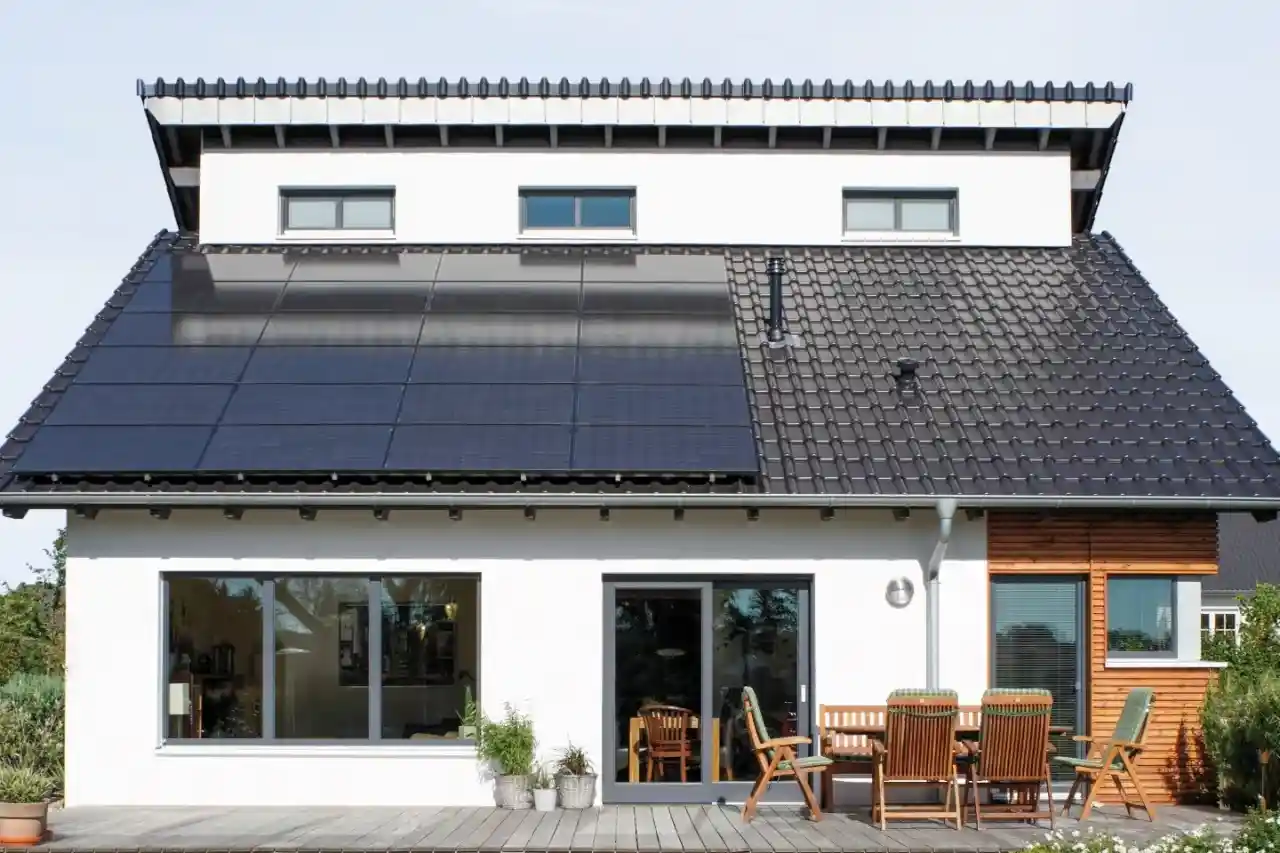
Close-up of a photovoltaic system with monocrystalline solar cells
AHI Carrier photovoltaic technology offers you perfectly matched components, consisting of photovoltaic modules, inverters, and installation systems, as well as energy storage systems and heat pumps for increased self-consumption. Our high-quality photovoltaic modules ensure cost-effectiveness and a long service life. Comprehensive services—from design and sizing of the photovoltaic system to delivery and maintenance—complete the photovoltaic system portfolio offered by AHI Carrier’s professional partners. Installing a photovoltaic system isn’t rocket science. With fully assembled photovoltaic modules, you too will soon be able to generate energy directly from your roof.
The Vitovolt 300 product range includes black monocrystalline modules with outputs up to 285 W, as well as 60-cell polycrystalline modules with outputs up to 270 W. These modules are particularly suitable for commercial and local government applications. Vitovolt 300 photovoltaic modules are just as impressive as modules for detached homes or multi-family buildings, thanks to their high performance, high quality, and extensive product and performance warranties.
AHI Carrier photovoltaic modules are made from monocrystalline or polycrystalline silicon cells and achieve module efficiencies of up to 17.5 percent. They also feature high mechanical load-bearing capacity under snow and wind loads. They are designed to last for decades, as guaranteed by a 25-year warranty. Thanks to their simple operating principle, AHI Carrier photovoltaic systems are completely reliable. Regardless of the situation, they offer the ideal solution for both self-consumption and grid export.


Your local AHI Carrier partner will provide you with personal advice.