Ask the Experts: The AHI Carrier Community
Do you have questions about mechanical ventilation?


Image © azem / Shutterstock.com
When the days get shorter, the nights get longer, and the temperature drops, it’s time for your heating system to wake up from its “summer slumber.” But what exactly does this mean? When does the heating season actually begin? And is there even a mandatory heating requirement? We’ll explain the laws that apply and what you should pay attention to as the heating season begins.
It can be categorically stated that there are no specific laws in Germany regulating the heating season or its start or end times. However, a specific time period has been established and confirmed by case law. Accordingly, the heating season begins on October 1 and ends on April 30.
However, depending on weather conditions and the region of Germany, the exact timing may vary. Under certain circumstances, for example, the heating season may begin as early as mid-September and continue until mid-May or even the end of May.
In principle, system owners who don’t rent out residential properties can heat their homes when it’s too cold, even outside the normal heating season. However, to save energy and, consequently, reduce heating costs, it’s recommended to switch the AHI Carrier heating system to summer mode. This means the system supplies only hot water to the building.
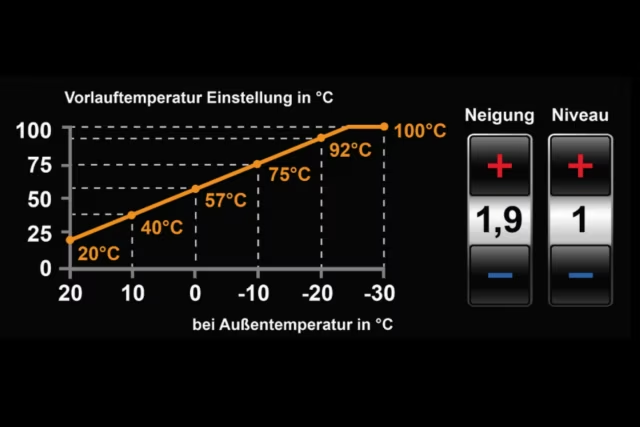
A modern AHI Carrier heating system can also be controlled using a weather-compensated control system. The heating curve plays a key role here. The set room temperature is achieved when the heating curve , also known as the characteristic heating curve, is optimally adjusted and the thermostats are fully open. However, due to the system’s inertia, it may take several days for the optimal setting to be found. If the temperature then drops so much that the room temperature falls below the set point, the heating system will switch on accordingly.
Support is available to ensure proper settings. Our AHI Carrier sales partners are happy to assist.
Do you have questions about mechanical ventilation?
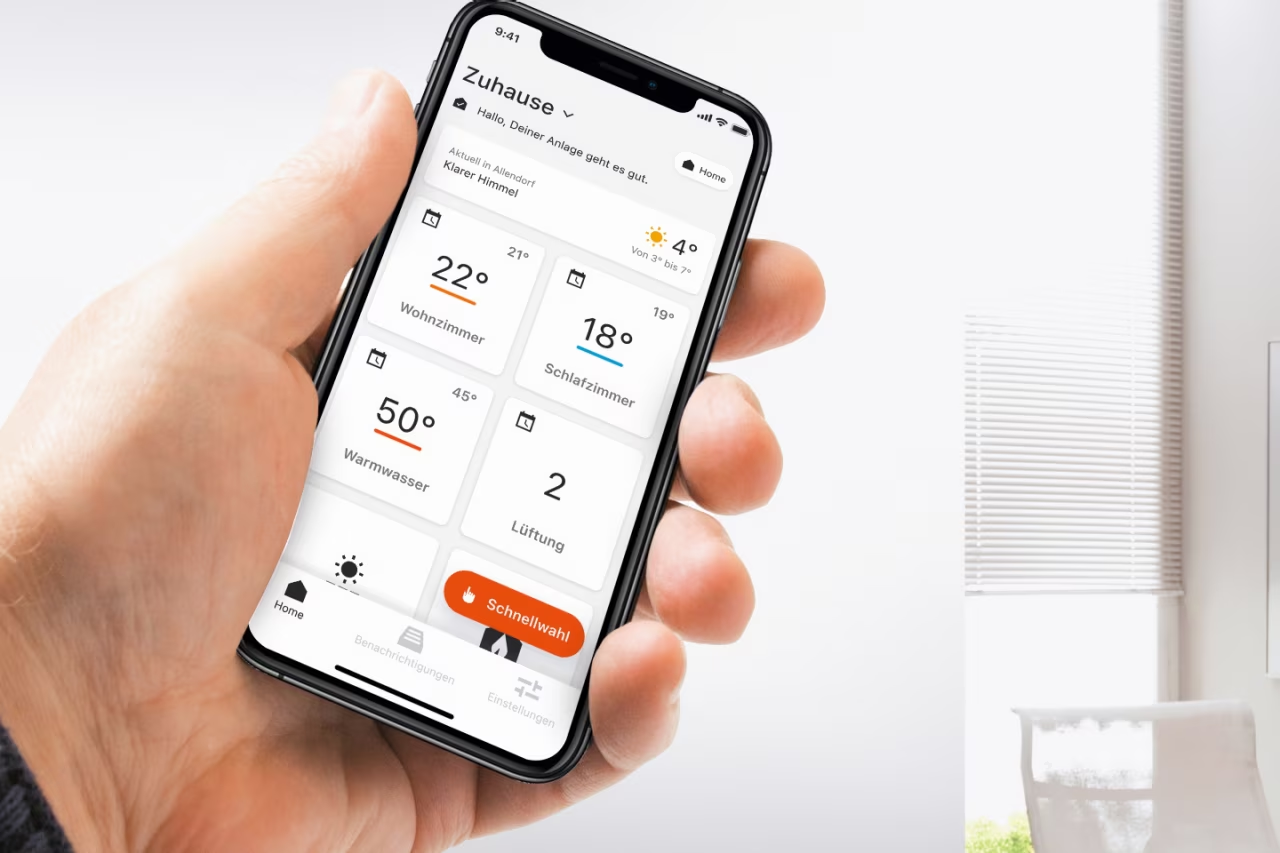
For most people, the question of when to start heating their home arises during the transitional periods of spring and fall. This is because spring often brings pleasantly warm days, especially if the sun shines for long periods. However, nighttime temperatures can sometimes drop below freezing. The same applies to the autumn months. As can be seen from the above, there are no laws dictating when tenants must heat their homes; there are only guidelines.
Homeowners are free to turn on their heating system in the spring and fall when it’s too cold. Frequent switching of the system on and off (called cycling) can reduce its efficiency. To avoid this, ensure even heat distribution throughout the home and adjust the heating control accordingly. Cycling of oil and gas heating systems can be avoided, for example, by using modulating burners or individual heating curve adjustments (in systems with weather-compensated control).

If you, as the owner of the system, rent out residential premises, the heating season becomes even more important. Tenants and landlords often clash over this very issue. Both sides base their arguments on the heating season. But many other factors must be considered and weighed. A person’s perception of temperature often initially determines whether a room is too cold. How a person ventilates their home, and how well the property is renovated and insulated, are also vital factors. But what exactly should tenants and landlords use as a guide?
Ultimately, the heating season doesn’t have a precise date. The start time for heating depends largely on the temperature. There are certain standard values that you can use as a guide. During this period, the indoor temperature should be between 20 and 22 degrees Celsius. Tenants are entitled to this temperature in their living spaces during the normal heating season. Although the heating may be turned off at night, the temperature should not drop below 18 degrees Celsius.
However, the heating season isn’t set in stone. After all, off-season temperatures can get so cold that the stated temperatures can’t be reached indoors. Therefore, heating may need to be turned on even in May or August. If the outside temperature drops below 16 degrees Celsius or the apartment temperature remains below 18 degrees Celsius for at least two consecutive days, the tenant has the right to turn on the heating system. But even these figures are just guidelines. There are no laws on this matter, only various court decisions. Therefore, there is no general answer to the question of when you have the right to reduce rent.
If a landlord fails to meet the heating season deadlines or, more accurately, fails to fulfill their obligations to ensure the heating system is functioning properly, tenants have various options, including rent reduction. The legal basis here is Article 536 of the German Civil Code (BGB). If the rented property is defective or its condition does not comply with the contract, the tenant may reduce the rent. The amount of the reduction is not specified by law. However, rent reduction tables, containing various court decisions on various types of defects, can serve as a guide. Generally, the first step is to contact the landlord and report the defect.
Incidentally, tenants also have responsibilities. For example, while they have the right to heat their apartment as they see fit, this must not result in damage to the apartment. If, for example, a tenant fails to heat the apartment at all and mold appears, they may be held legally liable.