

To optimize hot water consumption, it’s important to first understand it. Hot water consumption per person accounts for 25 to 40 percent of total water consumption in our country. With an average total water consumption of 121 liters per day (BDEW 2018), this equates to 30 to 48 liters. This wide range is explained by the fact that each person uses hot water differently.

Hot water consumption in figures
Daily personal hygiene accounts for the largest share of hot water consumption per person in a household. This includes showering, bathing, washing one’s face, and so on. The aforementioned average of 30 to 48 liters does not refer to the total amount of water used for showering or bathing. This is simply the amount provided by the hot water cylinder or solar thermal system . Those who bathe more frequently have a higher hot water consumption and, therefore, a higher overall water consumption than those who shower every day. This occurs because cold water is added to the heated hot water.
The following figures show how closely the consumption of DHW (hot water) in particular is related to the consumption of water (hot and cold water) in general:
- Toilet flushes account for almost 30 percent of total water consumption. As expected, this is cold, unheated water from the pipe.
- Laundry accounts for just over 10 percent of total water consumption. Unlike flushing a toilet, some of this water is heated—usually directly in the washing machine using electricity.
- As with laundry, some of the water used for dishwashing is heated. This process accounts for approximately 6 percent of total water consumption.
Consumption of hot water, drinking water, process water and virtual water
If you’re looking for information on average per capita hot water consumption, you’ll eventually encounter terms like drinking water, process water, virtual water, or water footprint. But what do they actually mean? The initial figure of 121 liters per day refers only to drinking water consumed directly from the tap. Process water, on the other hand, accounts for the amount of water used in the production of food or other goods, and it’s not limited by national borders. Experts also call this indirectly used water “virtual water.” Its quantity is many times greater than that of drinking water. For Germany, the Federal Environment Agency calculated daily consumption at 117.2 billion cubic meters. This equates to 3.9 cubic meters, or 3,900 liters, per person. This means that when calculating actual per capita water consumption, both direct and indirect water must be taken into account. The term “water footprint” is used for this purpose.


Calculation and reduction of hot water consumption costs
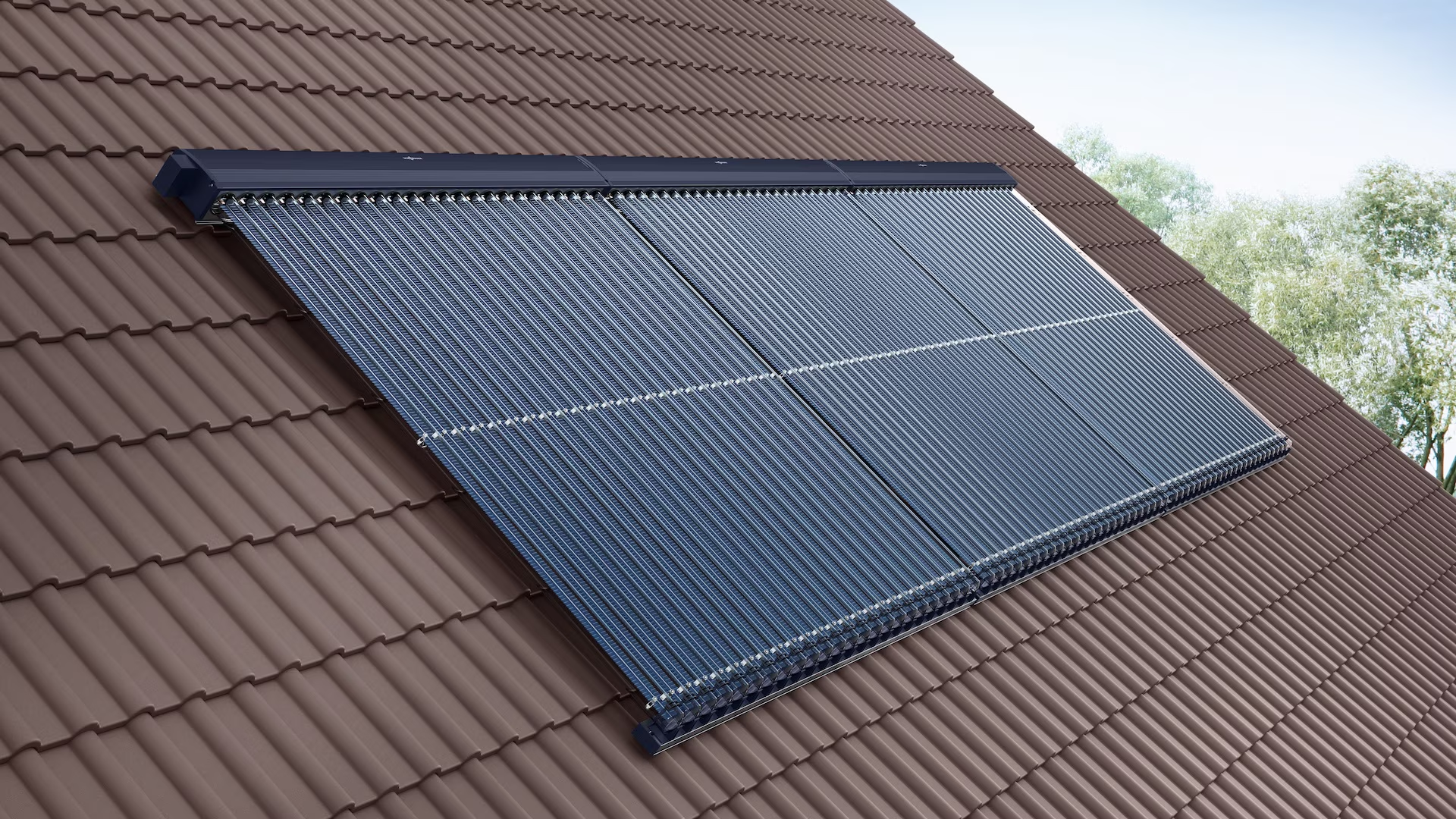
Technically, hot water can be heated in different ways: at a central location or in a decentralized system. In the case of centralized hot water heating, this task is taken over by the existing heating system. The water is heated either traditionally by the heat released during fuel combustion or by sunlight. The latter requires a solar thermal system and a suitable solar cylinder.
Decentralized hot water heating, on the other hand, is provided separately from the existing heating system. Here, electrically powered systems are used to provide hot water. The type of hot water heating significantly impacts the cost of hot water consumption.
In practice, experts recommend a centralized solution because it’s cheaper due to the fuel used. However, decentralized supply also has its advantages, for example, when the demand for hot water is too low to make connecting to an existing heating system economically feasible. Ultimately, the decision about which option is best rests with the individual. The first important step should always be to consult with an on-site heating contractor.
Calculation of average costs for hot water consumption
If you’re a homeowner with a solar thermal system, calculating your average hot water consumption costs may be of secondary importance to you. However, those living in rented accommodation shouldn’t shy away from it, as it provides both clarity and an incentive to save energy . If you want to calculate the cost of your average hot water consumption, you need to consider several factors. These include:
- Average hot water consumption
- the temperature to which water is heated
- price of fuel used
The number of residents affects hot water consumption
A household’s annual hot water consumption depends largely on the number of people living there. Considering that hot water consumption is approximately 40 liters per day per person (see above), for a family of three, this amounts to 43,800 liters or 43.80 cubic meters per year (40 liters x 3 people x 365 days).
Water temperature is also an important factor.
The hotter the hot water, the more energy the water heater consumes. On average, hot water in most systems is heated to a temperature of 50 to 60 degrees Celsius. Heating to a temperature below this range can impact comfort.
It all comes down to fuel
A significant factor influencing the cost of hot water supply is the fuel used. While the price per kilowatt-hour for traditionally purchased electricity is very high, for logs and pellets it has remained consistently low for several years, as shown in this table:
| Fuel | Fuel price* (average values for January 2020) | |
| Natural gas | 6.3 cents/kilowatt-hour | |
| Fuel oil | 6.2 cents/kilowatt-hour | |
| Pellets | 5.2 cents/kilowatt-hour | |
| Current | 31.3 cents/kilowatt-hour |
*These figures are approximate and may fluctuate significantly at any time.
If you now want to calculate the total cost of your annual hot water consumption, all you need to do is multiply the corresponding annual consumption in kilowatt-hours by the price of fuel. The easiest way to find out your annual consumption is to look at your annual heating bill. If you don’t have it handy, you can calculate it using the following formula:
DHW consumption x coefficient 2.5 x difference between cold and hot water = annual consumption, where the cold water temperature is 10 degrees Celsius.
In our specific example, this means: 43.80 cubic meters x 2.5 x 40 degrees Celsius (50°C set temperature – 10° cold water temperature) = 4380 kilowatt-hours. If the hot water is heated to 60 degrees Celsius, then the annual consumption will be 5475 kilowatt-hours = (43.80 cubic meters x 2.5 x 50 degrees Celsius).
Optimization of hot water consumption and cost savings
Optimizing your own hot water consumption doesn’t mean using less hot water or cutting costs at any cost. First, the basic water demand must still be met. Second, excluding the cost of purchasing a solar thermal system, hot water can be generated for free. Rather, it’s about optimally utilizing hot water through technical and manual measures.
How to optimize hot water or water consumption
- Optimizing your hot water consumption begins with how it’s produced. Choose a modern, efficient heating technology that meets your needs.
- If possible, invest in a solar thermal system and let it cover most of your hot water needs.
- Use a water-saving cistern for your toilet. It saves three times more water than a standard cistern.
- Flow limiters and thermostatic mixers can significantly reduce water consumption.
- Also, be mindful of how long you shower, or turn off the faucet while you apply soap.