Ask the Experts: The AHI Carrier Community
Do you have any questions about purging your heating system?


When the weather gets colder, it’s time to turn on your radiators. Frequently, annoying and sometimes loud leaking or gurgling sounds can occur. This is caused by air in the radiators. Besides the noise, another clear sign is when your heating system doesn’t heat up fully , meaning the radiators remain completely or partially cold. The correct action in this case is to bleed the heating system. Failure to do this will leave some rooms cold, and the heat generated will be wasted because air bubbles in the system prevent proper heat distribution. We’ll explain with a few clear instructions how you can easily bleed your heating system yourself.
A heating system is essentially a closed heating circuit through which hot water flows. The starting point is a boiler or heat generator. There, the water is heated and then transported through a system of pipes and conduits to the appropriate rooms, where it passes through radiators. These, in turn, radiate heat into the surrounding air.
Optimal distribution of heating water is essential for smooth operation. However, this is impossible if air is present in the system. This is because air conducts heat much less efficiently than water. This, in turn, means that some radiators become hotter than others. An annoying side effect is a gurgling noise that deprives many homeowners of a good night’s sleep. Furthermore, small air bubbles reduce the efficiency of the overall system.
Bleeding your heating system will ultimately save you money. A radiator that’s not receiving enough heating water consumes more energy. To achieve the desired temperature, the thermostatic valve typically needs to be turned even further, resulting in higher costs.
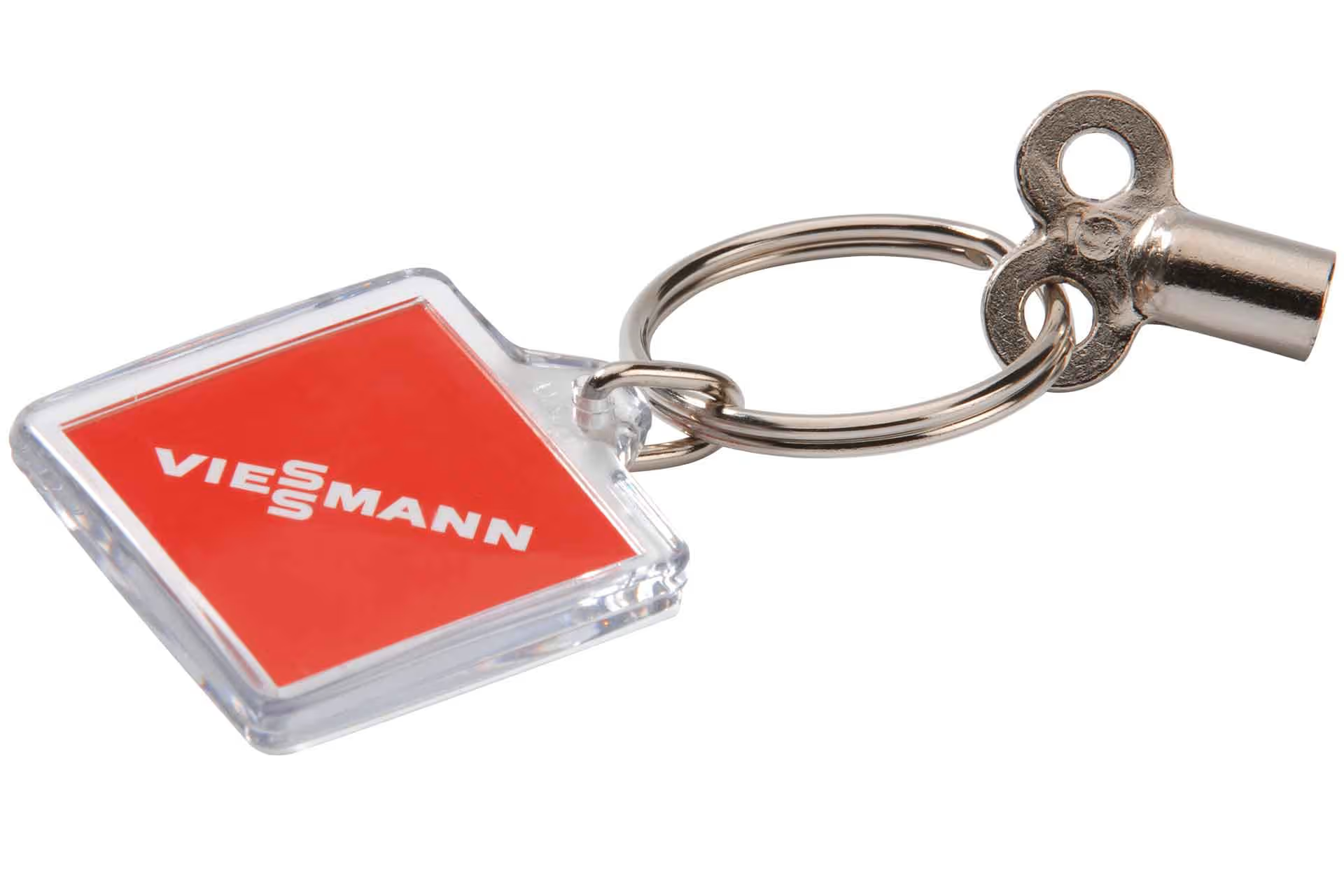
Before attempting to bleed your heating system yourself, you’ll need to gather a few items. These items are typically found in any home.
To bleed air from your heating system, you will need the following tools:
A bleed wrench can be purchased at a reasonable price from your heating contractor or at a DIY or plumbing supply store. It’s usually a standard square wrench. Some drain valves can be opened with a regular flat-head screwdriver. You’ll need a rag and a container to catch the leaking water.
To properly bleed a heating system, all you need is the above-mentioned tools and the following 7 short steps. Once you have all the tools ready, you can begin:
Please note: You may need to repeat the purging procedure several times.
As a tenant, you’ll often encounter the problem of inaccessible boiler rooms. However, to successfully bleed the heating system, you don’t need to turn off the circulation pump. Simply bleed the radiators as described above, finishing with the radiator furthest from the heat generator.
Important: As a tenant, you have the right to bleed the heating system. However, all subsequent heating system maintenance is the responsibility of the landlord or property management company. If heat is not distributed properly even after bleeding, first contact the landlord, who will then call a heating engineer.
Even if you’ve successfully bled the heating system, there are a few things you should pay attention to afterwards. One particularly important task is checking the water pressure or system pressure. Bleeding a heating system always results in a loss of some water. If this loss is significant, the water pressure in the heating system may drop. This can be seen on the pressure gauge. In this case, you may need to top up the water in the heating system . It’s also worth rechecking. After bleeding the air, the heating system should be run for at least an hour. Then, recheck the radiator located furthest from the boiler. If no more air comes out, you’ve successfully bled the heating system.
Important: If problems persist despite successful bleeding, please contact your AHI Carrier partner who can inspect the system more thoroughly on-site.
Sometimes the heating system remains cold or only heats up to half its capacity, despite successfully bleeding the air. This can occur for various reasons, and in each specific case, it’s best to have a specialist diagnose it on-site. For example, hydraulic balancing may be necessary , or the thermostatic valve may be stuck. It’s also possible that other adjustments to the heating control unit may be necessary.
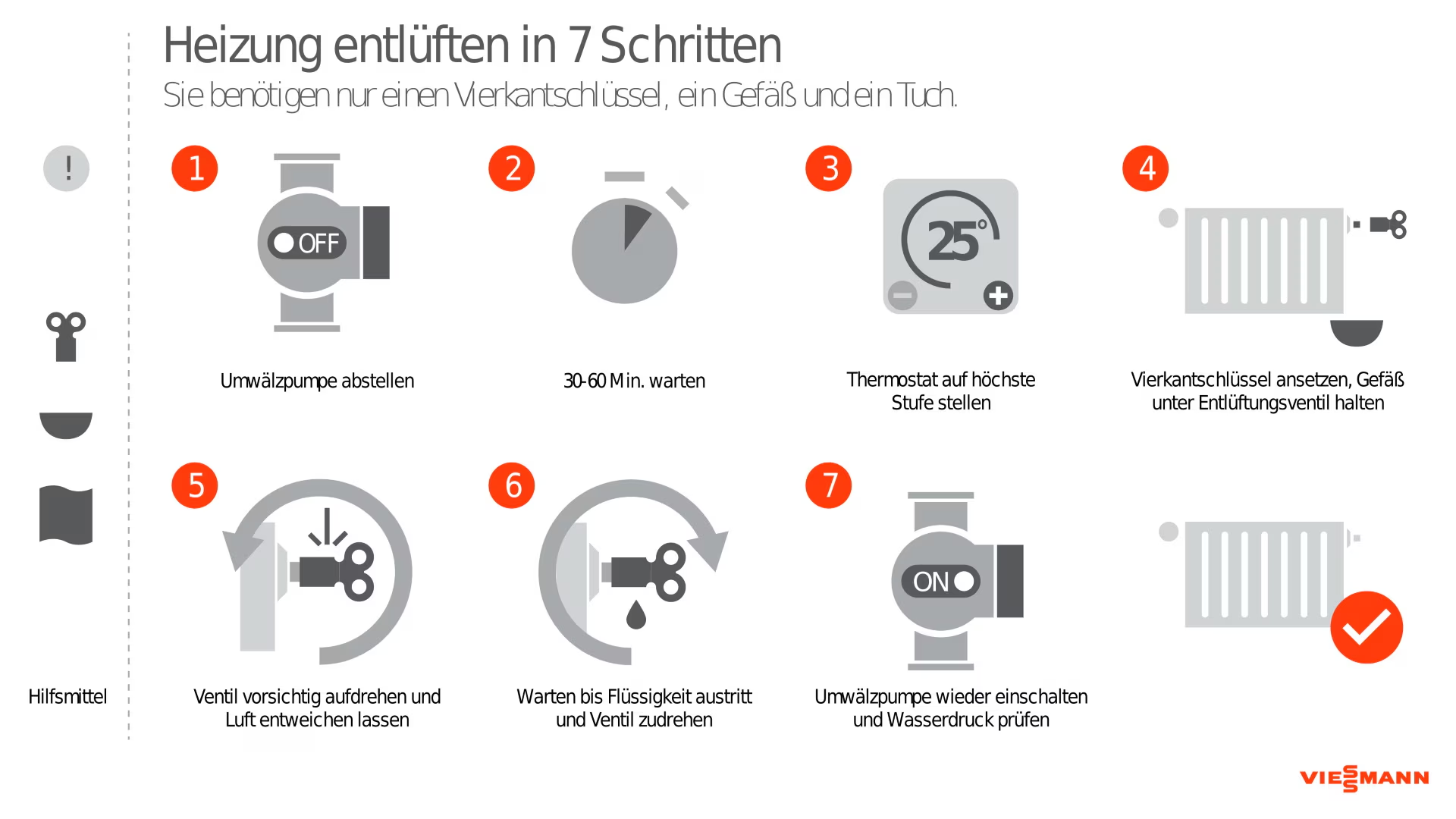
Summary: What should you pay attention to? This infographic summarizes all the points. With minimal effort, you can achieve excellent results and ensure optimal heat distribution is restored.
Do you have any questions about purging your heating system?
Proven calculation process

Get a free, no-obligation personal consultation from our qualified sales partners!