
Topics at a glance
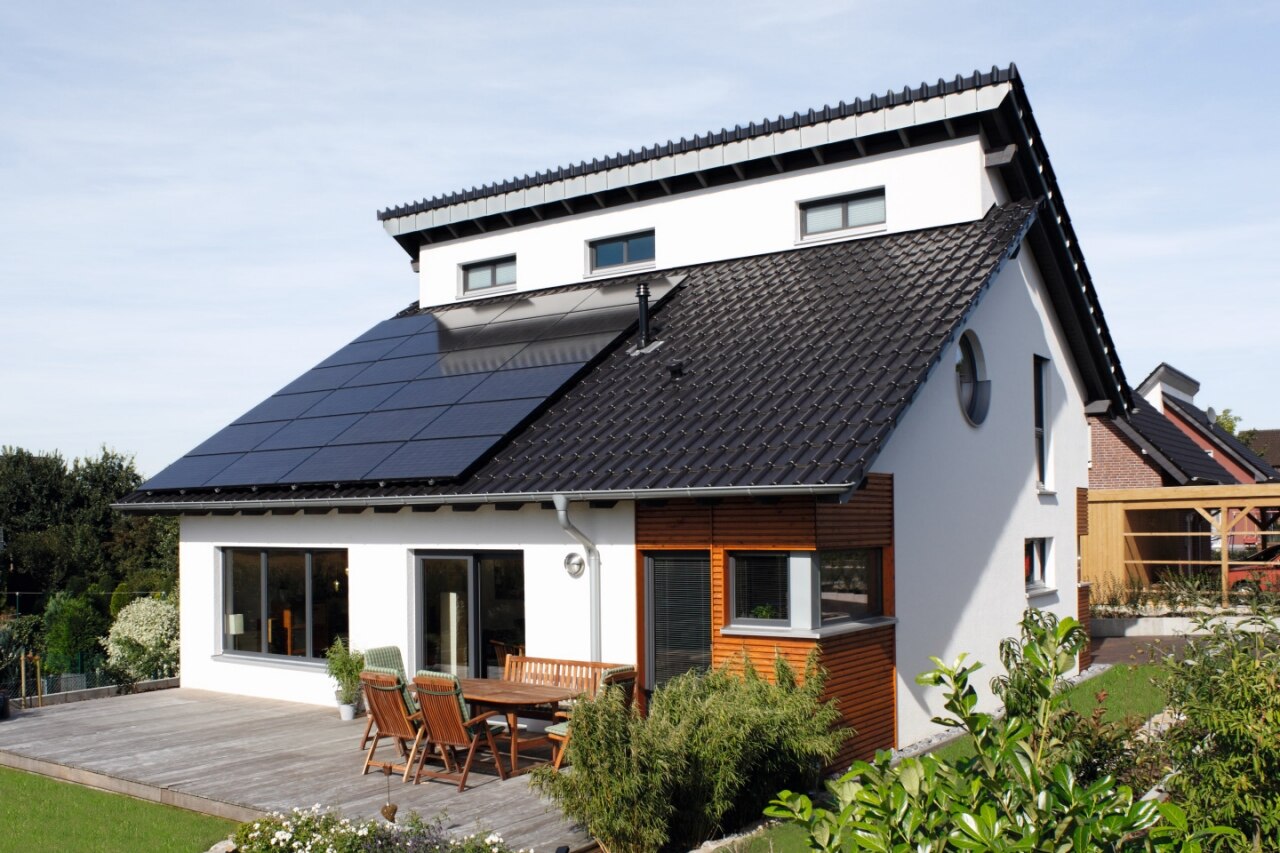
AHI Carrier photovoltaic systems can generate enough electricity to power a family of four for an entire year. However, the main problem with photovoltaic systems is that they typically generate power at times when most residents are not home—for example, in the afternoon. If none of the connected consumers are active or the connected devices cannot fully consume the power, it is fed into the public grid.
However, in recent years, preferential tariffs have been steadily declining. At the same time, the average price of electricity has been rising. Therefore, it is necessary to increase self-consumption. An energy storage system can help. That’s why AHI Carrier has launched the Vitocharge VX3 photovoltaic energy storage system. This battery system stores electricity generated during the day and ensures its availability when needed.
How do energy storage systems work?
Photovoltaic system
Solar energy storage systems offer a major advantage: the ability to use self-generated electricity when needed, even when the sun isn’t shining.
Electricity can be stored in two ways: directly and indirectly. However, only indirect storage systems are suitable for residential use. Direct energy storage occurs using components such as coils and capacitors and lasts only a few seconds. This makes these types unsuitable for detached or semi-detached homes. They are typically used in industry, primarily for grid stabilization. Therefore, when it comes to photovoltaic systems with storage, the system typically includes an electrochemical storage device, such as a battery.
Next-generation energy storage based on photovoltaic cells

Vitocharge VX3
Brief description of the storage process
The operating principle is quite simple. A photovoltaic battery storage system accumulates electrical energy, like a rechargeable battery, until the home needs power. It then transmits this energy to connected devices (lights, refrigerators, televisions, etc.). In detail, this means that when sunlight hits the photovoltaic modules, it is converted into direct current (DC). However, this cannot be used in everyday life. To remedy this, an inverter is installed in the circuit, converting DC to AC. When there are no consumers in the home, the energy storage system takes over. AHI Carrier lithium-ion batteries convert electrical energy into chemical energy. When discharged, this process is reversed.
Important: During the discharge process, a solar energy storage device is never completely discharged. There is a distinction between “nominal” and “usable” capacity. This difference lies in the depth of discharge. The Vitocharge VX3 was developed with a special operating strategy similar to that of an electric vehicle. Battery aging is compensated for over its lifespan by increasing the depth of discharge. In the case of an electric vehicle, this means the vehicle’s range is maintained at a constant level throughout its entire service life. Only when the depth of discharge reaches 100% does the usable capacity decrease. If the storage device is charged and there are no connected or active consumers, electricity is fed into the public grid. Remuneration is regulated by the Renewable Energy Act (EEG) [Germany].
What are the distinctive features of AHI Carrier photovoltaic storage systems?
Photovoltaic storage systems bridge the gap between supply and demand. This helps increase self-consumption and reduce electricity costs. The generated electricity can be used much more efficiently. AHI Carrier energy storage systems also provide greater independence from utility providers and reduce the load on the power grid.
Our Vitocharge product line offers lithium-ion energy storage systems with high efficiency and a long service life. Our models have a service life of up to 20 years or a guaranteed energy output of 9.6 MWh per 4 kWh battery. On average, you can expect approximately 250 complete cycles per year. Vitocharge VX3 batteries can be connected in series, allowing for flexible battery sizing and perfect adaptation to your individual energy needs. Furthermore, both versions are suitable for both parallel and grid-replacement operation. This means AHI Carrier energy storage systems can operate in parallel with the public grid, ensuring essential loads are supplied during a power outage.
A new generation of energy storage devices: more compact, quieter and more powerful
The new-generation Vitocharge VX3 energy storage system allows homeowners to easily store energy, thereby using it more efficiently. The proven and reliable lithium iron phosphate batteries are designed for a long service life. That’s why AHI Carrier offers a 10-year battery replacement guarantee at no extra cost. Furthermore, the system can be easily expanded during the first year of operation if energy needs change. The modular Vitocharge VX3 energy storage system is therefore a central element of AHI Carrier’s sophisticated energy solutions for heat, electricity, and mobility. From heat generation to the photovoltaic system and electric vehicle charging station, everything comes from a single source. You’ll only get this from AHI Carrier.
Click the play button to watch the video. Please note that when you watch the video, data will be transferred to YouTube. For more information, please see our Privacy Policy.
Is it worth buying an energy storage device?
By purchasing a AHI Carrier energy storage system, you receive a product with a variety of applications. The Vitocharge VX3 can be used as a hybrid energy storage system for photovoltaic panels, as a grid-connected energy storage system, or as a pure photovoltaic inverter. This makes it suitable for use in both new and existing systems.
Energy storage for new photovoltaic systems
As electricity rates fall, installing self-consumption systems is becoming increasingly important. However, it’s important that the new system is tailored to the home’s needs and energy needs, and that it’s also cost-effective. To ensure that environmentally responsible, self-generated electricity always reaches its consumers, a unified energy solution is essential. Here are some examples:
- Photovoltaic system + energy storage + heat pump
- Photovoltaic system + energy storage + fuel cell heater
- Photovoltaic system + energy storage + electric heating and hot water system
Photovoltaic system + energy storage + heat pump
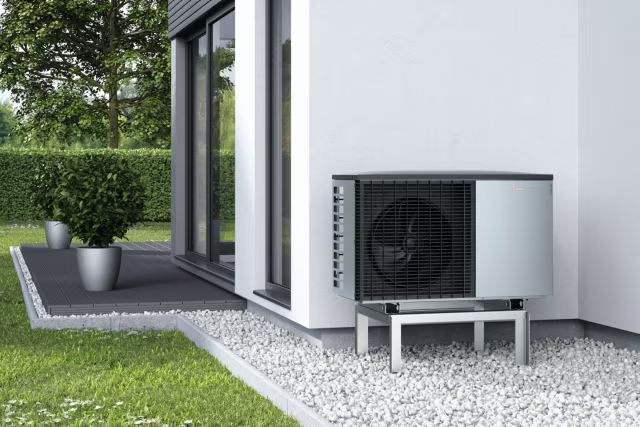
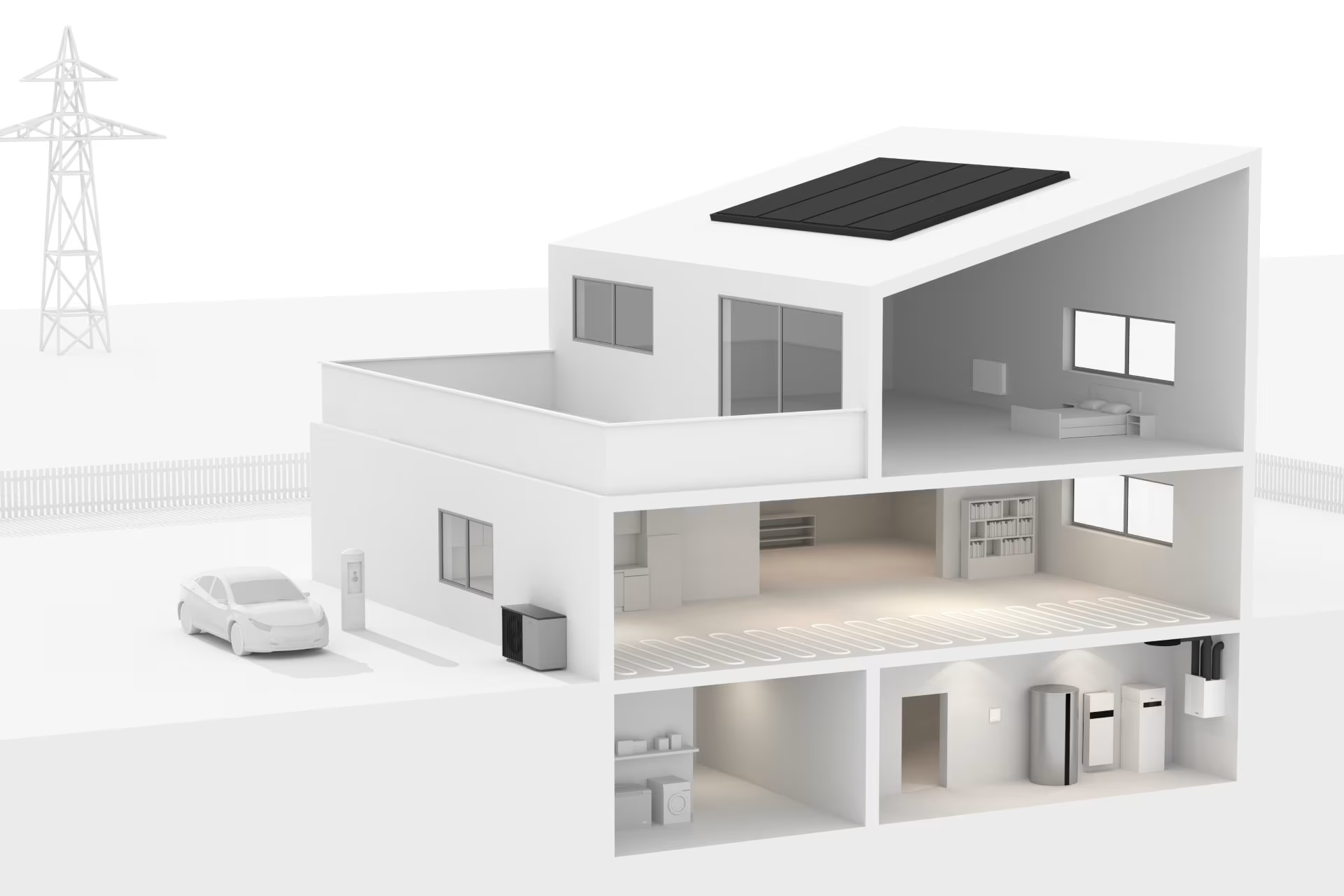
Energy from the photovoltaic system is stored in the energy storage unit and consumed directly by electricity users, such as a heat pump. If there is excess energy, it is temporarily stored in the battery and released again when needed. This allows the house and the heat pump to be largely powered by sustainably and efficiently generated rooftop energy.
Photovoltaic system + energy storage + fuel cell heater
When using a photovoltaic system together with a fuel cell heating appliance, you get two energy generators that complement each other perfectly. In summer, the photovoltaic system supplies electricity for the house and optionally for an electric vehicle. In winter, the fuel cell heater generates more electricity due to longer operating times. As a result, the house and optionally the electric vehicle can receive electricity from their own energy sources throughout the year, increasing self-sufficiency and reducing electricity costs.
Photovoltaic system + energy storage + electric heating and hot water system
In a fully electric system, the energy generated by the photovoltaic system is used for electric heat generators such as infrared room heating, underfloor heating, or domestic hot water heating. Excess energy is temporarily stored in the energy storage system. This enables a house with electric room heating and domestic hot water heating to achieve a high degree of self-sufficiency and sustainability while benefiting from low standby energy consumption.
Retrofitting an energy storage system into an existing photovoltaic system
System operators receive fixed compensation for electricity exported to the grid for 20 years. After the renewable energy subsidy period expires, grid operators are no longer required to accept the generated electricity. In addition, direct marketing of self-generated electricity on the energy market is not always possible.
In this situation, it becomes worthwhile to increase self-consumption using AHI Carrier products. The flexible AHI Carrier components make it possible to combine an existing photovoltaic system with an energy storage system as an integrated solution. The system can also be expanded later with additional battery modules if required.
Besides normal household appliances, self-consumption can be further increased using devices such as the electrically powered Vitocal 262-A domestic hot water heat pump. This provides convenient hot water while reducing operating costs through the use of self-generated electricity. The electrically powered Vitovent 300-W ventilation system also improves indoor comfort and helps preserve the building structure by supplying fresh, clean air and maintaining optimal humidity levels.
What size should the energy storage device be?
Whether it’s a new or existing system, sizing the energy storage system is crucial. It must have sufficient capacity to provide a family with solar power from evening until the following morning. The size or capacity of the energy storage system depends on both the annual electricity consumption and the nominal power of the existing or planned photovoltaic system. As a guideline, use the following rule: 1 kWh of photovoltaic system = 1 kWh of battery = 1,000 kWh of household electricity consumption.
Example 1 with a heat pump
Household + heat pump: 8000 kWh
PV = 8 kWh
________________________
Energy storage = 8 kWh
Example 2 with a heat pump and an electric vehicle
Household + heat pump + electric car = 12,000 kWh
PV = 12 kWh
___________________________________
Energy storage = 12 kWh
Drives that are too large or too small are uneconomical
If the energy storage system is too large, it will store too much electricity, which is not actually used. In addition to the unjustifiably high additional acquisition costs, you will also incur losses due to the loss of revenue for electricity fed into the grid. Conversely, if the energy storage system is too small, system owners will have to purchase more electricity. This is significantly more expensive than generating electricity from the roof. Therefore, it is necessary to consult with one of our sales partners.
Solar energy storage and efficient management
Digitally connecting and managing all system components facilitates the storage of renewable energy and the harmonization of its production and consumption. In this regard, the AHI Carrier GridBox is the ideal complement to system solutions consisting of a photovoltaic system and energy storage. This is because the app clearly visualizes energy flows in the home, creating complete transparency. The foundation for this is the energy dashboard. It displays, among other things, the output of the photovoltaic system, the charge status of the energy storage, and the current energy consumption in the home. Daily trends, weekly reports, and CO2 balance information provide users with a constant overview. Available optimization functions for the photovoltaic system, solar storage, hot water heating systems, and electric vehicles make the system even more efficient.
Range of energy storage devices
AHI Carrier energy storage systems increase the self-consumption of your generated energy and improve the efficiency of your photovoltaic system. The system charges the energy storage system when your home doesn’t need electricity. This energy is then used as needed, for example, to power electrical appliances. If the energy storage system is fully charged and no consumers are connected, excess energy is exported to the grid and billed accordingly.