

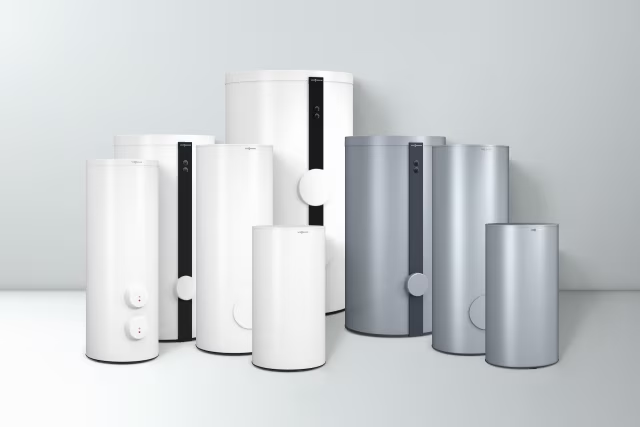
Simply put, the function of a hot water cylinder is to temporarily store preheated water and release it only when needed. This ensures that the water flowing from the tap is at the desired temperature as quickly as possible. The hot water cylinder is typically insulated to retain heat over a long period of time. Various methods, sometimes a combination, are used for this purpose. Rigid foam and fleece are often used for the casing. Vacuum panels are also attached to enhance thermal insulation. This achieves the same effect as the familiar Thermos flask. As a result, modern hot water cylinders operate with virtually no heat loss.
The difference between direct and indirect heating
When discussing hot water cylinders and their functions, it’s important to consider the distinction between direct and indirect heating. Each type has different applications and insulation levels. This also affects the cost-effectiveness of these hot water cylinders.
Direct fired hot water cylinders
Direct-fired DHW cylinders and how they work
As the name suggests, the water in this type of cylinder is heated directly. As an option, a flame or an electric indirect-heating coil can be used. A direct-fired DHW cylinder is often referred to as a hot water storage heater. In other words, it combines a water heater and a hot water storage tank in one unit.
These appliances usually have only minimal thermal insulation, and in some cases none at all. This means they can operate independently of the existing heating system. Direct-fired DHW cylinders are mainly used for decentralized domestic hot water (DHW) heating.More details: Electric storage water heaters
Indirect fired DHW cylinders
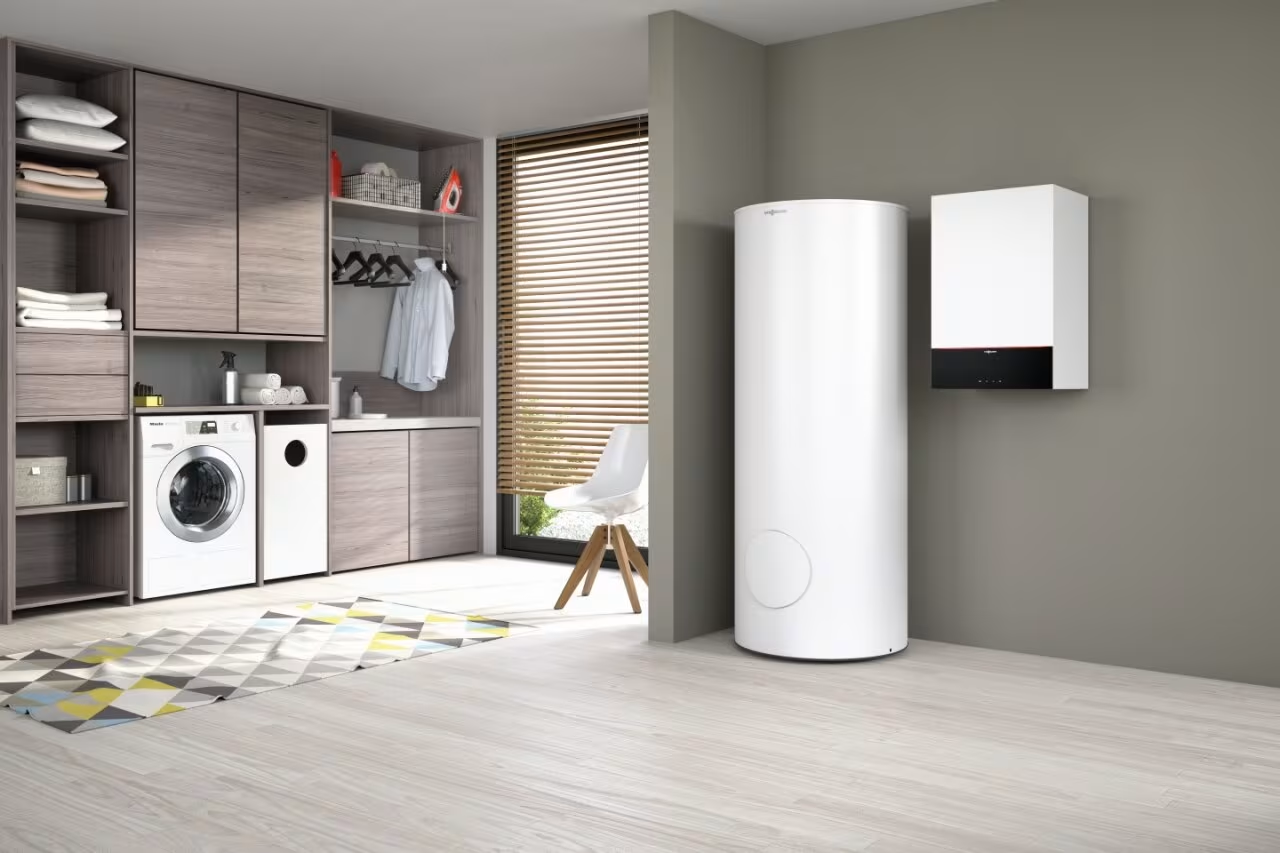
Vitodens 200 gas condensing wall-mounted boiler Vitodens 200 with Vitocell 300-W
Indirect-fired DHW cylinders and how they work
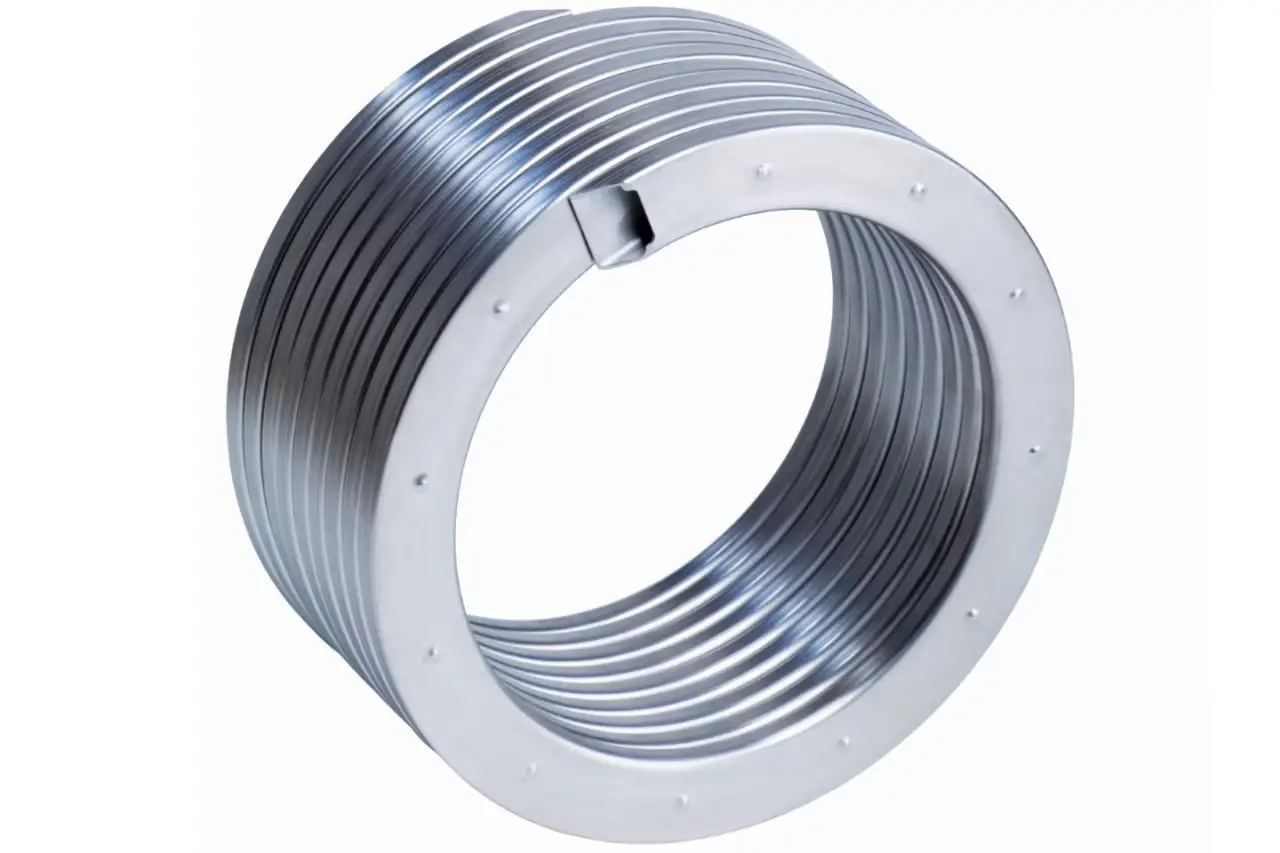
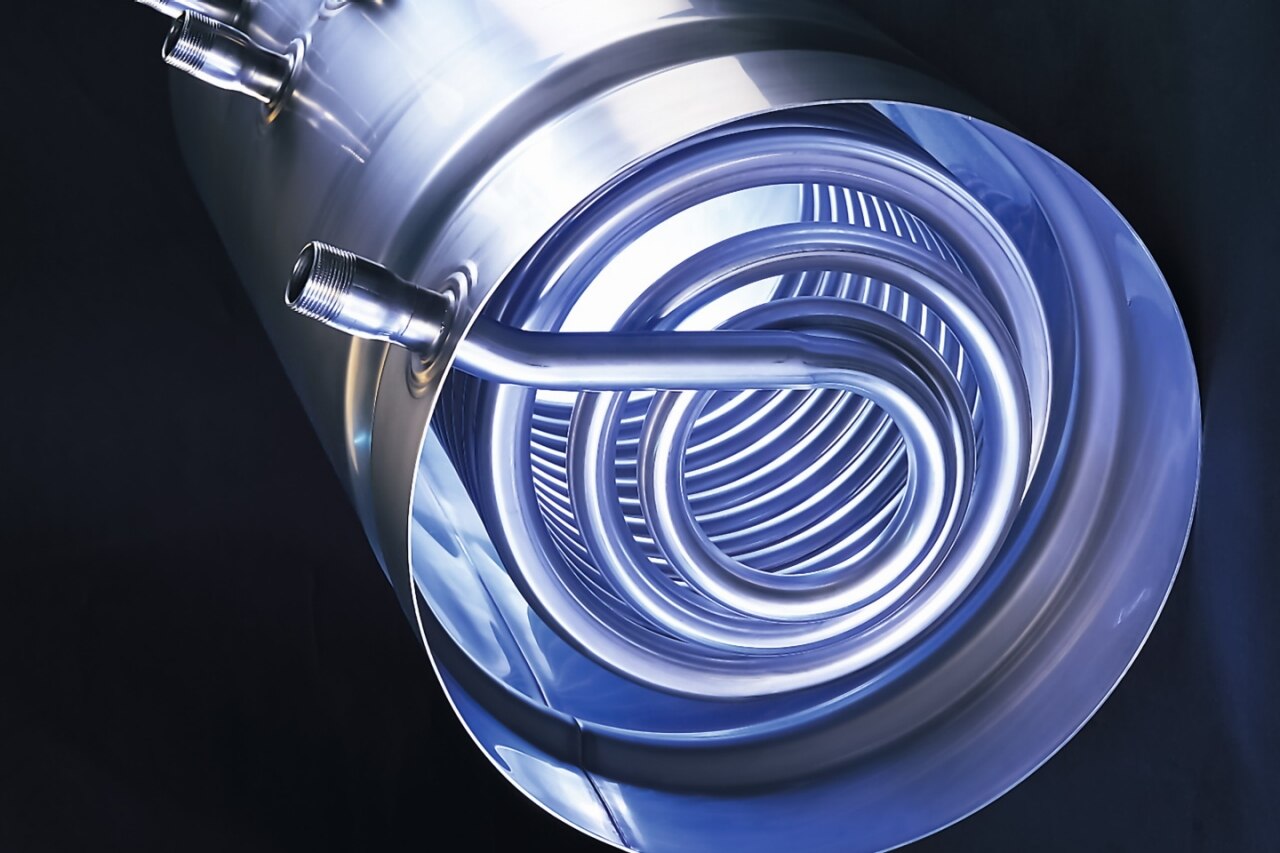
An indirect-fired DHW cylinder works quite differently from its direct-fired counterpart. Instead of electricity or an open flame, heated water from the heat generator passes through a built-in indirect heating heat exchanger.
During the heating process, the water transfers its heat, and the temperature of the water inside the DHW cylinder continuously rises. The heated water flows through the indirect heating coil until the required temperature is reached.
The resulting domestic hot water is then drawn from the upper part of the DHW cylinder.
Important: the heating water never mixes with the domestic hot water.
Both conventional boilers and heat pumps can be used as heat generators.
Mono- and dual-mode operation of DHW cylinders
If the water in a hot water cylinder is heated by only one indirect heating coil and one heat generator, experts call it a single-mode hot water cylinder. However, since it’s more economical and environmentally friendly to leave most of the hot water heating process to the solar thermal system, a dual-mode hot water cylinder is the preferred design. A dual-mode hot water cylinder contains two indirect heating coils. In this case, the indirect heating coil in the lower section heats the water using energy from the solar thermal system. If the available solar energy is insufficient to bring the water to the required temperature, the second indirect heating coil is activated. Using the heat generator, it heats the water to the desired temperature.
Division into ventilated and non-ventilated DHW cylinders
In addition to direct/indirect heating and mono/dual mode models, there’s another distinguishing criterion: vented and non-vented systems. The operating principle of the DHW cylinder itself, i.e., the process used to heat the water in it, also plays a role.
Experts distinguish between vented and non-vented hot water cylinders. A vented hot water cylinder, such as an electric storage water heater, is independent of water main pressure. When the hot water is withdrawn, the hot water valve opens the cold water inlet. Cold water then enters the cylinder and displaces the lighter hot water, pushing it upward to the draw-off point. Vented hot water systems are designed only for individual draw-off points.
The situation is different with unvented hot water cylinders. They can supply multiple draw-off points simultaneously. This type of cylinder maintains constant water pressure, pushing hot water to the draw-off points. Unvented hot water cylinders do not require special gravity-fed fittings. However, when using vented hot water cylinders, using commercially available pressurized fittings can lead to pressure imbalances and property damage. Therefore, selecting the appropriate fittings is crucial.
Other AHI Carrier guides and tips
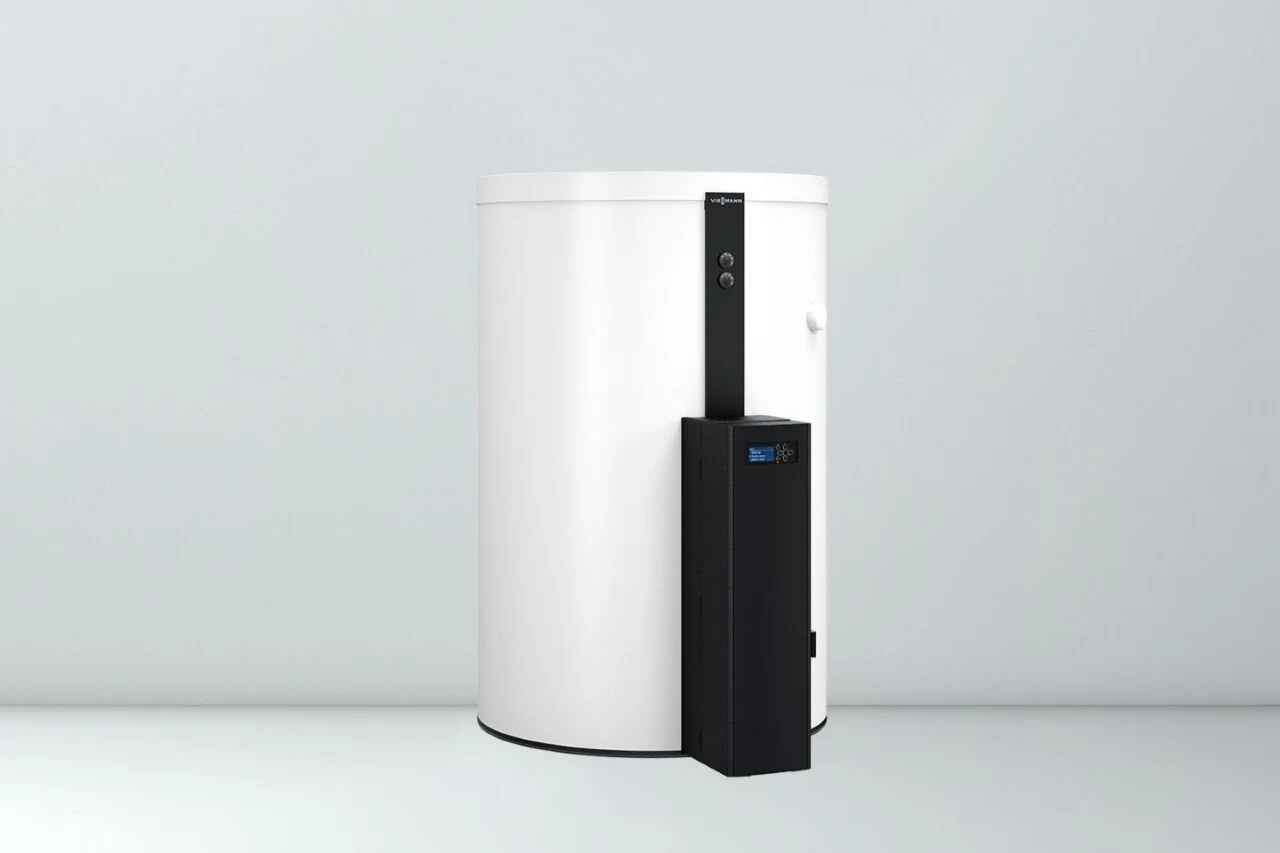
Overview of Buffer Cylinders for Water Heating
A buffer tank is the perfect addition to your heating system. Below is an overview of AHI Carrier heating water buffer cylinders.
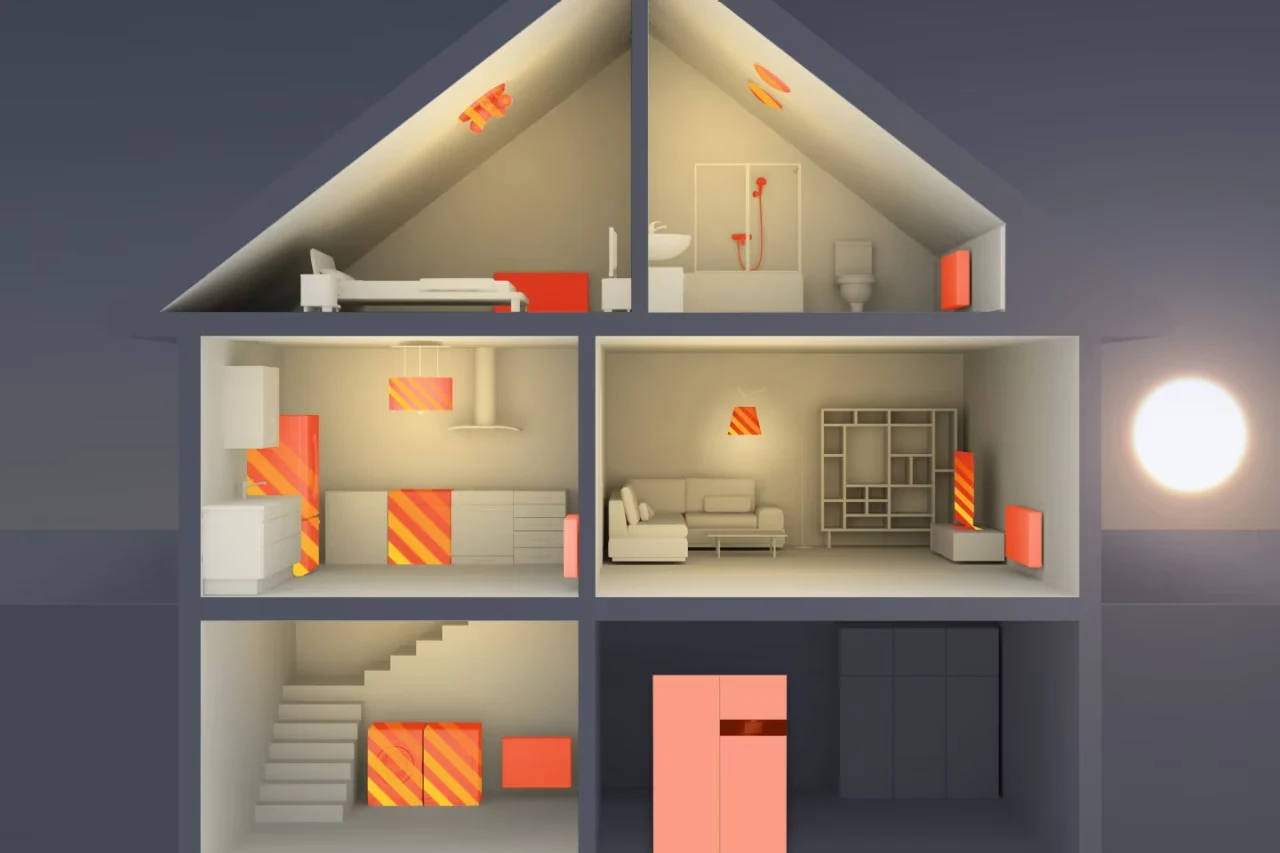
Saving energy and reducing heating costs
With the right measures and our professional advice, you can easily save energy and reduce your heating costs.
Heating equipment vocabulary
Our heating equipment dictionary contains information and explanations of heating equipment terms, as well as technical terms specific to AHI Carrier.
Stainless steel hot water cylinders
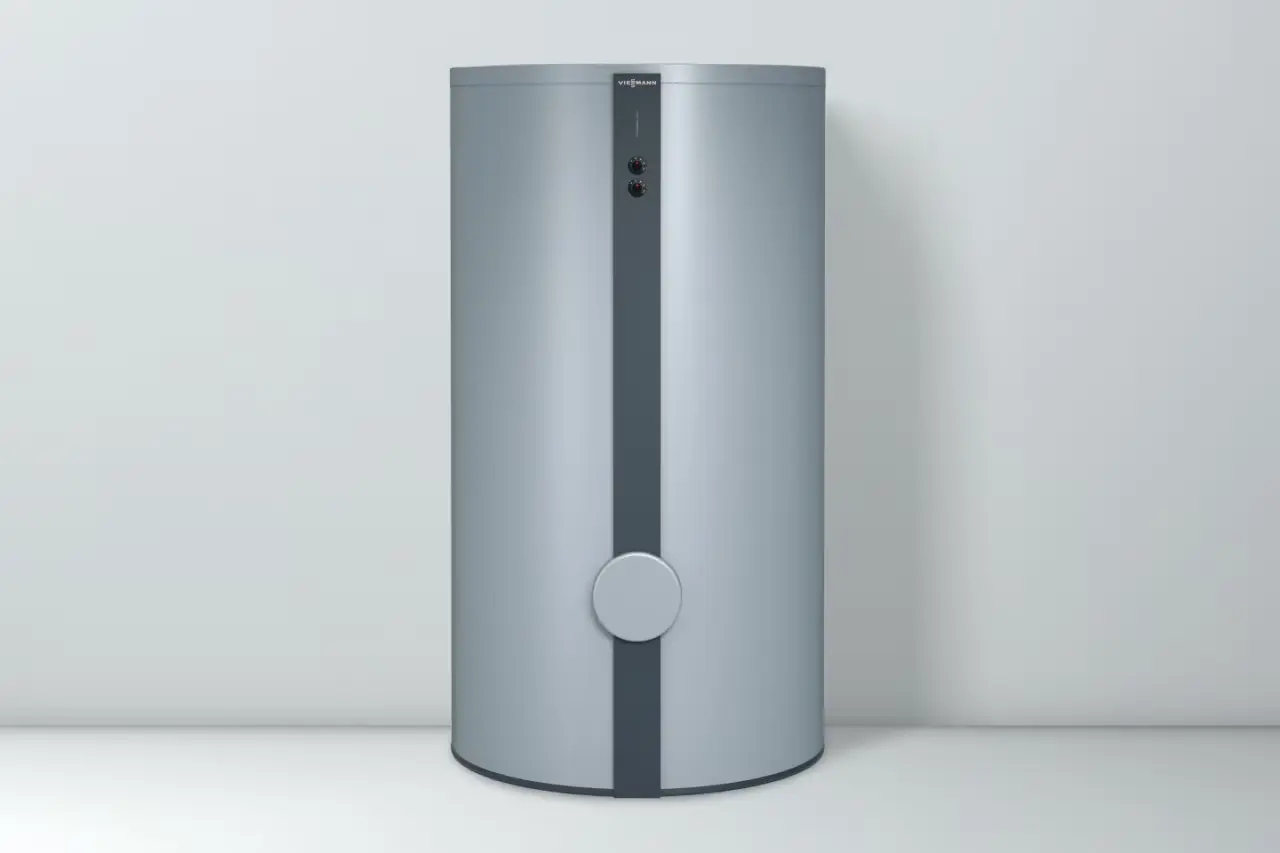
AHI Carrier stainless steel hot water cylinders offer numerous advantages over enamelled cylinders and are also covered by a 10-year warranty.
Dual-mode DHW cylinders
A dual-mode DHW cylinder allows you to integrate solar thermal technology into your heating system. You can find all the information here.