
MENU

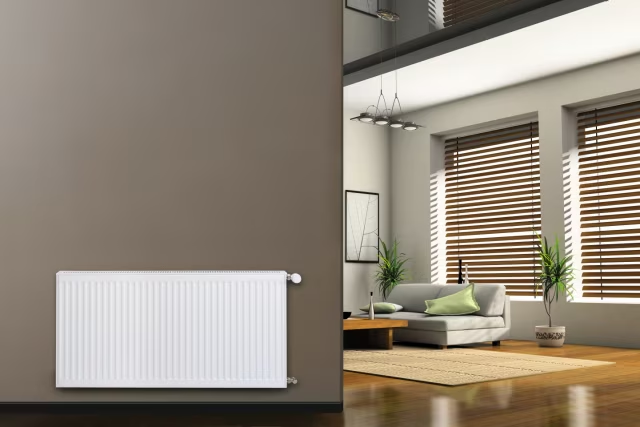
Radiators are the central component of a heating system. They transfer the generated heat to the living space via a coolant—water. Although the operating principle is always the same, there are several different types. A distinctive feature of all Viessmann Vitoset radiators is their high quality. The use of proven materials and high-quality workmanship guarantee the efficient and reliable implementation of any solution.

How does a radiator work?

The radiator operates on a simple principle: A pump transports heating water from the central heat generator to the radiators. There, the warm water enters through an inlet valve. During the flow, heat is released into the room through the heating surfaces, causing the water to cool. It flows back through a check valve and is brought back to temperature by the connected heat generator. The cycle begins again.

In addition to Vitoset radiators for central heating systems, Viessmann also offers electric heaters or radiators. Vitoplanar electric radiators are also suitable for decentralized heating of residential spaces, i.e., independent of the central heating system and for individual rooms.

The thermostat regulates the temperature

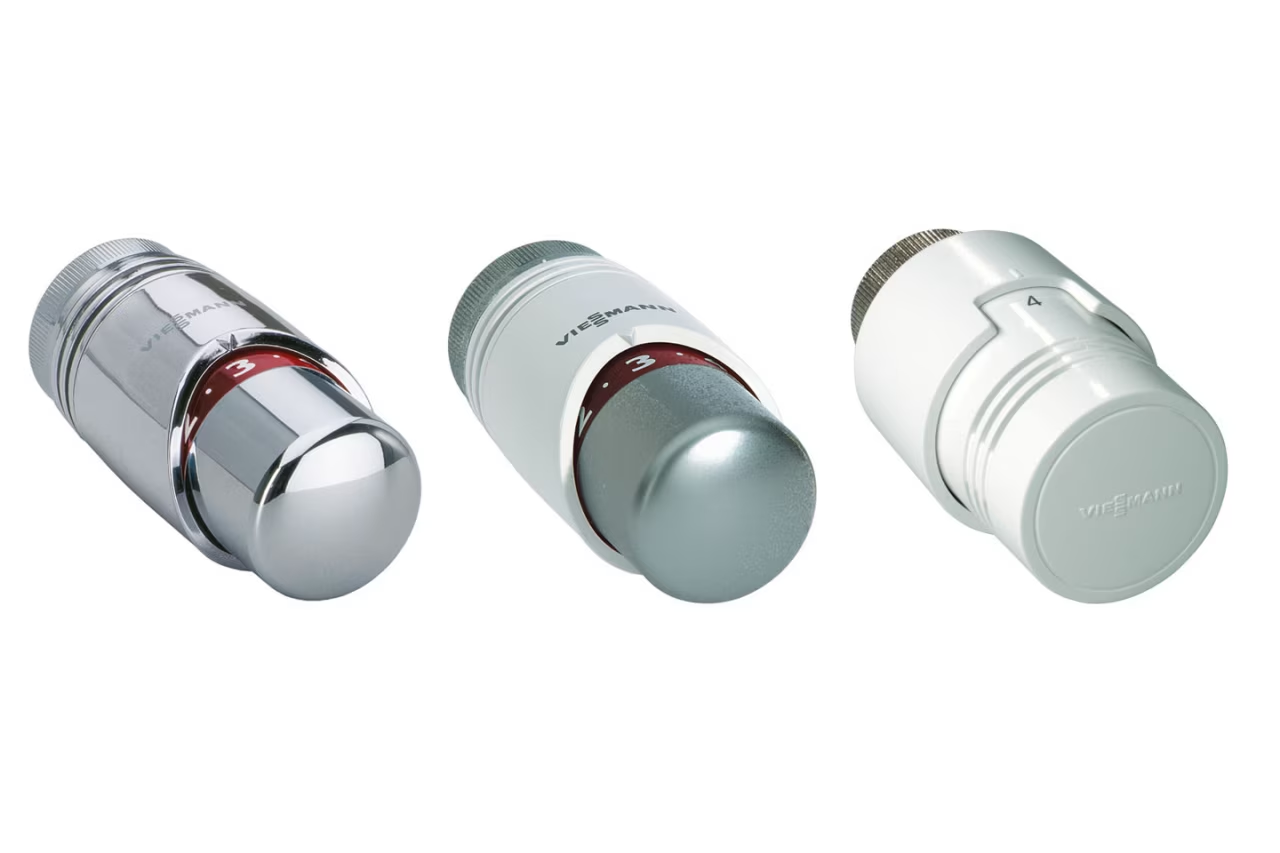
The amount of heat supplied to a room can be regulated using thermostatic radiator valves. A valve installed inside the thermostatic head regulates the water flow based on the room temperature. If the temperature is too low, the thermostatic valve opens, allowing water to flow through the radiator. Five temperature levels are available for setting the desired temperature. Each level corresponds to a specific room temperature. For more information about the thermostat’s function, numbers, and adjustment methods, please see the section on correct thermostat settings. Viessmann thermostatic heads can be used with any radiator in our range.

Viessmann thermostats for heating radiators

Easy temperature control via app

The Viessmann ViCare app provides convenient, individual room control via a smartphone or tablet—even independent of the heating system. This makes it suitable for rented apartments. Learn more about smart radiator control in the next Tech Talk article.

Image

Ask the Experts: Viessmann Community

Ask a question →

What types of radiators are there?

There’s a wide selection of modern hot water radiators. This is evident in the Viessmann range. In addition to panel radiators, the range also includes tubular radiators.

Steel panel radiators for universal use

Widely used panel radiators represent the latest evolution from the original sectional or finned radiators. Unlike these, they consist not of individual sections, but of one or more smooth or slightly profiled heating plates through which warm water flows. Between them are convection plates, past which the air in the room flows.

The radiator type designation depends on the design. It consists of two digits, the first of which indicates the number of heating plates, and the second the number of convection plates. Model type 21, for example, consists of two radiator plates and one convector plate. The basic principle here is: the more convection plates, the higher the proportion of convection heat. Viessmann offers corresponding radiators in both universal and panel versions. The latter are characterized by smooth surfaces and a visually slim design. Radiators are generally available in various connection options, such as center-connected radiators. This provides even greater flexibility.
Tubular radiators for the bathroom

Tubular radiators consist of multiple vertically or horizontally arranged tubes through which heating water flows. These radiators are particularly popular in bathrooms, where they also serve as towel rails and drying racks. Most of the heat is released through convection. Viessmann bathroom radiators are suitable for standard heating connections, but can also be equipped with an electric heating cartridge. This allows for heating of rooms independently of the central heating system, especially in summer.

Related articles

Saving energy and reducing heating costs

Saving energy and reducing heating costs

Read more
Adjusting the heating curve and saving energy

Adjusting the heating curve and saving energy

Read more
Topping up water for heating

Topping up water for heating

Read more
Bleeding your heating system in just a few steps

Bleeding your heating system in just a few steps

Read more
Hydrodynamic balancing

Hydrodynamic balancing

Read more
First steps with your new Viessmann heating system

First steps with your new Viessmann heating system

Read more