
MENU

As a reliable and energy-rich fuel, crude oil has long been used for heating. However, as a fossil fuel, it is only available in limited quantities. Furthermore, the price of oil can sometimes fluctuate greatly, which can negatively impact heating costs. To minimize costs, Viessmann relies on proven and future-proof oil condensation technology.

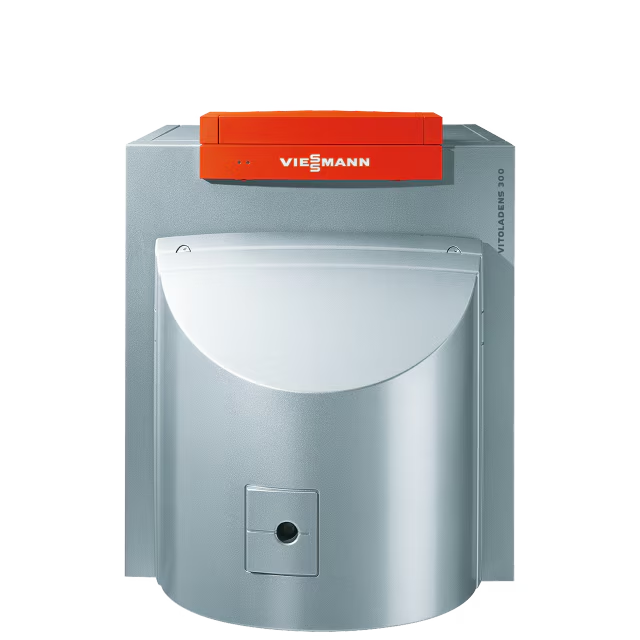
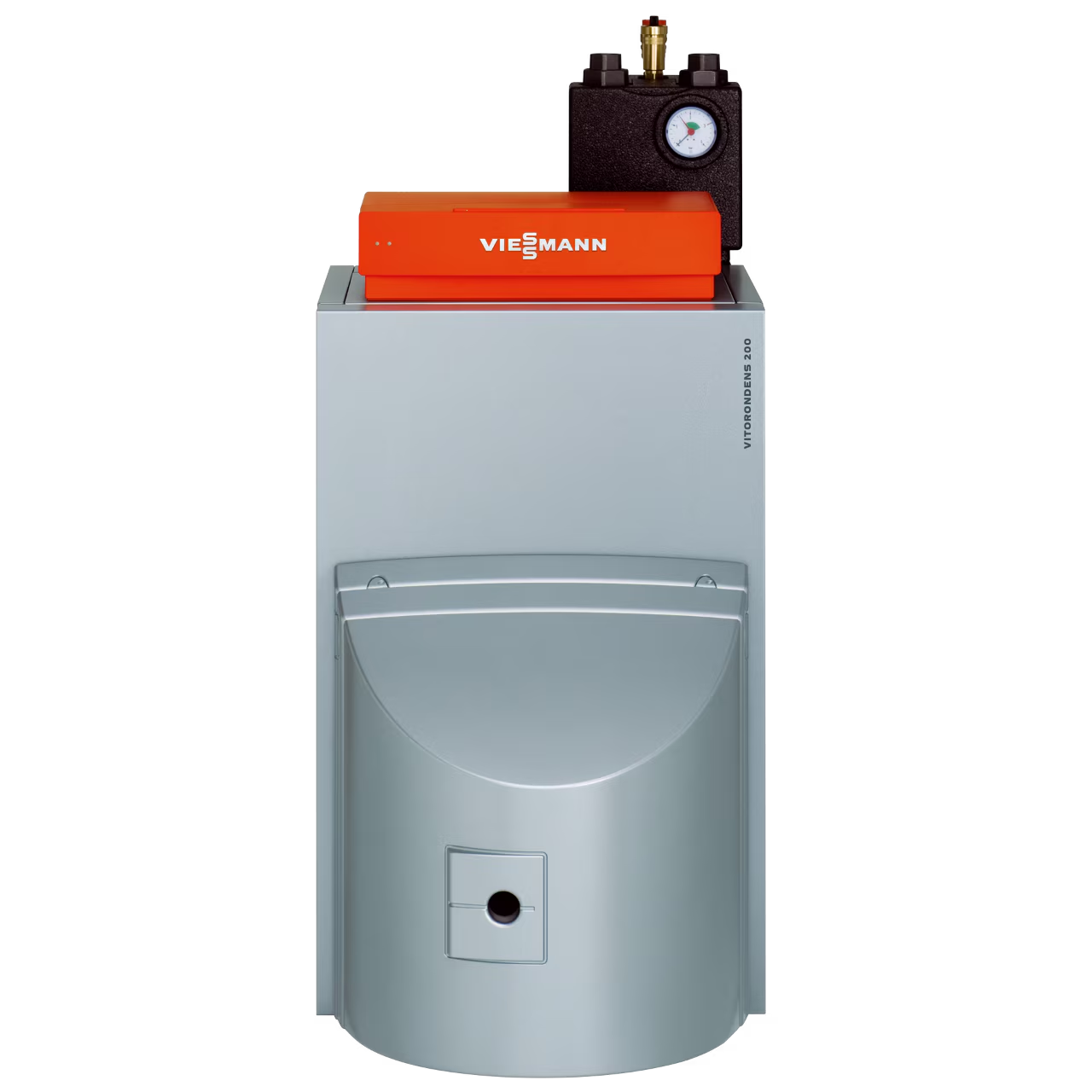
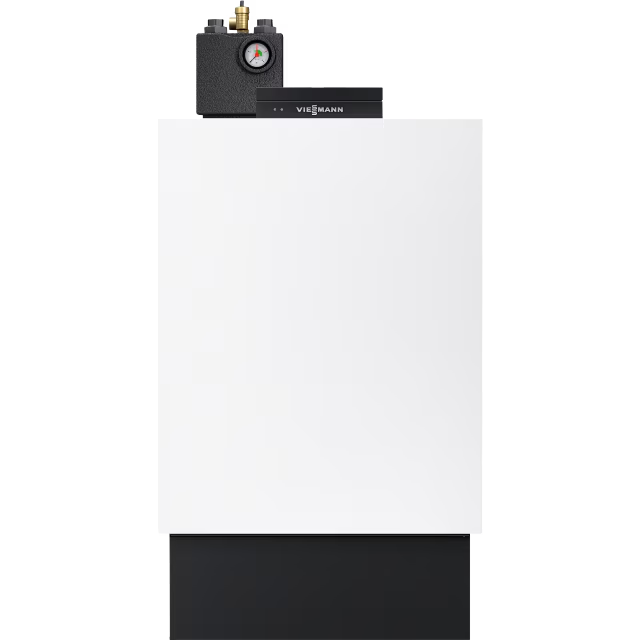
Viessmann oil-fired condensing boilers meet the latest engineering standards. With a wide range of power ratings up to 80 kW, they are ideal for use in detached and semi-detached homes, as well as small apartment buildings. Learn more about their features and advantages in the ” Oil Heating ” section.

Savings through modernization using oil condensate technology (Vitoladens 300-C*)

The old system New system Saving
Consumption/year 3400 l 2590 l 810 l / 2.1 t CO₂
Costs/year €2380 €1,760 €620 / 26%

*Basis for comparison: house (built in 1985), 140  living area , with an old 27 kW oil boiler. Rounded consumption costs using standard values ​​(EID) for 3,400 liters of oil. Average energy price for 2017.

Did you know that instead of buying a new oil condensing unit, you can lease it? It’s easy – with a comprehensive warranty of up to 15 years. Rent from Viessmann Wärme , and then sit back and enjoy.

Reduce energy consumption by up to 35 percent

In Germany alone, approximately two million heating systems over 25 years old are still in use. Their owners are often completely unaware of how much money they are wasting on energy that is pointlessly burned and exiting the chimney as unused heat. Furthermore, these old systems pollute the climate with unnecessary CO₂ emissions and contribute to global warming. By promptly replacing these systems with highly efficient oil condensing systems combined with solar technology, end users could reduce energy consumption by 35 percent. This would meet ten percent of Germany’s total energy needs, while reducing annual CO₂ emissions by 54 million tons.

How does an oil condensing boiler work?

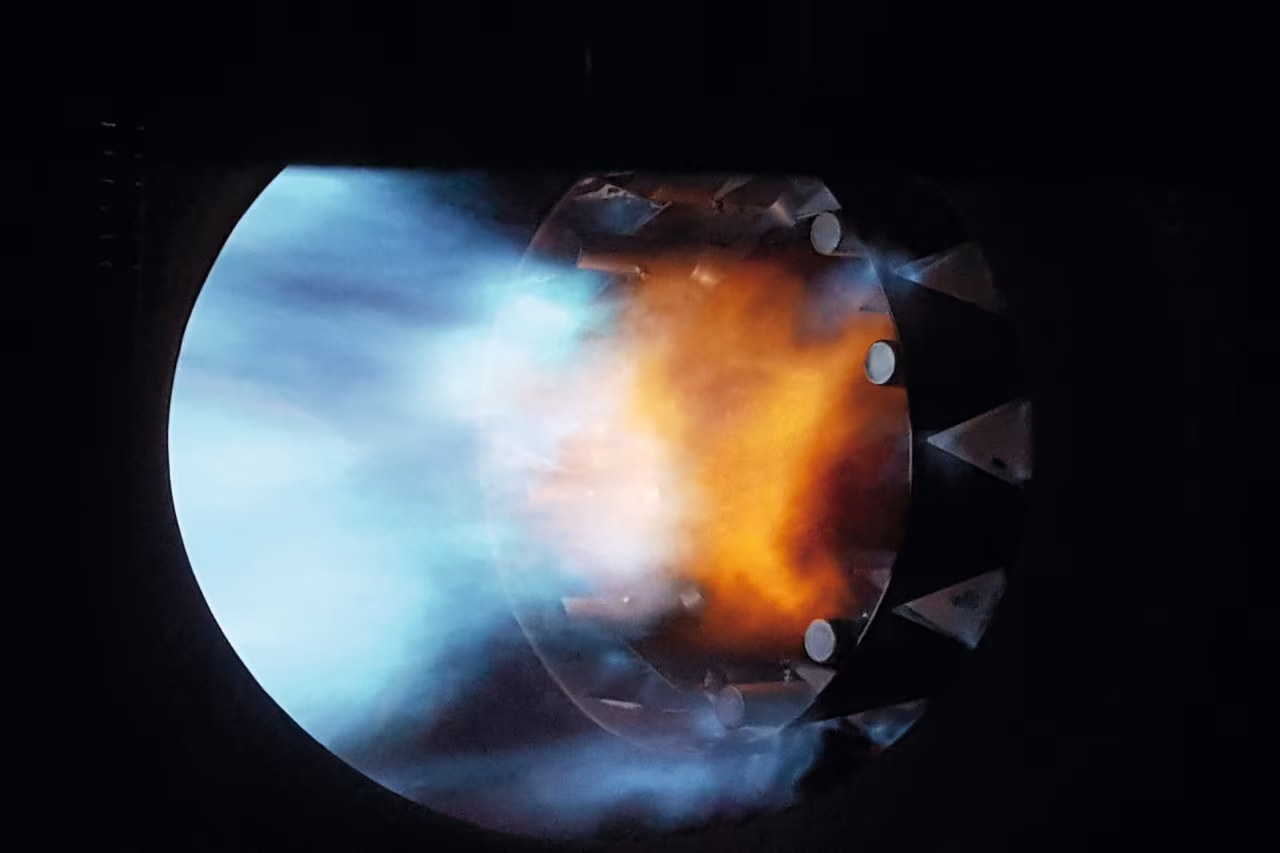
A boiler generates heat by burning fuel and using the resulting hot flue gases to heat the heating water. In conventional boilers, the heat from the flue gases is released directly into the open air. This is necessary because the water vapor contained in the flue gases would otherwise condense as soon as the flue gases cooled below the dew point. However, the components of this condensate are corrosive, so hot flue gases were long considered unsuitable for use.

Flue gases contain useful heat of condensation

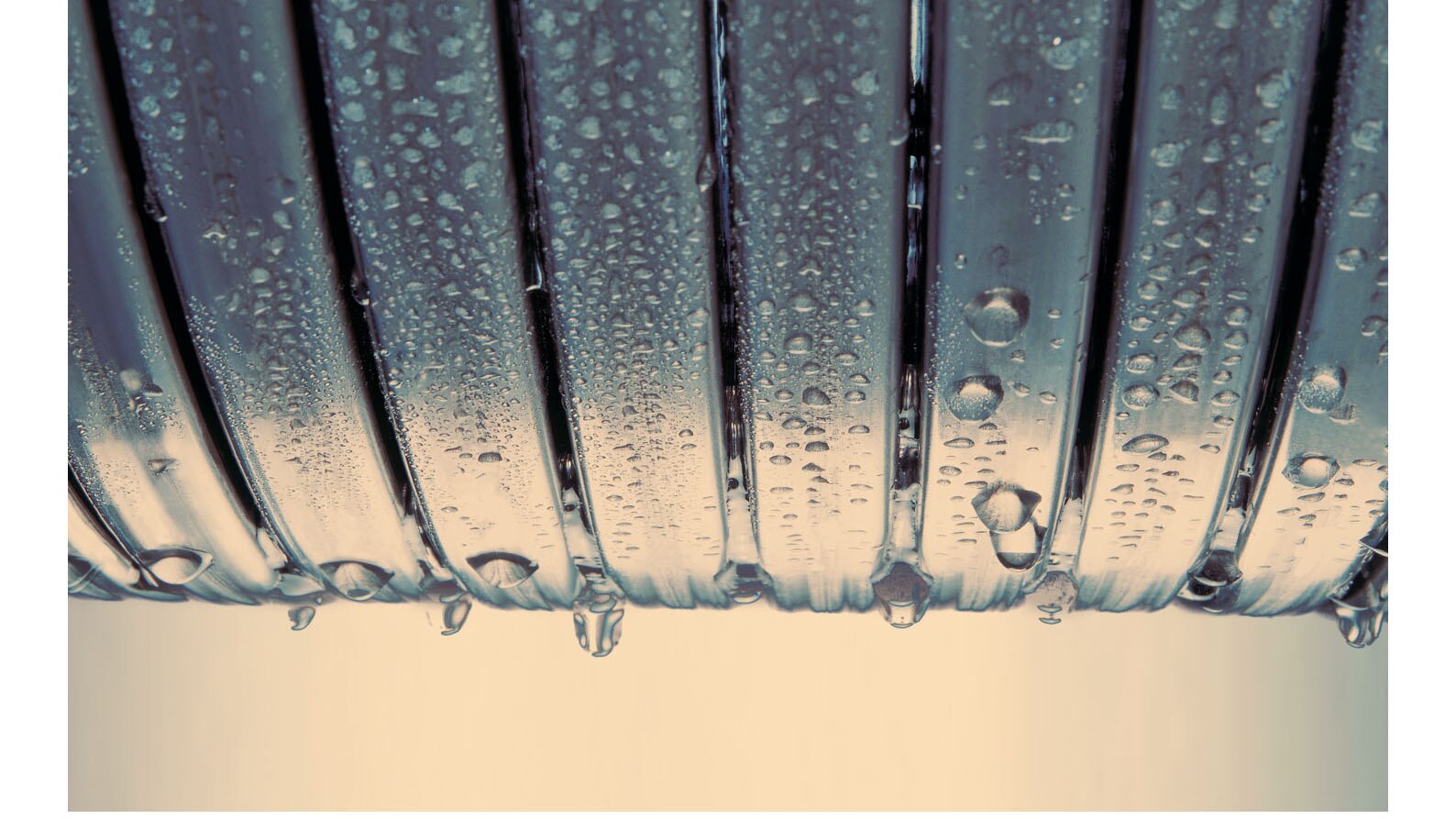
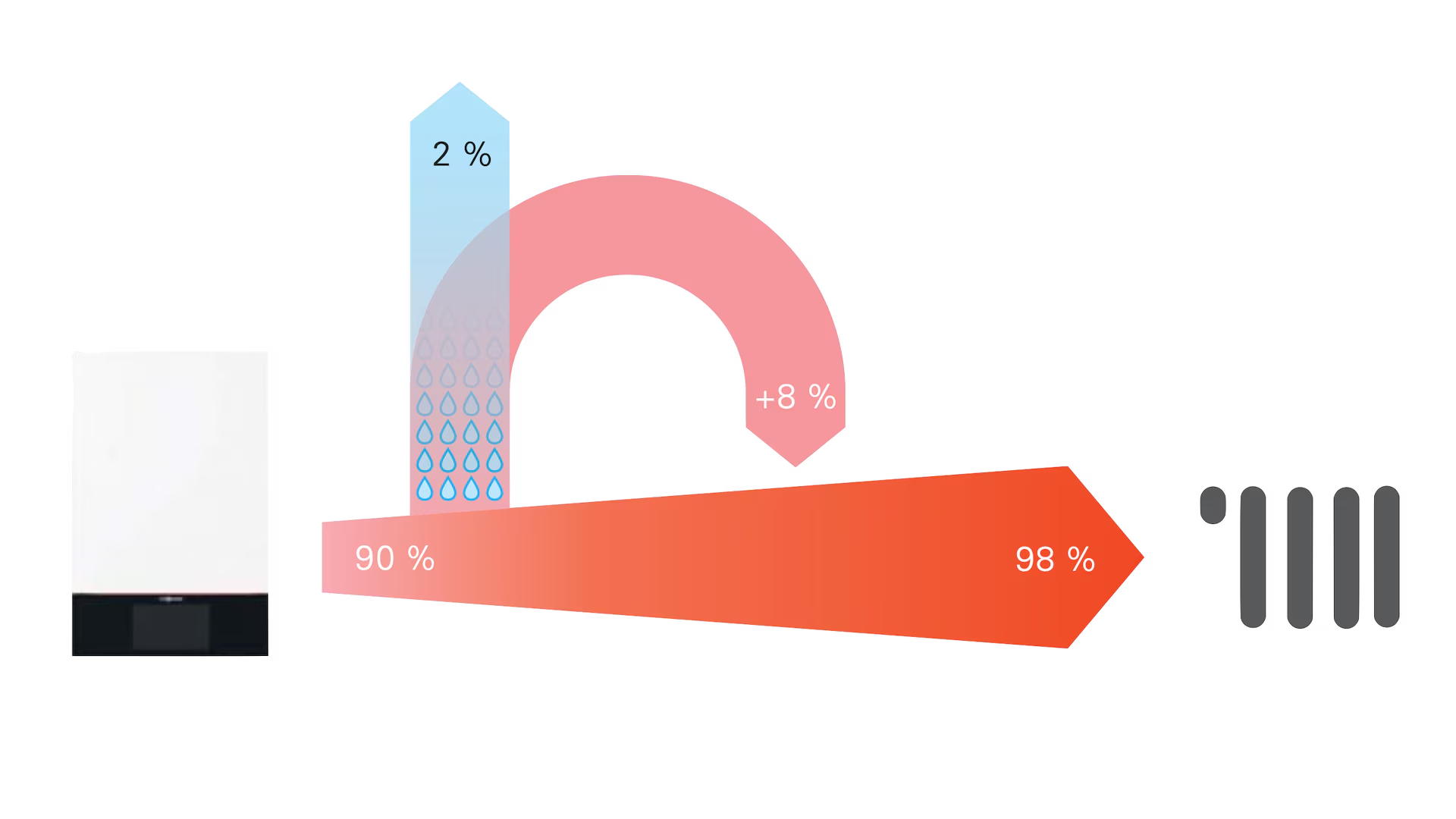
Hot flue gases — specifically hot water vapor — retain enough heat to be used for heating. You can feel this heat in a simple way: if you hold your hand over a pot of boiling water, you’ll eventually have to pull it away. This happens because hot steam rises from the boiling water and condenses on your palm. During condensation, the steam releases its latent heat, also known as heat of condensation.

To improve the energy efficiency of an oil heating system and develop a more resource-saving combustion technology in the long term, it is important to extract this heat in a controlled manner and return it to the heating system, without allowing condensate to damage the system or flue. Therefore, the operating principle of oil condensation technology also includes the deliberate condensation of hot flue gases.

Technology Brochure - Oil Condensation Technology

Heat exchanger as an indispensable component of oil condensation technology

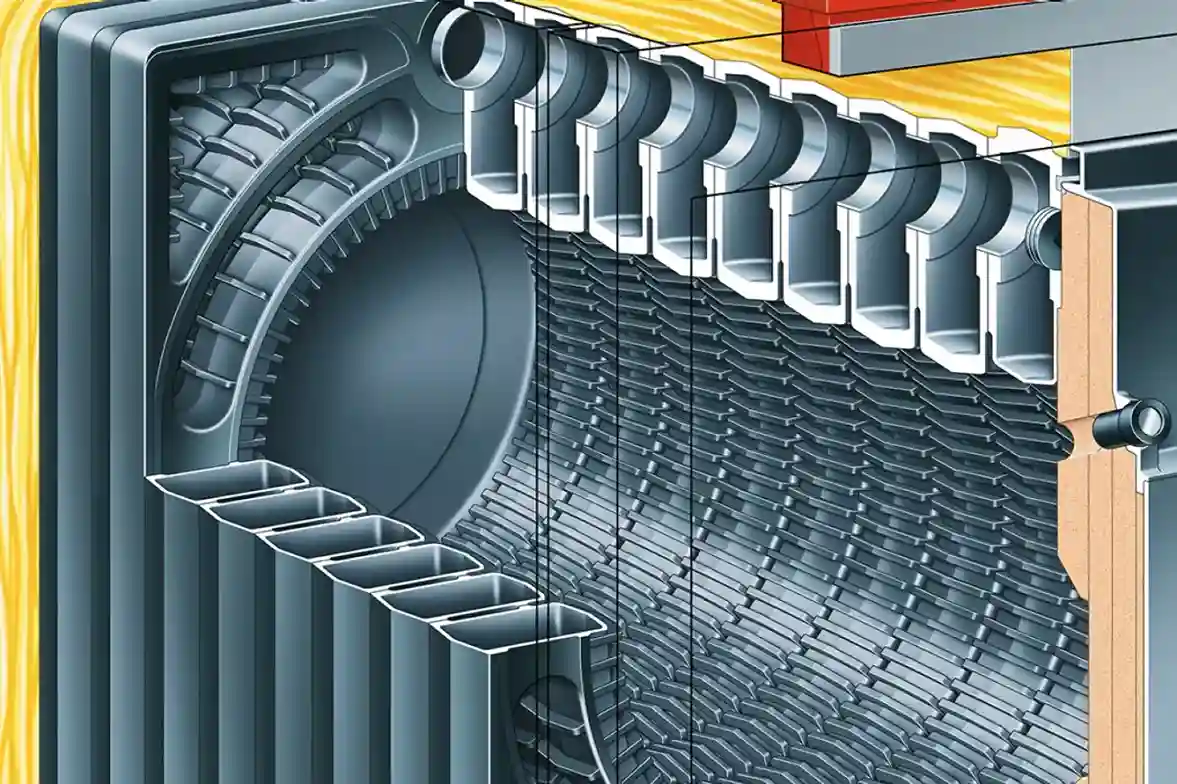
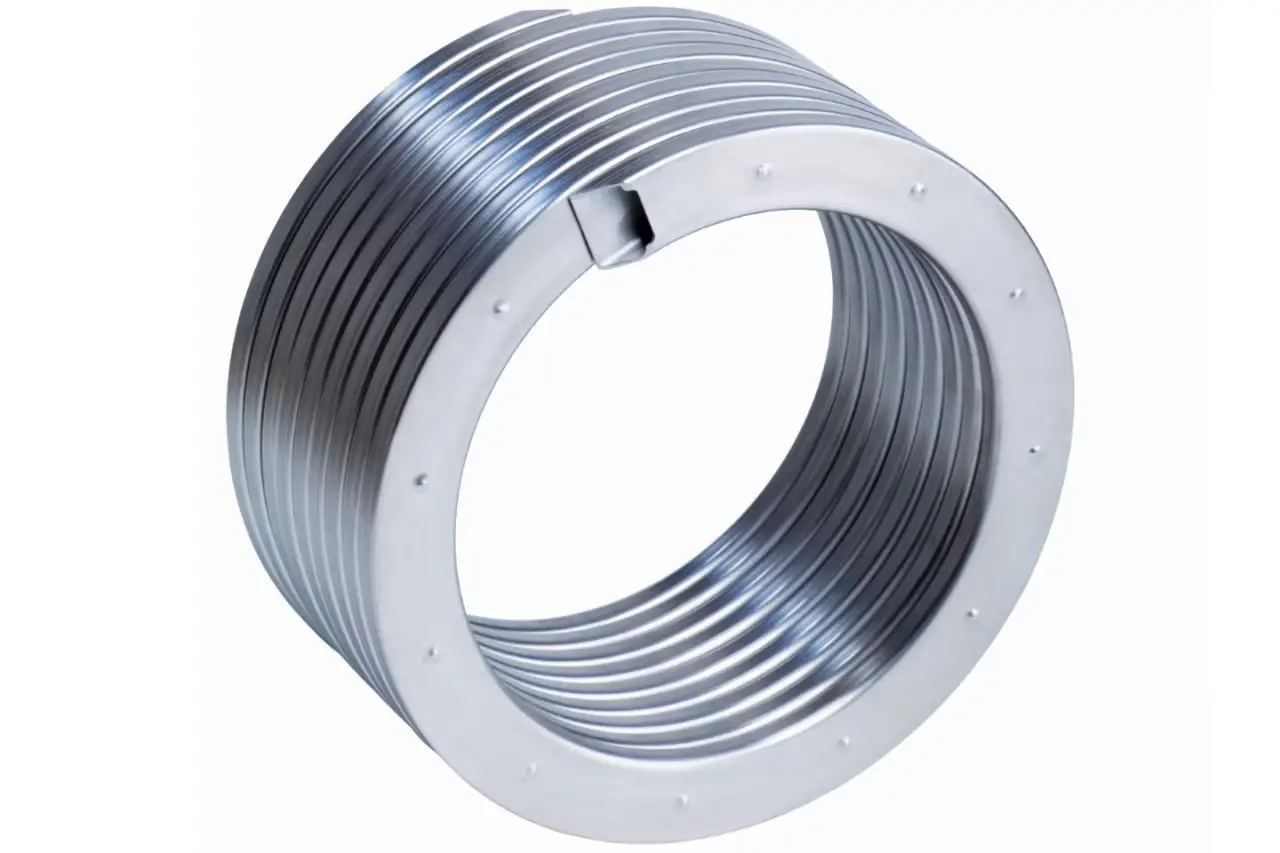
In practice, hot flue gases pass through a heat exchanger and are condensed using cold return water before being released into the open air. Due to the risk of corrosion from certain components in the condensate, the heat exchanger itself must be resistant to acid and moisture. Both properties apply to stainless steel, which is why condensing heat exchangers are made from this material.

They are also distinguished by a very compact design and durability. Viessmann offers a warranty of up to ten years on stainless steel heat exchangers.

Heat exchanger and return flow temperature

Simply put, the stainless steel heat exchanger is the connecting element between the combustion chamber and the radiators. The water passing through the heat exchanger is heated by the heat of the flue gases and pumped into the radiators. Once in the radiators, it heats them and gradually cools down. It then returns to the heat exchanger as “cooled” return water, and the process starts again.

Since oil condensation technology works by condensing flue gases, it is very important that the return water is as cold as possible when it returns. For oil condensing boilers, the dew point temperature is around 49 degrees Celsius. If the return water temperature is above this value, the condensation technology does not work. If it is below this value, the flue gases release their latent heat to the return water, and the oil condensing heating system operates under a lower load since the heating water is already pre-heated. A particularly effective way of cooling the return water is to use zone heating systems, such as underfloor or wall heating.

You can learn more about how oil condensing heating technology works in the video below.

Important information when using oil condensate technology

The intentional condensation of water vapor contained in flue gases results in condensate. Although it contains acidic components, it can generally be discharged into the wastewater system (not into small wastewater treatment plants)—provided the drainage system itself is acid-resistant. The pH value is important here. Water has a pH of around seven, considered neutral. Anything below this value is acidic. The pH of crude oil condensate ranges from 1.5 to 3.5. The calculation basis is provided in the Code of Practice “DWA-A 251” of the German Association for Water, Wastewater and Waste (DWA). It is also recommended to contact the responsible municipal wastewater association.

Other important factors for discharge to regular wastewater include the size of the oil-fired condensing boiler and the type of fuel oil used. Generally, systems using oil-fired condensate technology and having a rated thermal output of less than 200 kW are exempt from neutralization requirements. In some cases, the condensate must be diluted before discharge. Those using standard fuel oil must always neutralize the condensate before discharge.

Image

Expert consultation on oil condensation technology

Get a free, personalized consultation on our oil condensing boilers from our qualified partners!

Read more →

The requirements of the German Association for Water, Wastewater and Waste (DWA) in brief

Nominal thermal power Mandatory neutralization for combustion systems (low sulfur fuel oil) Mandatory neutralization for combustion systems (standard fuel oil) Restrictions
< 25 kW No 1) 2) Yes 1) When discharging domestic wastewater into small sewage treatment plants
From 25 to 200 kW No 1) 2) 3) Yes 2) For buildings and properties with drainage lines that do not meet the material requirements of ATV Code of Practice A 251
> 200 kW Yes Yes 3) For buildings that do not meet the conditions for sufficient mixing in accordance with ATV Code of Practice A 251

The chimney must also be suitable for oil condensing equipment.

Not only must the drainage system be designed to handle the condensing boiler, but it’s also crucial to ensure that the flue system cannot be damaged by condensate. Furthermore, it must be able to withstand a certain amount of excess pressure without leaking. This is necessary because a fan is required during operation, actively blowing out cooled flue gases. Flue pipes made of stainless steel or special plastic have proven themselves time-tested.

You can also find more detailed information on oil condensing technology in the Oil Heating Guide at heizung.de .

Combination of oil condensing technology and solar thermal system

Viessmann solar thermal collectors

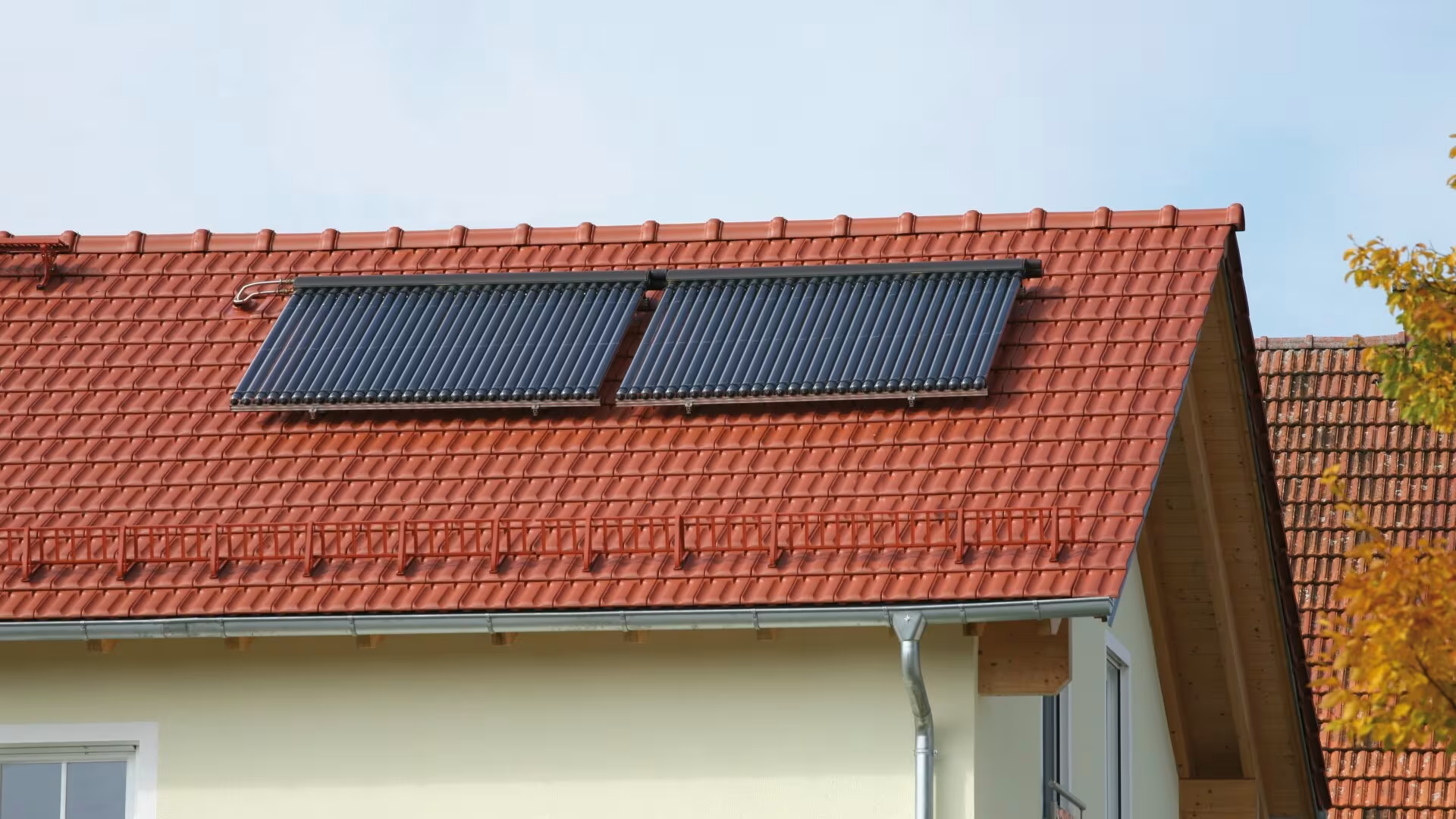
Another argument in favor of oil condensing technology is the variety of its combinations. Combining it with solar technology makes sense from both an economic and environmental perspective. Free solar energy is still underutilized for backup central heating and hot water heating. When upgrading, homeowners should consider combining a new heating system or boiler with a solar thermal system.

With solar technology, solar energy can be used for backup central heating or hot water heating. This is very cost-effective, as it means that on some days, the oil-fired condensing boiler does not need to be used at all. Because less oil is burned, system owners also reduce their environmental impact and thus actively contribute to climate protection. Last but not least, this combination makes them slightly less dependent on the fuel supplier.

Contrary to popular belief, a hybrid heating system combining oil condensing technology and solar thermal energy can be used in both old and new buildings. By taking several factors into account, it can meet the requirements of the German Energy Savings Act (GEG).

Other Viessmann guides and tips

Condensation technology

Condensation technology

Read more
Oil Heating: Efficient Heating and Modernization

Oil Heating: Efficient Heating and Modernization

Read more
Low-temperature gas boilers

Low-temperature gas boilers

Read more