MENU

Heating Lexicon – Technical Terms Clear and Simple

Our heating equipment dictionary contains information and explanations of heating equipment terms, as well as technical terms specific to Viessmann.

Flue gas losses

The energy released by burning oil or gas in a boiler cannot be supplied to the heating system without losses. Hot flue gases, which escape into the atmosphere through the chimney, contain a relatively large amount of heat, known as “flue gas losses.”

During annual emissions testing, flue gas inspectors determine whether combustion quality and flue gas losses during burner operation comply with legal standards. They check the burner’s proper operation and the system’s safety. Even if they award the boiler an excellent rating, this says little about the boiler’s actual energy consumption (its standard seasonal efficiency), as this is also significantly affected by surface losses.

Absorber

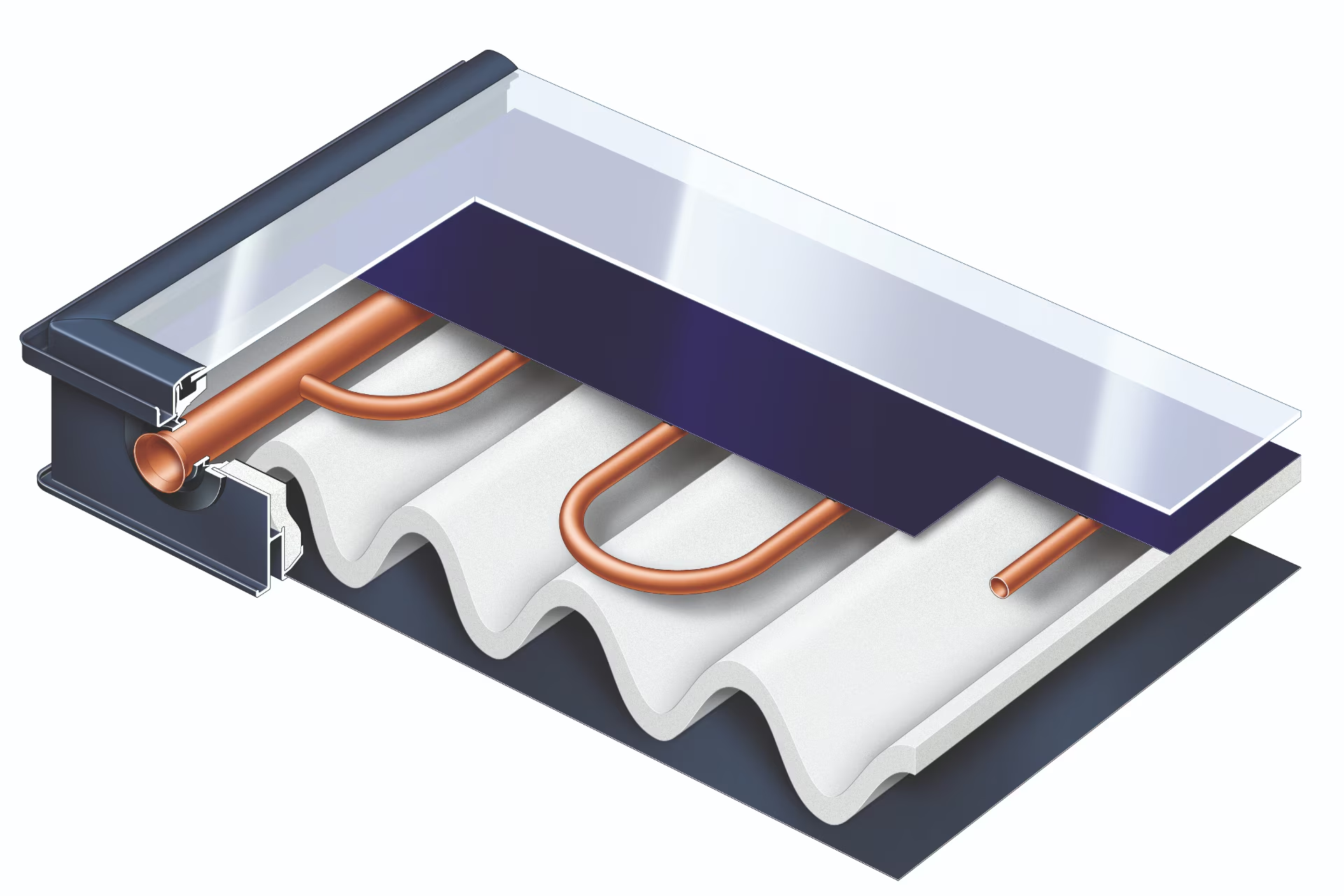
Absorbers are an integral part of every solar collector. They are located under the collector’s transparent, low-reflectance glass cover, allowing solar radiation to fall directly on them.

The absorber absorbs almost all solar radiation, converting the solar energy into heat. Absorbers with a highly selective coating, such as all Viessmann solar collectors, are particularly efficient.

Combined heat and power plant (CHP)

A combined heat and power (CHP) plant consists primarily of an engine, a synchronous generator, and a heat exchanger. The synchronous generator, driven by an internal combustion engine (drive unit), produces three-phase alternating current with a frequency of 50 Hz and a voltage of 400 V, which is typically used on-site.

A low-voltage grid (0.4 kV) is used for electrical connection. Cogeneration units typically operate in parallel with the grid. However, in principle, they can also be used in grid replacement mode by installing synchronous generators.

Excess power can be exported to the power grid. The engine generates heat, which can be absorbed in the “internal cooling circuit” from the lubricating oil, engine coolant, and exhaust gases and transferred to the heating system via a plate heat exchanger.

This system of generating and using energy is called combined heat and power (CHP) because the mechanical energy (power) generated by the engine and the thermal energy (heat) released by the engine when the generator is running are used simultaneously.

Schematic diagram

A gas-fired internal combustion engine drives a generator to generate electricity. The heat generated is removed from the coolant and exhaust gases through a heat exchanger and can then be used.

Dual-mode DHW heating

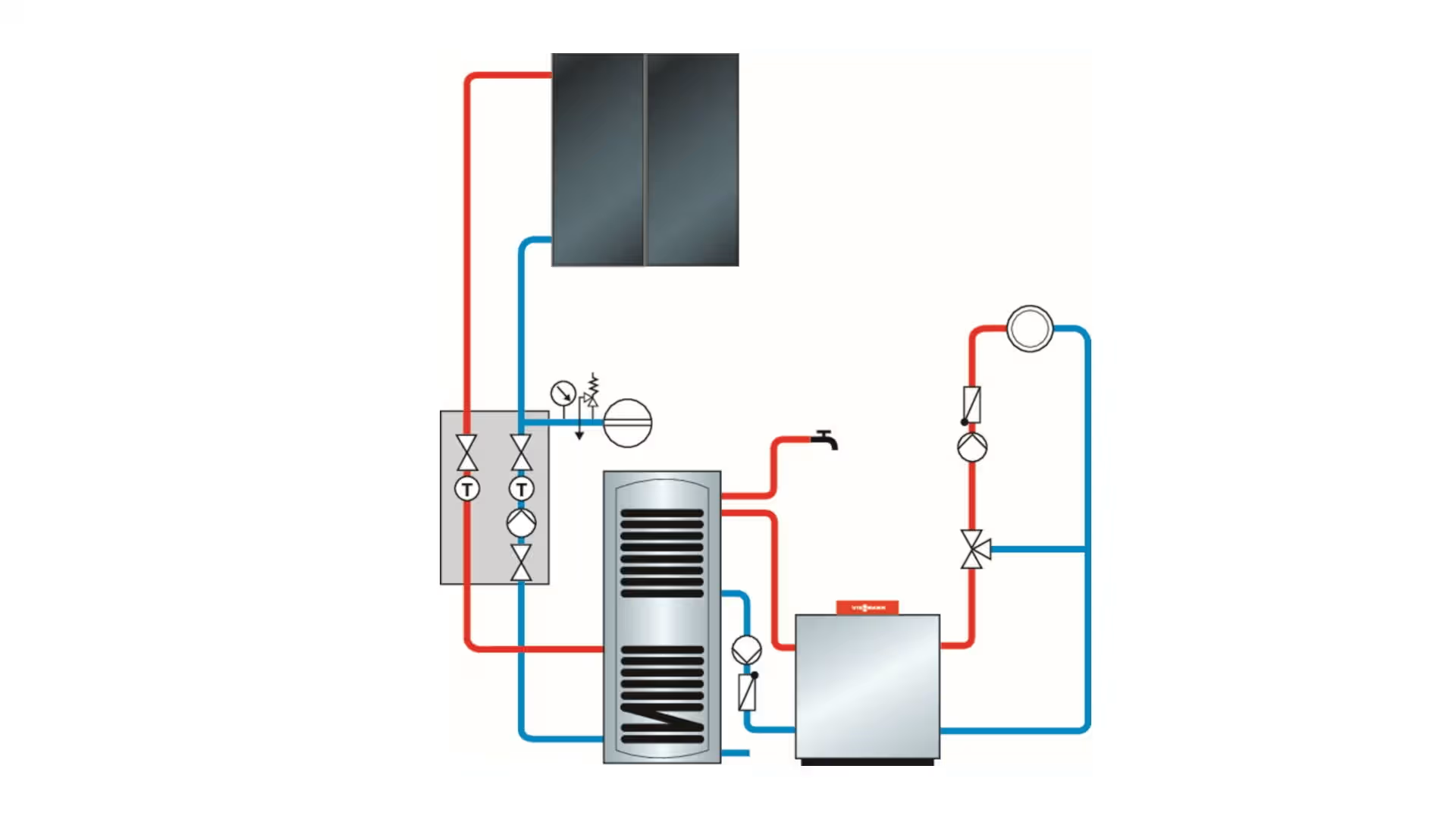
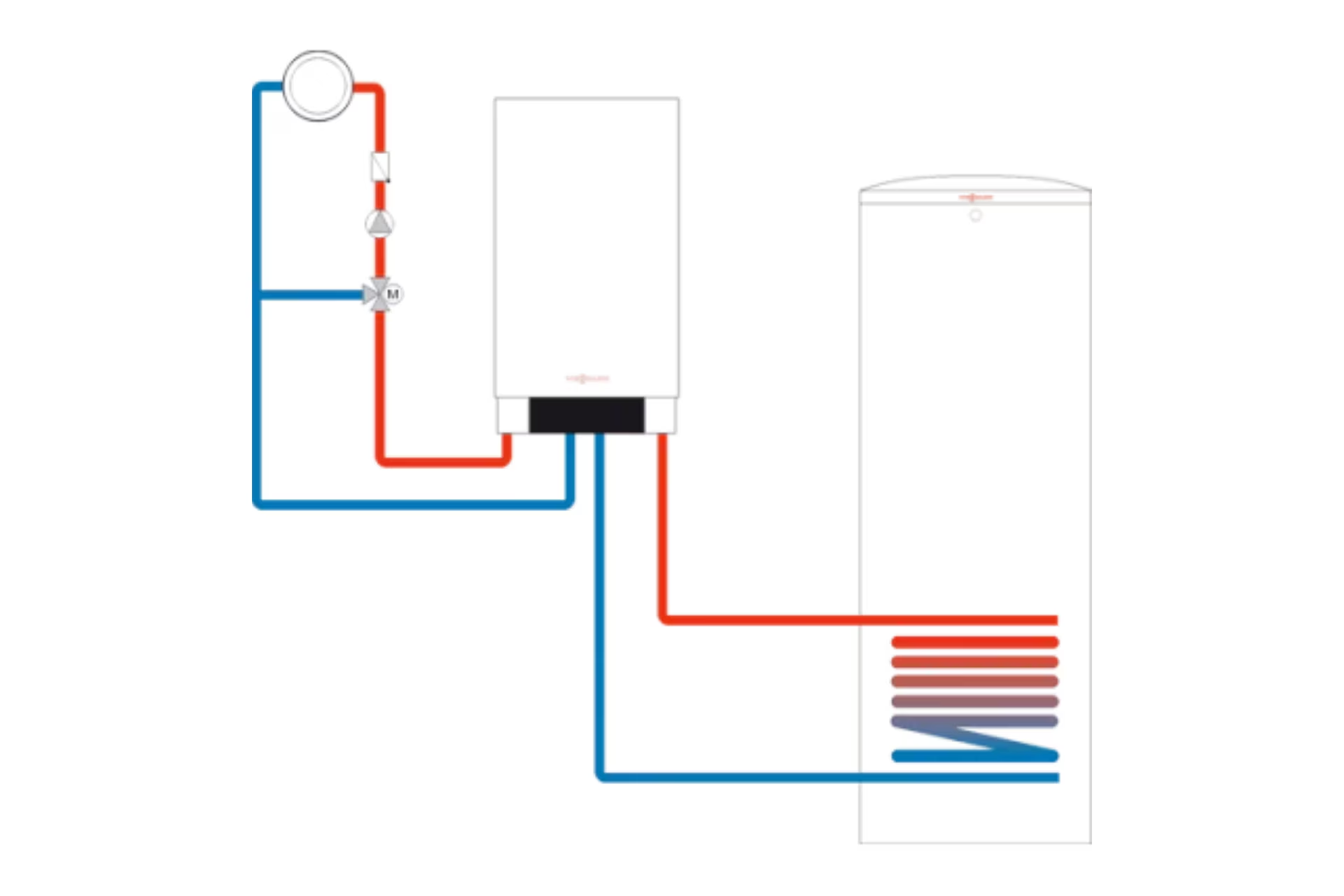
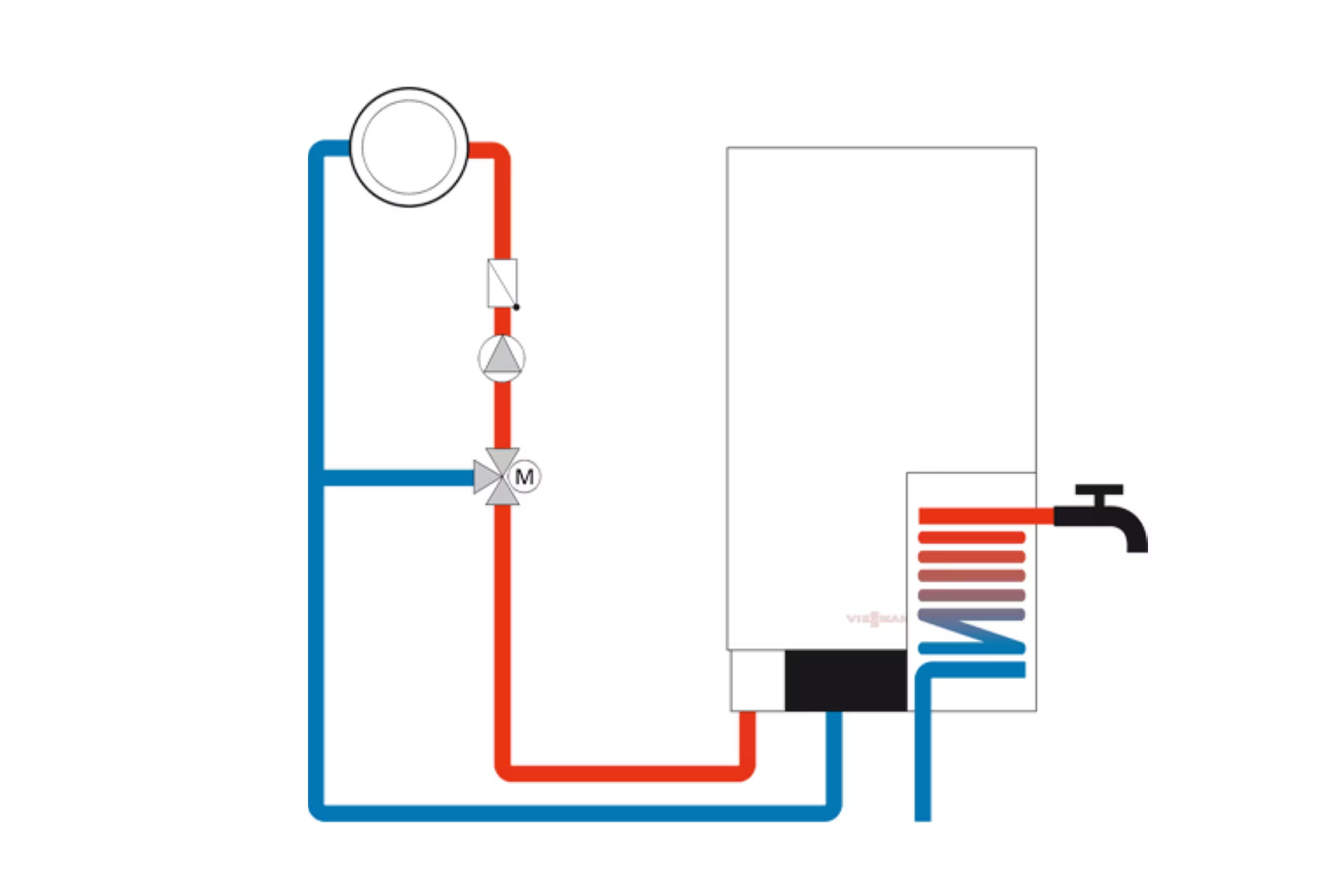
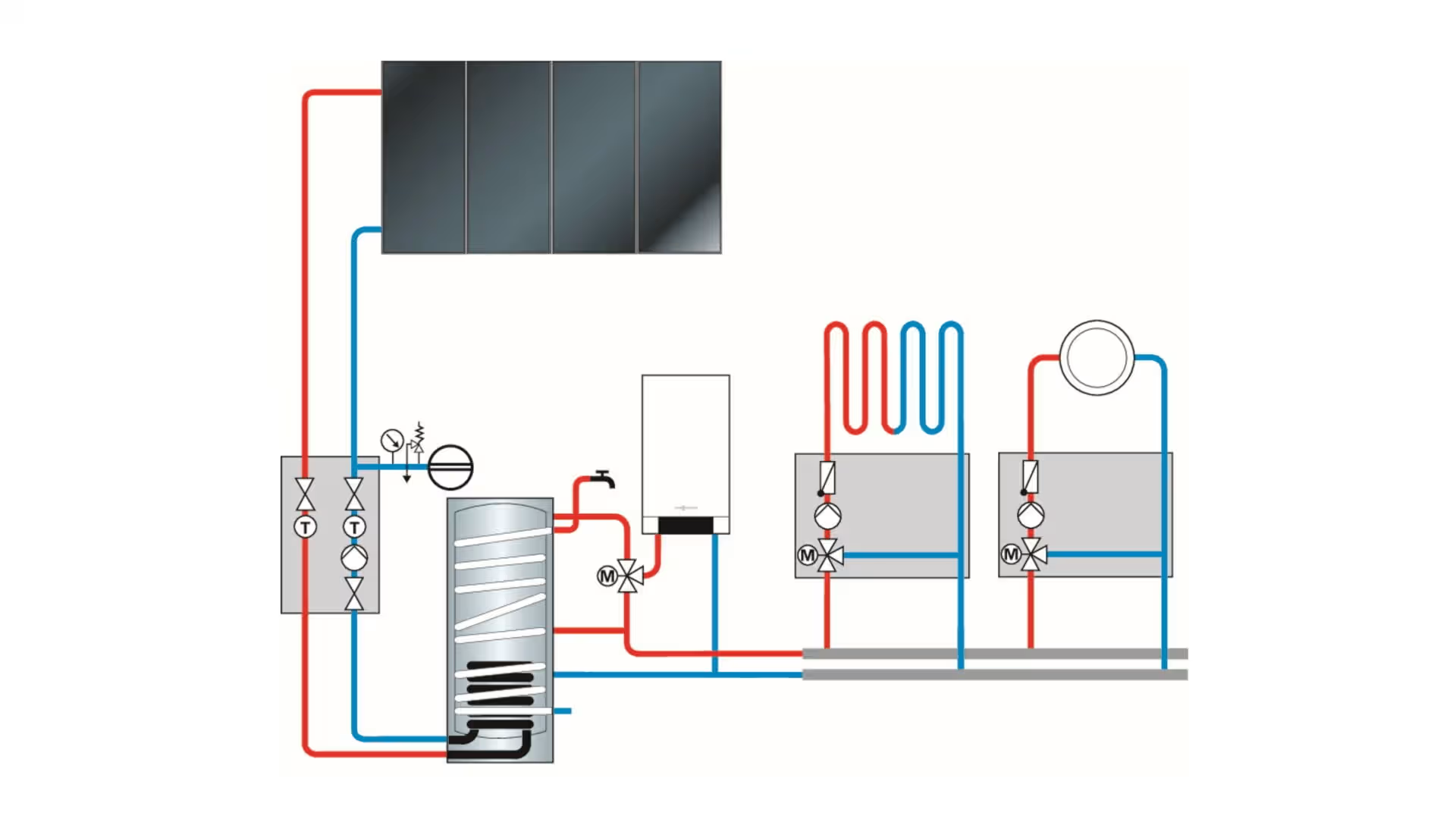
With dual-mode DHW heating, domestic hot water is heated by two different heat generators—for example, a boiler and solar collectors. Heat from the solar collectors is transferred to the DHW system through an indirect coil in the DHW cylinder. If necessary, the water can be heated by a boiler through a second indirect coil.

Fuel cell technology

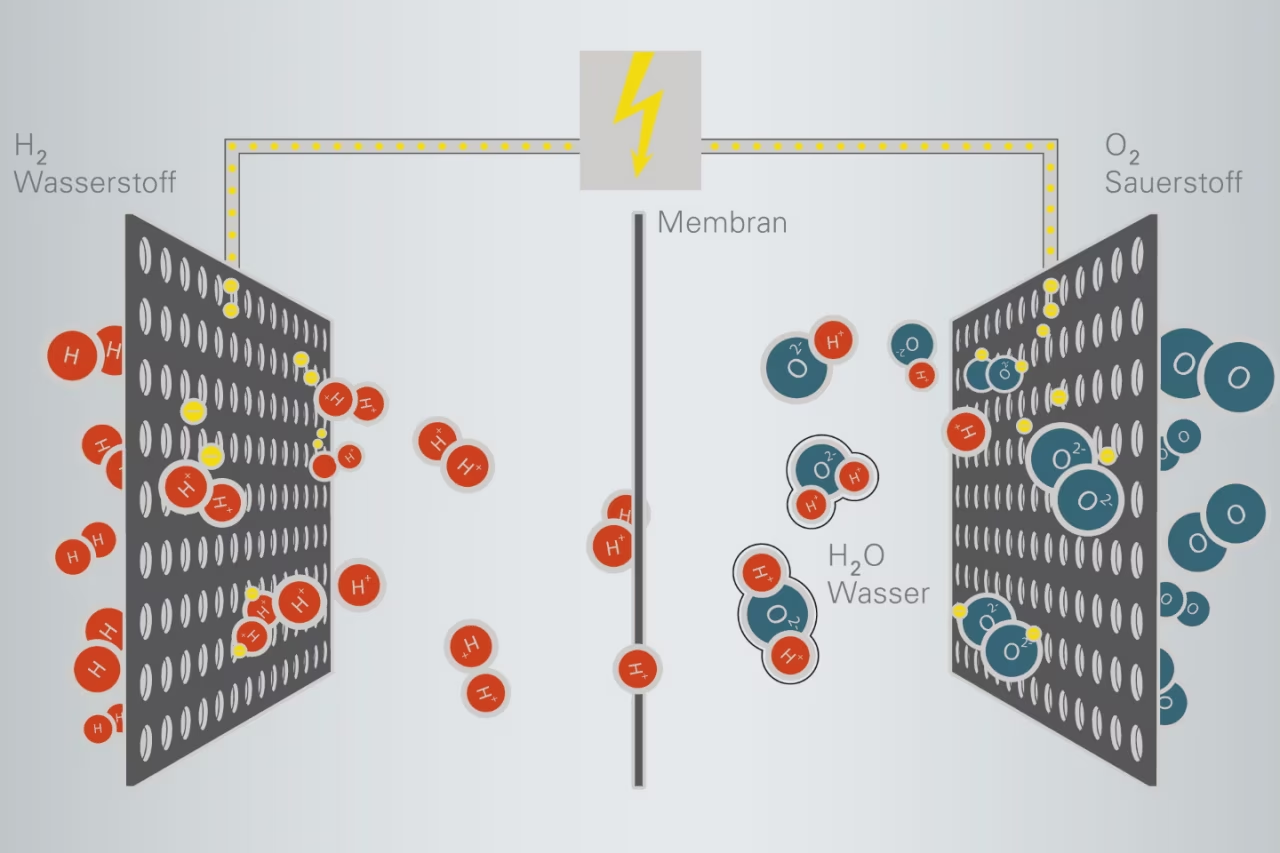
Hydrogen (H) and oxygen (O) react to form water (H2O); the membrane is visible in the center of the illustration.

Hydrogen and oxygen are all that is needed to generate heat and energy. The chemical reaction between these two substances is the basis of what is sometimes called “cold combustion.” It occurs between two electrodes: Hydrogen is fed to the anode, where a catalyst splits it into positive ions and negative electrons. The electrons travel to the cathode through an electrical conductor, generating an electric current. Meanwhile, positively charged hydrogen ions reach the cathode through an electrolyte (ion-exchange membrane), where they react with oxygen to form water. This releases heat. The entire process is completely pollutant-free and environmentally friendly.

Gross calorific value (Hs)

The gross calorific value (Hs) determines the amount of heat released during complete combustion, including the heat of vaporization latent in the water vapor of the hot gases.

Until recently, the heat of vaporization could not be utilized due to the lack of technical capabilities. Therefore, the net heating value (Hi) was chosen as the basis for all efficiency calculations. Therefore, using Hi and additional heat of vaporization can lead to efficiencies exceeding 100%.

Condensation technology

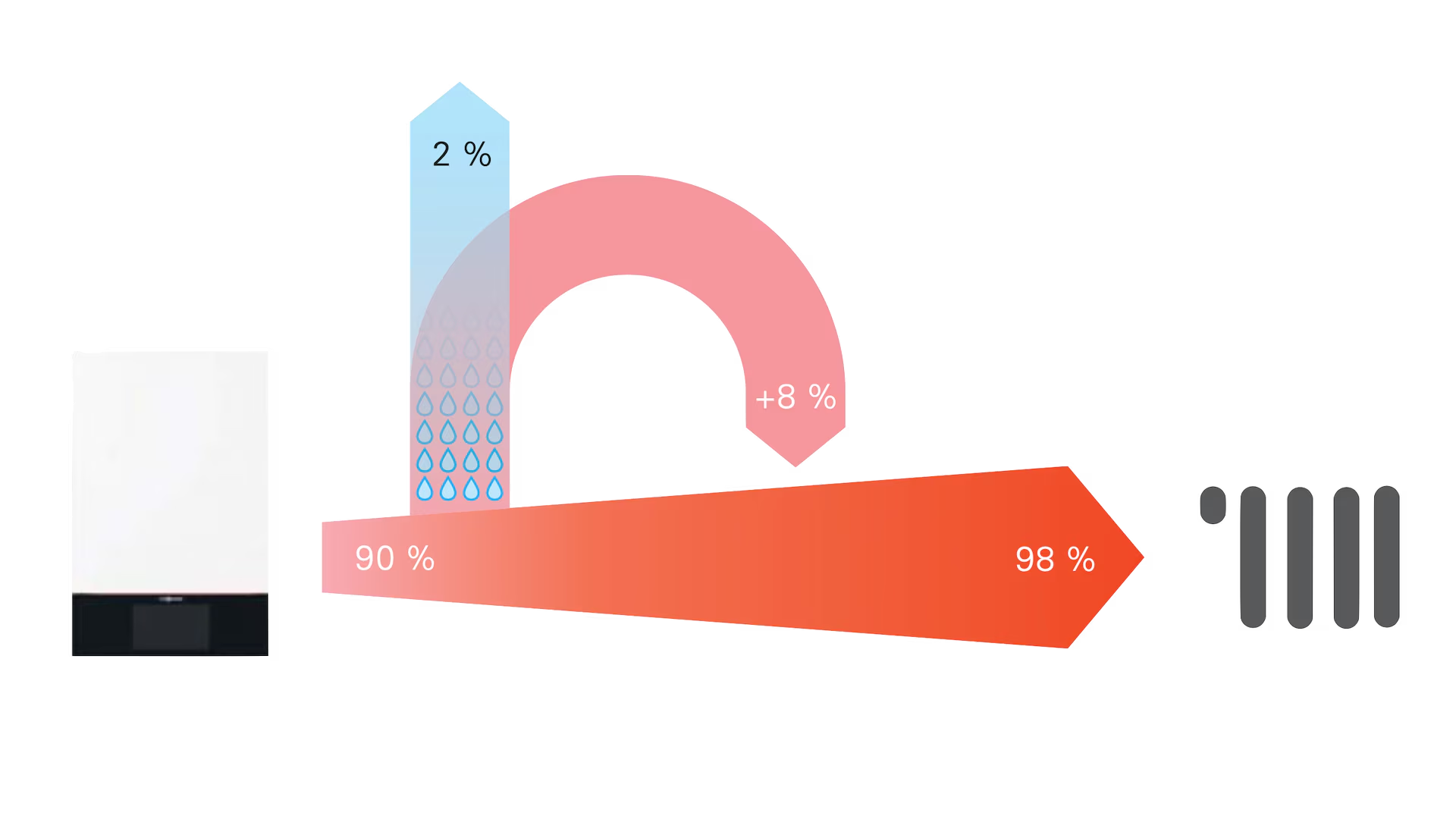
Condensing technology utilizes not only the heat released during combustion, measured as the hot gas temperature (net calorific value), but also the water vapor content (gross calorific value). Condensing boilers are capable of extracting almost all the heat contained in the flue gases and converting it into thermal energy.

Condensing boilers use highly efficient heat exchangers. They cool the flue gases before they exit through the chimney to such an extent that the water vapor contained in them condenses completely. This releases additional heat, which is transferred to the heating system.

Thanks to this technology, the condensing boiler achieves a standard seasonal efficiency [according to DIN] of up to 98% (relative to Hs). This makes condensing boilers particularly energy-efficient and kind to both your wallet and the environment.

Three-pass boiler

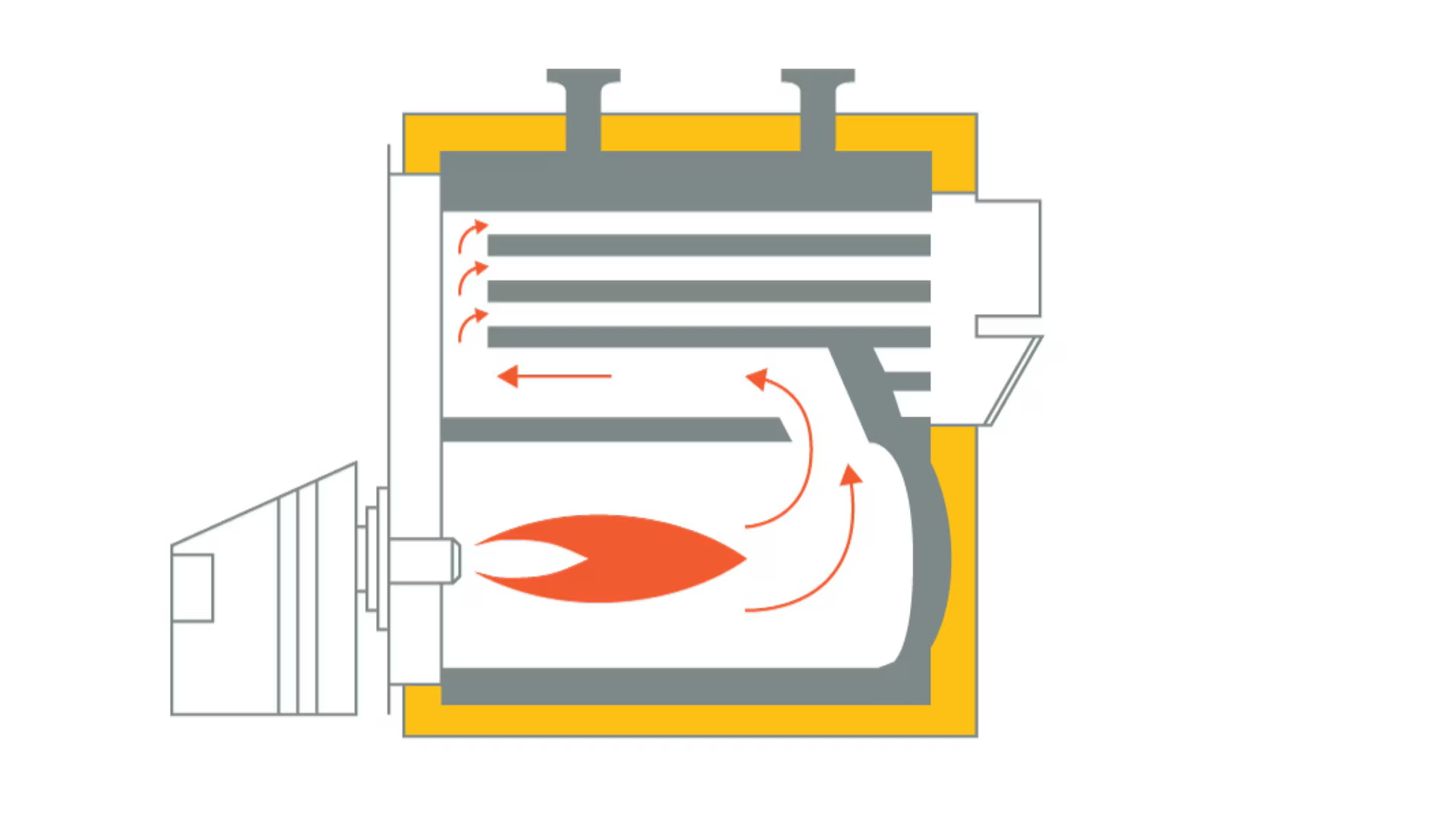
The three-pass boiler design reduces harmful emissions. Hot gases first pass through the combustion chamber, then return through the reversing zone and enter the third pass. This reduces the residence time of combustion products in the hottest part of the boiler, reducing the formation of nitrogen oxide (NOx).

Ice storage system

Innovative energy source for brine/water heat pumps

In new buildings today, every third heat generator is a heat pump, and this trend is growing. Heat for heating is extracted from the surrounding air, soil, or groundwater.

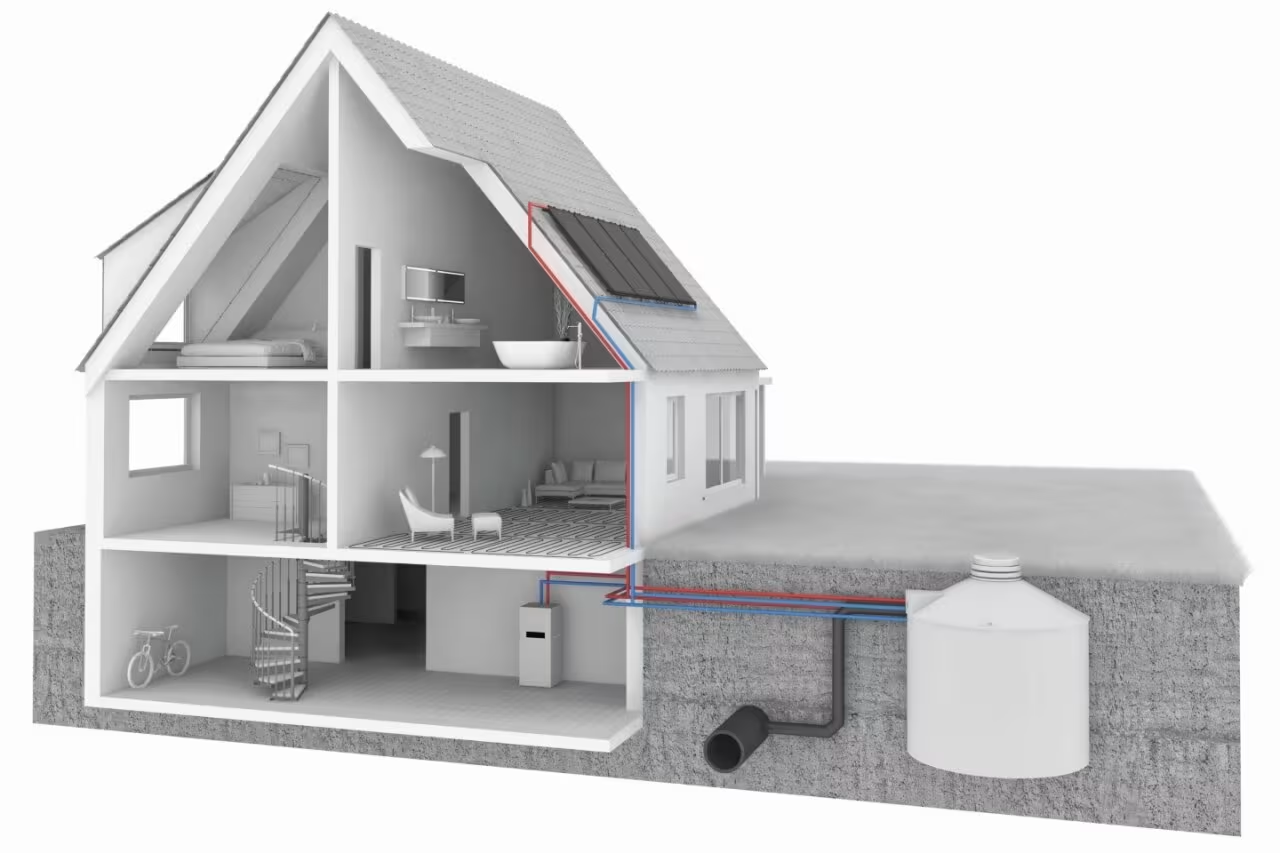
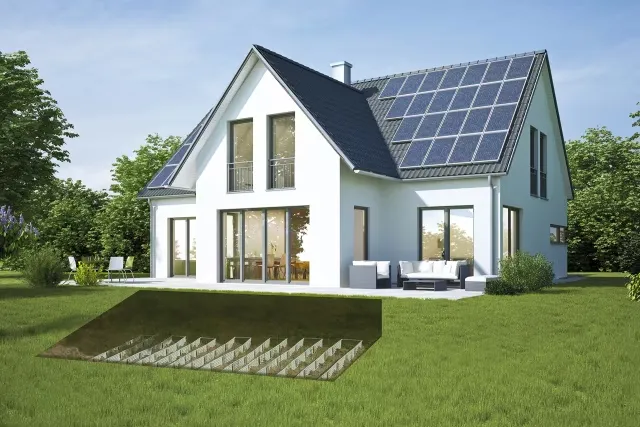
The Viessmann ice storage system offers an attractive additional heat source for brine/water heat pumps. The ice storage system consists of a tank with integrated heat exchangers, which is buried in the garden and filled with regular tap water. Special solar air absorbers are installed on the roof of the house. They capture heat from the surrounding air and solar radiation and transfer it to the ice storage system. The ice storage also draws energy directly from the ground.


Ice heating – additional energy

When needed, the heat pump extracts energy from the storage tank for heating and hot water production, cooling or possibly freezing the water in the process. Even when the storage tank is frozen, the heat supplied by the solar/air absorbers and the ground is sufficient for the heat pump to safely and economically heat the building. Energy from the sun, ambient air, and geothermal heat are used to re-thaw the storage tank.

Emissions

Every fossil fuel combustion process, along with the inevitable carbon dioxide (CO₂), produces harmful gases—carbon monoxide (CO) and nitrogen oxide (NOx). Nitrogen oxides are particularly important here. Increased levels of these gases not only lead to increased levels of toxic ozone but are also a factor in acid rain.

The working principle of a heat pipe

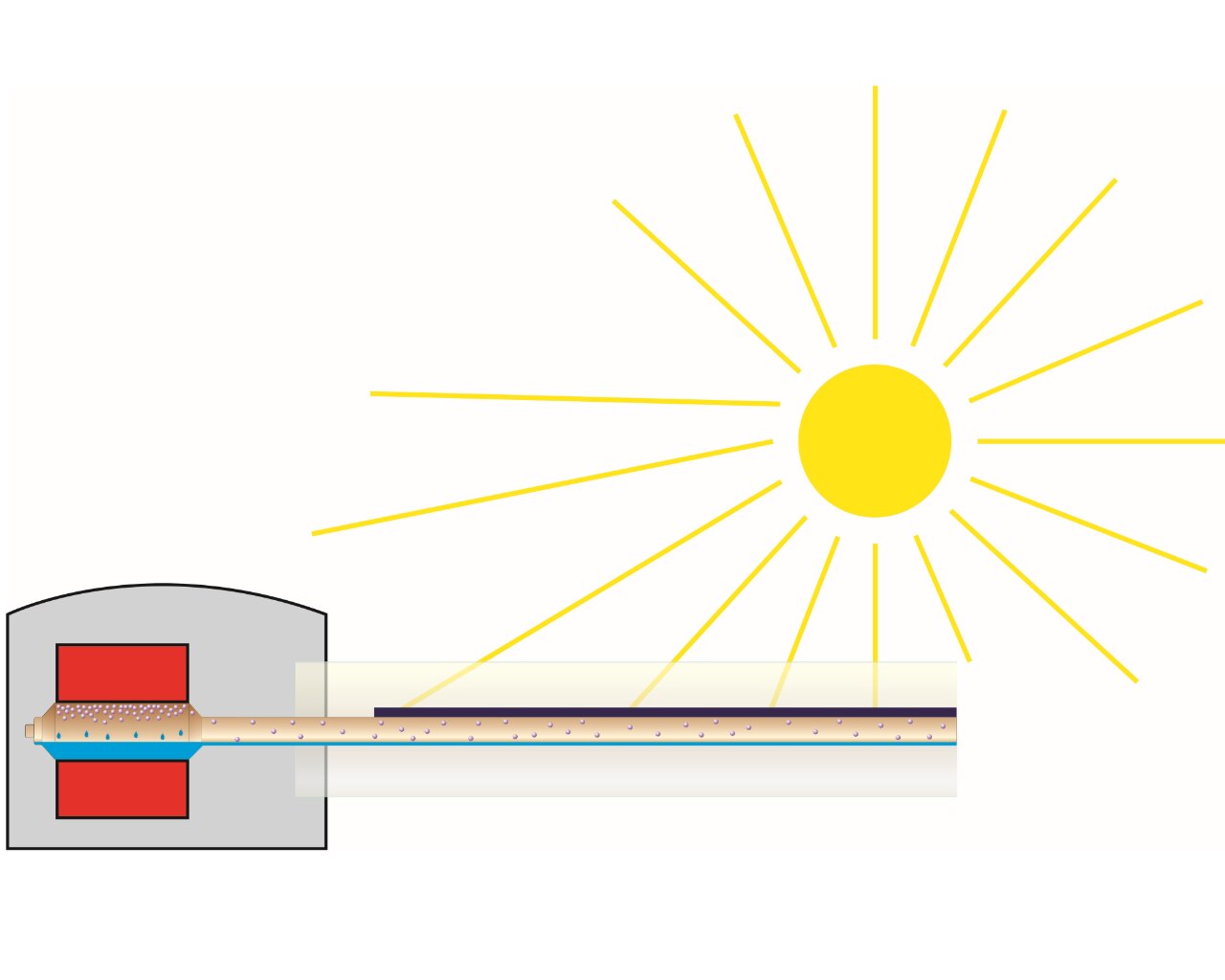
The solar-heated medium evaporates and moves to the cooler section of the pipe. There, the steam condenses, transfers heat to the collector, and the water is heated again in a new cycle.

In heat pipe systems, the solar medium does not flow directly through the pipes. Instead, the process fluid evaporates in a heat pipe beneath the absorber, transferring heat to the solar medium. The dry connection of the heat pipe tubes inside the collector, the small amount of liquid inside the collector, and the automatic temperature-dependent shutdown of the Vitosol 300-T ensure particularly high operational reliability.

System boiler

A system boiler is a wall-mounted appliance designed exclusively for heating. Such appliances can also be combined with a DHW cylinder to provide hot water heating.

Heating curve

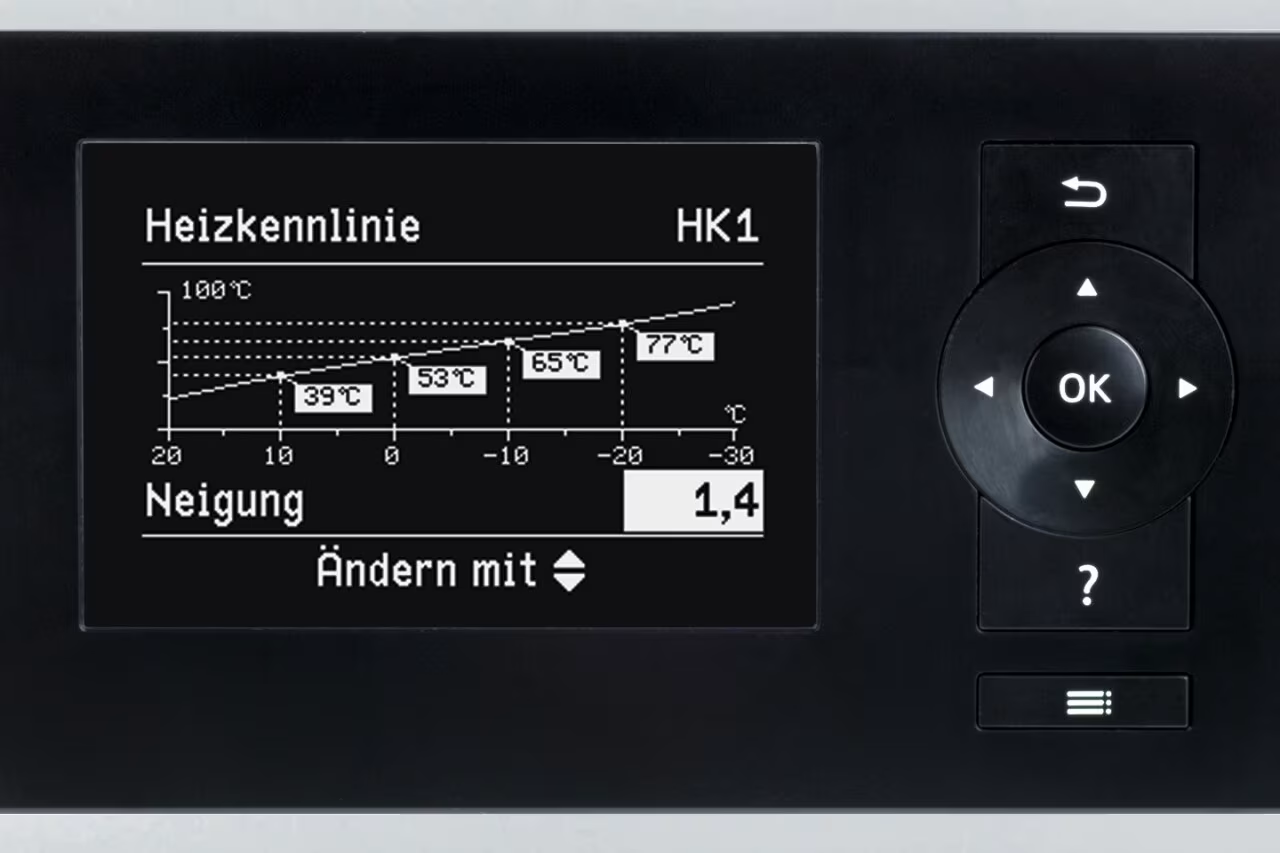
A weather compensated heating controller ensures that the flow temperature matches the actual heat demand (flow temperature is the temperature of the water supplied to the radiator or underfloor heating system).

To do this, the outside temperature is measured and the flow temperature is calculated depending on the required room temperature and the conditions at the periphery of the building.

The relationship between outside temperature and flow temperature is described by heating curves . Simply put: The lower the outside temperature, the higher the boiler water temperature or flow temperature.

Net heating value (Hi)

Net heating value (Hi) refers to the amount of heat released during complete combustion of a fuel, assuming the resulting water is released as steam. The heat of vaporization latent in the water vapor of hot gases is not utilized.

Hybrid device

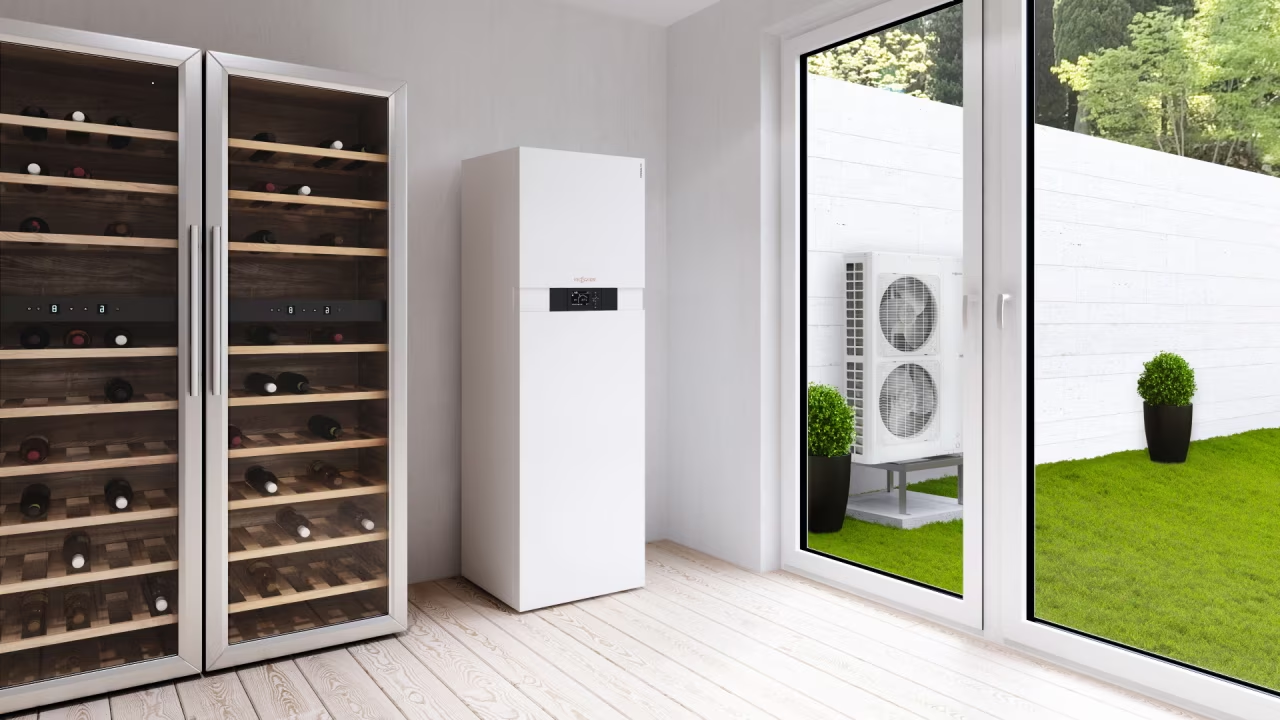
A hybrid system is one powered by multiple energy sources. Such systems include, for example, dual-mode heat pump systems. These are heating systems with an electrically driven heat pump combined with at least one fossil fuel boiler and a higher-power control unit.

During operation, the heat pump covers the base load, utilizing a large portion of the ambient free energy. To achieve this, the outdoor unit extracts latent heat from the outside air and, using a compressor, heats it to a flow temperature of up to 55°C.

A gas condensing boiler is only “switched on” when it is advantageous for the intended operating mode, i.e. when it results in lower operating costs for the system user, lower CO₂ emissions or increased hot water convenience.

Inox-Radial heat exchanger

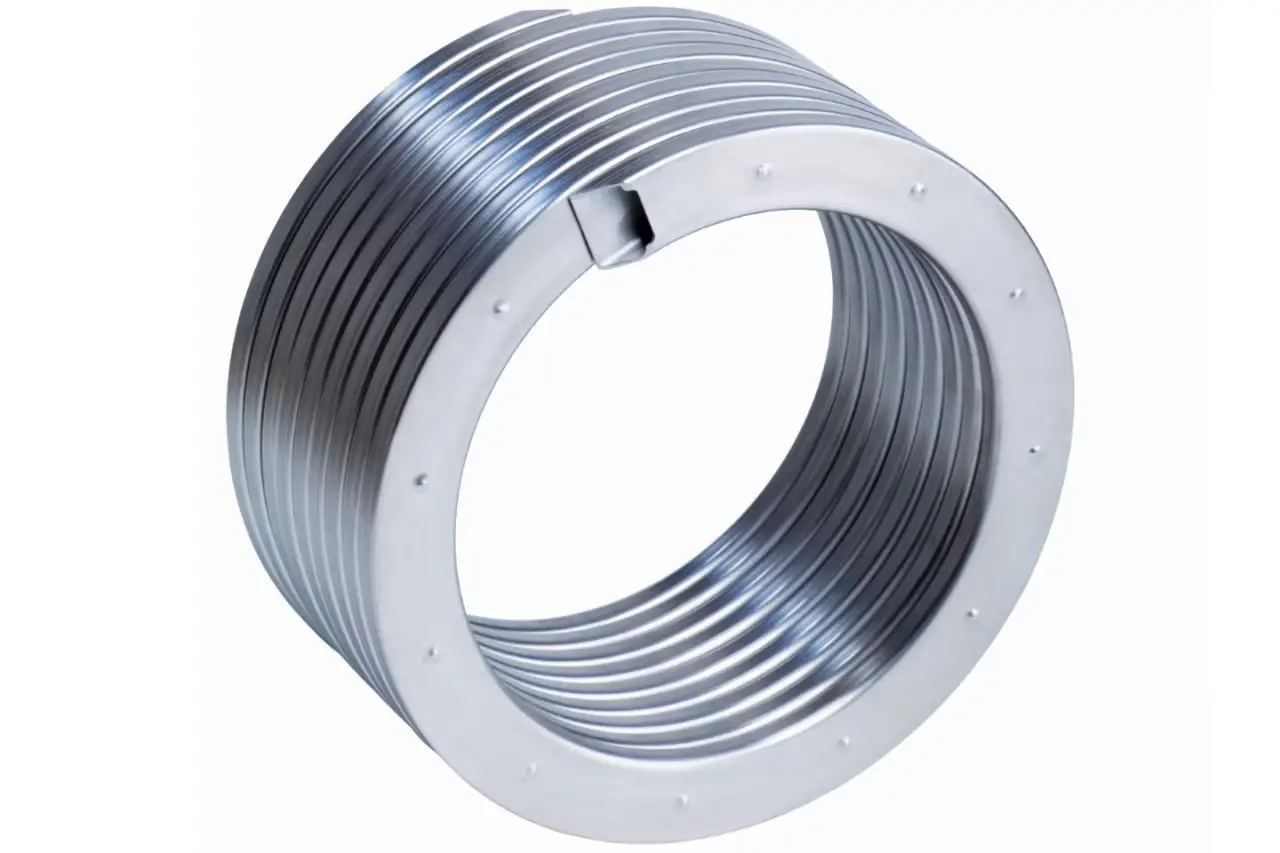
All Viessmann wall-mounted and compact condensing units are now equipped with an Inox-Radial stainless steel heat exchanger. This technology ensures extremely high efficiency of up to 98 percent [according to DIN] and exceptionally reliable and efficient operation over a long service life.

The Inox-Radial heat exchanger cools flue gases before they enter the chimney to such an extent that the water vapor contained in them condenses completely. The additional heat generated during this process is transferred to the heating system. This feature not only saves valuable energy but also protects the environment by significantly reducing CO₂ emissions.

Seasonal Performance Factor (SPF)Seasonal Performance Factor (SPF)

In heat pumps, the coefficient of performance (COP) is the ratio of heat transfer to power input. The seasonal coefficient of performance is the average of all efficiencies encountered throughout the year. The COP is used to compare heat pumps in terms of efficiency, but it is derived from a specific operating point under specific temperature conditions.

When designing a system, its operation throughout the year must be taken into account. To do this, the amount of heat transferred per year is determined relative to the total electrical power consumed by the heat pump system (including the power of pumps, control units, etc.) over the same period. The result is expressed as a seasonal performance factor. For example, an SPF of 4.5 means that, on average, over the entire year, the heat pump required one kilowatt-hour of electrical energy to generate 4.5 kilowatt-hours of heat.

Combination boiler

A combination boiler is a wall-mounted appliance used for both central heating and hot water heating. Hot water is heated using the instantaneous hot water principle.

Lambda Pro Management

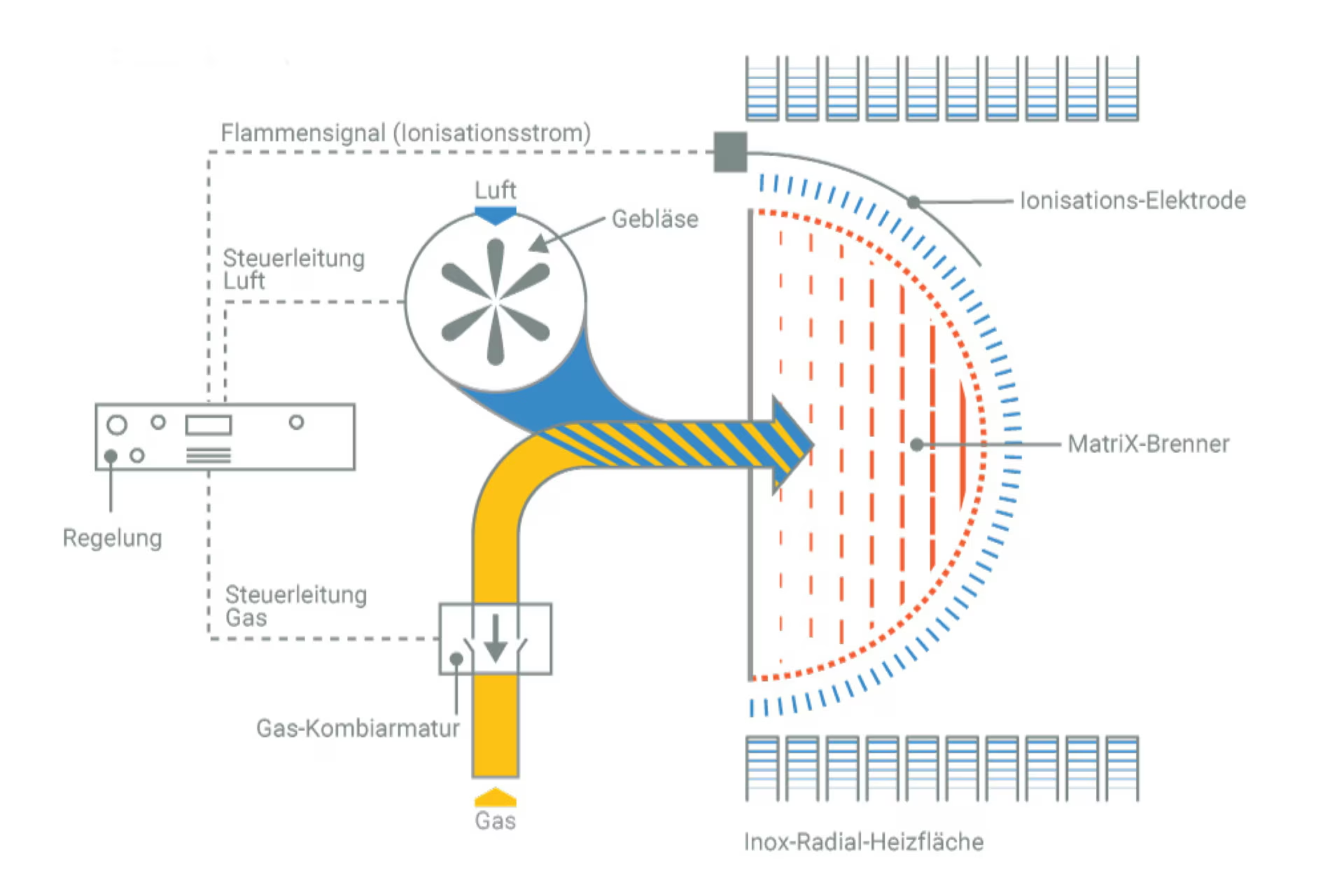
The Lambda Pro Control combustion controller in Vitodens wall-mounted gas condensing boilers ensures consistently stable and environmentally responsible combustion, consistently high efficiency and high operational reliability, even with fluctuating gas quality.

The Lambda Pro Control combustion controller automatically recognizes each gas type used. This eliminates the need for manual settings and measurements during commissioning. Furthermore, the Lambda Pro Control continuously manages the gas-air mixture to ensure consistent clean and efficient combustion, even with fluctuating gas quality. The ionization electrode provides the necessary input data directly from the flame.

Micro-CHP

Decentralized heat and power supply is becoming increasingly important. Viessmann offers solutions that can help mitigate the instability of renewable energy supplies. Wind farms and photovoltaic systems have been built in large numbers to replace nuclear power plants and traditional large-scale power plants.

However, because the availability of these renewable energy sources fluctuates and therefore cannot be planned, dispatchable combined heat and power (CHP) plants have become important components in advancing toward a successful energy transition. This development is driven by the policy goal of increasing the share of electricity generated by CHP plants to 25 percent by 2020.

Decentralized power generation

Where there is a shortage of unstable electricity generation, micro-CHP plants can make a significant contribution to meeting demand. Because they operate locally and the energy is generated on-site, they also reduce the load on the power grid. Generating your own electricity using cogeneration units is now a viable alternative to grid power. When combined with energy storage, it can provide an autonomous power supply, especially with micro-CHP plants.

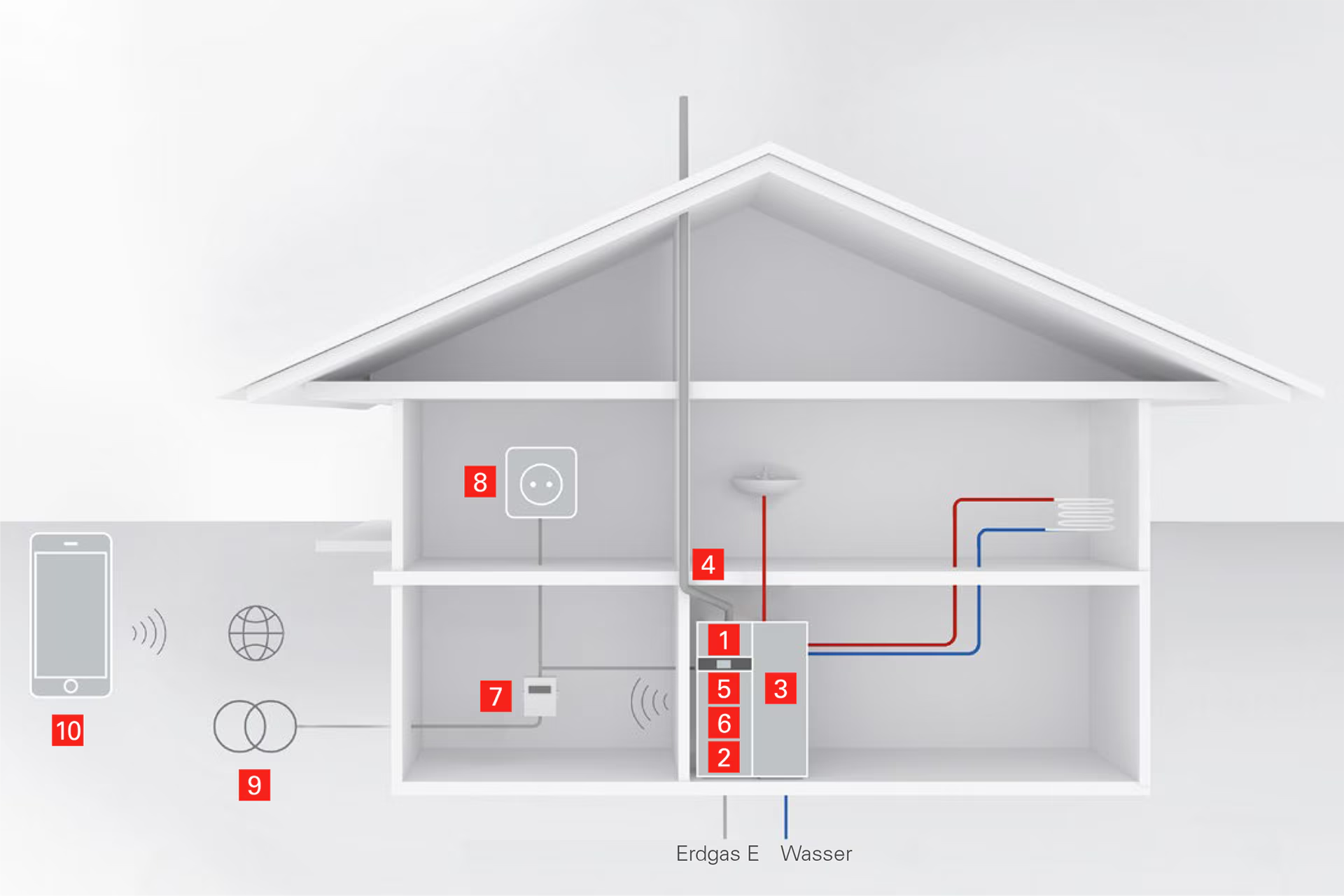
System diagram of a micro-CHP with a fuel cell

[1] Peak load boiler

[2] Fuel cell module

[3] Tower cylinder with 220L stainless steel hot water cylinder, hydraulics and sensors

[4] Balanced smoke system

[5] Built-in export counter of KU

[6] WiFi communication interface

[7] Household meter (bidirectional electricity meter)

[8] Household food chain

[9] Public network

[10] ViCare Internet/Application

Natural cooling

The primary purpose of heat pumps is to provide comfortable and convenient central heating and reliable hot water. However, they can also be used for building cooling. While the groundwater or groundwater is used to generate energy for heating in winter, it can be used for natural cooling in summer.

When using the free cooling function, the heat pump control unit only runs the primary pump and the heating circuit pump. This means that the relatively hot water from the underfloor heating system can transfer its heat through the heat exchanger to the brine in the primary circuit. This extracts heat from all connected rooms. This makes free cooling a particularly energy-efficient and inexpensive way to cool a building’s interior.

Standard seasonal efficiency [according to DIN]

The standard seasonal efficiency (DIN) was introduced to enable comparison of the energy consumption of different types of heat generators. As a measure of a boiler’s energy use, it shows what percentage of the energy used is converted into useful thermal energy throughout the year.

The standard seasonal efficiency level [according to DIN] is significantly influenced by the level of flue gas losses and surface losses that occur during operation.

Surface losses

Surface losses are the proportion of combustion power released into the surrounding air by the surface of the heat generator and thus lost as useful thermal energy.

They arise as radiation losses when the burner is operating or as standby losses when the burner is idle, especially in spring/autumn, as well as in the summer months when the boiler is needed exclusively for heating DHW.

Typically, the surface losses of an older boiler are significantly higher than the flue gas losses verified by a flue gas inspector. Therefore, the level of surface losses is a critical factor in the economic efficiency (standard seasonal efficiency) of a heat generator.

Working with an open chimney

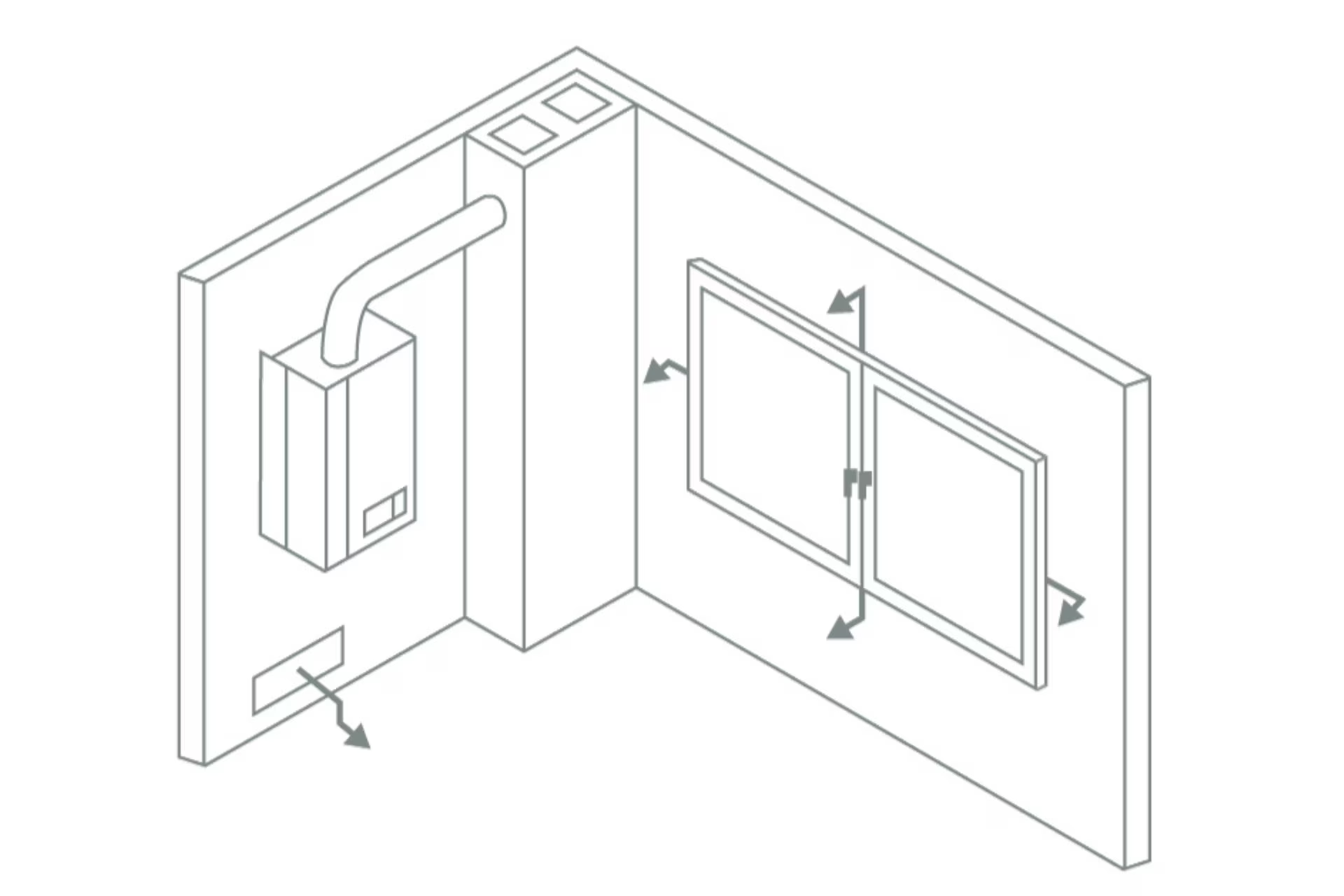
The terms “open flue” and “sealed room” describe the method of supplying the boiler with the air necessary for combustion.

With an open flue, the boiler draws combustion air from the room in which it is installed. Naturally, the room must have adequate ventilation openings. Several options exist. Often, combustion air is supplied through openings or slots (vents) in the exterior wall. If the appliance is located inside a living space, another option is “interconnected room air supply,” in which sufficient ventilation is provided through air connections (door openings) to several other rooms.

Sealed indoor operation

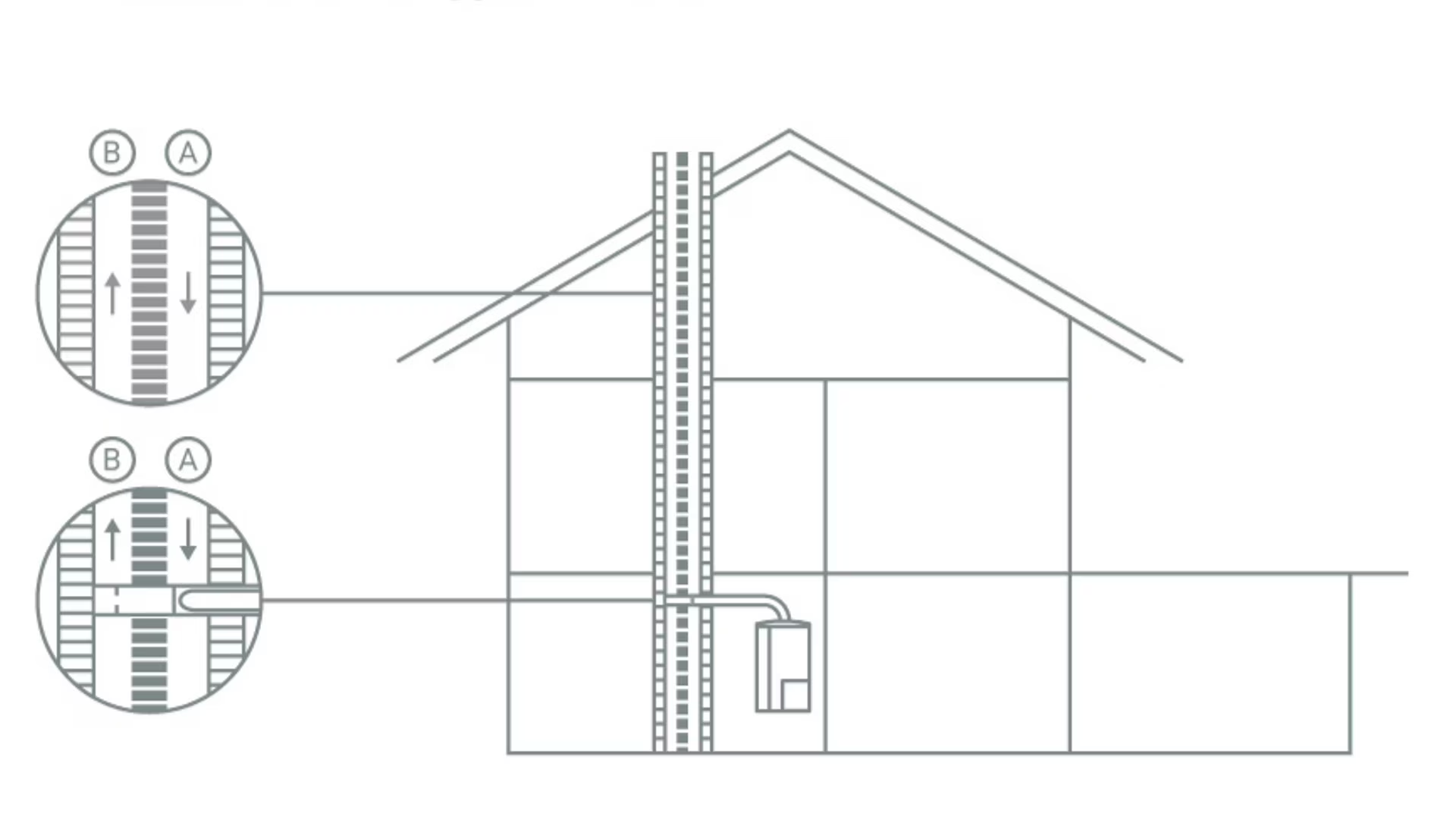
A = flue gas, B = ventilation air

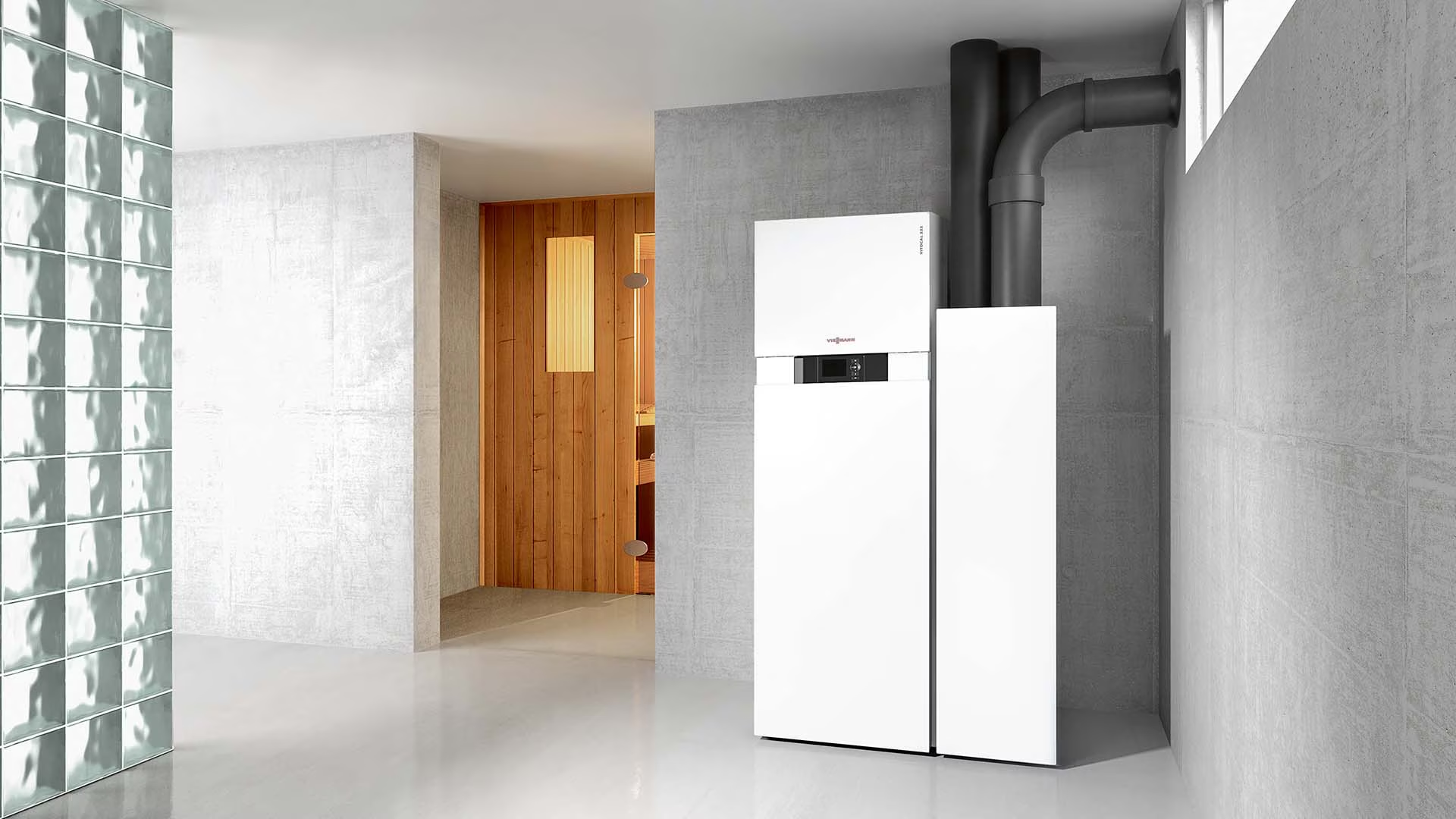
When operating indoors in a sealed environment, the necessary combustion air is supplied from outside through ventilation ducts. Essentially, three solutions can be identified:

1. Air supply through vertical outlet on the roof
2. Air supply through connection with external wall
3. Air supply through balanced chimney.

The advantage of sealed indoor operation is that it offers even greater flexibility when it comes to the placement of wall-mounted gas boilers than open-flue systems. The appliance can be installed anywhere—in living rooms, alcoves, closets, or on the roof.

Independence from indoor air also reduces losses, as heated indoor air is not used for combustion. Therefore, indoor sealed units can be placed within the building’s thermal envelope.

Solar heating hot water supply

A dual-mode DHW cylinder is the centerpiece of this type of system. When sufficient insolation occurs, the sun’s rays in the solar thermal system heat the water in the DHW cylinder through the lower indirect heat exchanger. When the temperature drops due to hot water withdrawals, such as for a bath or shower, the boiler is activated as needed to provide additional heating through the secondary circuit.

Backup solar central heating

In addition to heating domestic hot water, solar heat generated by solar collectors can also be used to raise the heating water temperature. For this purpose, the heating circuit uses the water in the solar cylinder, which is continuously heated by the solar collectors, through a heat exchanger. The control unit checks whether the desired room temperature can be reached. If the temperature falls below the set value, the boiler is activated.

ThermProtect

The solar collector generates heat whenever sunlight falls on the absorber—even when heat is not needed. This could be, for example, in the summer when residents are on vacation. If heat transfer through the hot water cylinder or the heating water buffer tank becomes impossible because neither is fully heated, the circulation pump switches off, and the solar thermal system enters stagnation.

If further insolation falls on the collector, its temperature will rise until the coolant evaporates, causing high thermal loads on system components such as seals, pumps, valves, and the coolant itself. Systems with ThermProtect temperature-dependent shutdown reliably prevent steam formation.

Flat collector with switched absorber layer

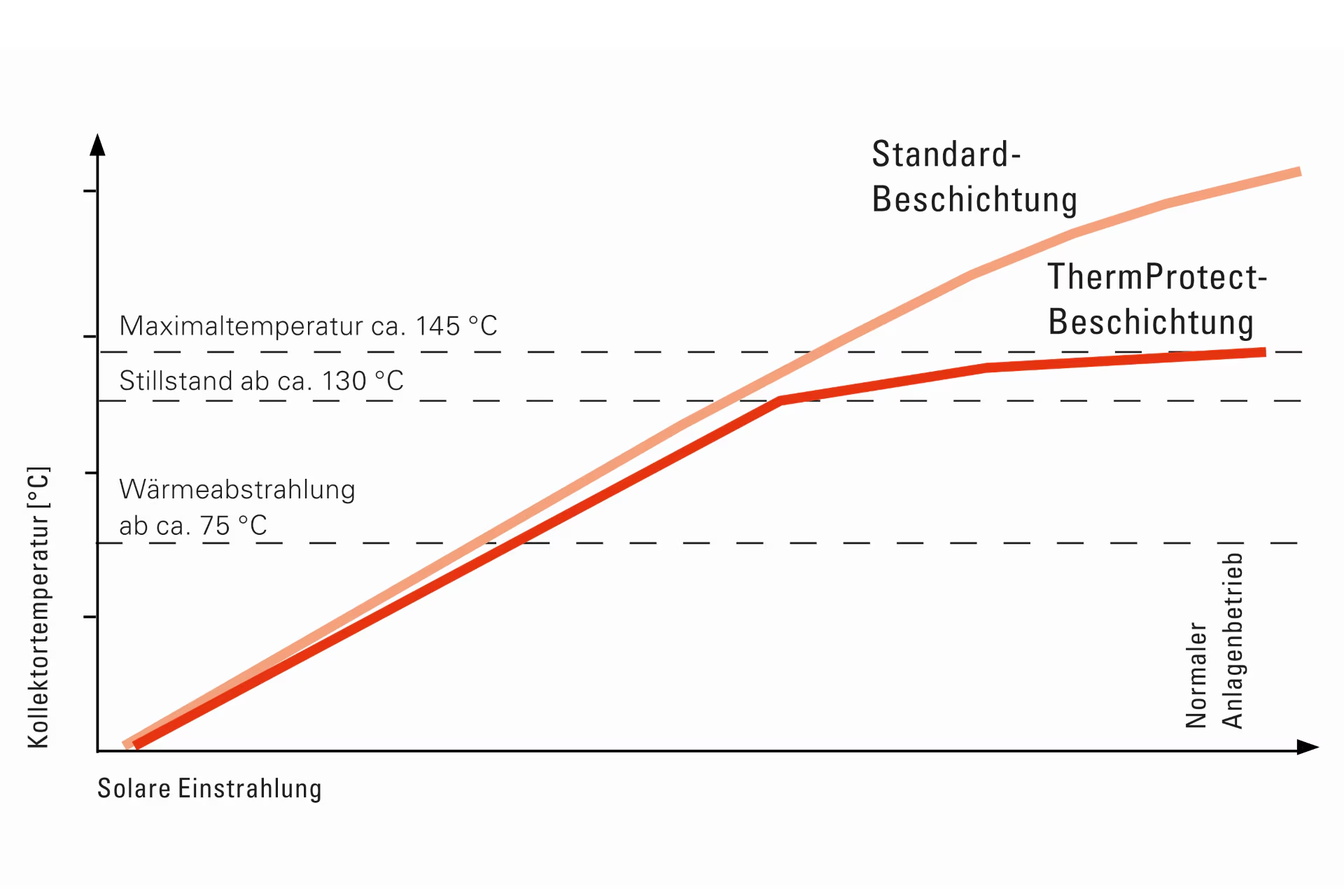
The first flat-plate collector was developed and patented that prevents further energy absorption after reaching a certain temperature. The Vitosol 200-FM absorber coating is based on the “switching layer” principle. The crystal structure, and therefore the collector’s output, changes depending on the collector temperature, thereby reducing the stagnation temperature. At absorber temperatures of 75°C and above, the coating’s crystal structure changes, significantly increasing the rate of thermal radiation. This reduces the collector’s performance, as the collector temperature rises, the stagnation temperature drops significantly, preventing steam formation.

As soon as the temperature in the collector drops, the crystalline structure returns to its original state. Now, over 95 percent of incoming solar energy can be absorbed and converted into heat; only a small portion (less than 5 percent) is re-radiated. This means the new collector’s performance is superior to that of conventional flat-plate collectors, as the collector never enters a stagnation phase and can resume supplying heat at any time. There is no limit to the number of times the crystalline structure can be activated, meaning this function is always available.

Reliable steam prevention with ThermProtect

In standard collector operation, the new absorbent coating on the Vitosol 200-FM flat-plate collector functions like any standard absorbent coating on Viessmann flat-plate collectors. At collector temperatures of 75°C and above, heat transfer increases significantly, reliably preventing overheating and steam formation in the event of stagnation.

Other Viessmann guides and tips

Geothermal collector

Geothermal collector

Read more
Gas Heating: Advance Heating with Condensing Technology

Gas Heating: Advance Heating with Condensing Technology

Read more
Heat pumps: All information at a glance

Heat pumps: All information at a glance

Read more