
MENU

To heat a room, a boiler requires thermal energy. The more thermal energy it consumes, the higher the subsequent heating costs. Furthermore, burning fossil fuels such as natural gas or oil as an energy source also has an environmental impact. This is where condensing technology plays a key role: it improves energy efficiency and reduces CO₂ emissions to a minimum.

There are many reasons to use natural gas condensate technology.

In Germany alone, approximately two million heating systems over 25 years old are still in use. Operators are often completely unaware of how much money they’re wasting on energy that’s pointlessly burned and lost up the chimney as unused heat. Furthermore, these old systems impact our climate by emitting unnecessary amounts of CO₂, thereby contributing to global warming.

By quickly replacing these systems with highly efficient gas condensing boilers combined with solar technology , you can reduce energy consumption by 35 percent. This represents 10 percent of Germany’s total energy needs, while reducing annual CO₂ emissions by 54 million tons.

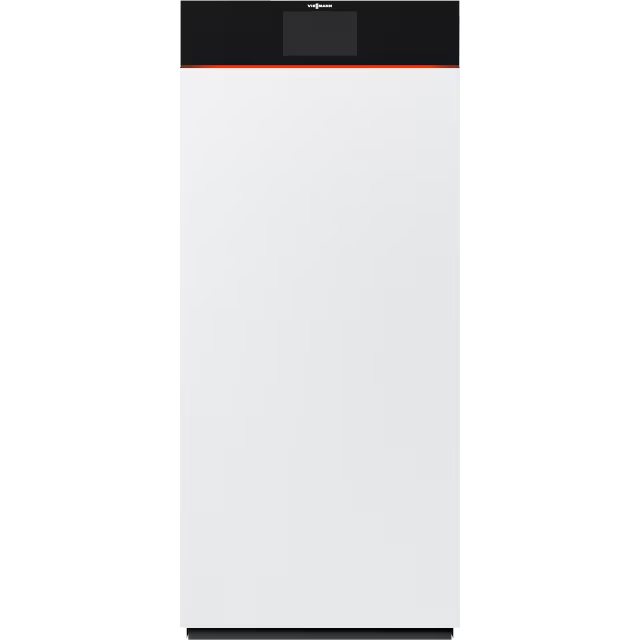
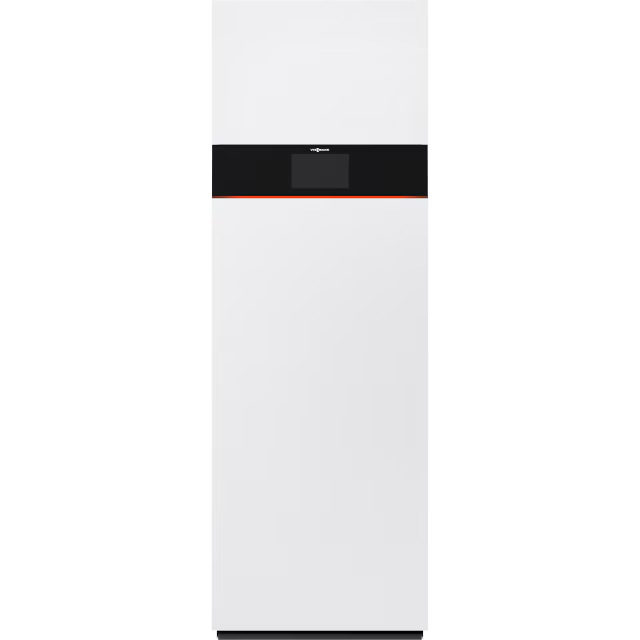
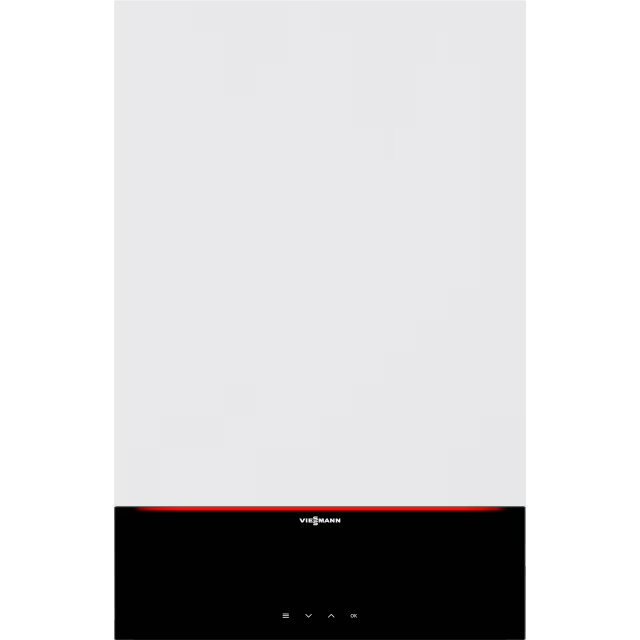
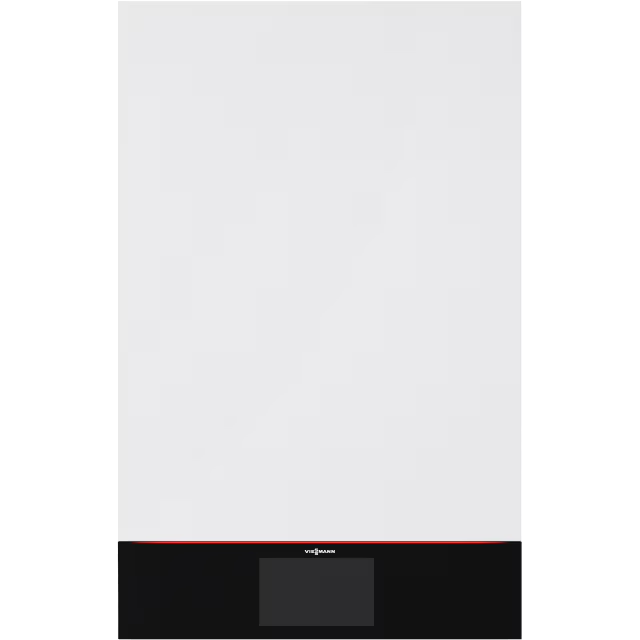
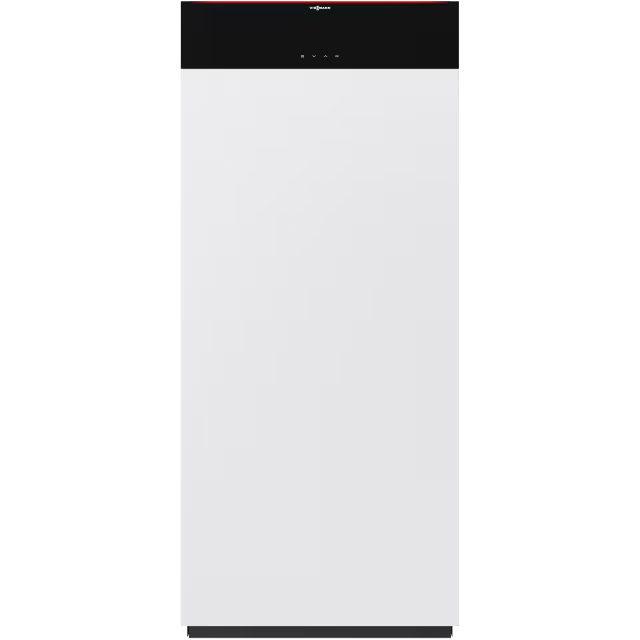
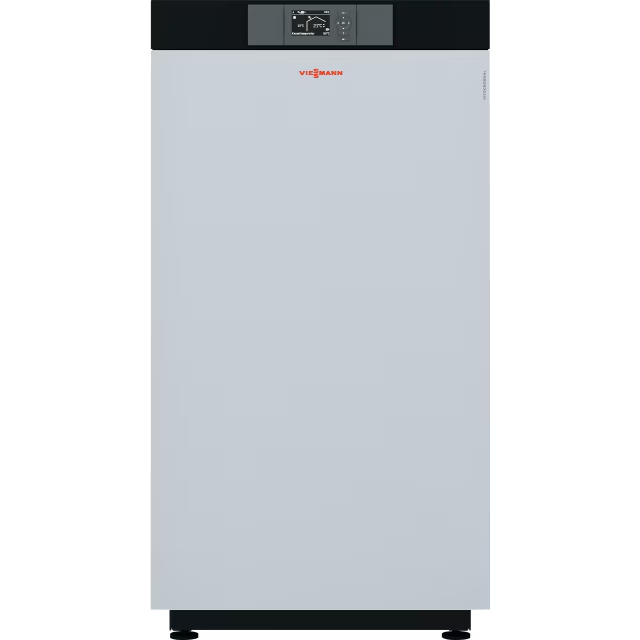
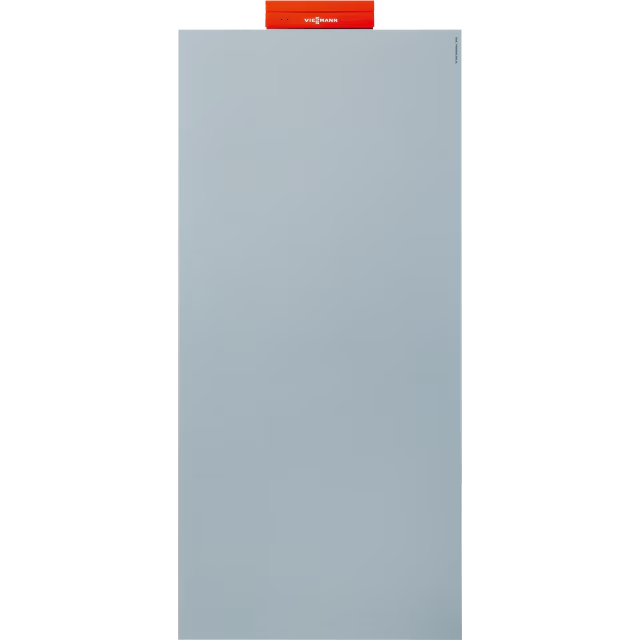
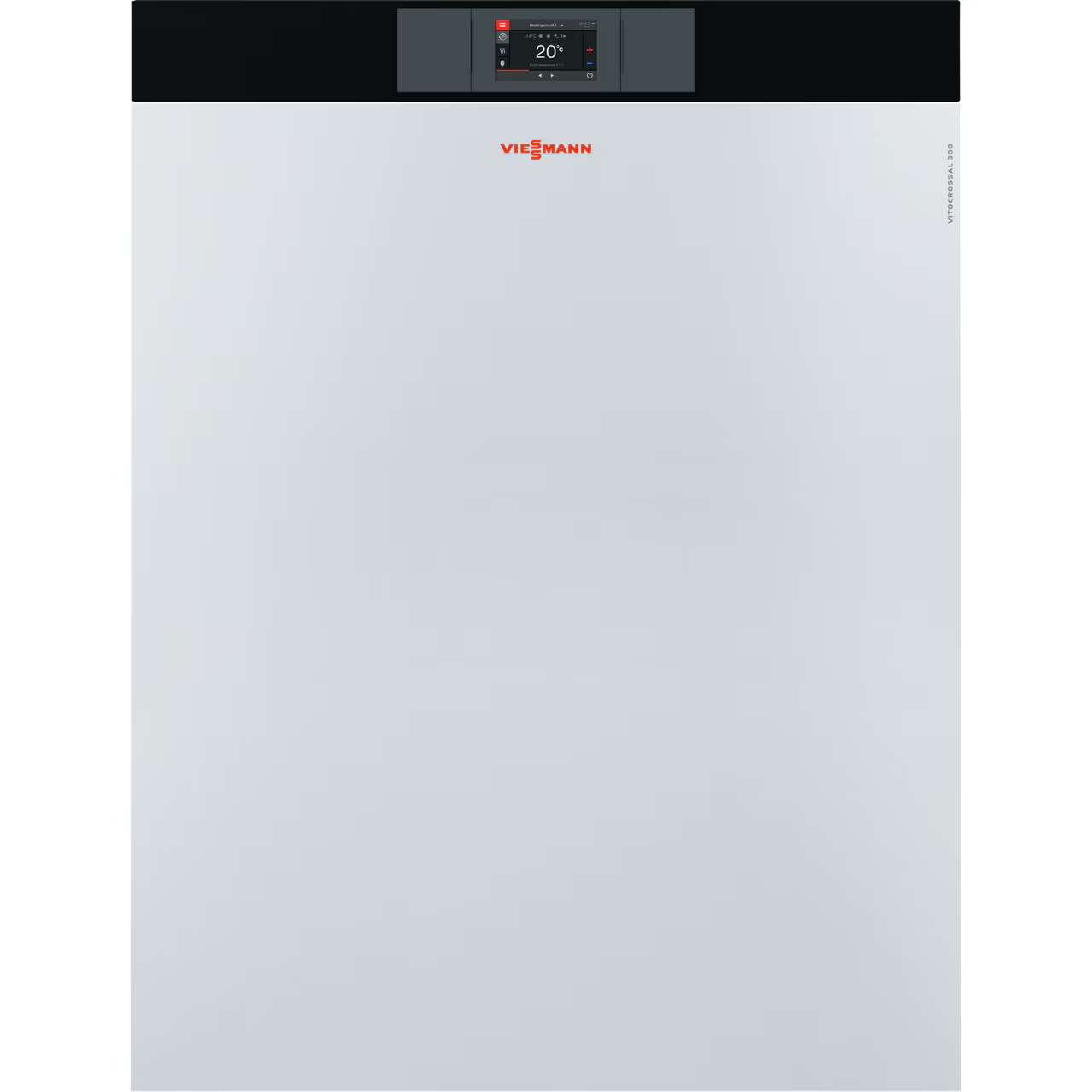
A wide selection of gas condensing boilers

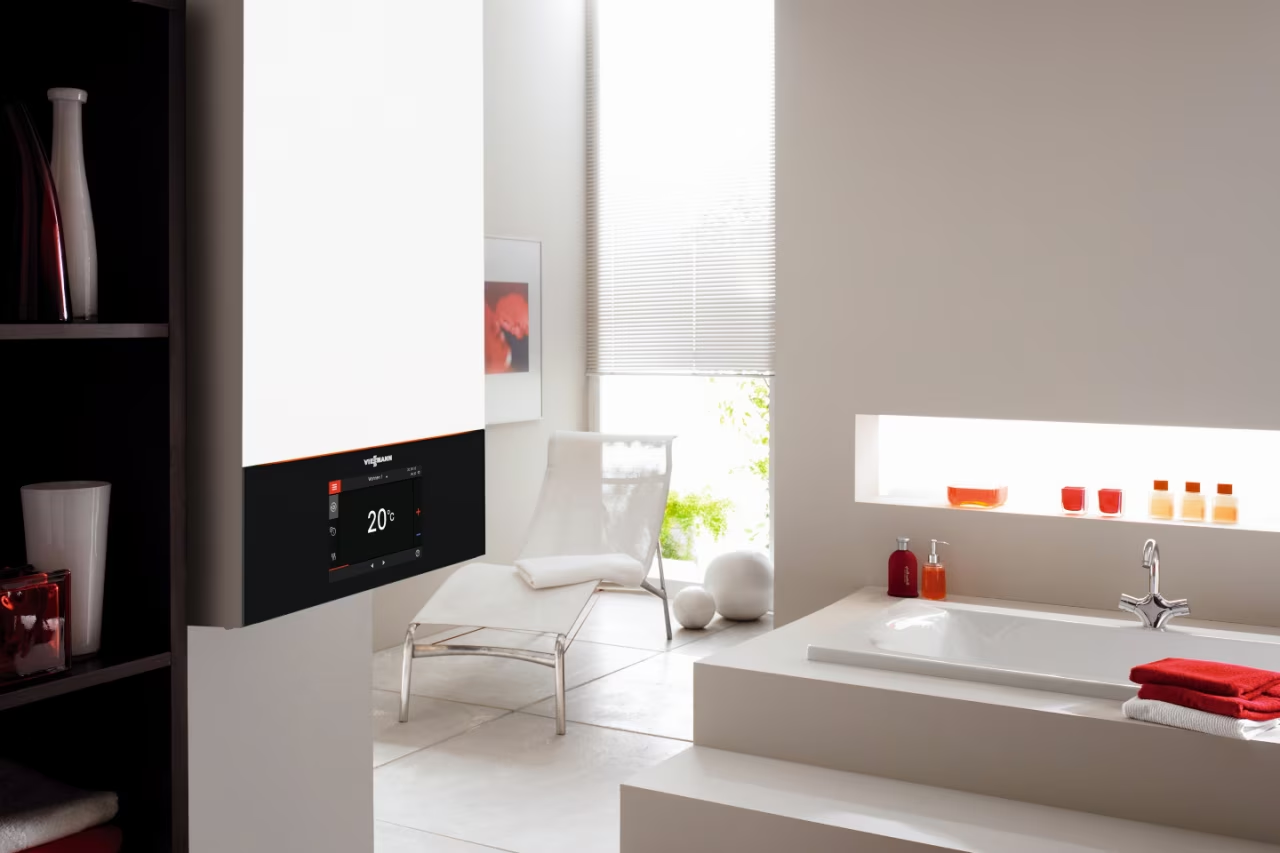
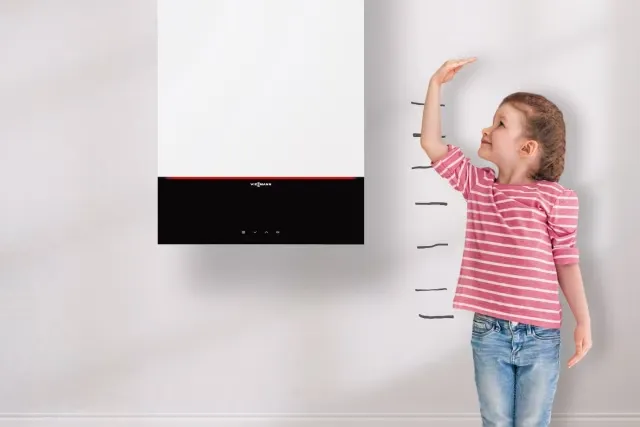
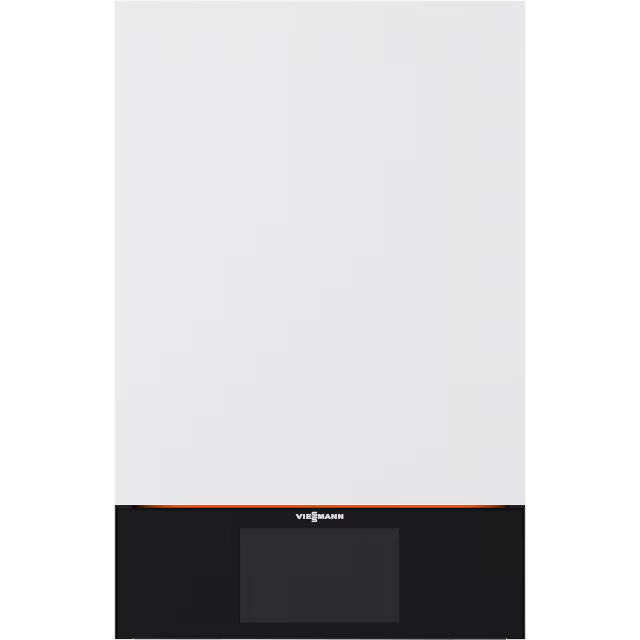
Transitioning from an old, inefficient boiler to an energy-saving gas condensing boiler is a snap, whether you choose a compact, wall-mounted gas boiler or a floor-standing unit with an integrated solar panel. Owners of single-family homes, semi-detached houses, and small apartment buildings, in particular, will easily find a suitable Viessmann boiler that meets all their power (up to 80 kW) and price requirements. And you can count on this technology in the future. In addition to natural gas, liquefied gas, and biogas mixtures, gas condensing boilers are suitable for gas mixtures containing up to 20% hydrogen.

Range of gas condensing boilers

The operating principle of gas condensate equipment

Unlike constant-temperature and low-temperature boilers, the operating principle of gas condensing technology cannot be simply divided into combustion, gasification, and heat generation. Between the last two stages, flue gas condensation occurs.

Flue gases contain heat of condensation

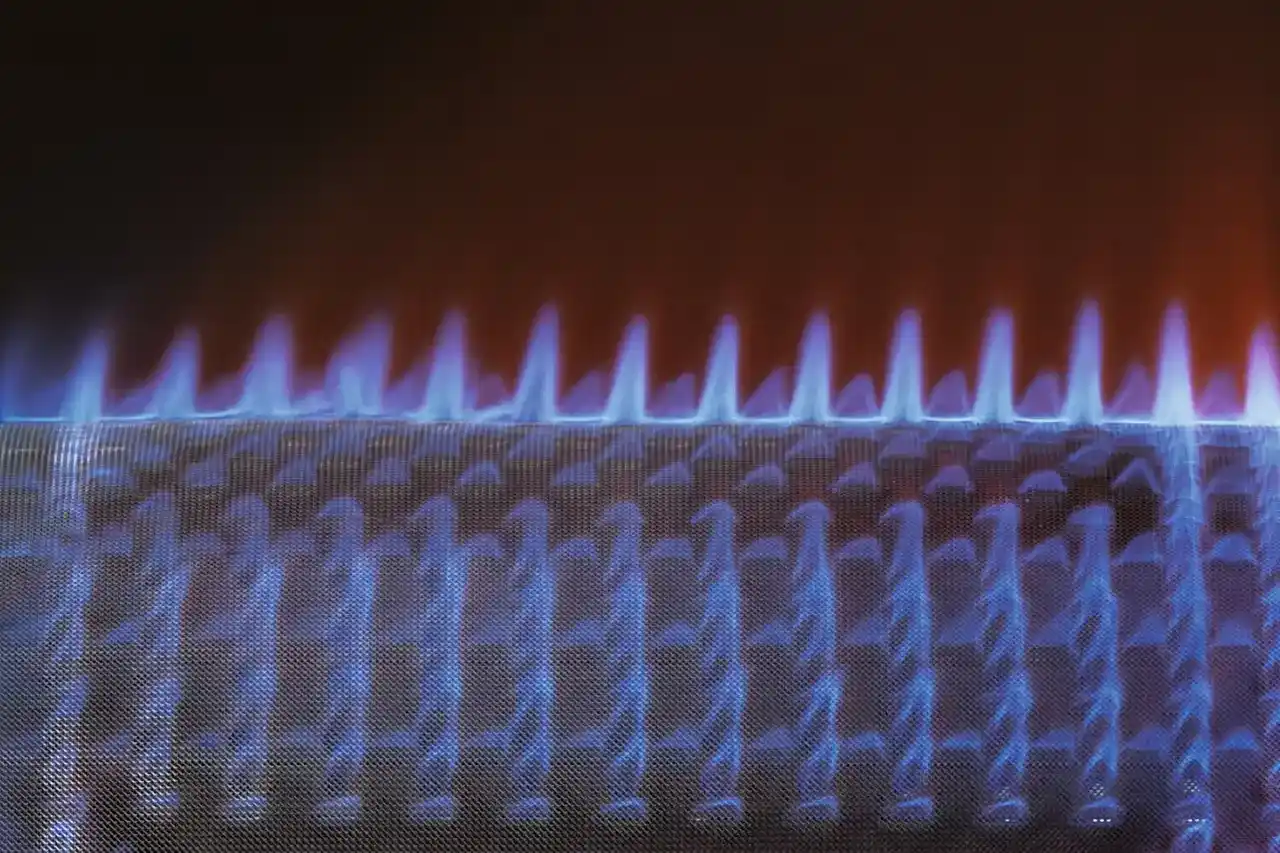
When fuel—in this case, gas—is burned, flue gases are produced in addition to the measurable thermal energy. These gases consist primarily of hot water vapor, some of which can be acidic. To protect the boiler and flue system from this acidic water vapor, older boilers vent flue gases directly into the open air. Depending on the heating technology, flue gas temperatures can reach 200 degrees Celsius. This intentionally prevents the condensation of water vapor in the flue gases.

Latent heat extraction

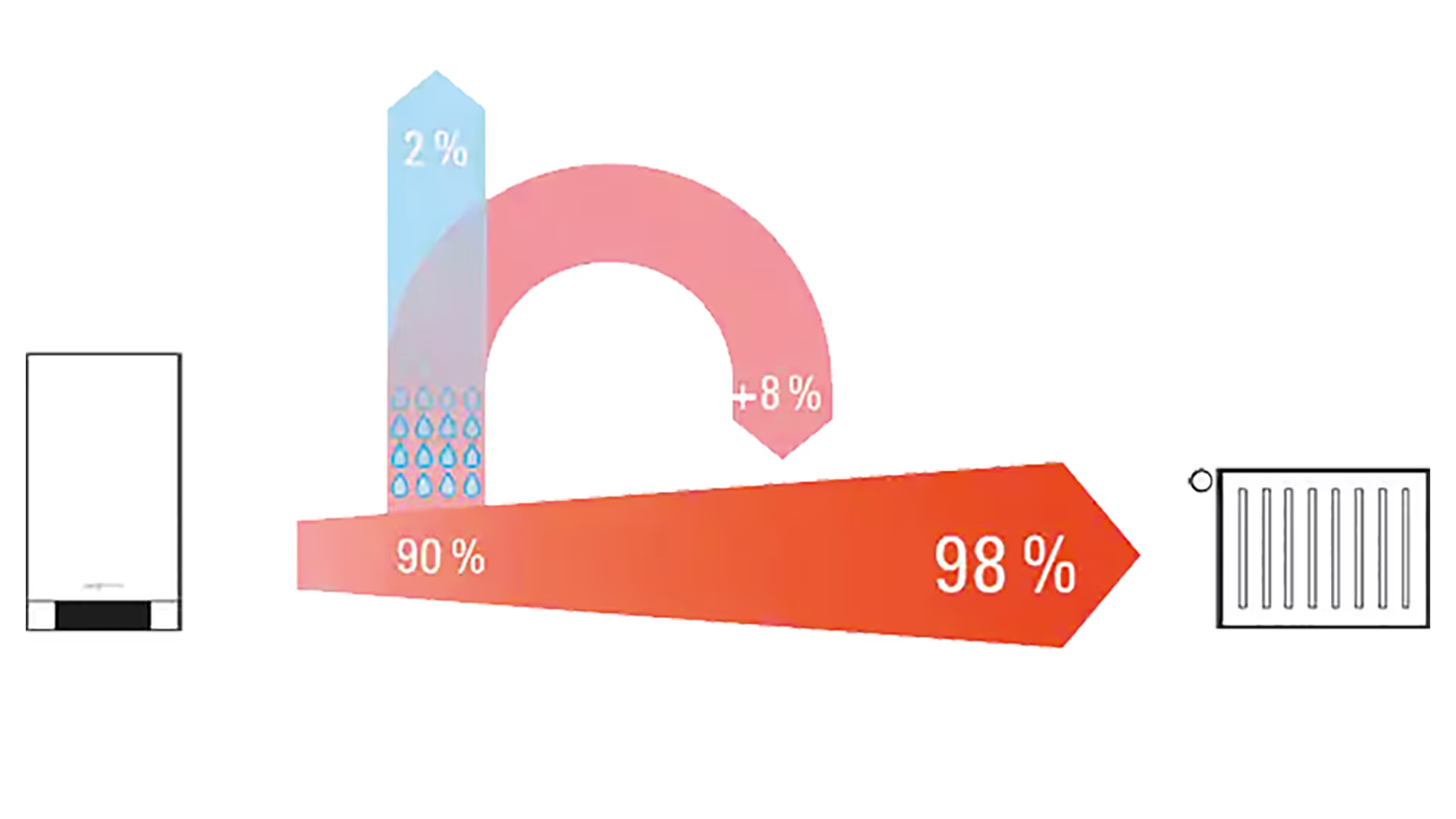
The fact that hot water vapor still contains energy can be demonstrated with a simple trick: if you hold your hand over a pot of boiling water, you’ll soon notice this energy in your palm. This happens because the steam condenses on the surface of your palm, releasing latent heat, also known as the heat of condensation. Gas condensation technology extracts this heat of condensation and adds it to the heating water. To achieve this, the hot flue gases pass through a heat exchanger before being released into the open air.

The heat exchanger is an essential component of a gas condensing boiler.

The heat exchanger is made of moisture- and acid-resistant stainless steel and is extremely compact thanks to its special design. As hot flue gases pass through the heat exchanger, they are cooled by the heating water flowing into the boiler from the radiators (return water). The flue gases gradually condense. The heat of the resulting water vapor is transferred to the heating system. To ensure condensation, the return water temperature must not exceed a limit of 57 degrees Celsius. Otherwise, the hot flue gases will not be able to condense. Zone heating systems, such as underfloor heating, are suitable for cooling this return water.

Therefore, the heat exchanger is a crucial component of a gas condensing boiler and is indispensable for this technology. It is capable of transferring the resulting condensation heat to the heating system with virtually no loss. Thus, it converts up to 98 percent of the energy contained in the hot gas into heat. This indestructible component is guaranteed for up to ten years by system owners.

Condensate drainage and the need for neutralization

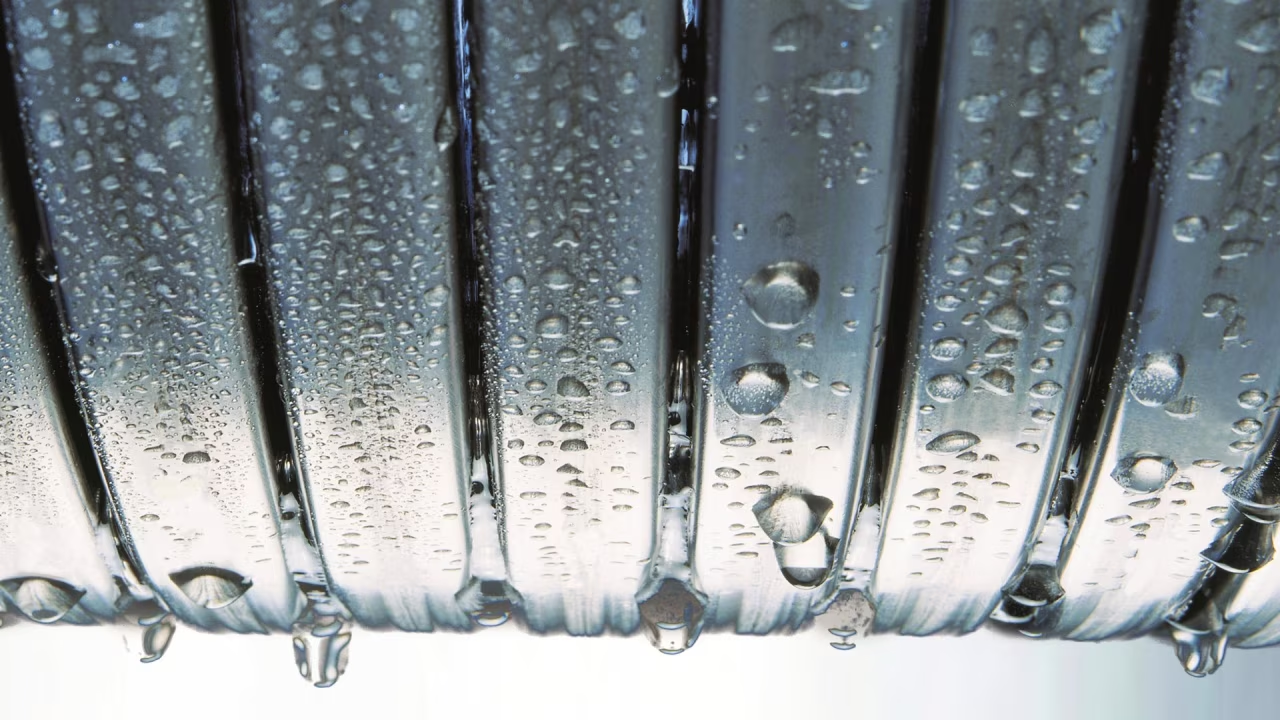
The intentional condensation of water vapor contained in flue gases results in condensate. This condensate can generally be discharged into wastewater (not into small wastewater treatment plants), provided the pH value is not too high. Furthermore, the drainage system must be acid-resistant. The “DWA-A 251” Code of Practice of the German Association for Water, Wastewater, and Waste (DWA) is used as the basis for calculation. The size of the gas condensing boiler is also an important factor. If the rated heating output is less than 25 kilowatts (kW), the condensate does not need to be neutralized. For outputs between 25 kW and 200 kW, direct discharge into wastewater is permitted only in certain cases through dilution with wastewater. For gas condensing heating systems with an output greater than 200 kW, neutralization is generally mandatory.

The chimney must also be suitable for condensing technology.

In addition to condensate drainage, the flue system must be designed for condensation technology. It is important that the amount of acid contained in the condensate does not damage the system. Positive pressure generated by a fan (e.g., a burner fan) must also not affect the new piping system. Flue pipes made of stainless steel or special plastic are tested and approved. If a chimney is already in place, the new pipe can usually be inserted into the existing flue. It is also possible to route the pipe outside without using the existing flue. However, in this case, consult a flue gas specialist.

For more information on how gas condensing technology works, please see the ” Gas Heating Guide” at heizung.de .

Video: Condensation technology is simple

Our expert Karsten Kuhlmann explains how condensation technology works.

How to save money with gas condensing technology

Thanks to the additional heat from the condensed flue gases, condensing boilers achieve a standard seasonal efficiency (DIN) of up to 98 percent, making them particularly energy efficient. This feature not only saves valuable energy but also protects the environment by significantly reducing CO₂ emissions. The following table shows the savings that can be achieved:

Savings when upgrading with the Vitodens 300-W* gas condensing boiler

Heating system The old system New system
Consumption/year 3400 m³ 2500 m³
Costs/year €2510 €1850

*Basis for comparison: House (built 1985), living area 140 m², with an old 27 kW gas boiler. Rounded consumption costs using standard values ​​(EID) for 3400 m³ of natural gas. Average energy price in 2017

Central heating backup with solar energy

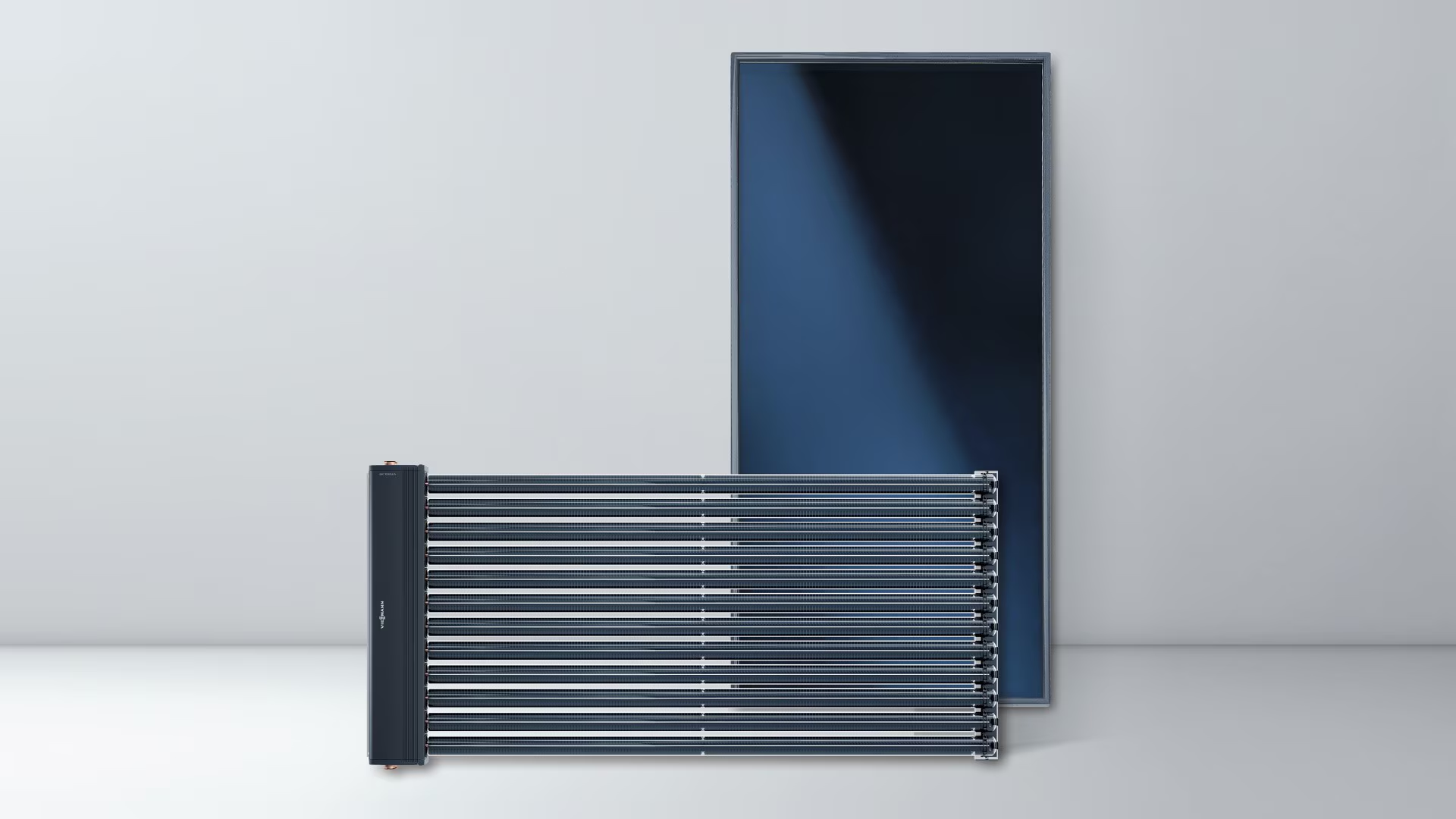
Gas heating systems are one of the most commonly installed heating systems in our country. They are compact and highly energy efficient. Their efficiency and environmental friendliness can be further enhanced if system owners choose a hybrid solution combining gas condensing technology and solar thermal energy. Free solar energy is still underutilized for backup central heating and hot water heating, despite being the cleanest heat source of all. And an endless supply is available free of charge. When upgrading, consider combining a new heating system or boiler with a solar thermal system.

Viessmann gas condensing boilers can operate in single- or dual-mode mode. Dual-mode operation with a solar thermal system requires a suitable cylinder. The Vitocell series from Viessmann is ideal for solar thermal systems. Whether it’s DHW cylinders, combination cylinders, or buffer cylinders for hot water, we have the perfect solution for every need.

Tip: Free solar energy is still underutilized for backup central heating and hot water heating. When upgrading, consider combining a new heating system or boiler with a solar thermal system.

Image

Expert advice on condensation technology

Free and without obligation: Get personalized advice on condensing technology from our qualified sales partners!

Request a consultation now →

Simple solutions for renting advanced gas condensate equipment

Did you know you can simply lease your new gas condensing boiler? This alternative to purchasing offers you the flexibility to choose from a variety of heating packages. Regardless of which you choose, you’ll receive the following benefits:

  • purchase costs of 0 euros
  • comprehensive warranty for up to 15 years.

To start enjoying the warmth, choose a contract model now at Viessmann Wärme .

Other Viessmann guides and tips

Wall-mounted and floor-standing gas condensing boilers

Wall-mounted and floor-standing gas condensing boilers

Read more
Gas Heating: Advanced Heating with Condensing Technology

Gas Heating: Advanced Heating with Condensing Technology

Read more
Gas as a heating fuel

Gas as a heating fuel

Read more