
MENU

Storing pellets in tanks, warehouses and fabric containers

Today, homeowners can choose from a wide range of fuel storage systems for pellet boilers. Alternatives to using a room in the house for pellet storage include permanent and flexible pellet tanks, pellet silos, and underground storage tanks.

Pellet storage room in the house

Pellet storage room in the house

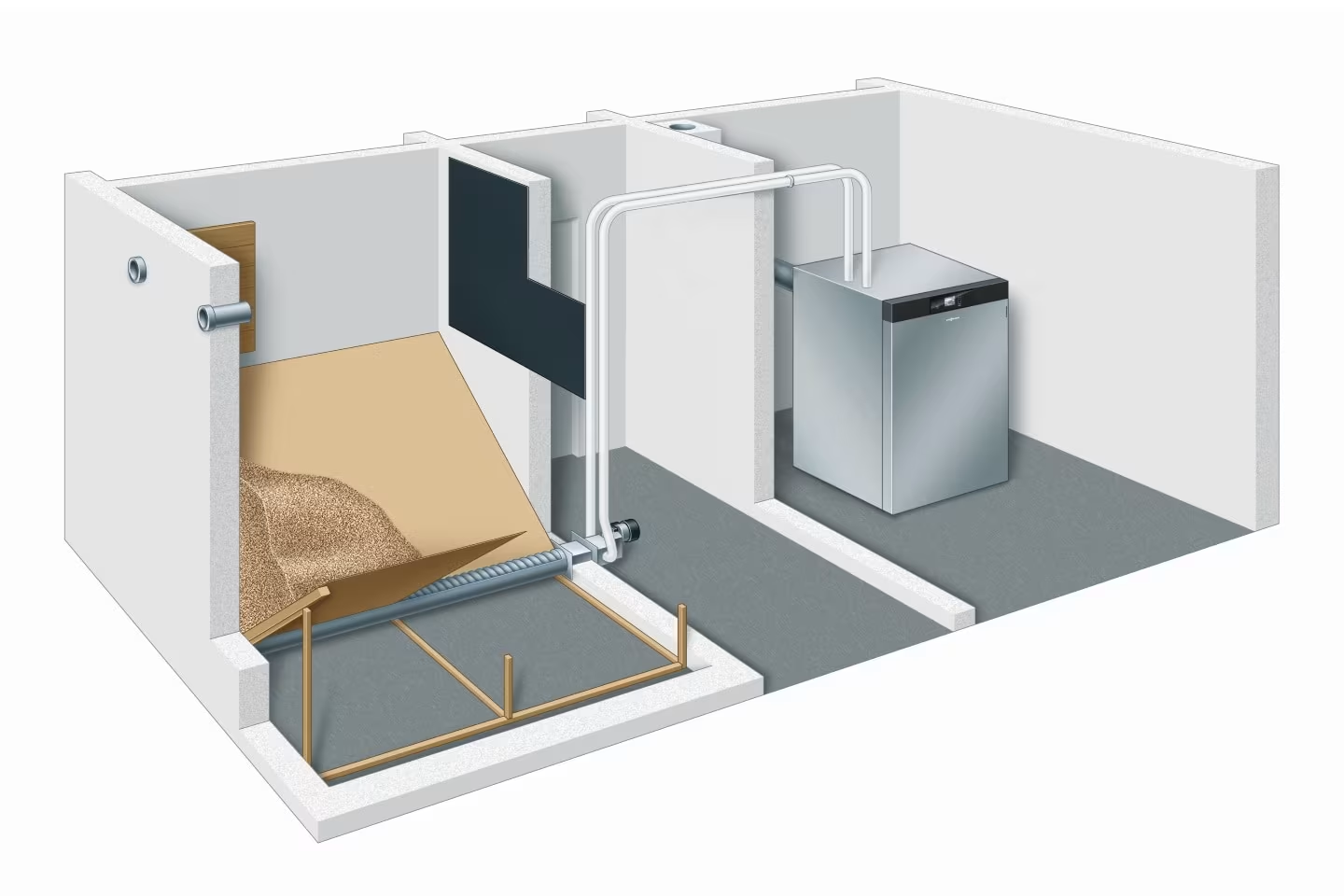
A pellet storage room is a dry space adjacent to the building’s exterior wall. It typically has a sloping wooden floor, allowing the pellets to automatically roll toward the center. This ensures reliable pellet supply.

To prevent fuel contamination, the plaster on the walls must be durable and not peeling. A special coat of paint or tiled wall surfaces are best. To prevent damage to the pellet storage room and the pellets themselves during combustion, a deflector mat is installed in the room.

Резервуары и силосы для хранения пеллет

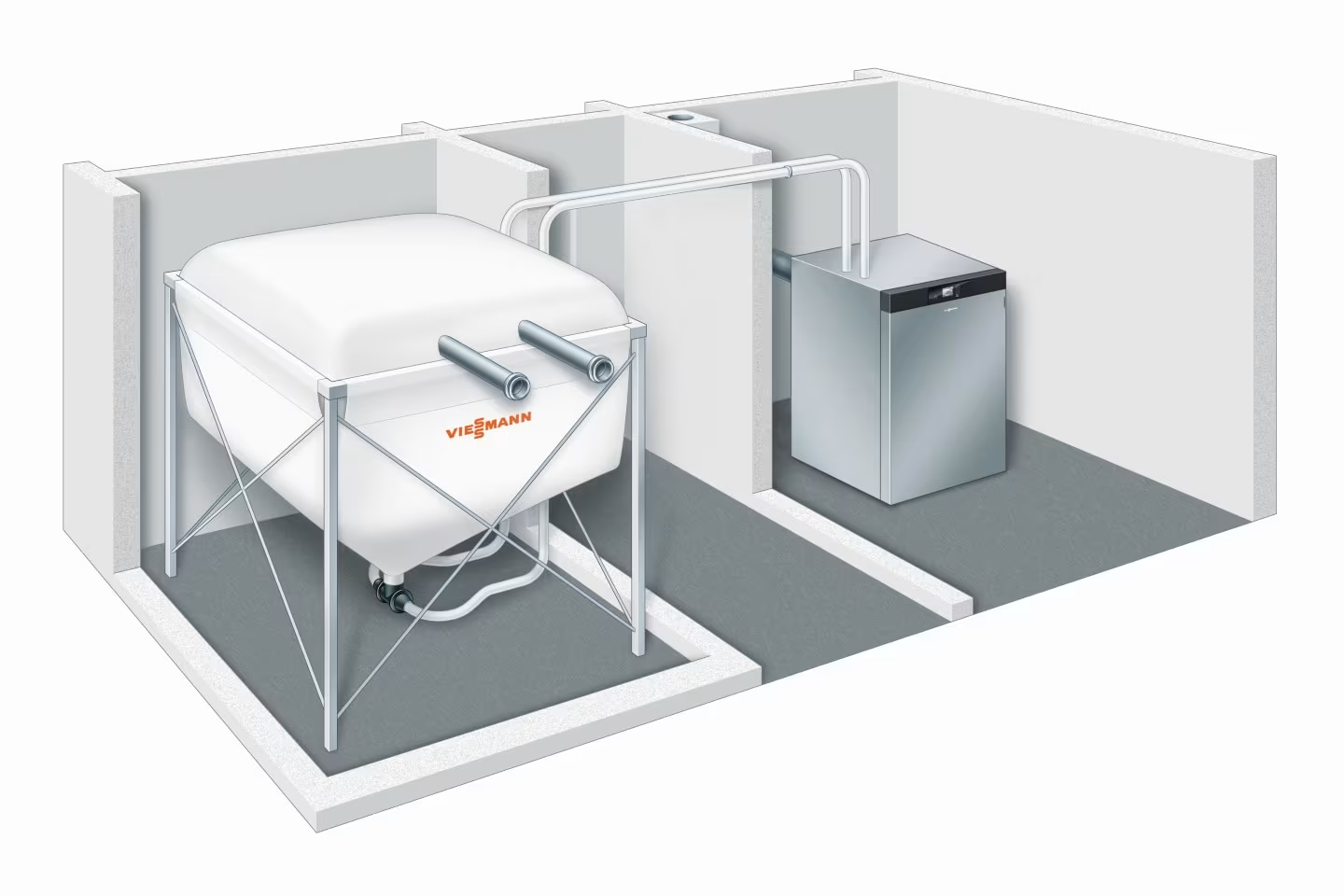
Если в доме нет подходящих помещений для хранения пеллет, вместо них можно использовать силосы или резервуары для пеллет. Они изготавливаются из листовой стали или пластика и доступны в различных размерах.

Для гибкой и быстрой установки в здании мешочные силосы часто являются лучшим решением. Стационарные и гибкие контейнеры для хранения пеллет могут быть установлены как в помещении, так и на открытом воздухе. При установке на улице крытый кожух защитит контейнер от ветра и непогоды.

Tanks for underground pellet storage

If fuel storage space is limited, homeowners can store pellets underground in a tank. The required tanks are made of concrete or plastic and come in various sizes. Due to the necessary excavation work and increased sealing requirements, the cost of an underground tank is usually higher than other pellet storage systems.

Humidity, fire safety and accessibility

To ensure the smooth operation of a pellet storage system, several factors must be considered. For example, proper protection from moisture is essential. This is because water reduces the pellets’ net calorific value and increases heating costs. Furthermore, it causes pellets to stick together, which impairs both the supply and the automatic operation of the heating system.

The Combustion Equipment Ordinance (or local equivalent) regulates general fire safety requirements. For example, a dedicated storage room is only required if the planned pellet storage volume exceeds 10,000 liters. Since fire regulations vary by location, fire protection requirements may also vary.

Wood pellets are typically delivered by tanker truck. The pellets are delivered to the storage system through a hose no longer than 30 meters. Therefore, to avoid delivery issues, the storage tank should be located within 30 meters of the nearest truck access point.

Pellet feeding using screw conveyors and vacuum systems

For a fully automatic pellet heating system to function properly, pellets must be supplied from the pellet storage to the boiler as needed. Pellet feeding systems, available in various designs, are used for this purpose. Possible options include screw conveyors or vacuum suction systems.

Screw conveyor pellet feeding systems are reliable and cost effective.

Screw conveyors work using a rotating screw. It usually lies on the floor and rotates, feeding pellets from the storage to the boiler. Despite their reliability, this method of pellet feeding is not the most flexible. The storage area and the pellet boiler must be as close as possible to each other and properly aligned.

Screw conveyors for pellets are usually used with pellet storage rooms or pellet tanks. They can also be combined with vacuum systems. The screw conveyor feeds pellets from the storage, and the vacuum system feeds them to the boiler.

Vacuum systems provide flexible pellet supply

For homeowners looking for a flexible pellet supply solution, vacuum systems are an interesting alternative. They suck pellets from the storage under negative pressure and feed them over a distance of up to 20 meters. The supply hoses can simply be routed along the ceiling and hardly affect the space in the house.

In a vacuum system, pellets are discharged from the storage using a screw conveyor, probe, or mole. While the probe draws the pellets into the supply hose from below, the mole is equipped with a motor to feed the pellets. It lies on top of the pellets and rotates, feeding them into the vacuum system.

Image

Expert advice on pellet boilers

Get a free, personalized consultation on our pellet boilers from our qualified sales partners!

Request a consultation now →

Related articles

Pellet heating system: Design, models, fuel

Pellet heating system: Design, models, fuel

Read more
Heating with wood sawdust - an environmentally friendly solution for high heat needs

Heating with wood sawdust - an environmentally friendly solution for high heat needs

Read more
How does pellet heating work?

How does pellet heating work?

Read more