


Night setback is a method of reducing heating output at a specific time. In technical jargon, it’s also called reduced operation mode. This is because night setback can also be activated during the day; in this case, the term “day setback” would be more accurate. Night setback settings are configured directly on the heating control unit, usually in the “Time Program” section. Those without this option can still control the heater’s output—albeit indirectly—manually or using programmable thermostats. This is because adjusting the thermostat only regulates the heating water flow rate, not the actual heating output of the heater.
Night rollback in detail
Night setback allows system owners to directly influence the heating curve—also known as the heating characteristic. Activating this feature shifts the room’s setpoint temperatures downward, so the heat generator produces less heat. Specifically, this means that during the selected reduced operating period, the room is heated less than during the rest of the day. You can learn more about how the heating curve works in the “Setting the Heating Curve” guide.
Division into several time phases
To enable night setback, the heating system must be divided into several parts, called time phases. Depending on the heating system, up to eight time phases can be selected. In addition to room heating, time programs can be set for hot water heating and the hot water circulation pump (if installed).
Here is an example with four time phases:
.
- Time phase 1: from 06:45 to 12:15 with normal room temperature (around 20 degrees Celsius)
- Time phase 2: 13:00 – 18:00 at a lower room temperature (about 16 degrees Celsius)
- Time phase 3: from 18:15 to 22:15 at normal room temperature
- Time phase 4: from 22:15 to 06:30 with reduced room temperature
Important : Between time phases, the room is typically heated to a lower temperature. However, heat pump systems may operate differently. Consult the operating instructions included with your heating system to determine how it operates between time phases.
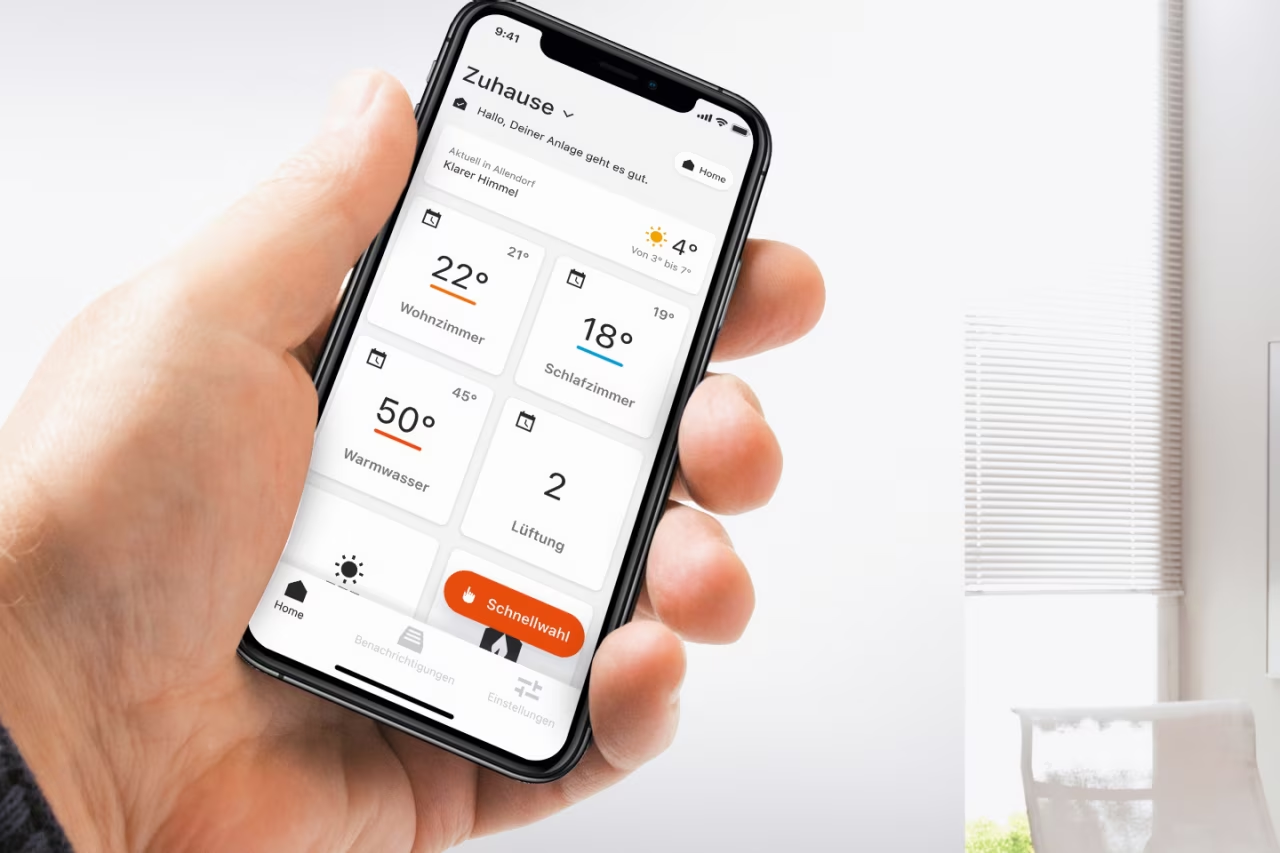

Expert consultations - local partner
Get a free, no-obligation personal consultation from our qualified sales partners!
Video: “A Quick Guide to Nighttime Failures”
Click the play button to watch the video. Please note that when you watch the video, data will be transferred to YouTube. For more information, please see our privacy policy.
To save energy while sleeping, some consumers use the nighttime reset feature, which cools the room and then heats it up again. We’ll explain what you need to consider. Click the play button to watch the video. Please note that watching the video will transfer data to YouTube. For more information, please see our privacy policy.
Advantages and disadvantages of overnight rollback
By temporarily reducing heating output, system owners can theoretically save on heating costs . But only theoretically. In practice, savings potential depends on many factors, including the building’s energy rating, the type of radiator, and the heating system.
Buildings react differently to the nighttime recede
Due to its thermal mass, a well-insulated house reacts very slowly, losing heat only slowly. For example, if the nighttime shutoff is activated at 9 p.m., the effect is usually noticeable only after several hours, or in some cases, only the following morning. By comparison, non-modernized buildings cool down much more quickly, reducing the theoretical savings potential of an overnight shutdown. At the same time, the rooms must be heated again the following day. In the best-case scenario, the amount of energy saved by the nighttime shutoff should exceed the amount of energy required to heat the rooms. However, the opposite can happen.
Typically, buildings have different storage capacity, so different intervals apply to them. This factor cannot be ignored when activating the nightly rollback.
Not every combination of systems is suitable for an overnight pullback
Another factor influencing the nighttime setback is the heating system and its radiators. Oil and gas boilers can heat rooms to the required temperature in a short time. However, to do so, they require high flow temperatures and, therefore, a large amount of energy. Heat pumps can operate with low flow temperatures. However, compared to gas and oil heating systems, they are slow and require a long start-up period. The same applies to underfloor heating, which is not really a heating system, but a large-area radiator. It only slowly absorbs heat and then releases it into the rooms, even if the nighttime setback is already activated. Whether system owners actually save energy with the nighttime setback can only be determined on a case-by-case basis.
The temperature should never fall below the minimum
Even if the nighttime cooldown achieves the desired result, it’s important for system owners not to overdo it. Under no circumstances should the temperature drop below 15-16 degrees Celsius for an extended period of time. Otherwise, the risk of condensation on cold walls increases. Vulnerable areas, such as room corners, can quickly become damp, thus providing an ideal breeding ground for mold .
How to activate the nightly rollback
After familiarizing yourself with the advantages and disadvantages of night setback, you can begin activating night setback in your heating system. This feature is pre-installed in almost all Viessmann heating systems.
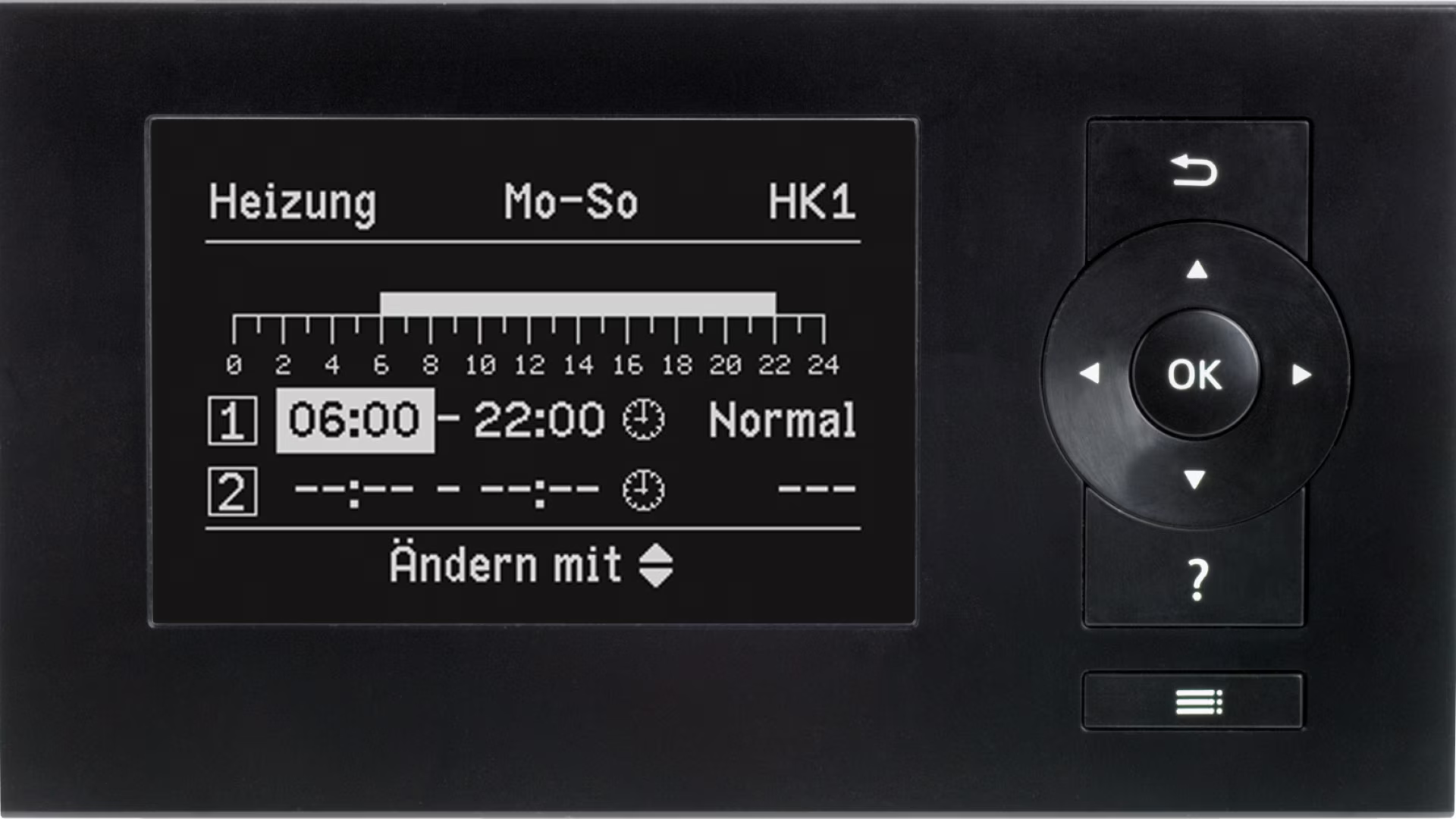
The navigation path from the main menu to the "Time Program" may vary depending on the control unit. Typically, the time program is accessed via "Menu" → "Heating" → "Heating Circuit" → "Time Program." For the correct procedure, please refer to the included operating instructions.
Your heating contractor can help with adjustments.
If you’re unsure how to set up the night reset, contact a heating engineer. Our local partner search lets you find the right heating engineer in your area in just a few clicks. You can also reach out to the Viessmann community.
Other Viessmann guides and tips

Heating with wood
Heating with wood means using a renewable fuel that’s inexpensive compared to fossil fuels. Our guide details the key factors when heating with wood.
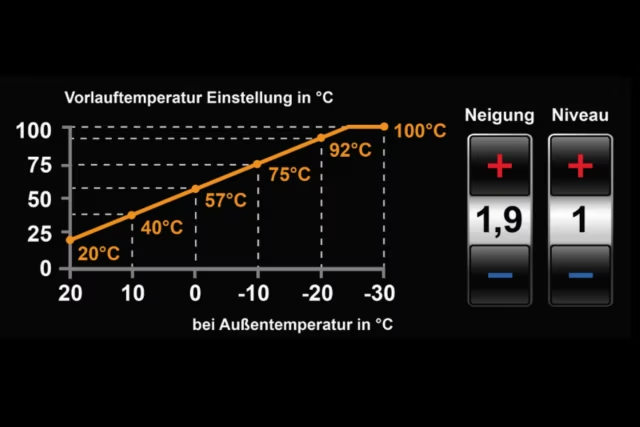
Adjusting the heating curve and saving energy
Properly adjust the heating curve to match heating output to actual demand. Read here to learn how it works and why it’s worth doing.

Heating check
Check your heating now and start winter with peace of mind tips on how to check your heating before the winter season.