MENU

According to a 2019 study by the Federal Association for Energy and Water Management (BDEW), one in four heating systems in Germany is considered outdated. Fear of the high costs and effort required for renovation discourages users from upgrading their heating systems. However, in many cases, it is urgently necessary, whether due to the system’s age or an insufficient energy balance. Those who hesitate often face exactly what they were hoping to avoid: high heating costs and bills for repairs and replacement of faulty parts, or replacement of the heating system if necessary. This guide provides an overview of how to prevent this. Learn about the right time to replace your heating system, the necessary scheduled maintenance, and the costs involved.

Updating your heating system saves on heating costs

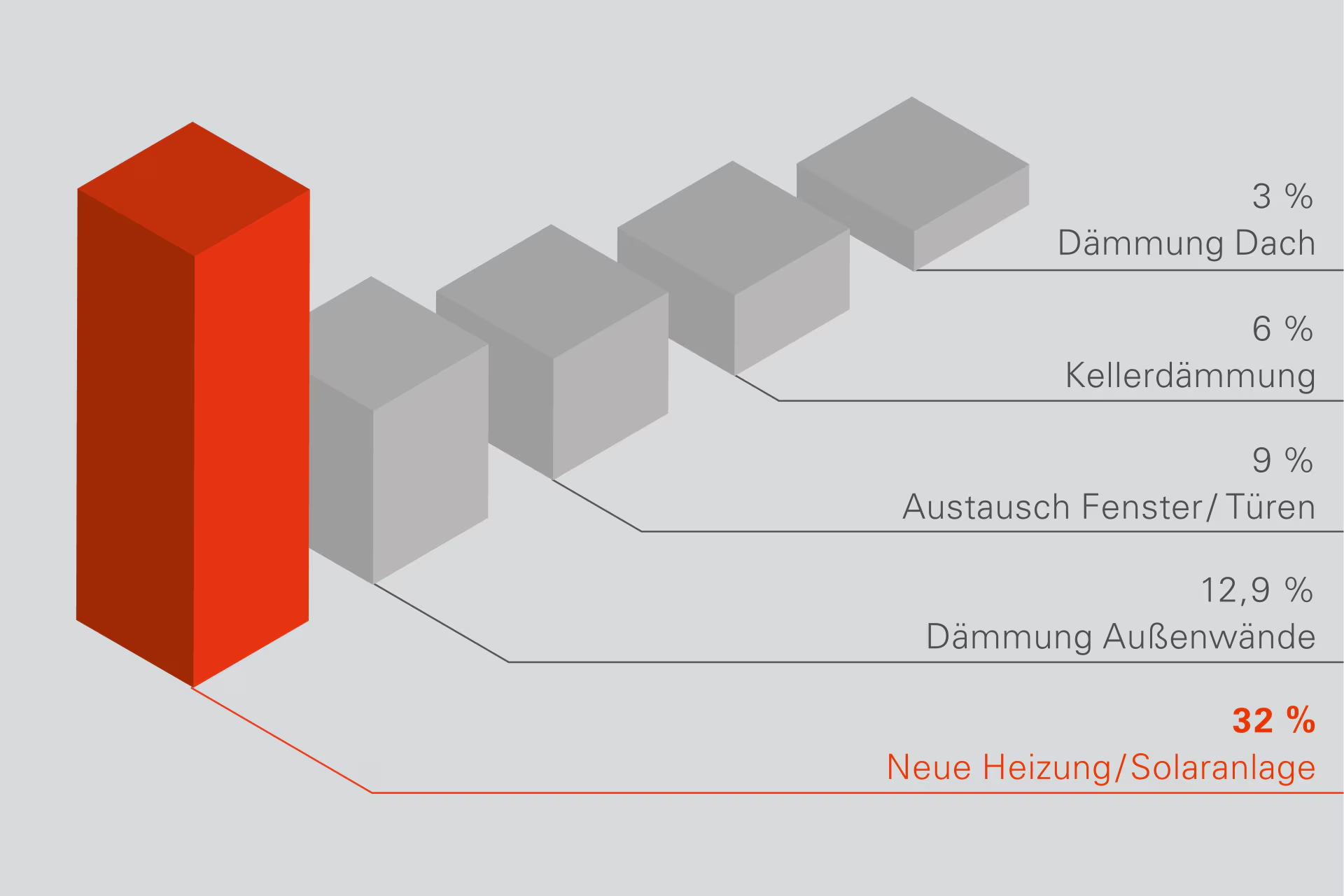
There are many ways to save energy in your home. Upgrading your heating system offers the greatest potential. A new heating system or installing a solar thermal system on your roof can provide significant savings. For an accurate calculation, it’s important to consider the building’s energy rating. However, typically, savings of up to one-third of energy costs can be achieved if you also incorporate renewable energy sources into your heating system upgrade. This is especially true when combined with the other measures shown in the figure. Independent measures, such as insulating exterior walls or replacing windows and doors, only yield savings of about ten percent.

Image

Heating System Upgrade – Start Where It Matters

According to the North Rhine-Westphalia Energy Agency and other organizations, heating and hot water account for an average of 70 percent of household energy costs. Therefore, upgrading a heating system can pay for itself in a short time, even if it presents a financial challenge. Government subsidies can help make this measure cost-effective. To qualify, you must include renewable energy sources. This is because the government specifically supports heating systems that utilize renewable energy sources. Over time, these benefits not only benefit your wallet but also the environment.

When should I upgrade my heating system?

You don’t have to wait for the perfect time to upgrade your heating system—spring, summer, and fall are all suitable. The obvious advantage of replacing your heating system outside of the heating season is that it gives you more time for improvements; the work can be completed before the colder months arrive. However, replacing a heating system is also possible during the winter months and can usually be completed within one to three days. Beyond these factors, it’s crucial to monitor your costs and identify any weak points in your old heating system in advance.

In the following cases, it is advisable to make a replacement:

  • boilers aged about 25 years or more
  • Old boilers that are not yet out of order, but are already 20 years old (installed in the 2000s)
  • Oversized boilers that take up a lot of space in the boiler room and operate at a constantly high boiler water temperature.
  • If during the annual inspection the flue gas inspector finds any abnormal flue gas performance (e.g. flue gas loss greater than 11 percent).
  • 30-year-old constant temperature boilers are subject to mandatory replacement under the German Energy in Buildings Act (GEG)

The correct procedure for upgrading a heating system

Before upgrading your heating system, it’s important to educate yourself about your options. This starts with talking to your neighbors or seeking valuable feedback from friends and neighbors. Even if well-intentioned people advise against it, if you’re unsure, you should replace your heating system. Because of the many energy-efficient measures available, upgrading your heating system is one of the most effective.

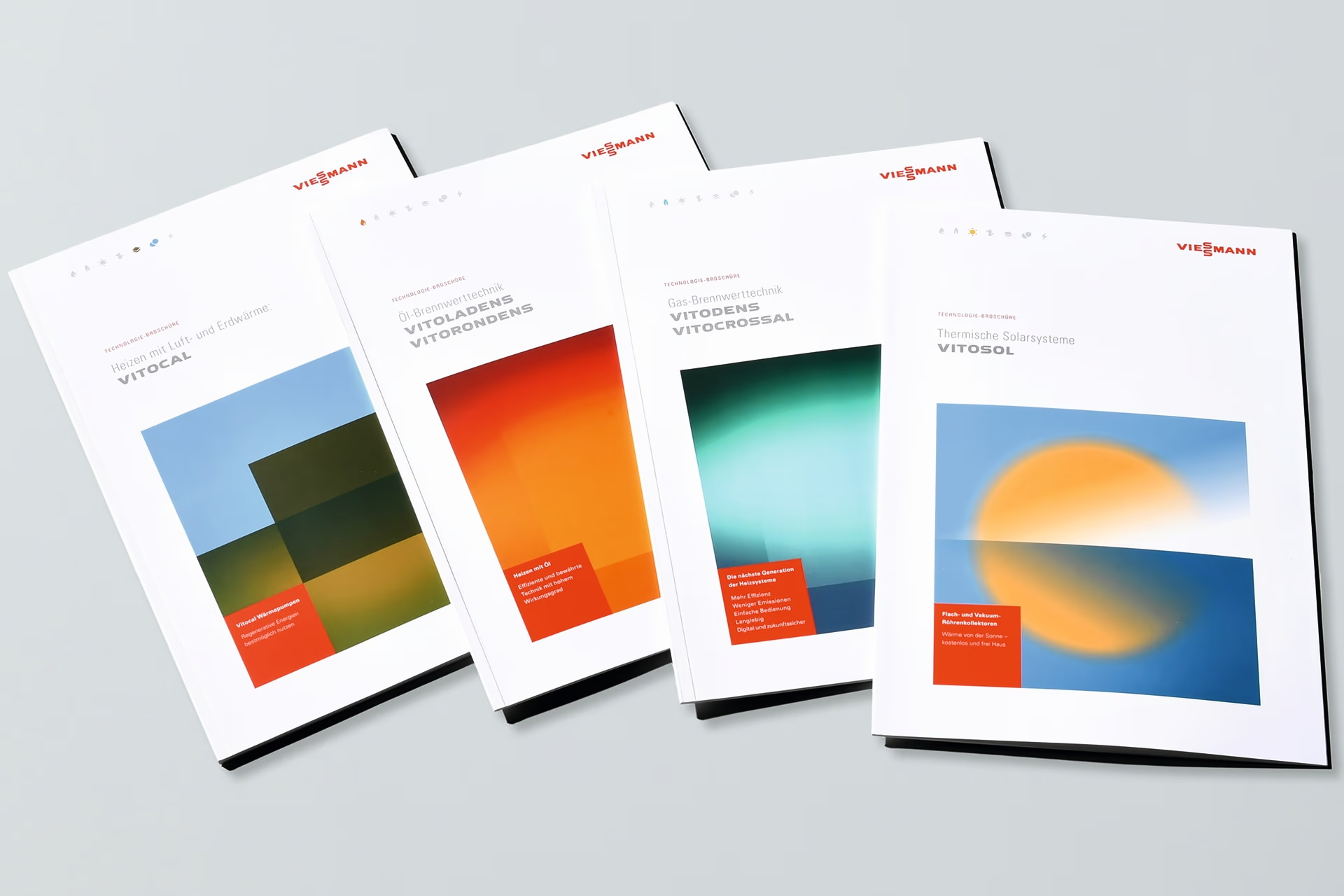
We recommend our Viessmann reference books as a good place to do your own research online.

Sooner or later, any journey must lead to a heating contractor, and in this case, that means a heating system installer. They know exactly what heating systems exist and have extensive experience in upgrading heating systems. Use the ” Consult an Expert ” link to get a referral to a local heating installer of your choice, who will consult with you and handle the upgrade of your heating system. Another option is to contact an energy efficiency expert. Such an energy consultant is especially recommended if you are planning a major renovation.

Think ahead - the effectiveness of heating system upgrades and subsidies

The cost of upgrading a heating system, including replacing a boiler, varies depending on the project and the heating system chosen. In any case, you should consider two aspects: first, the energy savings from a new boiler, which average 10 to 20 percent, and second, the range of available subsidy options. The Federal Funding for Energy-Efficient Buildings (BEG) offers varying amounts of funding (in the form of loans and grants) depending on the heating technology. Applications must be submitted before work begins, so it’s important to learn about suitable options in advance.

Use FöörderProfi to find the right subsidy for upgrading your heating system. Incidentally, FöörderProfi will also handle the application process for you.

It all depends on the heating system installation specialist.

Photo: © A. and I. Kruk / Shutterstock.com

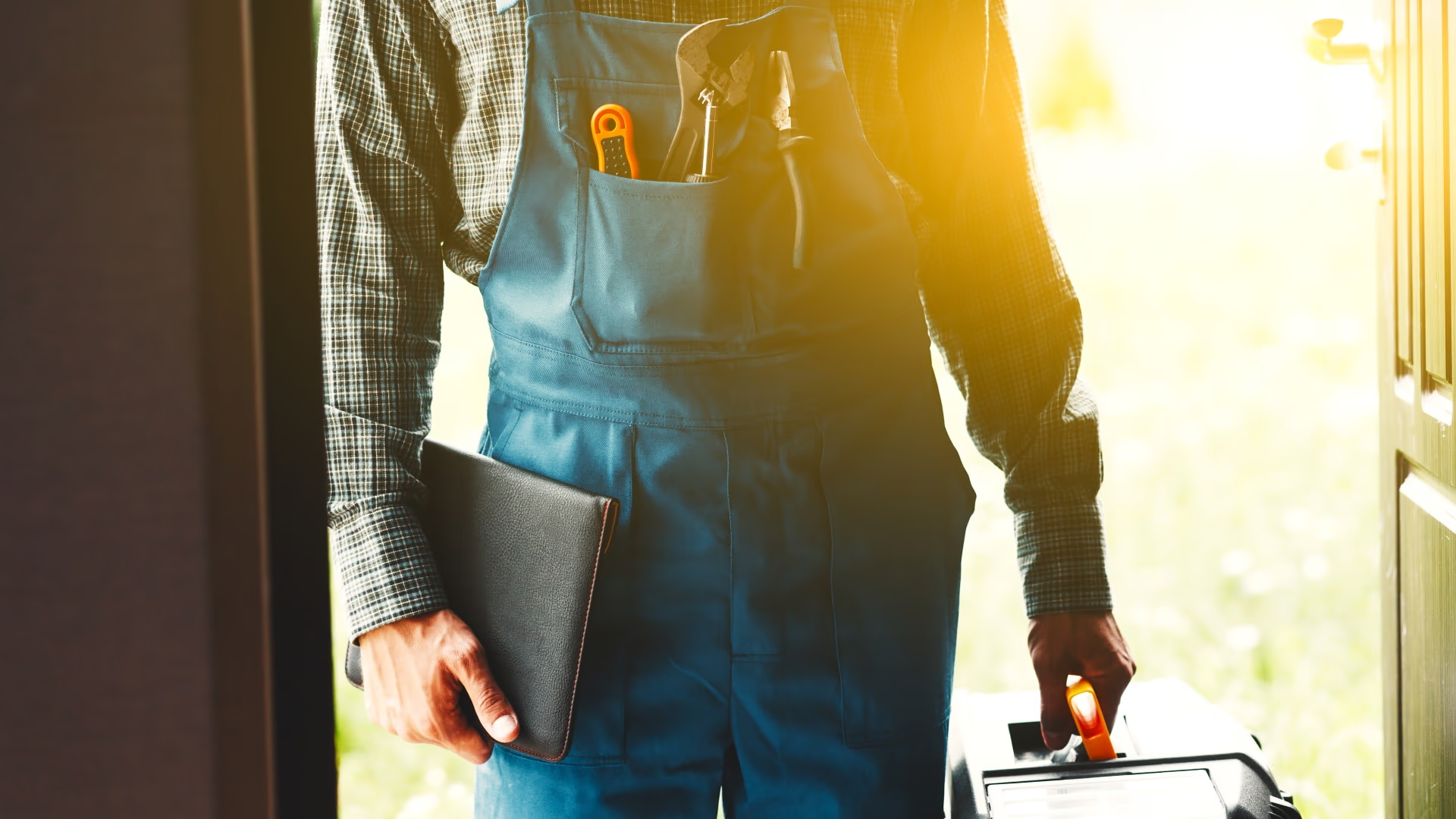
In addition to an efficient, modern Viessmann heating system, you should ensure you have the right heating system installer. The installers we connect you with through our consultation service are experts in their field, with years of experience in heating system upgrades. Many customers are also surprised that the construction work associated with the replacement is relatively straightforward. Experience shows that heating system upgrades often occur much faster than expected.

The right technology for upgrading your heating system

Before workers begin work, you need to choose the right heating system. To determine which system is right for your renovation, you can take our free energy efficiency check beforehand. Besides subsidies, key factors include the building’s energy rating, its age, and available space in the boiler room.

Do you have an oil boiler and are looking for a change? Perhaps it’s worth considering a pellet heating system. The space occupied by the old oil tank can be used for pellet storage. Another advantage is that replacing an oil boiler with a new hybrid system is subsidized by up to 45% in some cases. Planning to install a modern gas heating system? You should consider the climate protection financing guidelines. They state that gas, like a fossil fuel, is only subsidized if it integrates renewable energy sources.

Already found the product you’re looking for? Then check out ViBooks. There you’ll find user manuals for every device in our range.

What should you consider when replacing a heating system?

Once you’ve found a suitable heating system installer and completed the planning, it’s time to get started. Updating a heating system will sooner or later require workers to enter the home, and for many owners, this can temporarily limit their comfort. However, it’s important to consider the benefits, as these measures offer clear benefits and help save energy and money in the long run. Furthermore, the duration of the work always depends on the chosen heating system.

An essential measure: hydraulic balancing

As part of the system replacement process, hydraulic balancing must be performed. This is essential to ensure the new Viessmann heating system fully utilizes its savings potential. Furthermore, balancing is usually a prerequisite for receiving government subsidies. Hydraulic balancing of all radiators ensures uniform heat distribution to the heating surfaces and ensures the correct power output for the respective radiators and the heating system. Hydraulic balancing is performed only by a contractor, who will accurately set the flow rate on the thermostatic valve. In many cases, valve replacement is also necessary.

Compare costs – upgrading your heating system is really worth it.

Once all the work is completed and the heating system and radiators have been carefully adjusted, you can finally see how your new boiler compares to the old one. Whether you’ll actually save as much fuel and as much on heating bills as you expected before the upgrade is difficult to answer definitively. Individual heating habits and the average temperature in a given year play a role, the latter of which we have little influence over. However, everyone can respond to external factors with economical heating habits. An updated and properly adjusted heating system makes this approach effective. Ultimately, it’s always worth taking the bold step of upgrading your heating system.

Other Viessmann guides and tips

Alternatives to oil heating

Alternatives to oil heating

Read more
In what case is it advisable to use a combined heat and power plant

In what case is it advisable to use a combined heat and power plant

For the KU module to be economically viable, the device must operate continuously for as long as possible. Read here to learn why this makes sense.

Read more
Solar thermal energy modernization and energy consumption reduction

Solar thermal energy modernization and energy consumption reduction

Read more