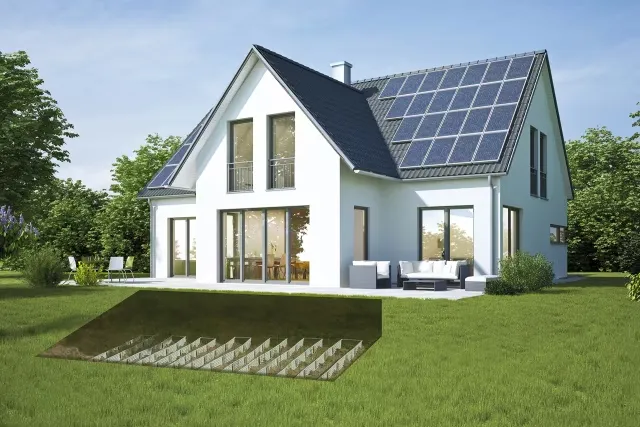
Geothermal collectors
Geothermal collectors for brine/water source heat pumps extract heat close to the surface and can be installed without a permit. You can read more about the differences here.


Let’s start by looking at the design of a combination boiler, such as the Vitopend 100-W type A1JB .
Several elements are responsible for the preparation of hot water in the boiler:
A three-way valve is switched, and the burner’s start and power are controlled by a temperature sensor. Water is heated in flow-through mode.
It should be noted that due to the instantaneous heating of water without storage tanks, it is impossible to install a DHW circulation line on combination boilers. Therefore, in plumbing fixtures located far from the boiler, the hot water in the DHW pipe simply cools down during prolonged inactivity. This increases the waiting time for water to reach the required temperature.
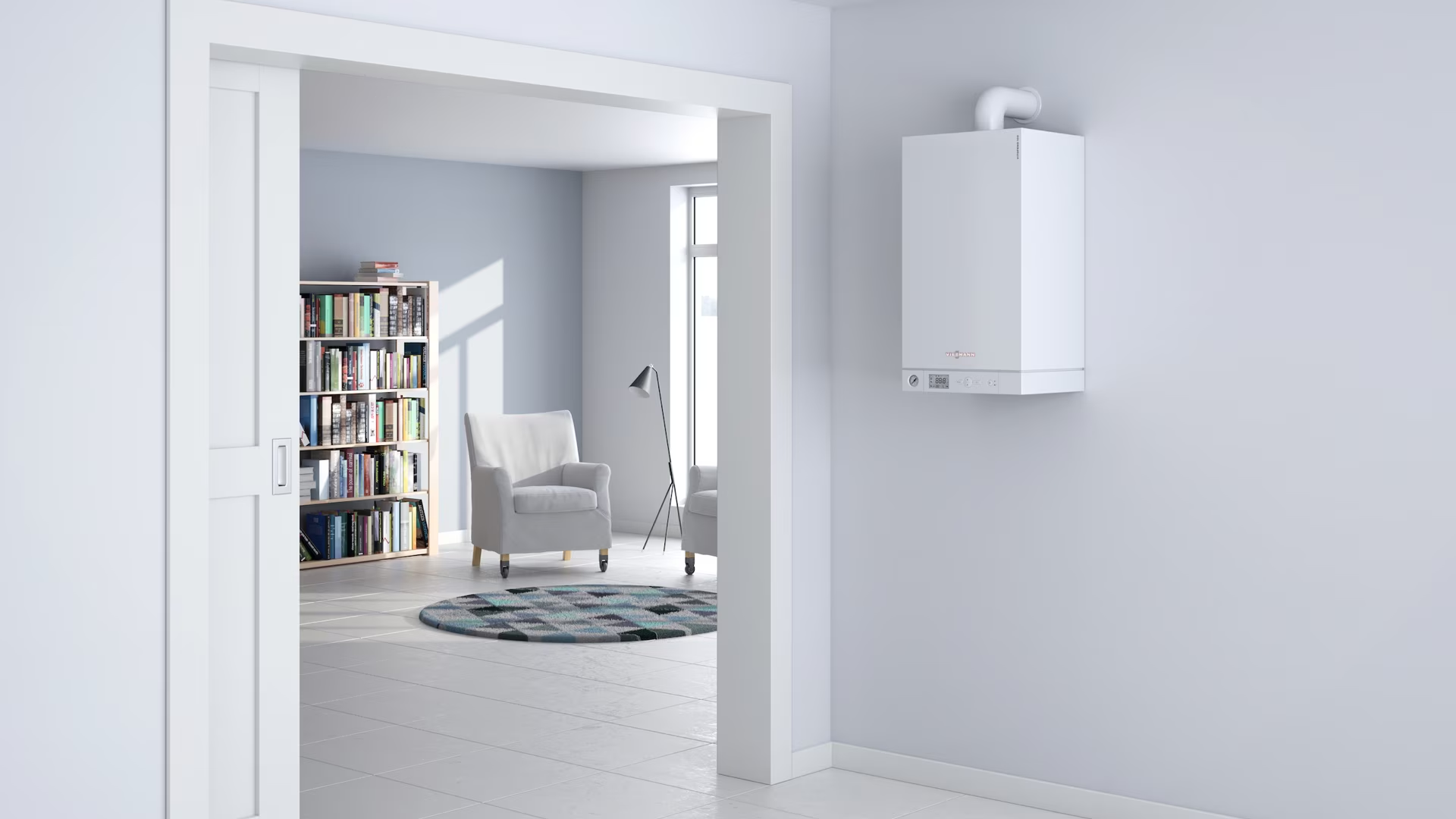
It’s also important to understand that reaching the set temperature also takes some time. For Vitopend 100-W boilers , the time from the moment hot water is called for to the delivery of water at a temperature of 40°C is approximately 40 seconds.
Viessmann also produces boilers equipped with the CombiComfort system (for example, the Vitodens 100-W type B1KC ), which keeps the DHW heat exchanger always in a “hot” operating condition. These boilers significantly reduce the time it takes to reach the set temperature.
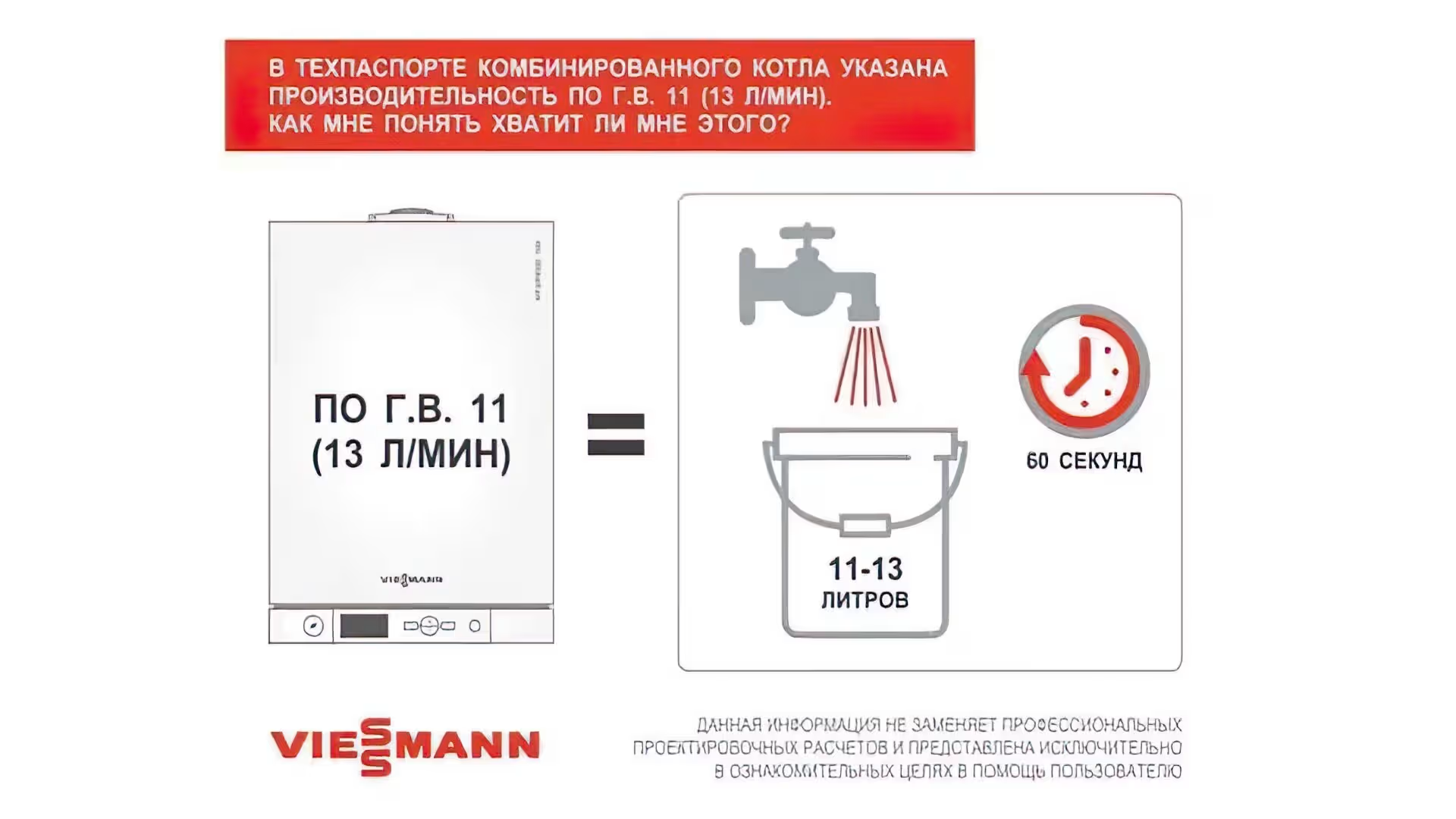
Depending on their power, Vitopend 100-W boilers can produce the following water flow rates at a comfortable temperature of around 40°C:
Below are the water consumption figures for some sanitary appliances according to current regulations:
So, what’s the conclusion? If you own a small house or apartment with one bathroom, or if your family consists of one or two people, a combination boiler is ideal for hot water needs. However, if you have a larger house with several bathrooms and more than two people in your family, the second option is for you.
Most boilers produced by Viessmann already in their basic configuration allow for the production and control of hot water using a boiler.
Single-circuit boilers, such as the Vitodens 100-W type B1HC or Vitopend 100-W type A1HB , are equipped with a three-way valve. When hot water is needed, it switches and directs the coolant into the boiler coil, thereby heating the cold water to the set temperature. Once the desired temperature is reached, the three-way valve switches back to heating.
Other boilers, such as the Vitogas 100-F , Vitocrossal 100, and others , switch over to DHW production differently. They lack a three-way valve, but the automation in these boilers controls the boiler charging pump, which is activated when hot water is needed.
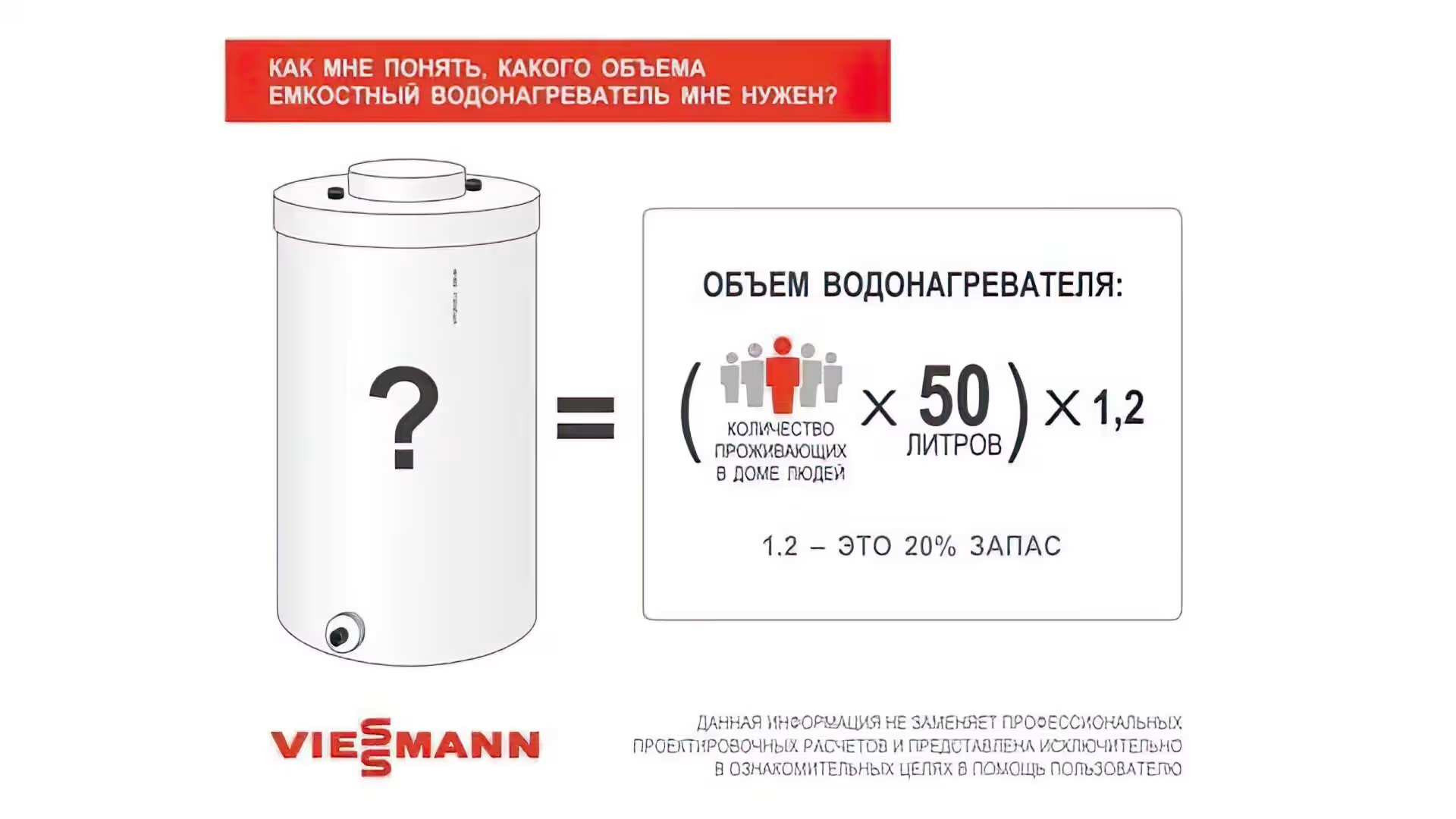
Firstly, you can always choose a boiler of the required capacity based on your needs. Neither the number of bathrooms or plumbing fixtures nor the number of residents will limit you. You will always have a supply of potable hot water. The only requirement is that the boiler’s capacity must match the boiler’s capacity.
Secondly, you can always install a DHW circulation line and make hot water use as comfortable as in a typical city apartment with a central hot water supply. To customize the system to your needs, there are undermount boilers, located directly under the wall-mounted heat generator, and freestanding boilers (in both vertical and horizontal versions).
The performance data for combination boilers was presented at the beginning of the article. Now, as an example, let’s look at the figures for a 24 kW boiler with the smallest possible 100 liter capacity:
In systems with a boiler, it’s advisable to set a higher DHW temperature and then achieve a comfortable temperature for the user using the mixer tap. This way, you can comfortably use several plumbing fixtures simultaneously. Depending on your needs, you can choose a larger and more powerful boiler.
A system with an indirect heating boiler is also essential when using a Vitosol solar collector. A special series of bivalent water heaters, the Vitocell 100-W type CVBB, is produced for this purpose. These heaters feature two heating coils: one for the boiler and one for the solar collector.
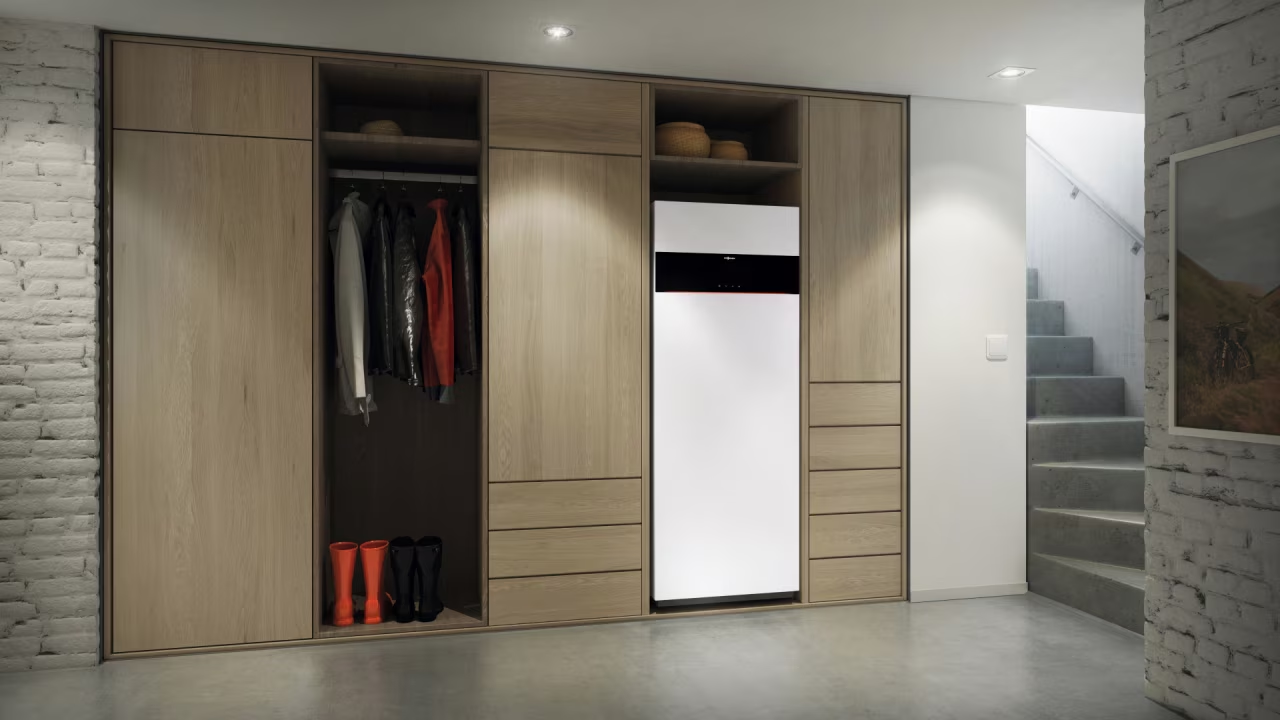
Viessmann produces boilers with a DHW buffer tank. In its domestic appliance line, these boilers are represented by the Vitodens 111-W type B1LD and the Vitodens 222-F type B2TB .
These boilers are equipped with a stainless steel buffer tank with a layered loading capacity of 46 and 100 liters, respectively. This reserve is depleted when hot water is used. At the same time, the boiler switches to an operating mode similar to a combination boiler, resulting in continuous hot water production. As an example, consider the volume of hot water produced by this 26 kW boiler in 10 minutes:
The undeniable advantage of the system is its compactness, as all elements are housed in a single wall-mounted housing.
Boilers with a buffer tank are free from the disadvantages of combination boilers and at the same time remain compact.
Geothermal collectors for brine/water source heat pumps extract heat close to the surface and can be installed without a permit. You can read more about the differences here.