MENU

Prolonged heat, poor air quality, and the need to create a healthy indoor climate are increasing interest in air conditioning systems. For many, it’s not just about cooling during the summer months but also about achieving a high level of thermal comfort. Humidity plays an equally important role, as does filtered air—free of viruses, allergens, and other pollutants. Learn more about the benefits of air conditioning systems, their various applications, and their features in the following overview.

The advantages of the Viessmann air conditioning system in brief

Heating, active cooling, dehumidification and air purification in one compact device

Flexible system for transition periods and ideal combination with other energy solutions

IDF filters for healthy and pleasant indoor air

Comparatively low investment and low operating costs with own electricity consumption

Very quiet operation thanks to the separate design with indoor and outdoor units

Convenience thanks to simple and fast control

Improve indoor air quality quickly and easily

Unlike many mobile units and simple fans, warm air in a room isn’t simply swirled or enriched with moisture. The Viessmann air conditioning system creates a pleasant indoor microclimate. It not only quickly cools but also simultaneously dehumidifies and purifies the air. This ensures a high level of comfort and coziness. Furthermore, the system effectively removes harmful air pollutants such as allergens, viruses, and other pollutants.

Compact heating and cooling

An air conditioning system can not only actively cool rooms but also provide heating during transitional periods, support existing heat generators and energy systems, or temporarily replace them entirely. On some days in spring and fall, the mornings and evenings can still be very cool. This is where an air conditioner in a home comes into its own as an ideal supplemental heating source.

Air conditioning system as a flexible system for various applications.

Viessmann air conditioning systems are ideal for hybridizing your home, including adding a photovoltaic system . This increases your self-consumption of the electricity you generate, as the highest solar radiation and greatest cooling demand coincide. When combined with other energy solutions, you can also save fossil fuels, especially if you supplement and maintain an existing gas or oil heating system. A multi-split air conditioner also offers the flexibility of combining multiple indoor units, simultaneously providing cooling to multiple areas of your home.

Image

Air Conditioning Tips

Ask for advice now! →

How does an air conditioner work?

Essentially, an air conditioner extracts heat, or thermal energy, from the air in a room and transfers it outside. Heat typically flows from a higher temperature to a lower temperature. However, on hot days, when it’s even warmer outside than inside, we want the opposite: heat should flow from the outside to a higher temperature, making the inside much cooler and more pleasant. The basis for this, similar to an air-to-water heat pump , is the refrigerant circuit—only in reverse. This process allows energy to flow from the inside to the outside. A key requirement for this is that the refrigerant used in the air conditioning system evaporates at room temperature.

Brief description of the refrigerant circuit

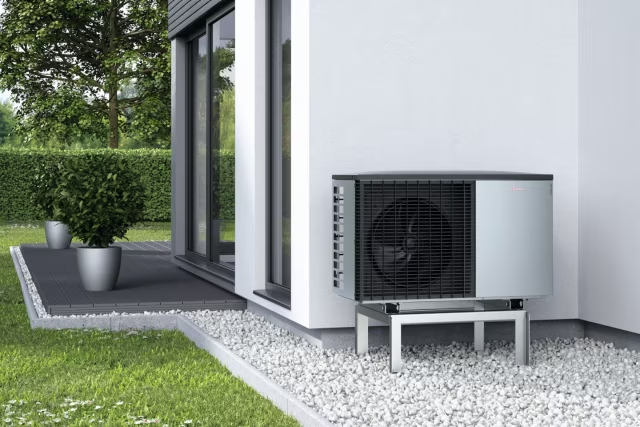
First of all, it’s worth clarifying that Viessmann offers so-called split air conditioning systems. These consist of an indoor and outdoor unit. The fan and evaporator are located in the indoor unit. All other components are located in the outdoor unit.

  • The fan draws in warm air and directs it past the heat exchanger.
  • The heat exchanger contains liquid refrigerant.
  • The refrigerant absorbs heat energy from the air in the room and evaporates.
  • The room noticeably cools down.
  • The refrigerant passes through the compressor. The pressure increases, and with it the temperature of the now gaseous refrigerant.
  • Thermal energy – heat in the form of a warm gaseous medium – is released to the outside.
  • The refrigerant pressure and temperature return to their original levels. The medium liquefies, and the cycle can begin again.

More information about the heat pump

Air Source Heat Pump: Overview and Products

Air Source Heat Pump: Overview and Products

Read more
How does a heat pump work?

How does a heat pump work?

Read more
Heat pump and electricity consumption

Heat pump and electricity consumption

Read more

What is cooling capacity?

Cooling capacity is analogous to heating capacity and can be calculated accordingly. Essentially, this performance parameter describes how much heat energy an air conditioner or other cooling device can absorb and dissipate in a given time to cool a room or rooms. Ideally, the system is designed so that the performance matches all internal and external heat sources. These include, in particular, large windows or other glass surfaces that allow relatively large amounts of solar radiation into the rooms. Furthermore, the relatively moderate insulation of the outer shell also affects the heating load in the home during the summer months. Other factors include the number of people moving within the room or building and the amount of heat supplied by electrical appliances. These factors must be taken into account when calculating the cooling load in accordance with VDI 2078. Furthermore, the perceived temperature also plays a decisive role in the evaluation and design of the system. Cooling capacity is specified in watts or kilowatts.

What are the different types of air conditioners and ventilation units?

There are various solutions for cooling a building or space. They range from simple fans with cooling functions, such as portable or permanently installed air conditioners, to monoblock air conditioners and split air conditioners, which form an entire system with multiple indoor units. Depending on the sophistication of the technology, units and systems typically achieve lower or higher performance levels. Furthermore, split air conditioners, in particular, are equipped with additional features.

Simple cooling fans and portable air conditioners

These room cooling options are very inexpensive to purchase and are available in both stationary and portable versions. They typically consist of several components: a fan, a water tank, and an evaporative mat. The latter is humidified by the tank. The fan forces air through it, causing the water to evaporate. This cools the surrounding air. A major drawback is the high moisture content they introduce into the room. Furthermore, the device quickly loses its effectiveness when the water tank empties.

Monoblock air conditioners

A monoblock design means that the entire refrigerant circuit runs within a single unit. This requires a hose that exits to the outside through a window or door. Condensate formed during the cooling process and heated exhaust air are expelled through this hose. Monoblock air conditioners can also dehumidify the air and purify it through a filter. The main disadvantage of this design is its relatively high noise level. Furthermore, the opening for the condensate hose must be tightly sealed.

Separate layer climbing

A split-system design is characterized by the system consisting of an indoor and outdoor unit. This means the refrigerant circuit is divided between the two units. The compressor is located in the outdoor unit. This has the advantage of extremely quiet operation. The two units are connected only by thin pipes in the outer wall. Furthermore, the split-system air conditioner is equipped with an inverter motor, which allows for power adjustment based on demand. This, in turn, results in highly efficient operation and energy savings. A split-system design also allows for connecting multiple indoor units in a home to a single outdoor unit. This is known as multi-split air conditioning. Due to these numerous advantages, Viessmann exclusively offers split-system air conditioning systems.

Free downloadable PDFs on air conditioning for your home

Tips for Buying an Air Conditioner for Your Home

Before purchasing, you need to make a decision. You can enlist the support of our partners—specialized companies. During an on-site meeting, you can clarify all the important points with an expert. A good preparation is to clarify a few questions in advance. Please consider the following overview as a checklist to help you clarify the most important aspects of purchasing an air conditioning system. Keep in mind that this list is not exhaustive. Only a personal consultation will help you find the cooling and ventilation solution that meets your needs.

  • What purposes should an air conditioner or ventilation unit be used for?
  • Is it only about cooling the rooms or should heating also be taken care of?
  • How large is the space or spaces that need to be cooled? Are these individual rooms or an entire building?
  • When and how often will the system be used? Would it be needed for a vacation home or other facility that is only used temporarily?
  • Is there an existing air conditioning system or mobile air conditioning unit and should it be integrated into the new system?
  • Do you have a photovoltaic system and would like to increase self-consumption?
  • Should a new Viessmann air conditioning system be integrated with an existing heat generator or is it necessary to plan a new complete solution?

For actual planning, key factors such as the size of the residential space or building will be just as important as the number of occupants, location, and solar radiation, and therefore the maximum temperatures expected in summer. The specialist company you select will discuss all these factors with you, and together they will create the optimal solution.

Image

Air Conditioning Tips

Ask for advice now! →

Upgraded air conditioning

Vitoclima Viessmann air conditioning systems are suitable for both new construction and modernization. Modernization is no problem. Planning is particularly important here. The type, size, and, most importantly, the capacity must be matched to the existing building and your living conditions. In addition to the above considerations, special consideration should be given to existing cooling systems, heat generators, or power generators during planning.

Application areas of split air conditioners as a decisive factor

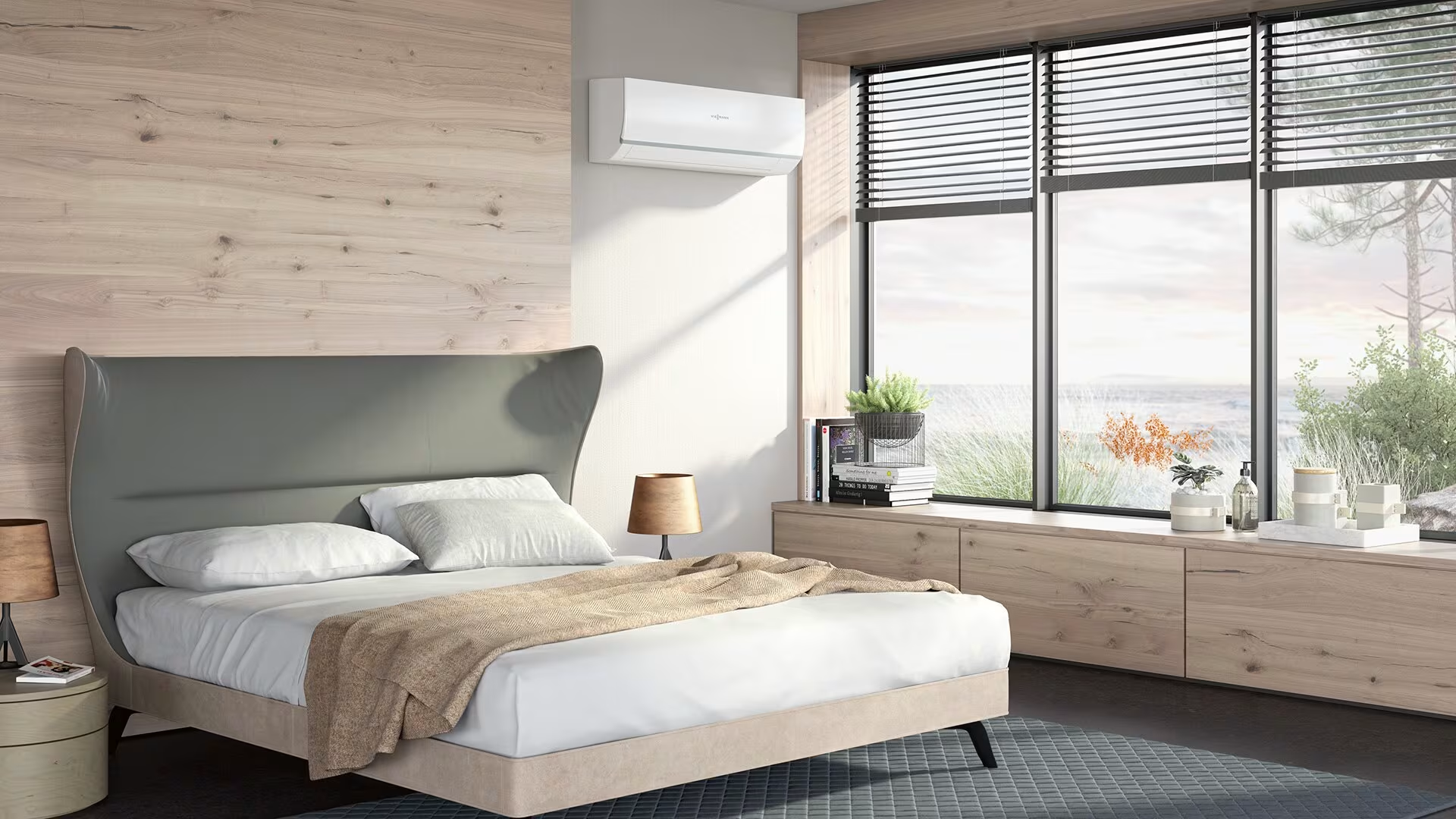
When deciding whether to air-condition individual rooms or the entire house, it’s important to plan where the system will be used. Performance and possible combinations depend on the intended use. For example, you might plan to install an air conditioner in the attic, where it can be especially uncomfortably warm during the summer months. You could also use an air conditioner in the bedroom to ensure a pleasant sleep on tropical summer nights. You also have the option of air-conditioning the entire house. A multi-split system, for example, is ideal for this. Discuss with a local professional in advance where cooling needs are greatest and whether there are any upgrade options you can consider for future use.

Image

Air conditioning and its cost

In principle, air conditioning systems are characterized by relatively low investment costs. Especially if the system has been properly planned and thus customized, operating costs are also low. Importantly, air conditioning systems can fully utilize their benefits when combined with other heat generators. This is especially true if the air conditioning system also provides heating. This is an ideal option during transitional periods. Other systems can safely be switched off during the relatively mild spring and fall months.

The aforementioned combination with a photovoltaic system and energy storage, such as the Vitocharge VX3, is particularly efficient. By drawing electricity from your own roof, you also reduce your air conditioning costs.

Additional information and guidance

Heating systems in old buildings - effective modernization

Heating systems in old buildings - effective modernization

Read more
Alternative to gas heating

Alternative to gas heating

Read more
Heating system - which one is right for you?

Heating system - which one is right for you?

Read more