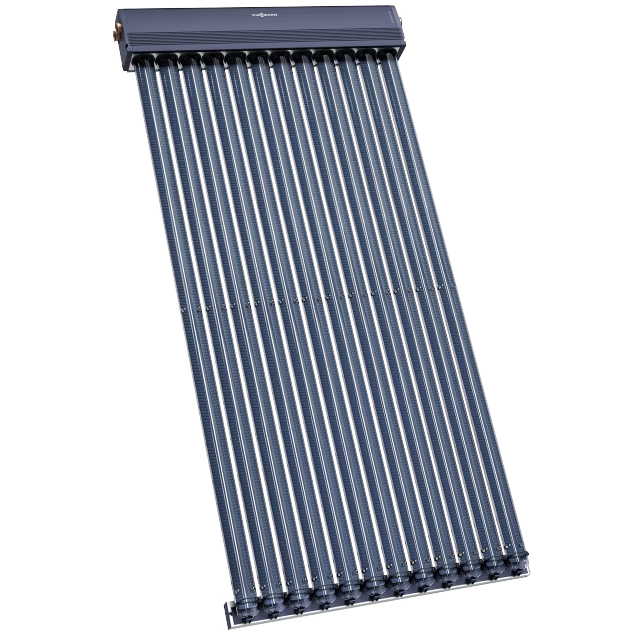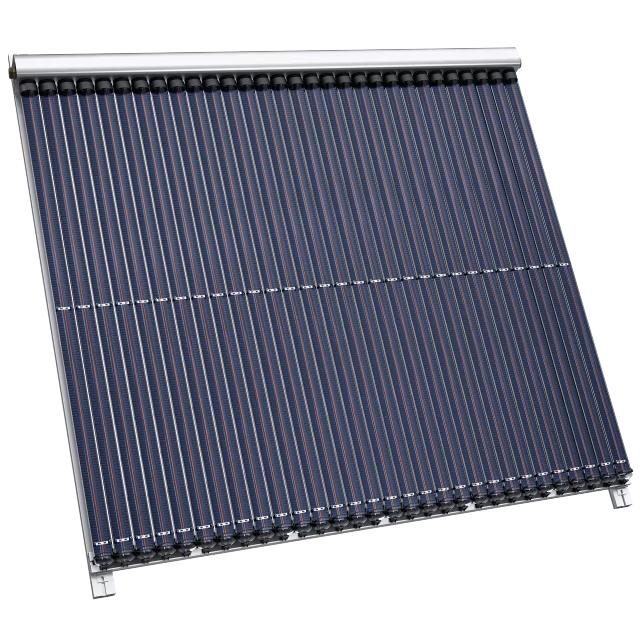
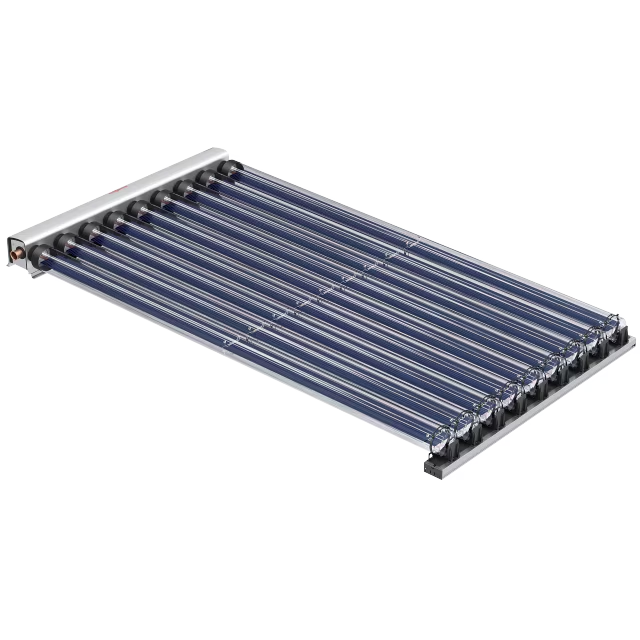
Vitosol 200-TM
Solar Systems
- How a heat pipe works
- Long service life
- ThermProtect
- Overheat Protection
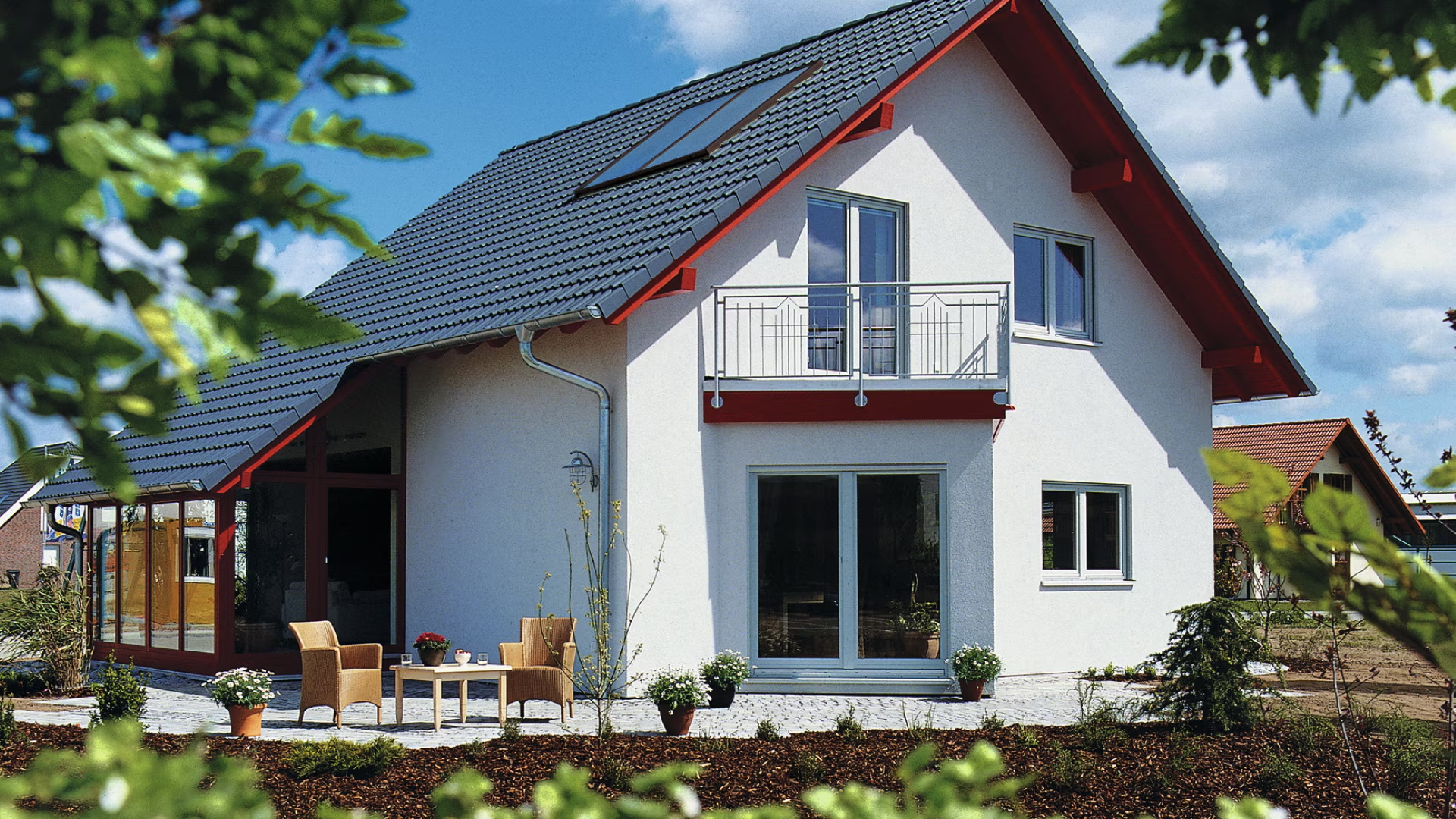
Anyone investing in a new heating system today should design it with solar thermal systems in mind from the outset. By installing solar collectors, you demonstrate your commitment to protecting the environment by sustainably reducing CO₂ emissions. You can also save up to 60 percent on your annual domestic hot water energy consumption. With Viessmann, you have a reliable partner at your side. We draw on 40 years of experience in developing and manufacturing solar thermal systems. You can count on the highest quality. With this technology, you can future-proof your system and rely on the optimal interaction of all system components.
Unlike Viessmann flat-plate collectors, the absorber in evacuated tube solar thermal collectors is located directly on the tubes themselves. In the former, the tubes through which the solar radiation passes are sandwiched between two flat absorber layers. Another unique feature is the vacuum. In evacuated tube collectors, the second tube is surrounded by a vacuum. This provides particularly effective thermal insulation. This ensures virtually no heat loss between the absorber and the inner glass tube. The absorber is located inside the evacuated tube collector, protecting it from dirt and atmospheric influences. This, in turn, ensures consistently high energy efficiency.
Another key component of Viessmann’s Vitosol evacuated tube collectors is the heat exchanger. It transfers heat from the absorbers to the connected heating circuit.
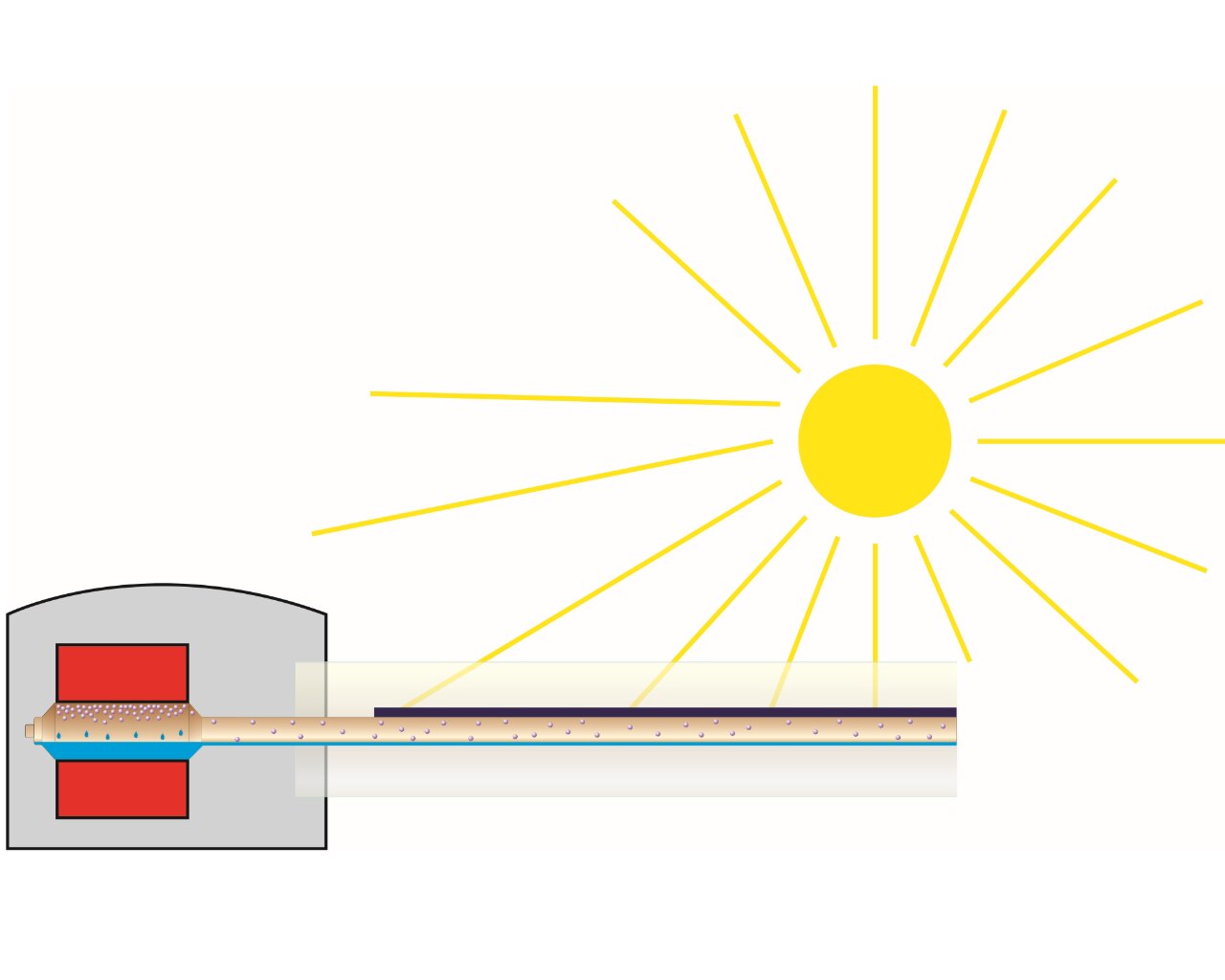
Viessmann evacuated tube collector technology is based on the “heat pipe principle.” The key feature of this principle is that solar radiation does not pass directly through the tubes. Instead, the heat pipes are dry-connected to the heat exchanger. But what exactly happens in the heat pipe, and how does the patented ThermProtect function work?
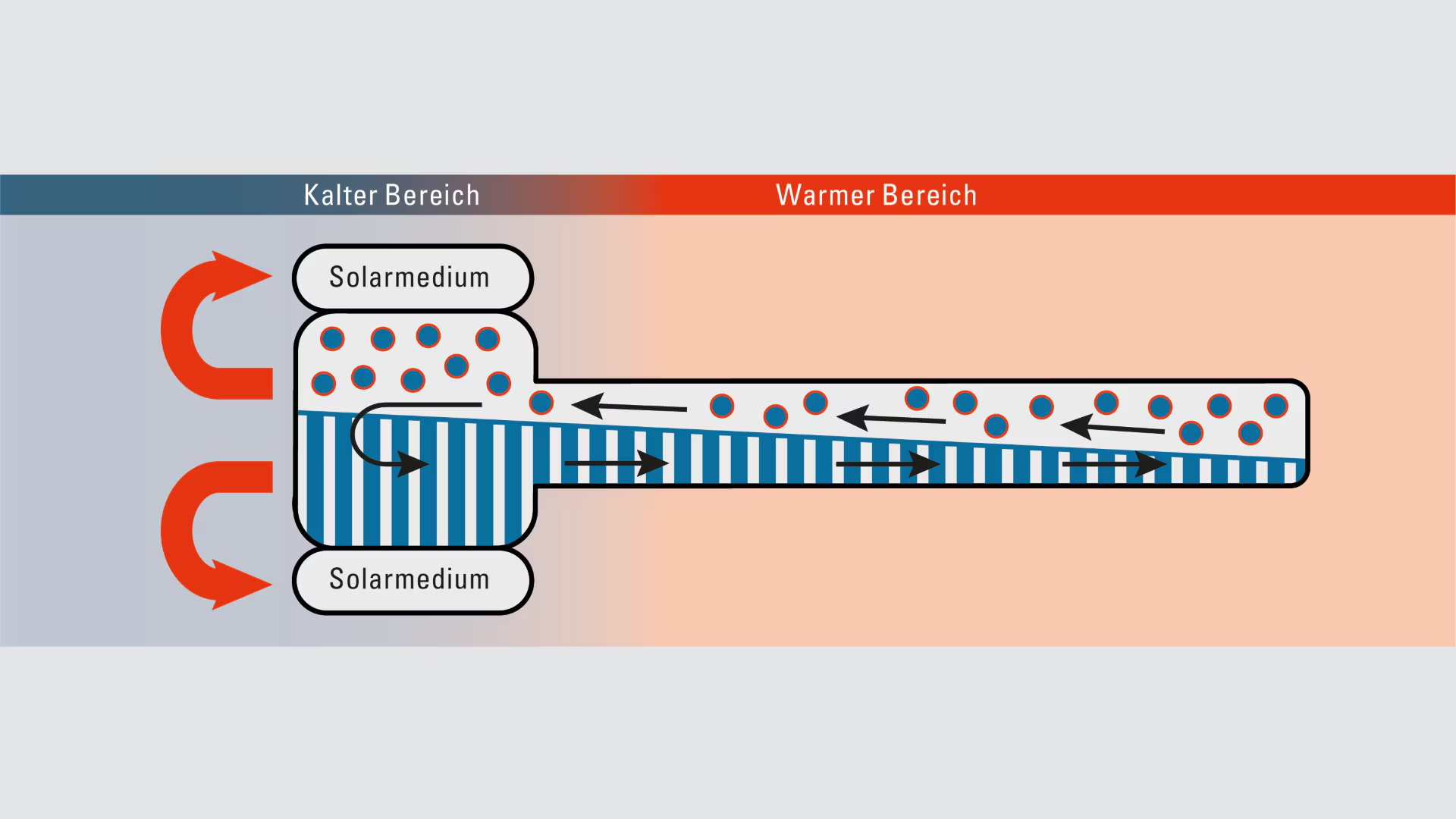
Sunlight hits the absorber. The solar heat evaporates the coolant in the heat pipe. When it reaches the cooler areas of the collector, i.e., away from direct solar radiation, the vapor turns back into a liquid. This process releases energy—heat—which is transferred to the solar thermal system via a dual-pipe Duotec heat exchanger (Vitosol 300-TM) or copper heat exchanger (Vitosol 200-TM). In its liquid state, the coolant in the heat pipe flows back to the sunlit area, and the process begins anew, continuing as long as the sun shines.
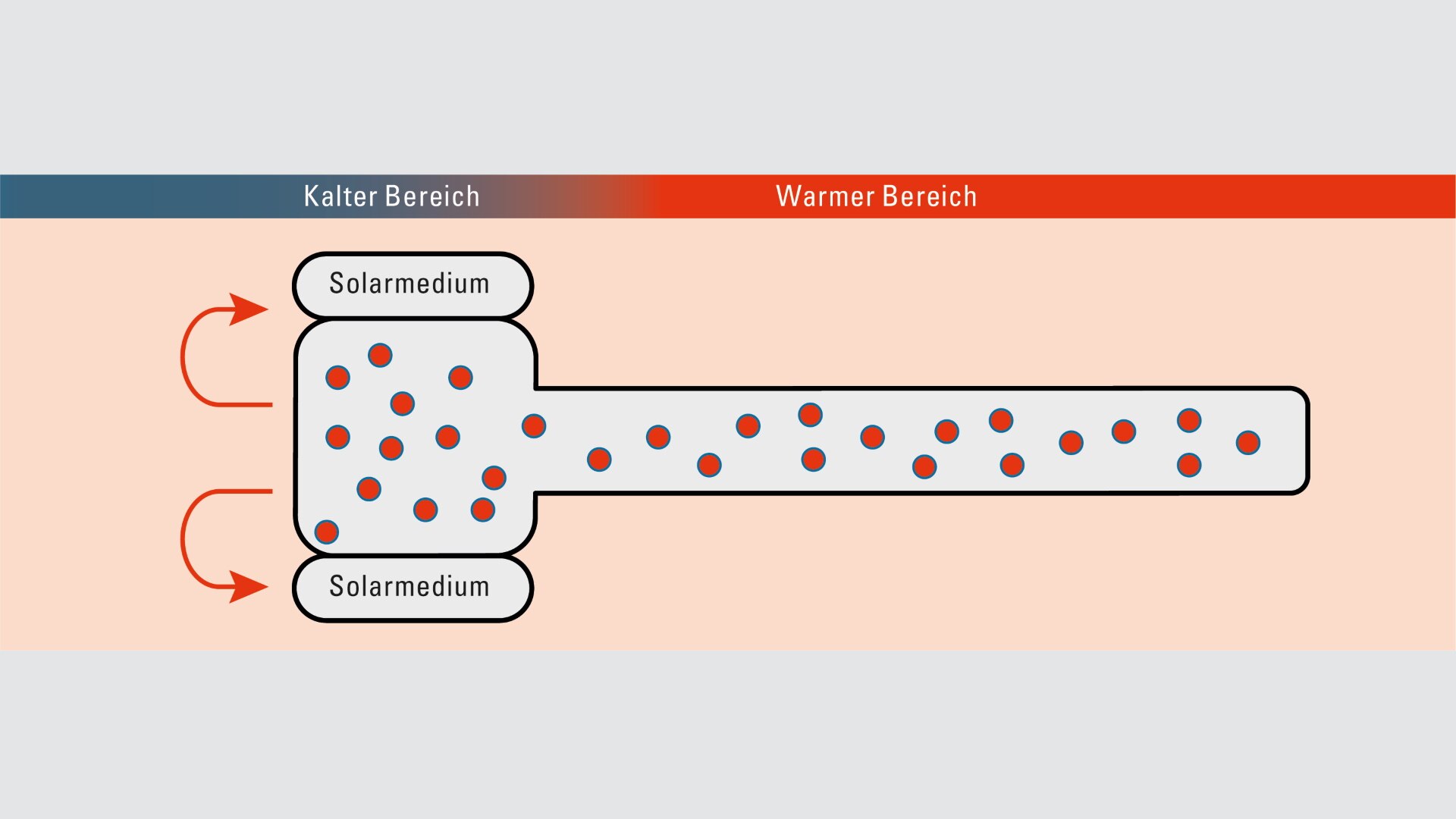
This process is interrupted when the temperature limit of 150 degrees Celsius is exceeded. This occurs when the medium no longer condenses and liquefies in the cooler areas of the pipe. This principle helps protect the system from excessively high stagnation temperatures and thus prevents overheating. This makes the Vitosol 200-TM and Vitosol 300-TM suitable for buildings that are unoccupied for part of the year, such as holiday homes. The circuit restarts only when low collector temperatures are reached.
Both Vitosol 300-TM and Vitosol 200-TM are characterized by the following:
Protection against overheating or excessive stagnation temperatures thanks to ThermProtect via a self-regulating heat pipe
Highly efficient through absorber with highly selective coating
Particularly effective thermal insulation due to the vacuum, virtually no heat loss between the glass tube and the absorber
Exceptionally long service life thanks to corrosion-resistant materials
Constantly high energy yield thanks to the integration of the absorber into the vacuum tube and thus protection against dirt and atmospheric influences
Particularly high operational reliability thanks to the dry connection of the heat pipe to the heat exchanger and low liquid content
Easy installation thanks to modular design
Furthermore, the Vitosol 300-TM is particularly suitable for spaces with limited space, such as detached houses and apartment buildings with small roof areas. The absorbers have a flexibly adjustable angle of +/- 25 degrees, allowing them to be used in locations with less favorable sun exposure.
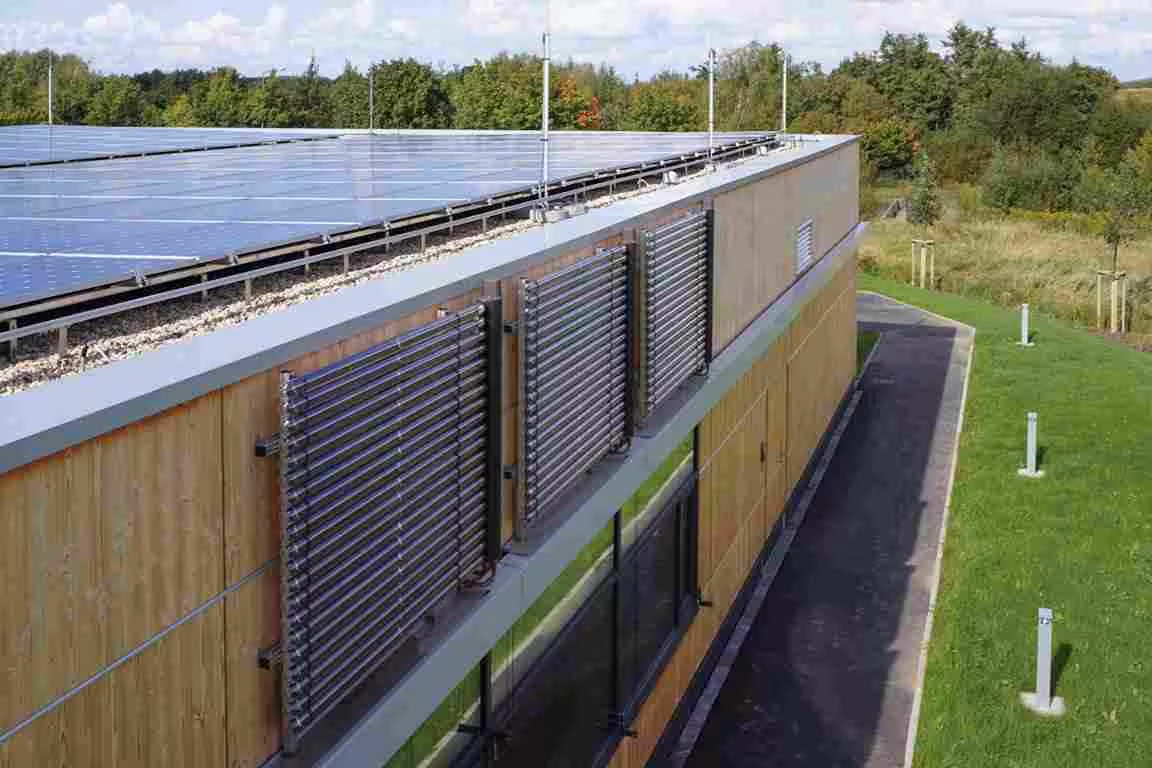
The Vitosol 200-TM model is best suited for horizontal installation in large systems on flat roofs and apartment buildings. Like the Vitosol 300-TM, it is also position-independent, as the absorbers can be rotated by +/- 45 degrees.
Efficient solar heat utilization – Viessmann tube collectors are capable of converting even low levels of solar radiation into useful heat. Absorbers with a highly selective coating ensure high efficiency. At the same time, the vacuum in the tubes provides highly effective thermal insulation. This means that losses between the glass tubes and the absorber are virtually nonexistent, allowing the collector to convert even low levels of insolation into useful heat. Evacuated tube collectors utilize available solar radiation extremely efficiently, especially in spring and fall, as well as in winter, when outside temperatures are low.
With a solar thermal system, you save not only money but also the environment. Our video explains how it works. Learn more here!
A solar system provides energy independence. It reduces energy costs and protects the environment. We’ll explain the differences between photovoltaics and solar thermal energy and how they work.
With solar thermal systems, you can harness the sun’s free energy in your own home. This reduces heating costs and protects the environment. We provide information on the design and operation of solar thermal systems.