


Using a photovoltaic system, sunlight can be converted into electrical energy. This is based on the “photoelectric effect,” which was discovered in the 19th century but was only physically explained and applied in the 20th century. Its first application was space travel. Today, this technology can be found on many rooftops, providing residents with electricity from free solar energy. Photovoltaics are also suitable for reducing electricity costs for businesses and local governments, while simultaneously contributing to climate protection.
How does photovoltaics work?
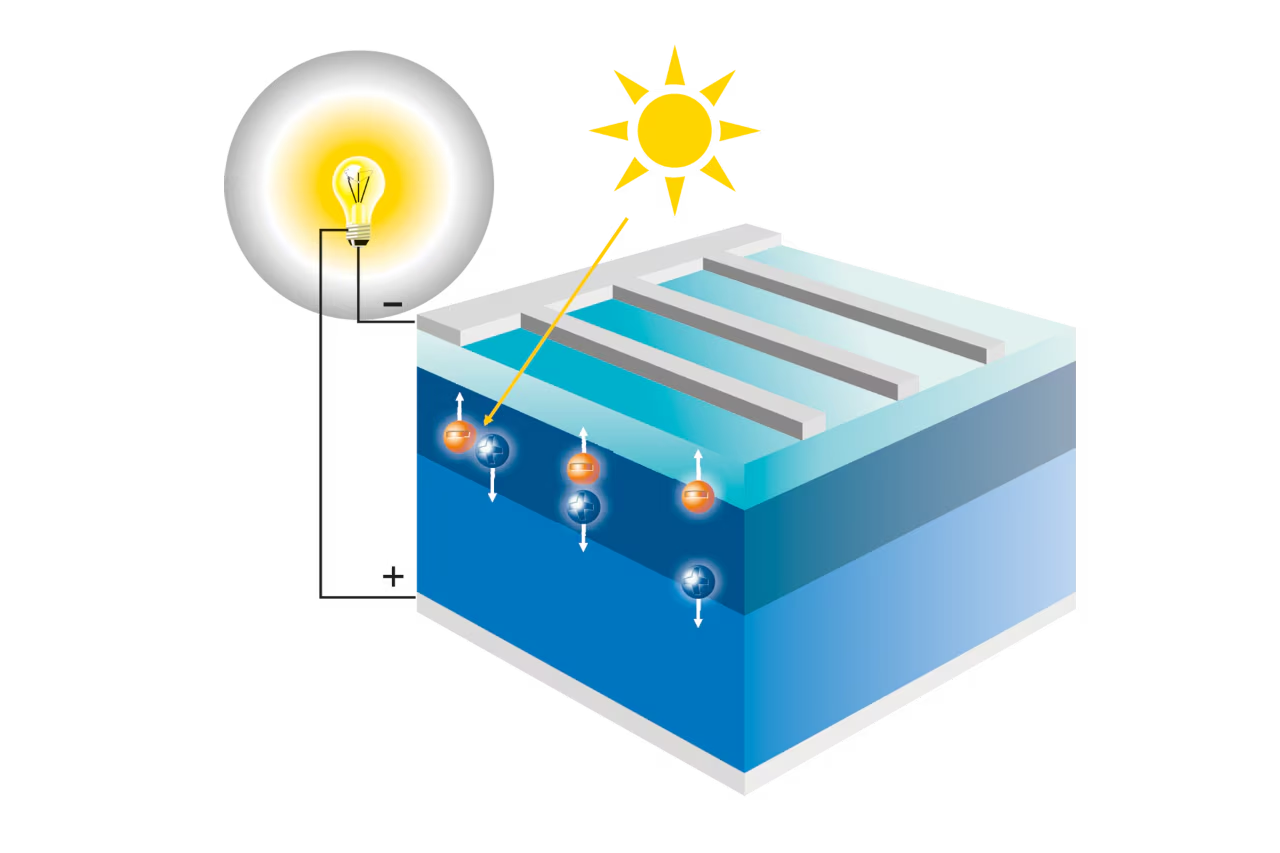
Photovoltaics are based on solar panels. These cells convert radiant energy into electrical energy. These cells can be connected together to form modules, which are then installed on roofs, facades, and open spaces. Electricity production can be broadly divided into two stages:
- Energy Harvesting: When light falls on photovoltaic modules (PVMs), electrons are released inside the solar cells. Positive and negative charge carriers collect at their respective electrical contacts, causing a direct current to flow between the front and back of the cell. This photovoltaic effect occurs without mechanical or chemical reactions, so it requires no maintenance and is not subject to wear.
- Energy Conversion: The direct current generated by the solar panel is converted by an inverter (commonly also called a solar inverter or grid-tie device) into grid-ready alternating current (AC) (230 or 400 volts AC at 50 Hz). Tested safety standards and fully developed processors, along with advanced power electronics, ensure efficient solar energy conversion. The resulting AC current can be used in the home or fed into the public grid.
The efficiency of photovoltaics depends on the solar cell manufacturing technology. In the Vitovolt 300 from Viessmann, we distinguish between monocrystalline and polycrystalline cells. The following table shows the differences between these two types.
| Solar cell type | Description | Efficiency |
| Monocrystalline elements | Powerful elements made of pure single crystals | From 14 to more than 19 percent |
| Polycrystalline cells | Made from cast silicon blocks with crystals of varying orientations | from 12 to more than 17 percent |
Vitovolt 300 monocrystalline photovoltaic modules feature ultra-dark monocrystalline solar cells housed under a special low-iron, highly transparent glass backing. Combined with a black anodized frame and a black Tedlar film under the cells, this creates modules that offer the highest performance, maximum stability, and a modern design. These modules come with an extended 10-year product warranty and a performance guarantee of up to 25 years, guaranteeing at least 80 percent of the rated power. Both monocrystalline and polycrystalline Viessmann solar panels are suitable for use in residential, commercial, and institutional buildings.

Photovoltaic expert consultations
Get a free, personalized consultation on our photovoltaic systems from our qualified partners!
Request a consultation now →Take advantage of Viessmann photovoltaic systems
With energy costs constantly rising, photovoltaic systems help users save money and reduce their dependence on utility companies. The energy generated can be used for on-site use or exported to the public grid. Thanks to the statutory remuneration and the savings resulting from self-consumption, the investment pays for itself in just a few years. A photovoltaic system also increases property value.
Responsibility and climate safety
By installing photovoltaic modules, users demonstrate their responsible attitude towards the environment and actively contribute to climate protection by reducing CO₂ emissions. 8.5 m2 of photovoltaic surface area is sufficient to meet the electricity needs of the average person.
Reliable technology and comprehensive service
Our high-quality photovoltaic modules ensure cost-effectiveness and a long service life. Comprehensive services—from design and sizing to delivery and maintenance—complete the photovoltaic module portfolio offered by Viessmann’s professional partners.
Optimal interaction of components
Viessmann photovoltaic technology offers you perfectly coordinated components consisting of photovoltaic modules, inverters and installation systems, as well as energy storage systems and heat pumps for increased self-consumption.

Preferential remuneration and self-consumption
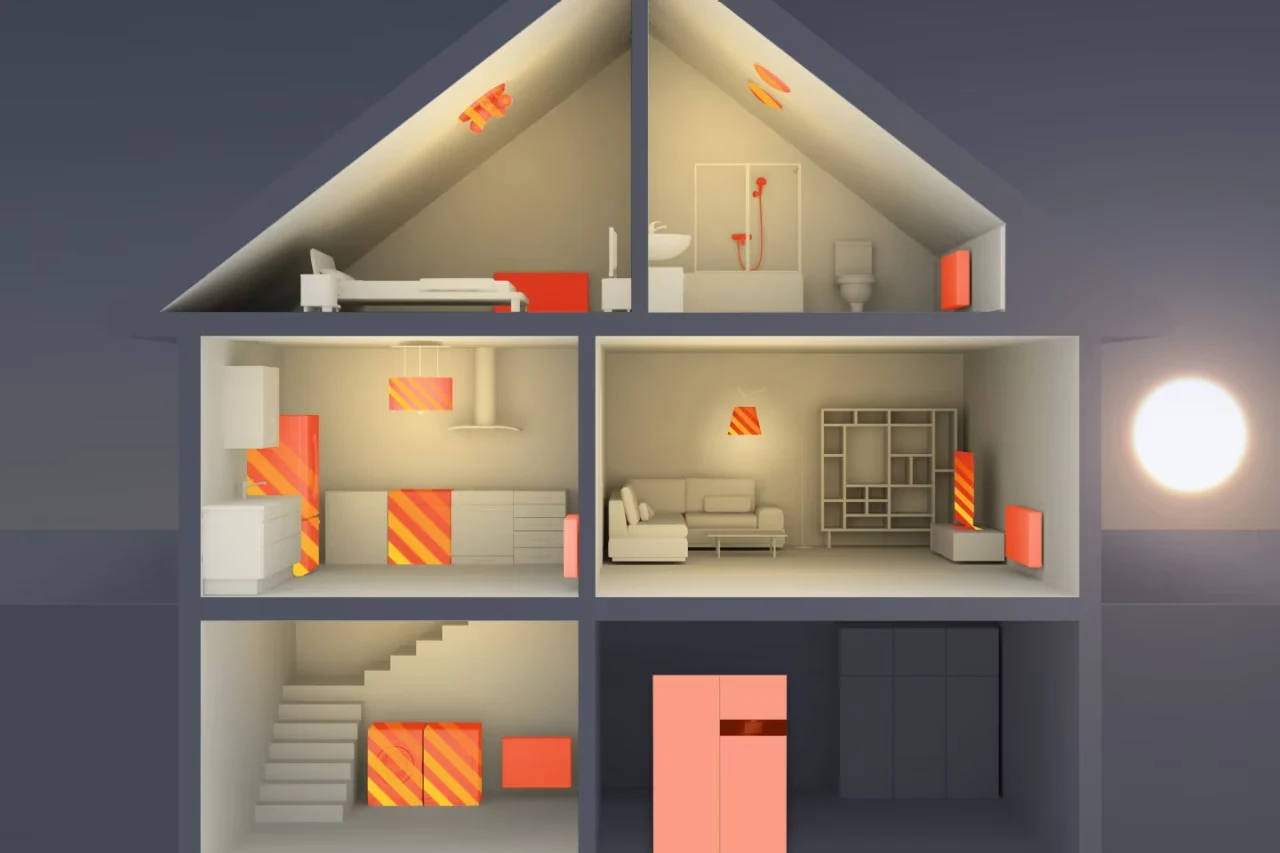
Currently, there are two ways to use solar energy generated by a rooftop photovoltaic system: it can be either fully exported to the grid or partially or fully used on-site. In the past, exporting all solar energy to the grid was more financially attractive [in Germany]. However, the combination of declining feed-in tariffs and rising energy costs means that self-consumption is becoming increasingly attractive. The cost of electricity per kilowatt-hour is typically much higher than the feed-in tariff for the same kilowatt-hour of solar energy exported to the grid. Therefore, generated photovoltaic energy is increasingly used on-site or temporarily stored in batteries, and only surplus electricity is exported to the grid. The latter is regulated by the Renewable Energy Act (EEG) [in Germany]. According to this law, energy suppliers are required to purchase any electricity that is not self-consumed and integrate it into their grid.
Ensure efficient self-consumption
Self-consumption offers financial advantages, as solar energy generated by photovoltaic systems is cheaper than grid-connected power. An optimized system design with perfectly matched components ensures high levels of self-consumption.
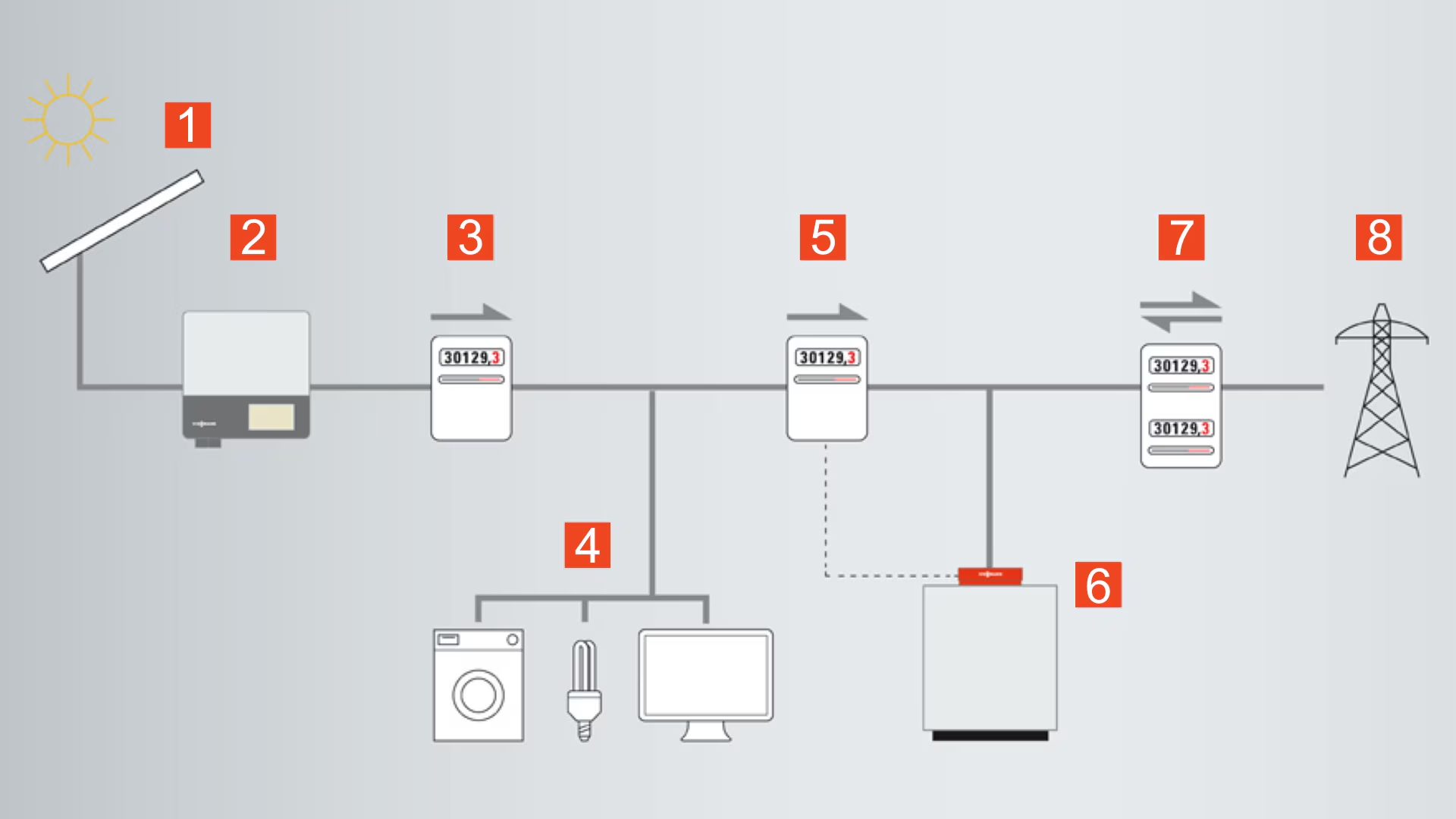
[1] Photovoltaic system [2] Photovoltaic inverter [3] Photovoltaic meter [4] Consumer [5] Heat pump meter [6] Heat pump [7] Consumption and export/generation meter [8] Public grid
Complete solution Combining a photovoltaic system with a heat pump
The most efficient way to generate heat from electricity is to use a heat pump. With a heat pump, one kilowatt-hour of electricity can generate up to four kilowatt-hours of heat by harnessing free energy from the environment. If a heat pump is used to cover space heating and hot water supply, then inexpensive solar energy provides an affordable heating solution. Those planning to combine a photovoltaic system with a heat pump should choose eco-heating, which specifically optimizes self-consumption and can be adapted to the photovoltaic system’s generation scheme. For this purpose, Viessmann has developed a carefully coordinated system consisting of a photovoltaic system and a heat pump.
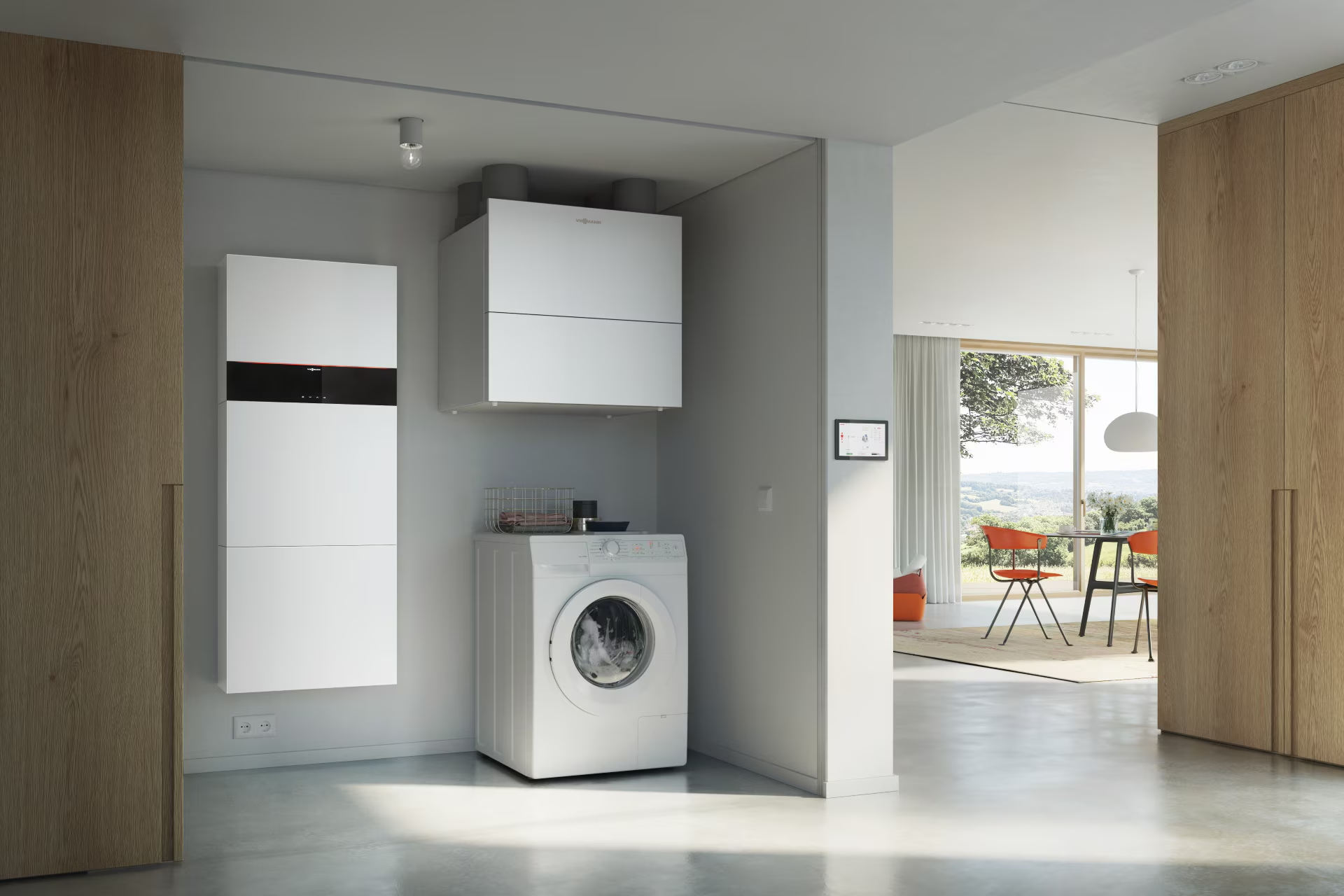
Vitocharge photovoltaic system with energy storage
Provided a photovoltaic system is installed over a large enough area, it generates enough energy during the day to cover the needs of a single home. However, this unstable power supply is subject to various peaks in demand—for example, when a dishwasher, washing machine, or dryer is running. And, of course, the heat pump requires more energy for the circulation pump during the heating season.
The energy storage system balances these peaks, providing additional power from its batteries exactly when needed. Vitocharge VX3 is a next-generation energy storage system from Viessmann that increases the self-consumption and efficiency of the entire system. The system charges the energy storage system when your home doesn’t require electricity. This electricity is then used as needed. If the energy storage system is fully charged and no consumers are connected, the excess energy is exported to the grid and billed accordingly.

Vitocharge VX3
Next-generation PV energy storage:
High efficiency
Optimizes energy consumption
Outstanding, compact design
Reduces energy costs
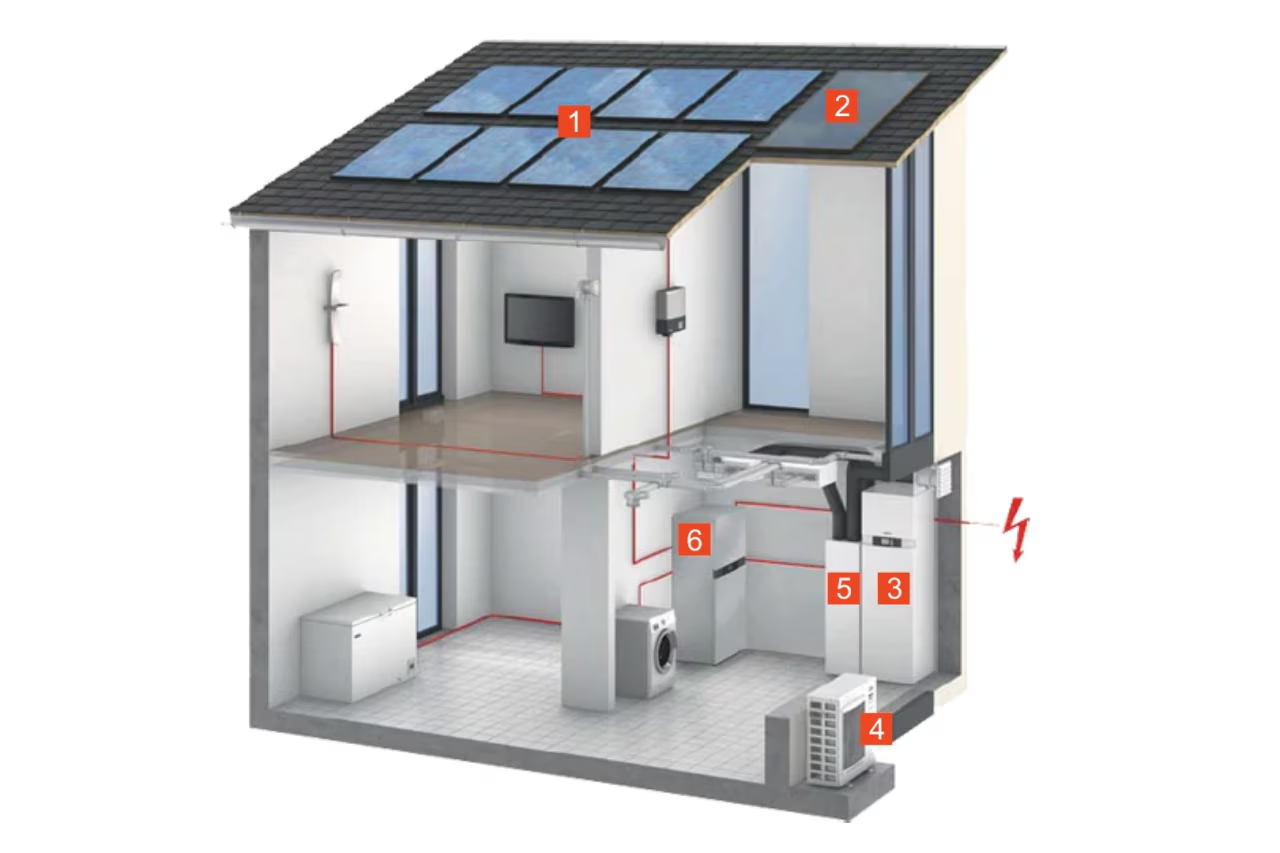
Using this system, annual results demonstrate a high level of self-sufficiency for the KfW Efficiency House 40. In the example described, energy costs would be only €86 for heat and electricity—for the entire year!
[1] Photovoltaic modules
[2] Solar collectors
[3] Split air source heat pump
[4] Heat pump outdoor unit
[5] Mechanical ventilation unit
[6] Energy storage
Video - ViTalk: IoT for Energy
Video - ViTalk: IoT for Energy
Proper planning is essential for economical operation.
To ensure the technology operates economically and reliably, several factors must be considered. In addition to high-quality products and execution, proper planning is also crucial. Anyone considering purchasing a photovoltaic system should first check with one of our partners to ensure all necessary requirements are met.
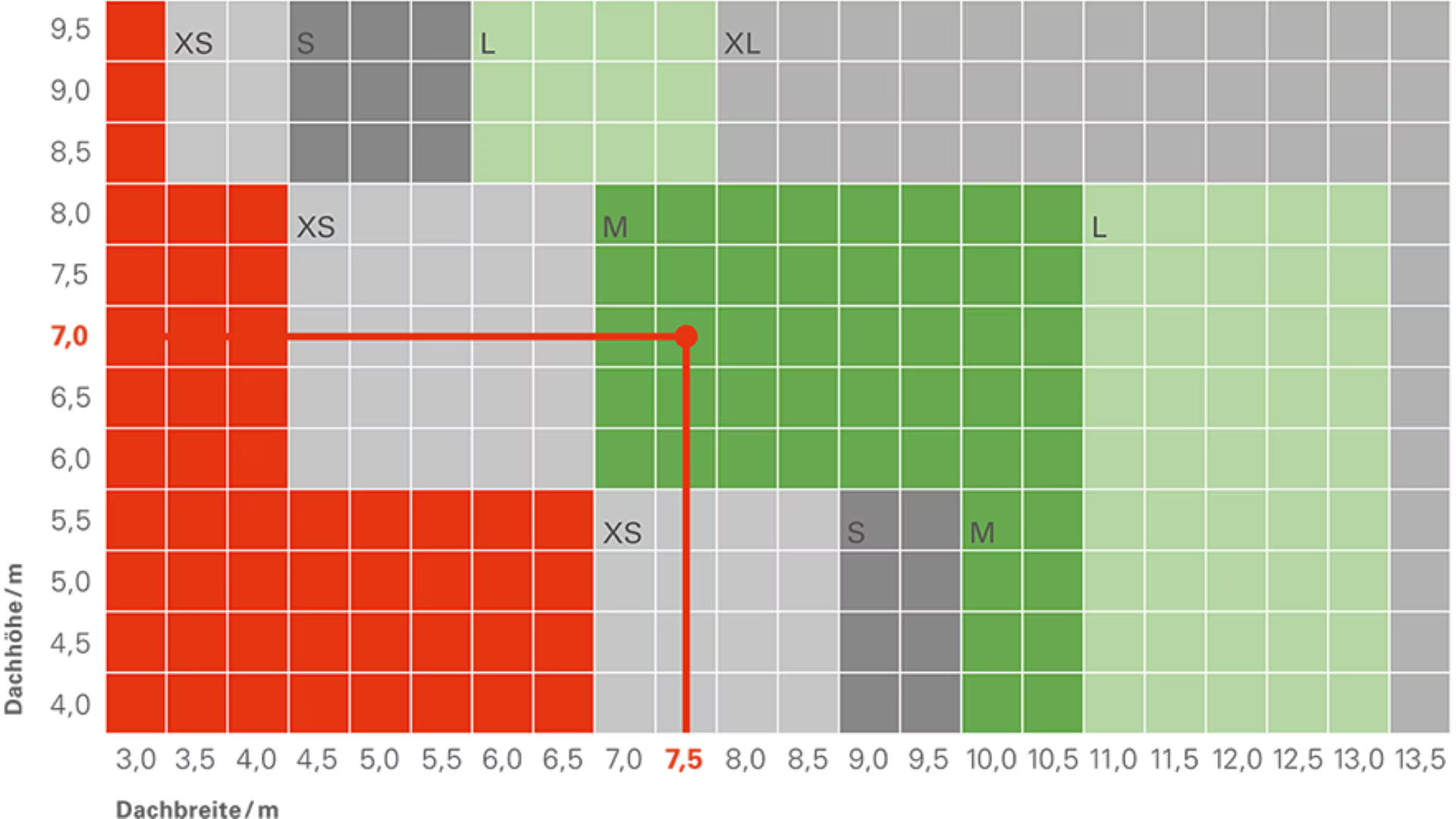
The matrix shows an illustration of a suitable package for the existing roof area. The intersection of the roof height (Dachhöhe) and the roof width (Dachbreite) yields the corresponding package (shown in the figure).
Orientation, slope and shading of the roof surface
South-facing, shade-free roofs are ideal for photovoltaics. At a slope of 30 to 40 degrees, the sun’s rays strike the Vitovolt 300 solar modules at the right angle, allowing them to generate a significant amount of electricity. If the slope is favorable but the orientation is shifted to the east or west, output will be on average 20 percent lower. To compensate for these losses, a more powerful photovoltaic system must be purchased. The Viessmann surface matrix shows the power output possible on your roof. Interested parties can enter the width and height of the roof surface to quickly see how many modules can be installed.
Check the load-bearing capacity of the roof
Solar modules add weight to the roof. A structural engineer will quickly determine whether the roof can support the equipment. If repairs to the roof structure are necessary, homeowners can apply for financing through a loan from the Kreditanstalt für Wiederaufbau (KfW) [or the local equivalent].
Standard values for design in residential buildings
Viessmann’s Vitovolt 300 packages make choosing the right photovoltaic system particularly simple, based on just a few questions. The system a homeowner needs depends on the number of people living in the home and the intended use of the technology. For example, more solar modules will be needed if the photovoltaic system will supply electricity to a heat pump. In contrast, fewer modules are needed when combined with a fuel cell. This is because, in addition to heat, the fuel cell also produces electricity for its own consumption. The following table provides approximate standard values.
| City | Time | Limit in dB(A) | Limit in dB(A) | Limit in dB(A) |
|---|---|---|---|---|
| People in the household | Average annual electricity consumption | Photovoltaics only | Photovoltaics and heat pump | Photovoltaics and fuel cells |
| 2 | up to approximately 3000 kW/h | XS | S | XS |
| 3 | up to approximately 3500 kWh | S | M | XS |
| 4 | up to approximately 4500 kWh | M | L | XS |
| 5 | up to 6000 kWh | L | XL | S |
| from 5 | up to 6500 kWh | XL | XXL | S |
| from 5 | from 6500 kWh | XXL | XXL | s |