
Vitoset
Accessories
- Suitable for detached houses
- Packaged solution for easy installation
- Three sources of energy: ambient air, solar radiation, and earth
- Use of crystallization energy
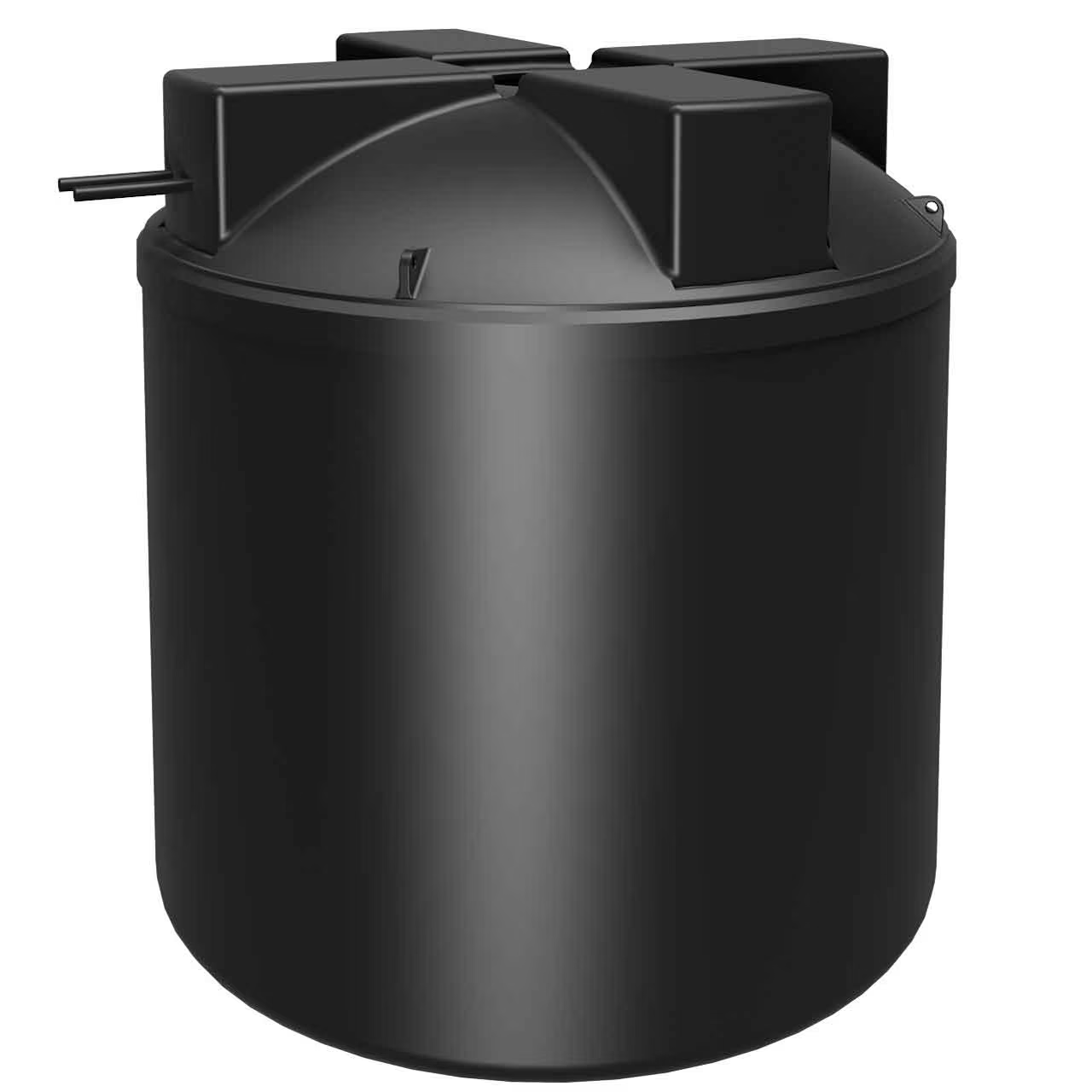
A top view of the store with liquied ice
An ice storage heating system consists of a brine/water heat pump and an ice storage facility. This combination allows the system to extract heat not only from the ground but also from the water and ambient air. However, the most important heat source is the ice storage facility. Ice energy storage systems are primarily used in buildings with high heating and/or cooling requirements, making them an innovative climate control solution for both commercial and municipal applications.
An ice storage facility consists of a tank completely buried underground. The tank itself is usually made of concrete and uninsulated. It contains large tubular coils through which a frost-resistant liquid (brine) circulates. One section of the coil functions as a heat exchanger for extraction, and the other as a heat exchanger for regeneration. After all the pipes, outlets, and inlets are installed, the tank is filled with water, which serves as the energy source.
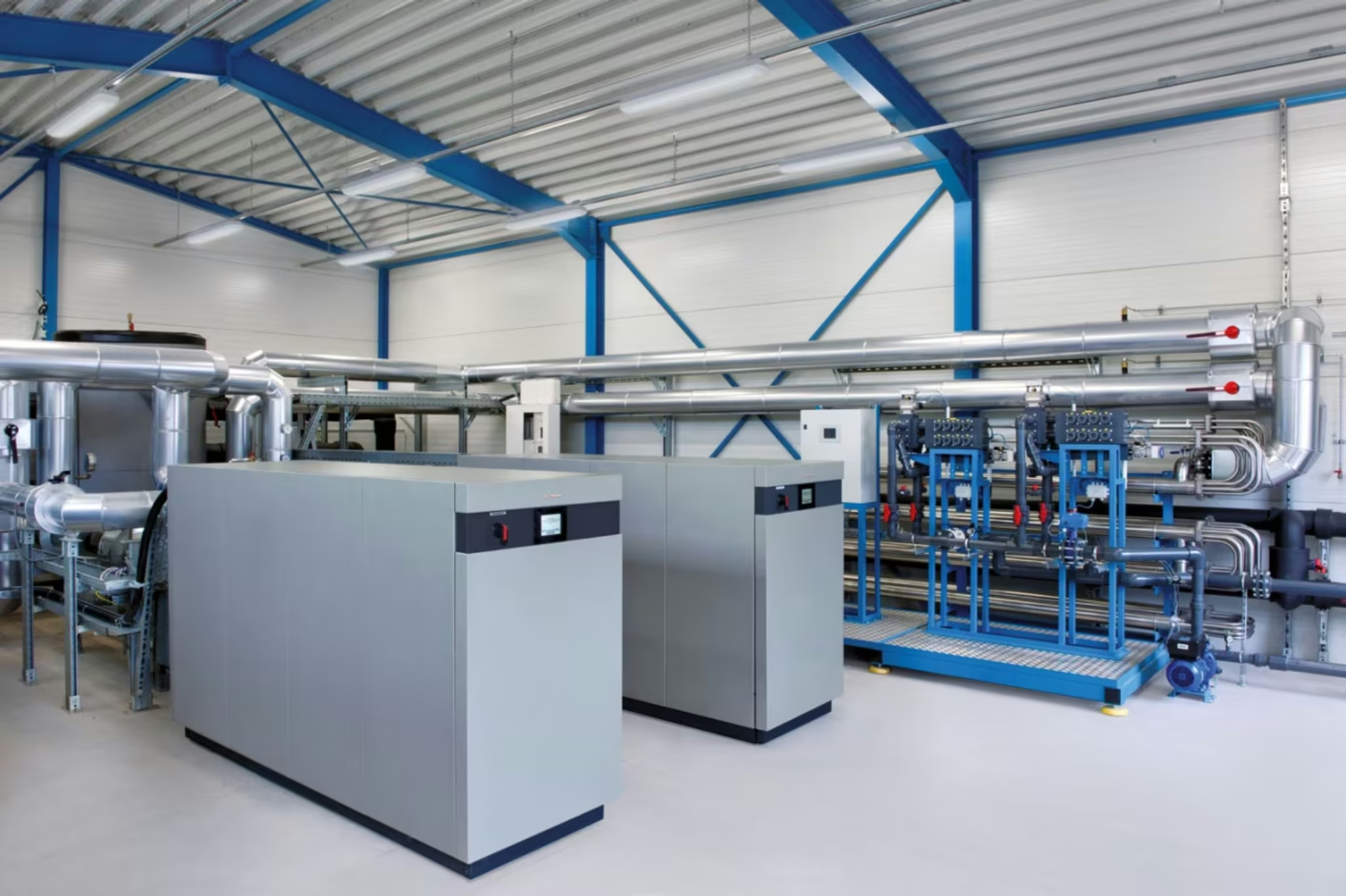
Vitocal 300-G heat pumps as a component of the ice warehouse heating system (Photo: © Enno Friedrich www.ef-artfoto.de)
In the ice storage heating system, the first heat exchanger extracts energy from the liquid water and transfers it to the heat pump. This is where the compression process occurs, during which the refrigerant first evaporates and then is compressed. The resulting heat can be used for both heating and hot water supply. This process is described in detail in the section ” How a Heat Pump Works .”
As the water releases its heat to the exhaust heat exchanger, its temperature drops and it gradually freezes. To prevent damage to the tank, the pipes are laid so that the water freezes from the inside out. The regeneration heat exchanger supplies heat to the tank from a solar air absorber or other heat source.
Due to the lack of insulation around the concrete tank, the Viessmann ice storage facility draws heat from the surrounding ground, accelerating the thawing process. Once the water returns to liquid form, the cycle can be repeated as often as necessary. In addition to geothermal heat, other environmental factors, such as warm rain or solar radiation, also contribute to this regeneration process.
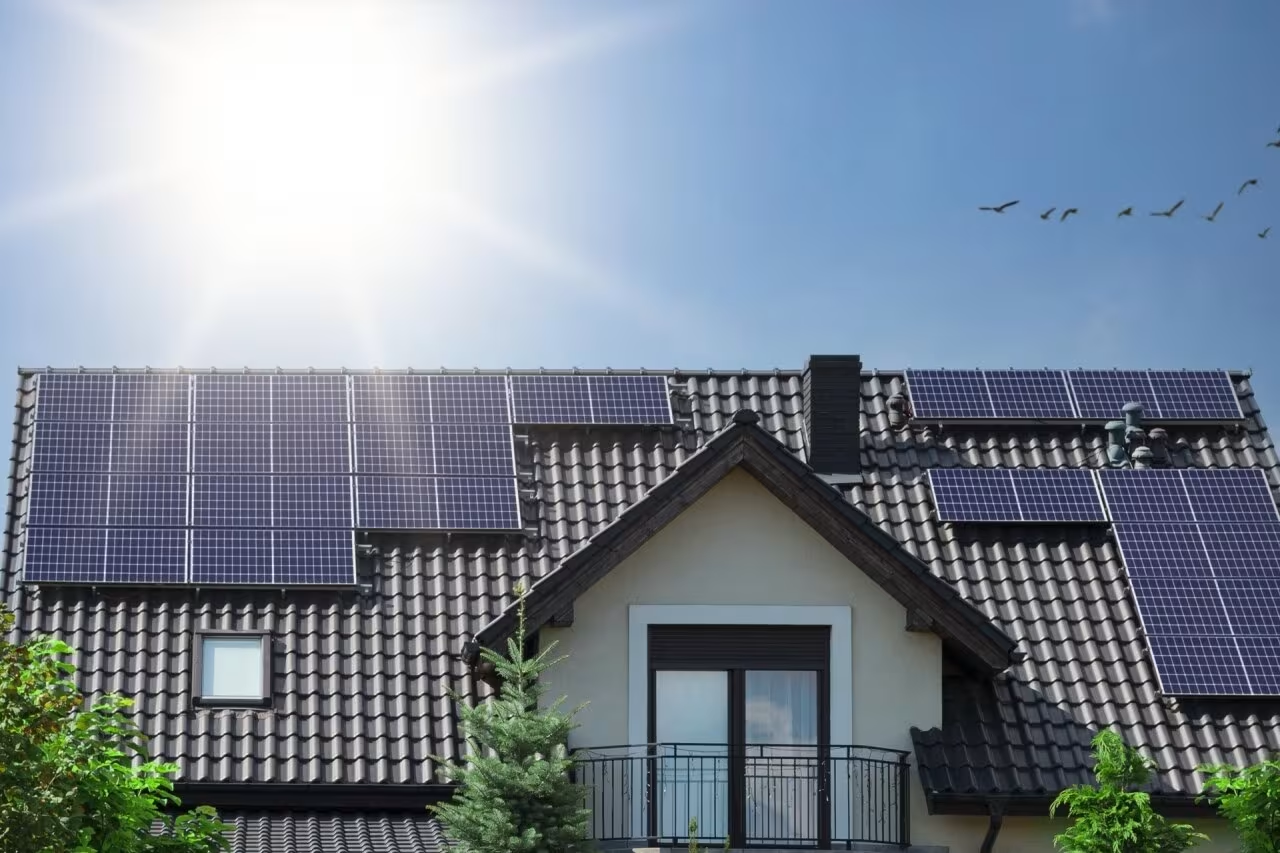
Another way to extract thermal energy from the environment is to use solar air absorbers. They are installed on the roof and capture energy from both the ambient air and solar radiation. The energy is then fed to a heat pump. When there is no heat demand, the solar air absorbers release their energy into the ice storage, accelerating the regeneration process.
Viessmann ice storage systems utilize a special property called crystallization energy. In other words, the ice storage system delivers energy even when water freezes into ice. This is because the change in physical state (phase transition) releases the same amount of energy required to heat one liter of water from 0 to 80 degrees Celsius. In practice, this means that a 10 cubic meter ice storage facility provides the same amount of energy as burning 110 liters of fuel oil.
There are many advantages to choosing ice energy storage. Some of the most important include:
Free and No Obligation
Get a free, personal, no-obligation consultation on our heat pumps from our qualified sales partners!
Request a consultation now →Felix Neureuther built a house for future generations. If you want to systematically protect the environment, you find ways to significantly improve your carbon footprint. World champion skier Felix Neureuther built a new home in Garmisch-Partenkirchen that provides three generations of his family with 100% clean energy—using an ice energy storage system from Viessmann.
Today, heat pumps use ambient air, groundwater, or groundwater as a heat source. The ice storage heating concept combines air and geothermal energy and can also utilize solar radiation as a heat source.