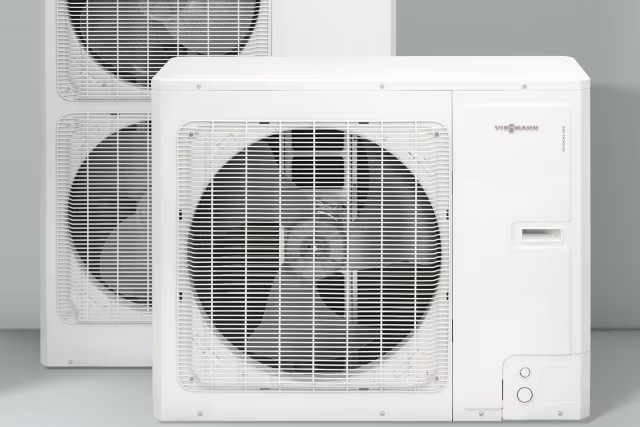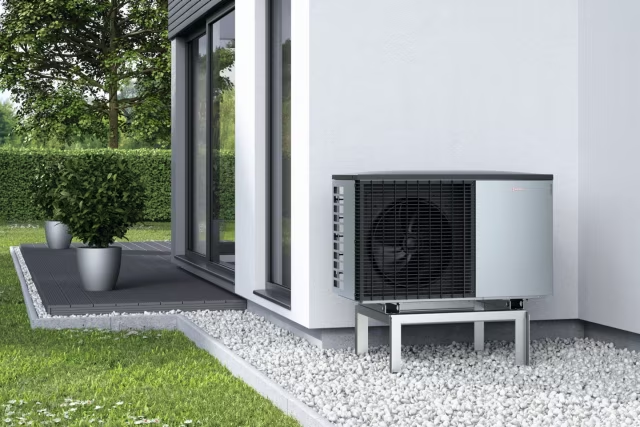


Cogeneration plant for the production of heat and electricity
Viessmann cogeneration units are designed for commercial and municipal use. Consequently, they offer high performance and are tailored to your operational processes to reliably supply electricity, heating/cooling, and hot water. This means you’re investing not only in improved efficiency but also in the future.
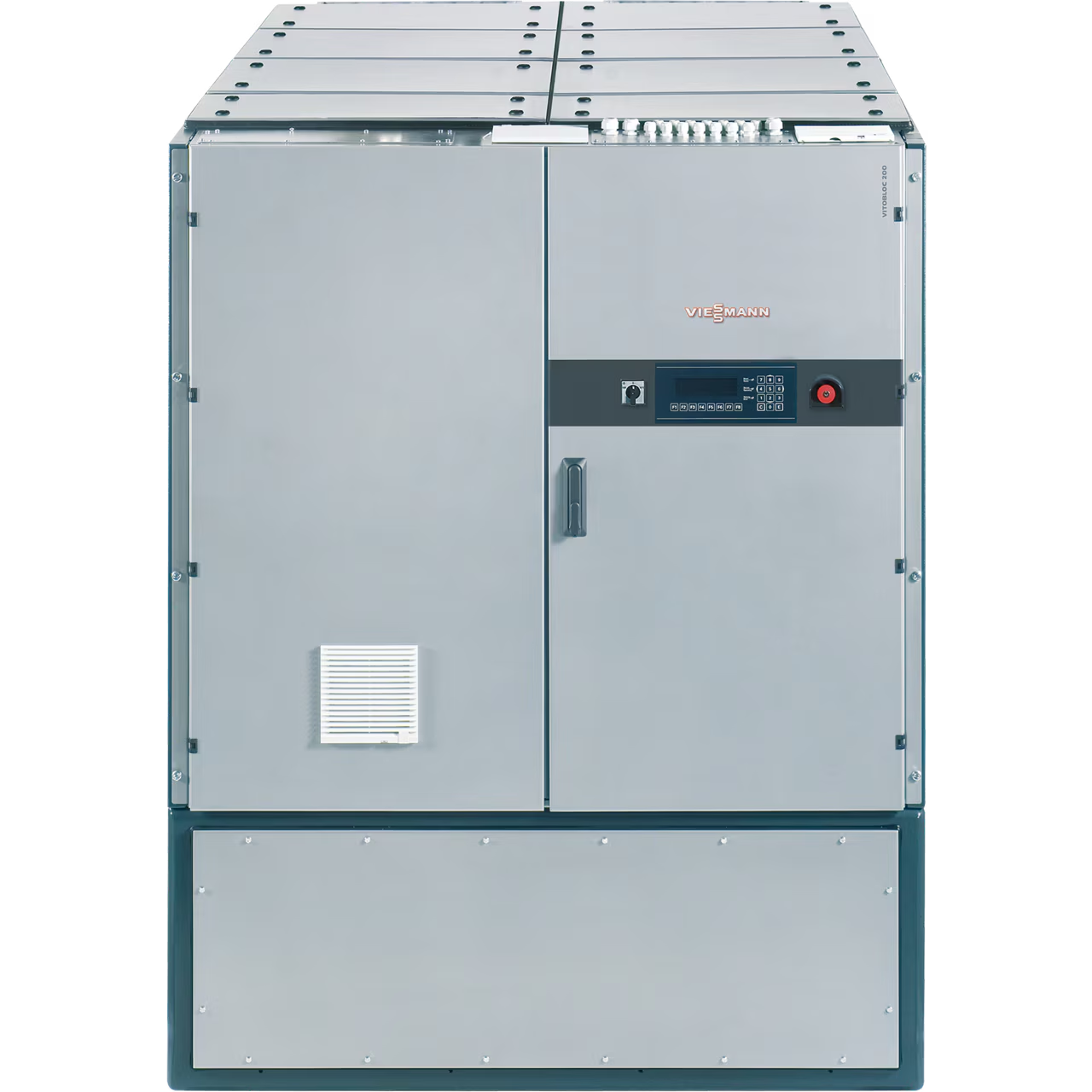
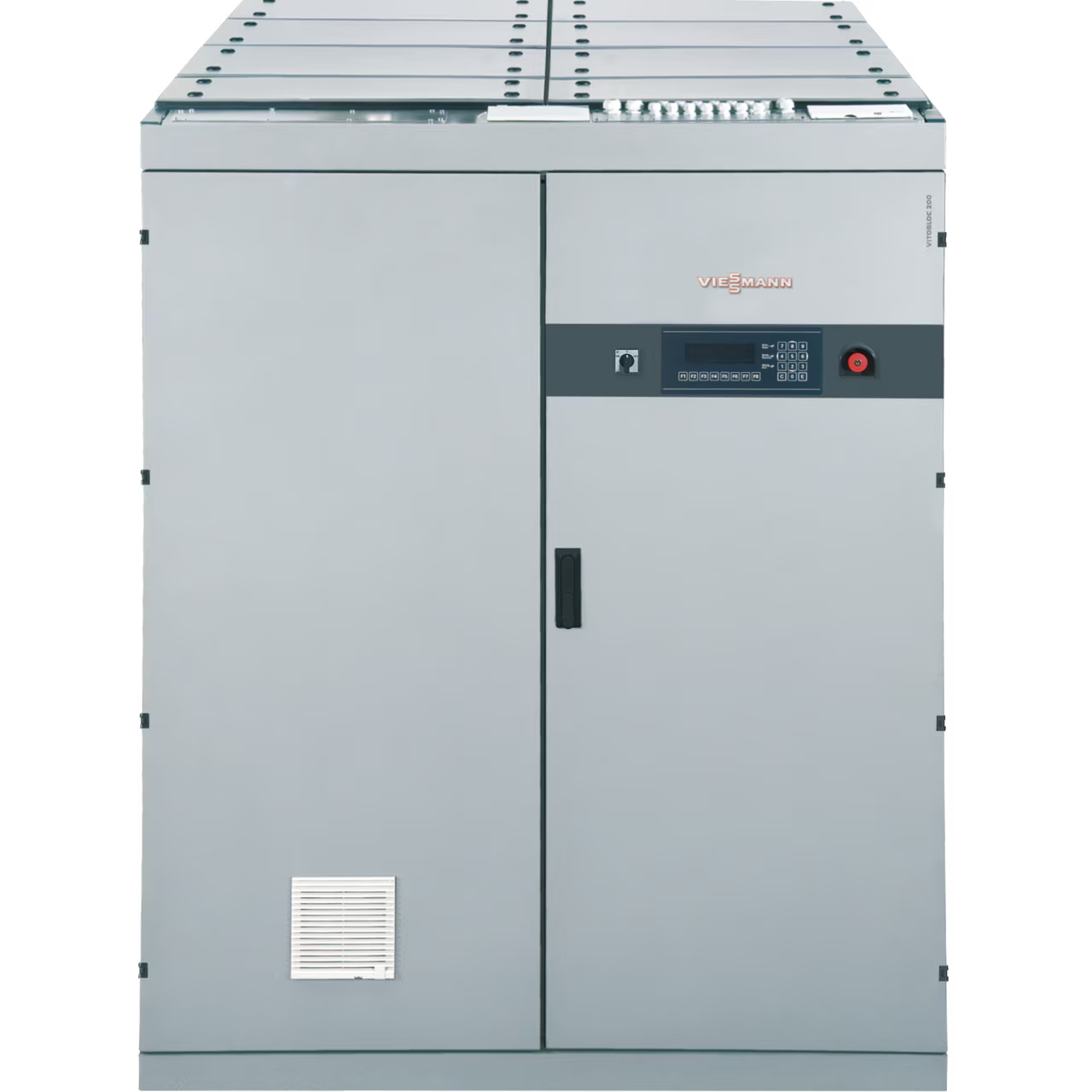
The compact Vitobloc 200 series units are designed as decentralized cogeneration systems with a focus on heating. These relatively small units generate electricity for their own consumption. The heat generated is simultaneously used for heating, with virtually no loss. Unused electricity is exported to the public grid, and the utility company pays a corresponding fee.

Ask the Experts: Viessmann Community
Experts answer questions about thermal power plant units
Ask a question ›
Why a combined heat and power plant (CHP)?
Most electricity in Germany is generated in condensing power plants. This means that thermal energy is converted into electricity using a steam turbine. The average efficiency of all conventional power plants is approximately 38 percent, meaning that over 60 percent of the energy consumed is lost to the environment as unused waste heat.
A cogeneration plant goes a step further and utilizes waste heat, which can improve the overall efficiency of the system. In the case of large-scale combined heat and power (CHP) systems, this occurs through district heating pipelines. However, the potential of existing plants is largely exhausted. Ultimately, this only works if there are large heat consumers near the power plant, such as a residential area.
This is where the idea of decentralized combined heat and power (CHP) plants with a focus on heating comes in. Electricity is generated in relatively small units, where the by-product heat does not need to be transported over long distances (which would lead to heat loss), but can be used directly on-site. There are also no losses associated with energy distribution.
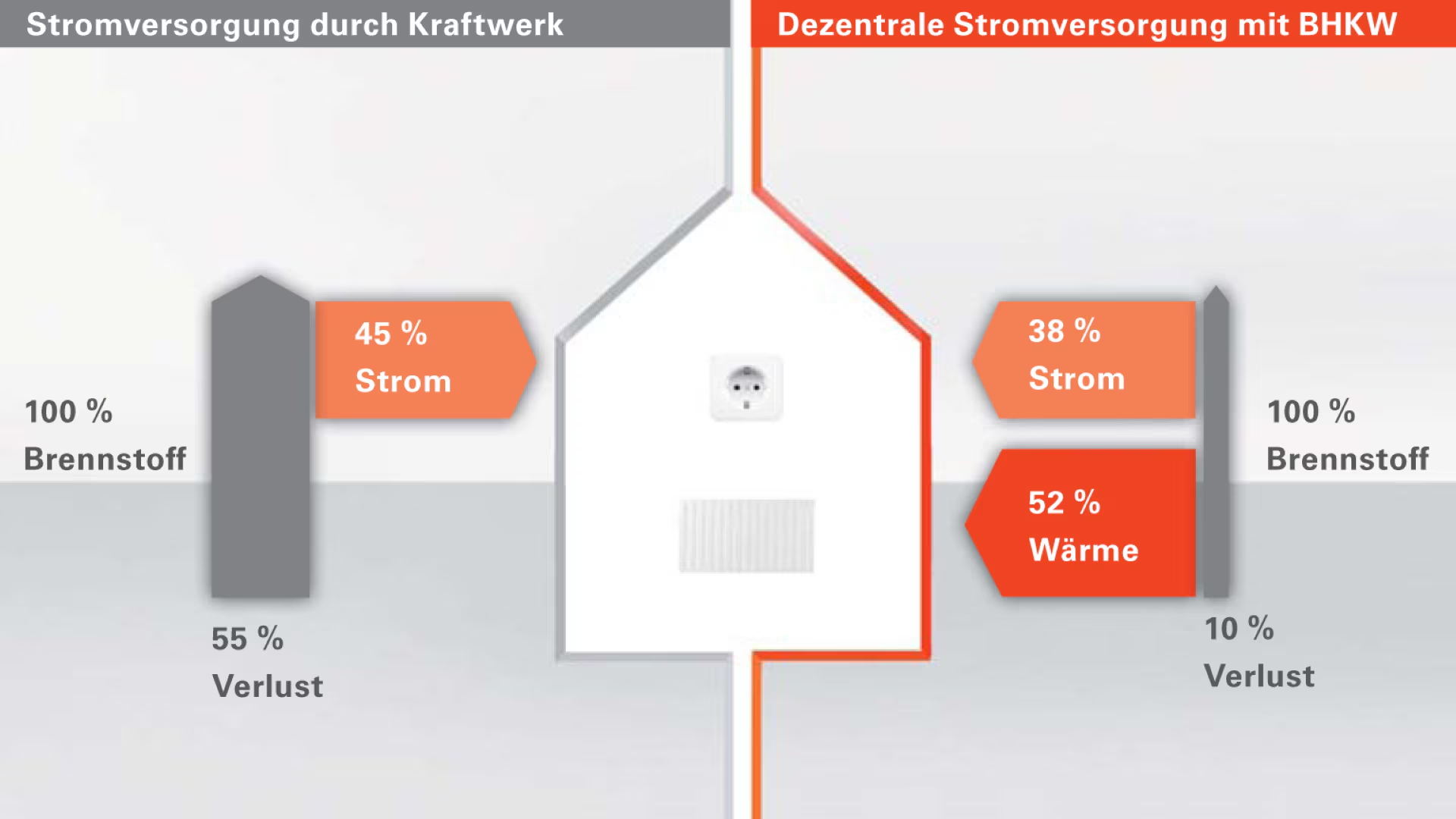
Decentralized power supply with a combined heat and power plant
Central power plants typically produce only electricity. The accumulated heat is lost. In contrast, combined heat and power plants (CHPs) use 36 percent less primary energy, which translates into significantly lower electricity costs.
Structure and functions of a cogeneration plant
A cogeneration unit primarily consists of a motor, a synchronous generator, and a heat exchanger. The synchronous generator, driven by an internal combustion engine (drive unit), produces three-phase alternating current with a frequency of 50 Hz and a voltage of 400 volts, which is typically used on-site.
A low-voltage grid (0.4 kV) is used for electrical connection. Cogeneration units typically operate in parallel with the grid. However, in principle, they can also be used in grid replacement mode by installing synchronous generators. Excess power can be exported to the power supply network.
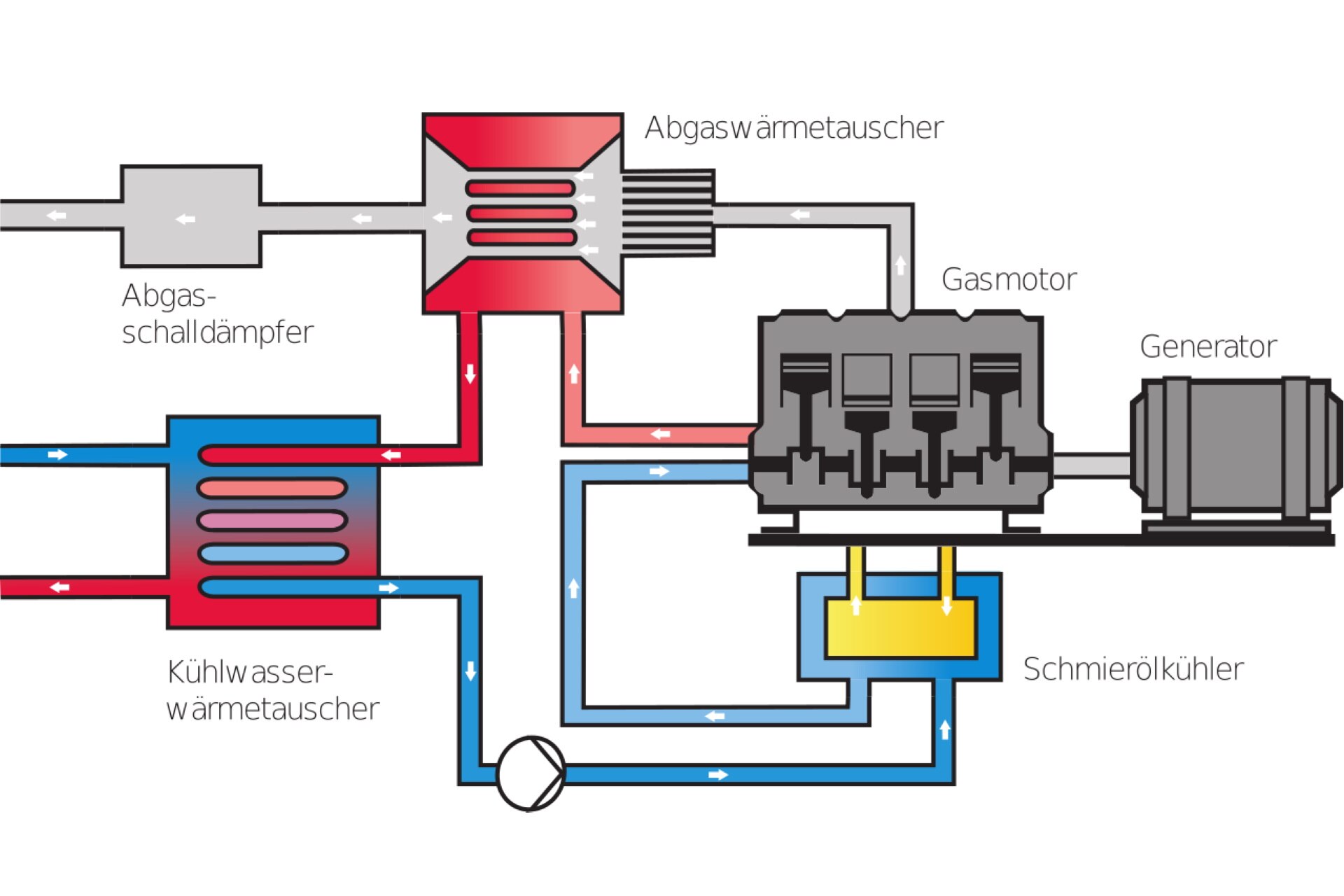
The engine generates heat that can be absorbed in the “internal cooling circuit” sequentially from the lubricating oil, engine coolant and exhaust gases and transferred to the heating system via a plate heat exchanger.
This system of generating and using energy is called combined heat and power (CHP) because the mechanical energy (power) generated by the engine and the thermal energy (heat) released by the engine when the generator is running are used simultaneously.
Schematic diagram of a cogeneration plant
In a combined heat and power plant (CHP), a gas-fired internal combustion engine drives a generator to generate electricity. The heat generated is recovered from the coolant and exhaust gases through a heat exchanger and can then be used.
When does installing a heat pump make economic sense?
For a cogeneration system to be economically viable, the unit must operate continuously for as long as possible. The longer the cogeneration system can effectively transfer heat and electricity to the system, the faster it will pay for itself. When sizing, with some exceptions (such as emergency power supply), the primary consideration is heat. A cogeneration system is designed for heat.
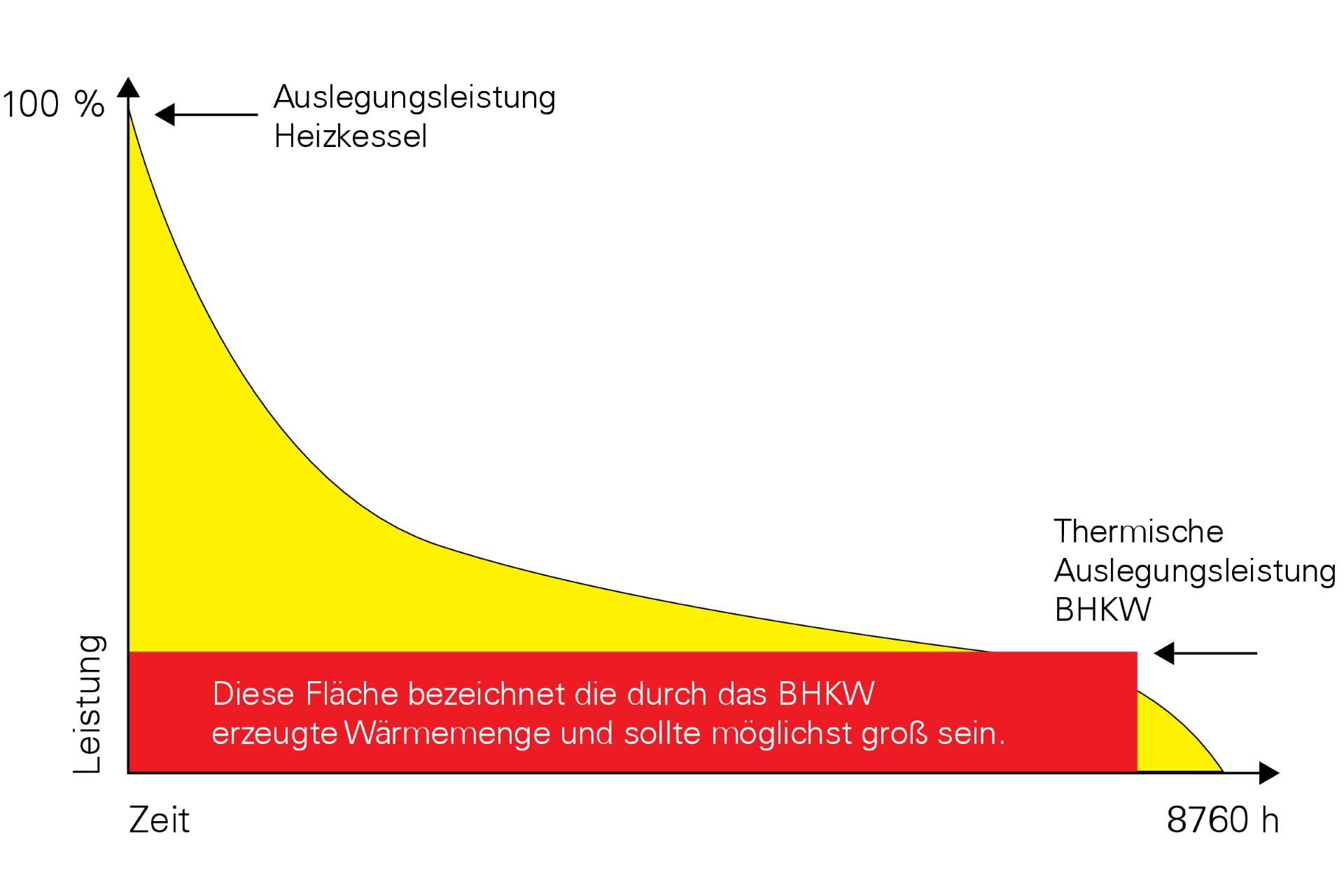
Constant annual curve – calculation of the power of the KU unit
If we look at how annual heating capacity is typically distributed over a 12-month period (a constant annual line), it becomes clear that the cogeneration unit should not be oversized. Its heating capacity is calculated so that heat is transferred even at low loads.
To achieve a working time of at least 4500 hours, we can take approximately 20 percent of the boiler capacity as the heating capacity of the CHP unit to provide heating to the building.
How is the KU unit integrated into an existing installation?
On the heating side, the cogeneration unit operates in parallel with the boiler. Both heat generators are connected to the heating system, hot water supply, or other heat consumers, such as a swimming pool.
Depending on the building’s consumption profile, it may make sense to use a heating water buffer tank to ensure the operating time of the heating system module is as long and uninterrupted as possible.
Regarding electricity, the primary goal is to cover the building’s own consumption. If there are no other consumers, electricity is fed into the public grid and billed.
Electricity: for self-consumption or for export to the grid
Electricity for use at the facility is generated in units calculated to meet the relevant needs. Unused electricity is exported to the public grid, and the energy supplier pays a corresponding fee.
Heat: efficient use and almost no loss
Unlike central power plants, the heat generated by a combined heat and power plant is not lost. It is fed into the district heating network. Combined with another heat generator, such as a boiler, the building is supplied with electricity, heat, and hot water with virtually no loss. Furthermore, cooling needs can be fully or partially met by connecting to an absorption chiller.
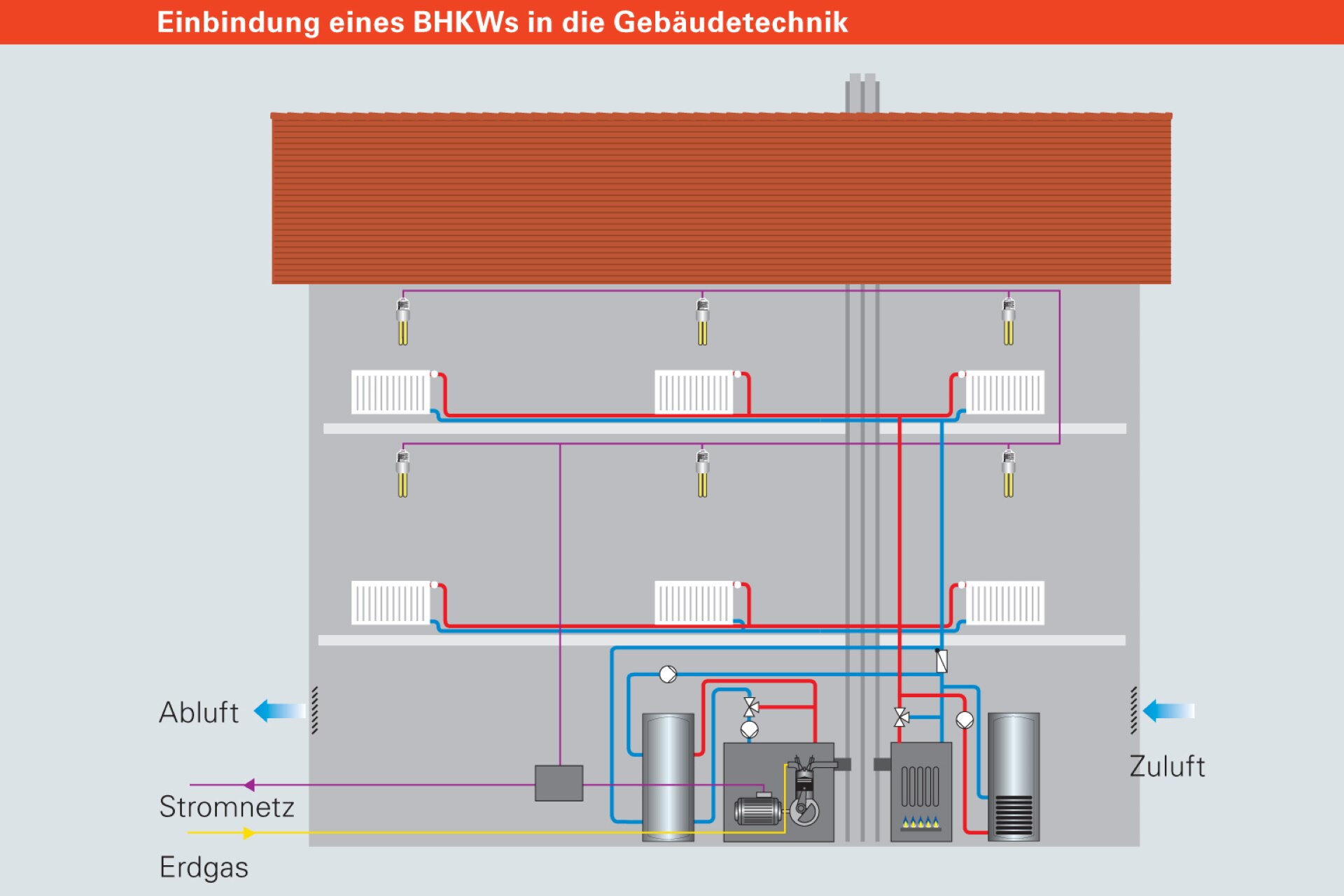
The figure shows the system integration diagram for the control unit.
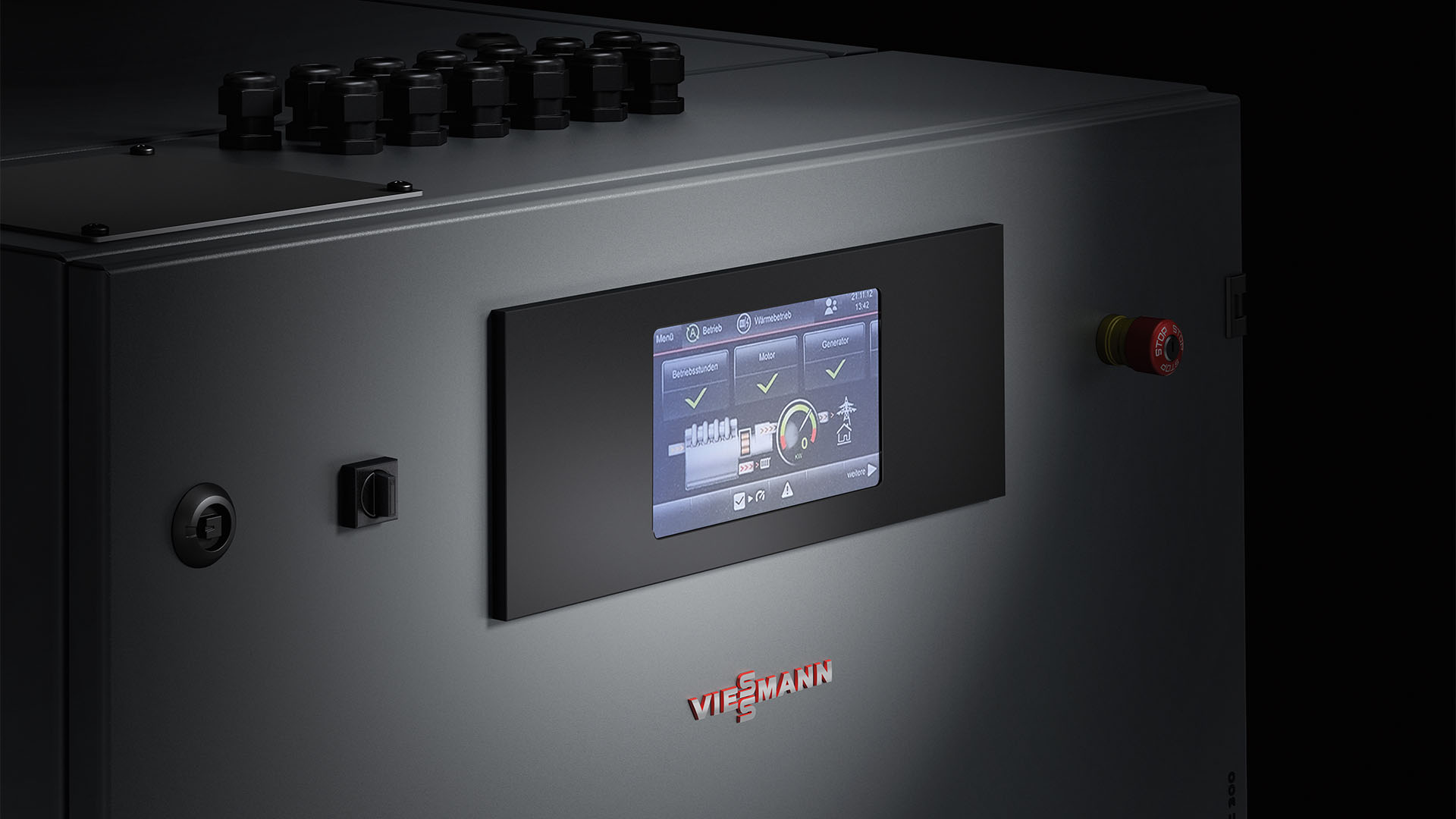
Display Vitobloc 300 type NG
Does it make sense to use a Vitobloc cogeneration unit?
Since a cogeneration unit essentially pays for itself by reducing the amount of electricity consumed from the grid (rather than by charging a fee for supplying electricity), it’s also important to consider the building’s electricity consumption. By answering three simple questions, you can quickly determine whether a Vitobloc cogeneration unit makes sense:
- Does the required boiler capacity exceed 60 kW or does the gas consumption exceed 90,000 kWh/year (relative to the gross calorific value)?
- Does your annual electricity consumption exceed 32,000 kWh?
- Are heat and electricity consumed simultaneously?
If the answer to all these questions is “yes” and there is the possibility of connecting to a gas pipeline, it is worth taking a closer look at the possibility of using a cogeneration unit.
Vitobloc 200 and 300 are compact, quiet and supplied ready for connection.
The Vitobloc 300 NG 15 and Vitobloc 300 NG 20 are compact, ready-to-connect units with water-cooled synchronous generators for three-phase power generation and hot water heating. Their low noise levels and small footprint make them ideal for both new construction and retrofit projects.
Vitobloc 300 cogeneration units are suitable for operation with natural gas, biogas, liquefied petroleum gas, and 20% hydrogen. Integrated condensing technology enables overall efficiency of up to 107.3% (Vitobloc 300 type NG 20).
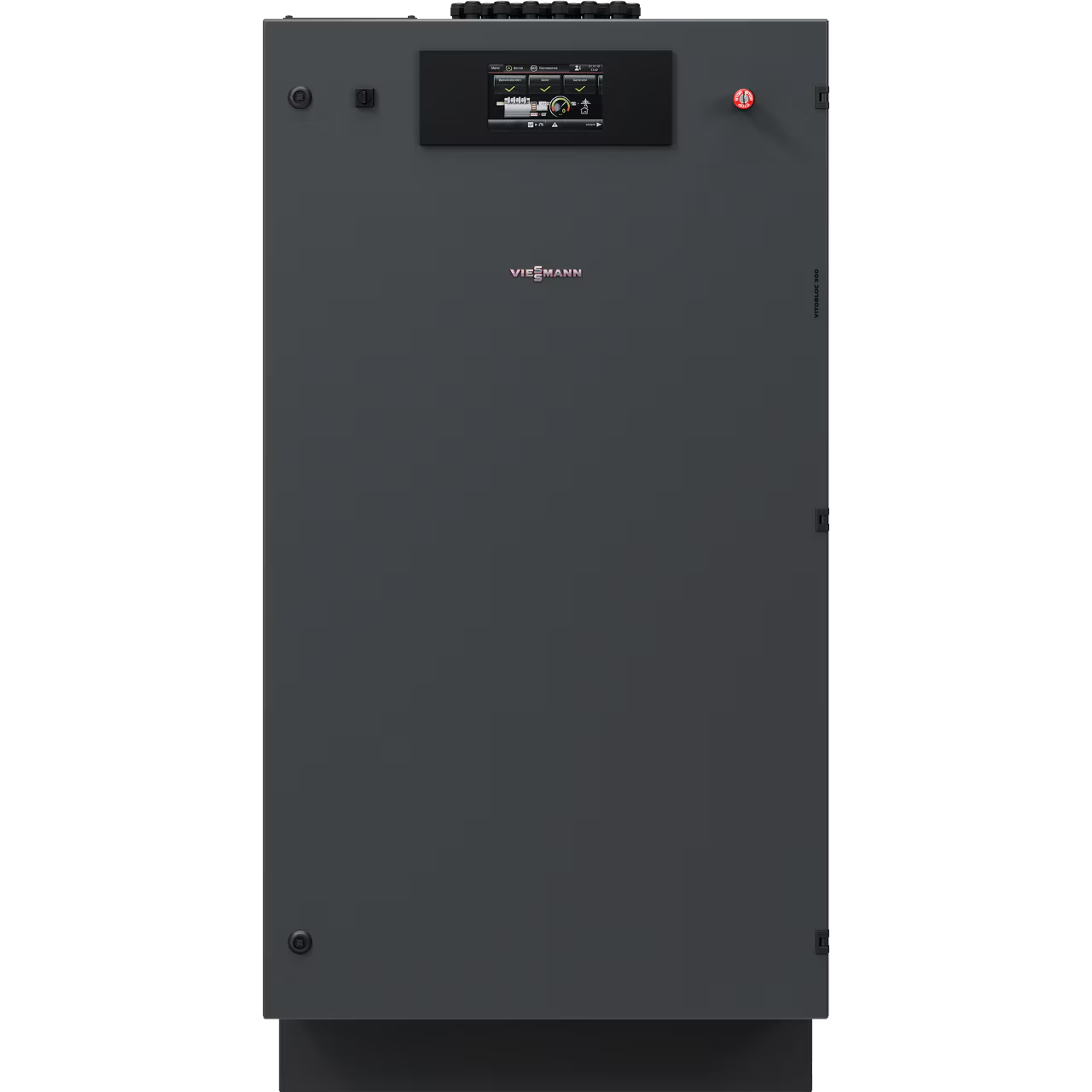


Vitobloc 200 Series
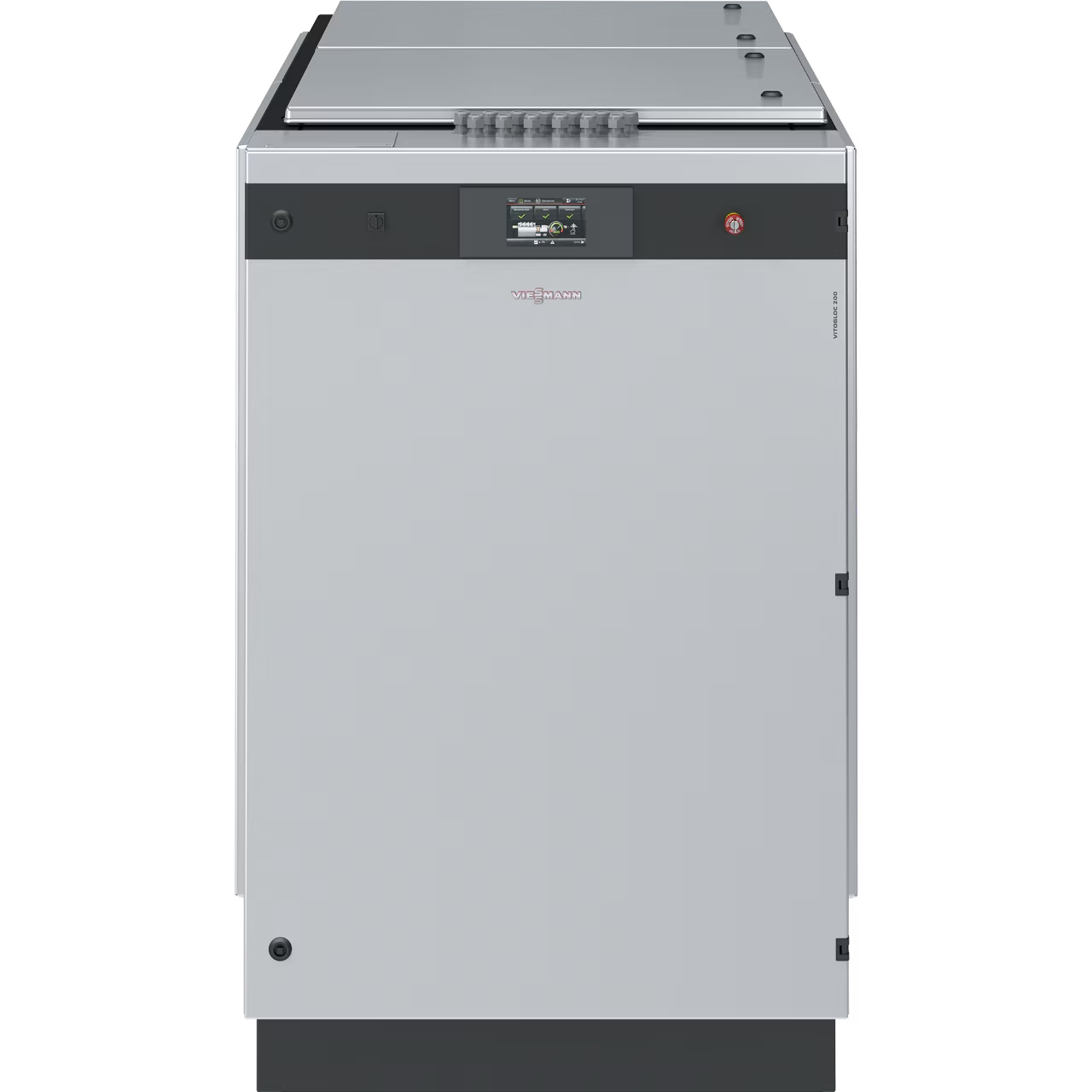
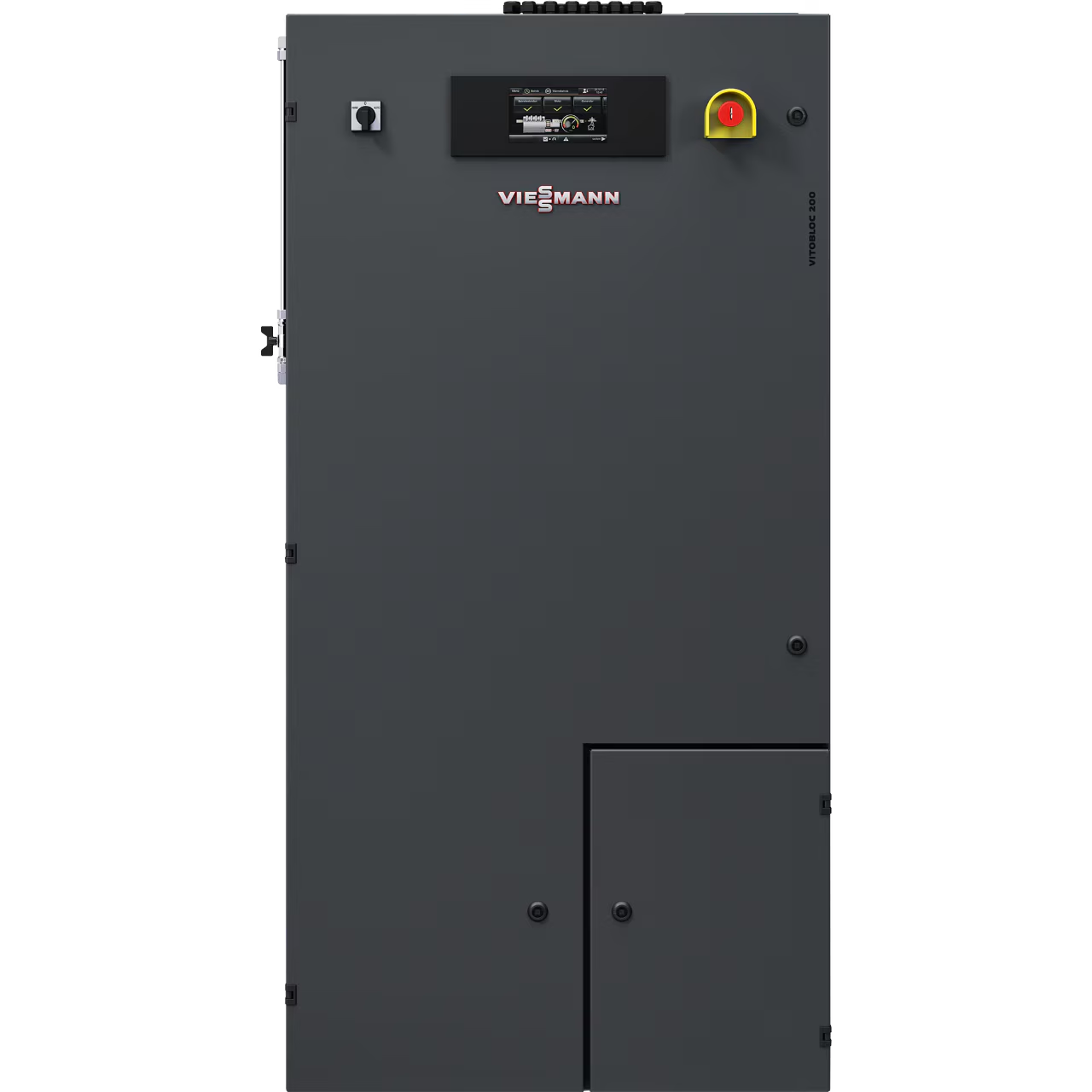
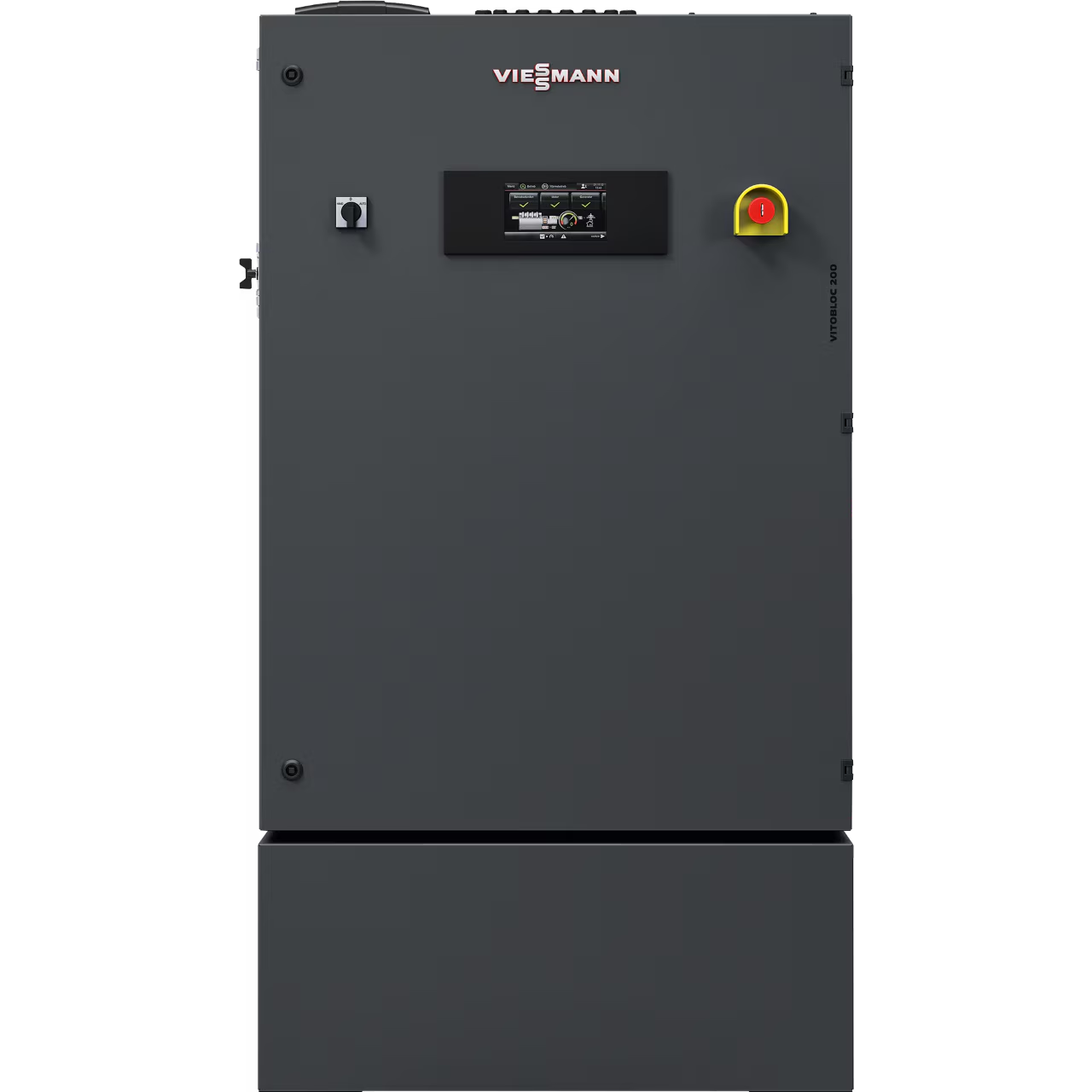
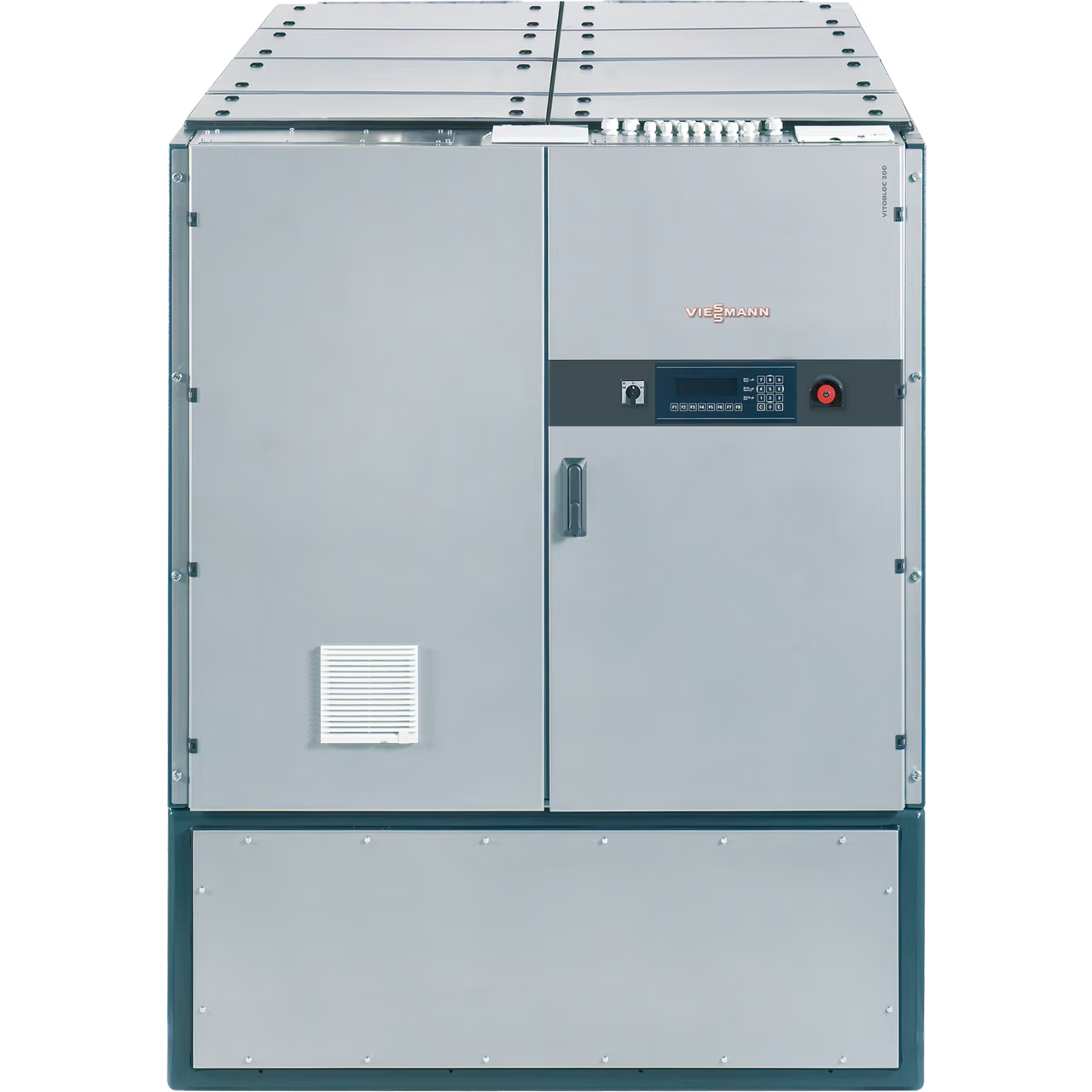
Cogeneration units such as the Vitobloc 200 type EM-260/390 or the Vitobloc 200 type EM-100/167 from Viessmann achieve impressive efficiency. This makes the Vitobloc 200 cogeneration units particularly easy to maintain thanks to their long service intervals. Some units feature integrated condensing technology, achieving overall efficiencies of up to 95 percent. Furthermore, they feature up to 50 percent electrical modulation and can operate in both heat and power modes. Other advantages of the Vitobloc 200 cogeneration unit include its comprehensive technical equipment, including an energy meter and flexible connections for gas, flue gas, exhaust air, and heating water, as well as a standard silencer hood for significantly reduced operating noise.
Benefits and advantages
| Advantages | Advantages | |
|---|---|---|
| Very high electrical efficiency thanks to energy-efficient motors and synchronous generators | Maximum economic efficiency due to the highest possible share of generated electricity | |
| The standard equipment includes starter batteries and a synchronous generator. | Suitable for grid replacement mode, no-load current requirement does not increase, no correction system or turn-on resistors are required for asynchronous operation | |
| 4-pole main switch (3-pole up to 20 kWel), initial filling of lubricating oil tank, flexible connections, calibrated energy meter, installation for raising the temperature of the heating return water, 24-week conservation, heat modulation mode for DN and LE | Reduces subsequent system integration costs | |
| Integration of gas pipeline, starter batteries, lubricating oil supply, control panel into the unit Silencer and exhaust fan up to 150 kVel | Saving time and costs during design, installation, commissioning and operation | |
| Autonomous operation after heat modulation for single-unit systems | Elimination of management system integration costs | |
| Certified safety technology in accordance with Directive 90/396/EEC on devices with a product identification number in series production | Insurance coverage and operational reliability are proven | |
| Factory testing of the entire module with engine, generator, heat exchangers and control panel at full load | Minimal commissioning effort, proven performance | |
| Safe design, assembly and acceptance in a manufacturing plant certified to ISO 9001/EN 29001. | The advanced technology is already used in approximately 600 successfully installed cogeneration units. | |
| Exclusive use of qualified components from renowned brand manufacturers | Highest operational reliability and long-term guaranteed supply of spare parts, maintaining high cost |
Update on the renewable energy tax exemption for DH systems
The Energy Collection Act came into force on January 1, 2019. It contains amendments to the Renewable Energy Act and the Combined Heat and Power Act. This primarily involves a reduction in the renewable energy tax for highly efficient new combined heat and power (CHP) systems. The following points should be noted:
- New cogeneration plants and cogeneration plants commissioned after 1 August 2014 and with an electrical capacity of less than one megawatt or more than ten megawatts will continue to pay only 40 percent of the renewable energy tax.
- All new HU systems in companies with high electricity costs will continue to pay only 40 percent of the tax amount under the Renewable Energy Act.
- For other new HRSG systems, the 40% levy privilege under the Renewable Energy Sources Act applies only if the HRSG operates for less than 3,500 hours of full load per year. For HRSG systems with higher utilization rates, the average levy steadily increases and reaches the full levy under the Renewable Energy Sources Act at 7,000 hours of full load.
- For new cogeneration units built between 1 August 2014 and 31 December 2018 and falling under the third point of this list, a graduated transition scheme is applied until 2019 or 2020.
- The compromise option applies retroactively from January 1, 2018. Accordingly, a portion of the tax paid for the 100% use of renewable energy sources is returned to the operators of combined heat and power plants.
The amendments to the Combined Heat and Power Plant Law specifically address promotional aspects. For example, the subsidy for new installations has been extended until 2025, while the subsidy for existing installations has been reduced. Furthermore, a culmination exception now exists. Additional subsidies beyond the support provided by the Combined Heat and Power Plant Law are no longer permitted.
The right partner for your cogeneration plant: Viessmann
Viessmann Kraft-Wäärme-Kopplung GmbH (formerly ESS – Energie Systeme & Service GmbH) is the Viessmann Group’s CHP specialist and has been part of the group since 2008. With over 25 years of experience in this field, Viessmann offers efficient gas-fired systems for combined heat and power (CHP). In addition to standard products, the company also manufactures cogeneration systems tailored to individual customer needs.
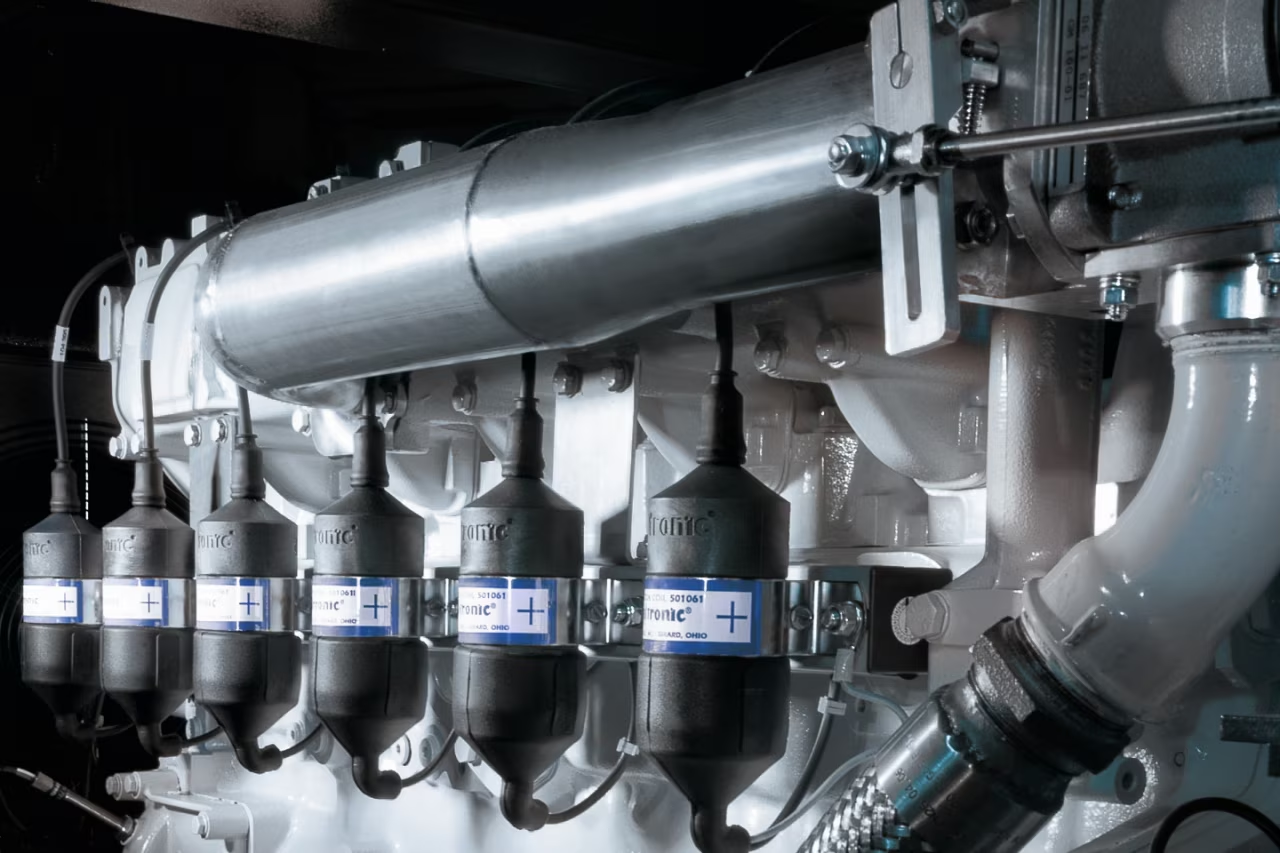
Cogeneration units are efficient gas systems for the combined production of heat and electricity.
Gas-fired combined heat and power (CHP) plants generate both electricity and heat simultaneously using the principle of combined heat and power (CHP). A specialized heavy-duty gas internal combustion engine drives a generator to generate electricity. These units are sized to suit residential complexes and commercial properties. On the heating side, a cogeneration unit operates in parallel with a boiler. Both heat generators are connected to the heating system to provide hot water or domestic hot water.
Viessmann cogeneration units are team players. They achieve maximum efficiency in a system tailored to specific requirements. This begins with system technology, such as control cabinets for higher-level control functions, and extends to customized maintenance contracts.
Product range: Cogeneration units with a capacity of up to 530 kWel and 660 kWh
The cogeneration system is extremely environmentally friendly: in addition to primary energy savings of up to 36 percent, CO₂ emissions are significantly lower compared to traditional electricity and heat generation. With over 25 years of experience in this field, Viessmann offers efficient gas-fired systems for combined heat and power (CHP). In addition to standard products, the company also manufactures CHP systems tailored to individual customer needs.


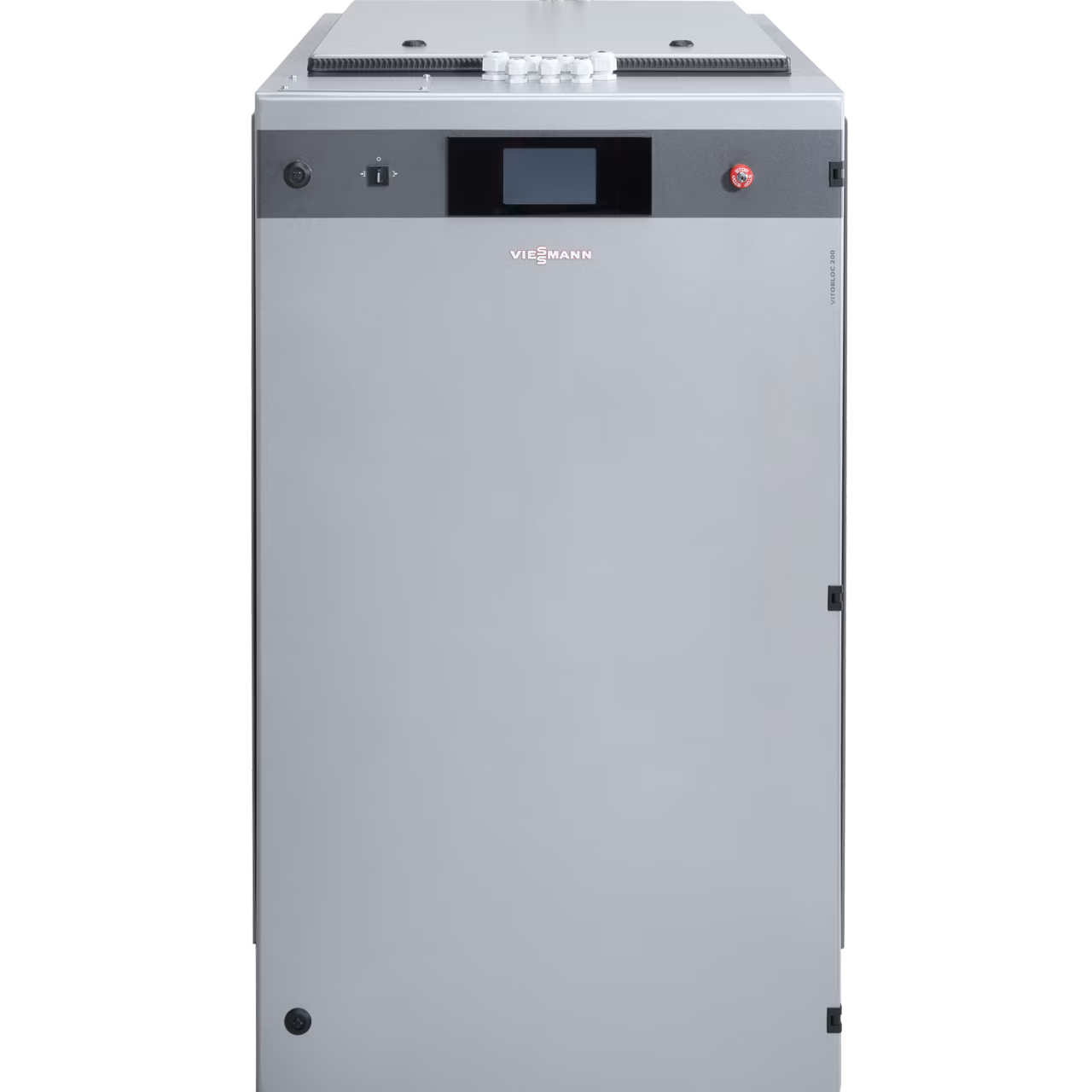




Current documents, forms and brochures for download
Technical specifications for the CU units are available here. Additional forms are available upon request. Please contact your local Viessmann representative.
Datasheets/specifications (PDF)
In our ViBooks database you can download technical data sheets for all Vitobloc cogeneration units.
Unit Certificate
Certificates of a specific type for each power unit, confirming the compliance of the designed power system with the requirements of these VDE Application Rules.